


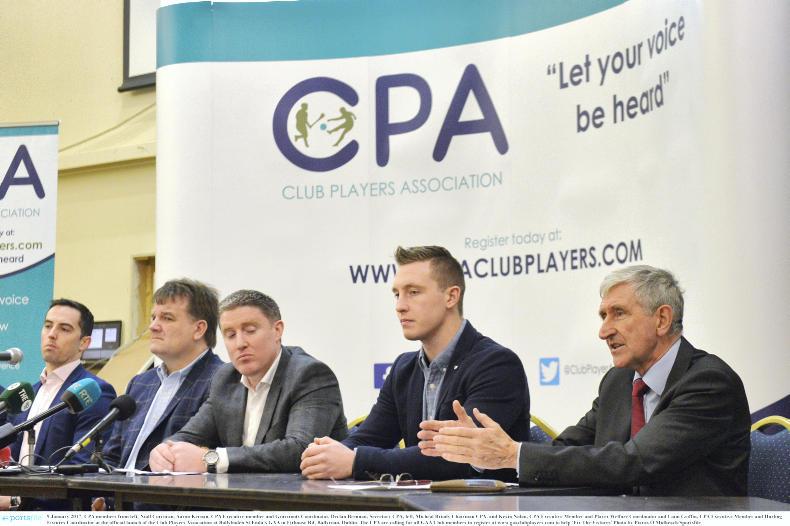
The GAA is in grave danger. If it’s not careful, it is going to be overrun by acronyms. Once upon a time DJ was the most commonly used acronym in the GAA lexicon. Not any more. The latest one to join the fold is the CPA. It takes its place in a GAA family that now includes old reliables such as the GPA, the CCCC, the dreaded DRA and AN Other.
The Club Players’ Association (CPA) has been formed in recent weeks because, like most new organisations, it has identified a gap in representation and it aims to fill it. Its reason for existing is to have the voice of GAA club players heard and to provide for a fixture schedule that allows them to play meaningful matches, essentially in the summer months. They will have their work cut out.
Plenty of members of the GAA hierarchy, pundits, county board officials, scribes, players and former greats (we’ll call them the usual suspects) have had their say recently about the aims of the CPA and what I find incredible is that everyone agrees with them. And all right-minded GAA supporters, which we all like to think we are, feel the same.
We should have club championship matches played in the summer months and inter-county managers in particular should not be given the power (or indulgence) to prevent this happening.
So, why is it happening, I hear you ask? That’s a valid question considering the sheer weight of support that has rowed in behind the fledgling CPA, which as of early this week had registered 15,000 club players as members.
This is where it gets tricky for the CPA and its mission because those mentioned above (the usual suspects) who support the CPA’s aims are precisely the ones who are part of the conspiracy that won’t allow it to happen. Stay with me here. Ninety-nine per cent of the GAA-playing population are club players. Yet the club playing schedule is dictated by the needs of the 1% playing inter-county. And the 99% have done nothing about it. Perhaps until now.
It took them long enough to get into gear and even then the truth is it took Monaghan man Declan Brennan to agitate. It is thanks to him that the CPA is sweeping club training grounds throughout the country with a cry for freedom and justice. It is ironic that the very same people who agree with all the CPA is saying are the ones with the power to make change happen. They’ve had it all along. You see, the GAA is quite the democratic body, the secret being that you actually have to get to vote on what it is you want to change.
Clare is a typical GAA county in many ways (not so typical in others, but that’s a whole other show), and we run a fixtures schedule in a manner that allows club players to do something about it if they don’t like what is being offered. At the start of the year, Clare, like almost all other counties, draws up a master fixtures plan. It sets out the dates for the first round of the championship in hurling and football, usually alternate dates for later rounds depending on whether the county is involved in Munster championship, qualifiers, All-Ireland series, etc.
Over the last few years, this has seen a round played in May and the rest left up in the air until we’re knocked out of the inter-county championship. We’d be perfect case-study material for the CPA because inevitably there is little or no championship hurling or football played in June, July and August.
That’s outrageous, I hear the hardcore GAA supporters cry out. Yes it is, say the club players. Who is responsible for this outrage?
And here’s the nub: we all are. The master plan is sent to club secretaries. They have a week or two to discuss it among themselves in their club, they go back to the county board meeting and say yay or nay. You see my point? If the players and clubs don’t like what they are presented with then they are supposed to shout stop. They’ve had clearly outlined mechanisms to do so. Yet they haven’t. Democracy has been at their disposal at local level for years now but apparently nobody has pulled the trigger. Why not? Here’s my educated guess:
May: College exams and we have eight players doing their finals. Sure, we can’t ask them to play, so most of that month is out.
June: The Leaving Cert is on, we have four minors we can’t play without and there’s no point playing if we can’t have the county lads for training.
July/August: Paddy is getting married and the whole team is going to that and/or the stag on the bank holiday weekend. And don’t forget the captain is away in Lanzarote for a fortnight. All the while, the eight students are over in the States on J1s playing hurling. Sure, we have to wait for them.
September: Look, we’ll go up to the Sevens in Kilmacud and make a weekend out of it for the All-Ireland.
Competition overload
By the time you read this, I will have seen the Clare senior hurlers play four times in 11 days. I am actually OK with this fresh air. I have been to Austin Stack Park and Fraher Field already on two crisp Sunday afternoons and spent two chilly evenings watching the Banner under lights in Sixmilebridge. It’s called the Munster League. If Clare were lucky enough to win a front door All-Ireland this year (can someone please form the organisation that makes that happen!), then they would play just four games to do so. But it would take 14 weeks.
In the middle of this 11-day, four-game spell, exactly half of Clare’s 28-man panel are also playing Fitzgibbon Cup hurling. That’s a fifth game and they’re proper championship encounters. This is what comes from giving carte blanche to people to schedule matches at any time of the year they want.
Clare’s joint managers Donal Moloney and Gerry O’Connor have rightly cried foul on these essentially meaningless fixtures. On deaf ears, it would appear. The Gaelic Players’ Association is now so embedded into the mother ship and off on its own wellbeing tangents that it has forgotten that it was such suffrage that required its formation in the first place.
I hope the CPA achieves its aims of club championships being played throughout the summer. Selfishly, I’d like more games to go to. I hope it doesn’t become distracted from the reason it has been formed. But be careful what you wish for lads. If you do lead your horses to water, be sure they actually want to drink it.


SHARING OPTIONS