In an ordinary year, the pre-budget submission time is a busy period for the Federation of Irish Sport (FIS), but in these most unprecedented of times, the need to advance the interests of the country’s various sporting bodies has been heightened.
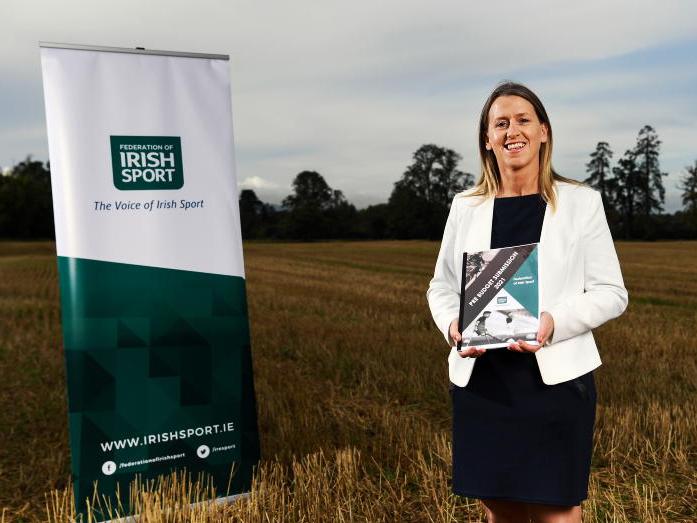
The FIS represents the country’s national governing bodies (NGBs) for sports and local sports partnerships (LSPs). It was instrumental in securing the creation of a resilience fund to aid sporting organisations earlier this year. The challenge now, however, is to ensure that budget 2021 doesn’t take away what has already been given. In this regard, FIS chief executive Mary O’Connor is keen to ensure the sport’s multi-faceted role is recognised.
“This year has been unusual in that, since March, it’s been relentless, really,” she says.
“We played a big role in trying to secure the €70m for the resilience fund, but the budget submission is an annual thing.
“This year is different of course, in that a lot of sectors are under pressure and sport is no different to any other sector. What we’re trying to do is make the point that, when you invest in sport, you get a return. We can’t afford to see investment in sport as ‘nice to do’,” she says, “It must be seen as, ‘have to do’.”
“When you invest in sport, you invest in so many aspects of Irish society that people take for granted. Also, sport is a business – a lot of the organisations might be not-for-profit but they provide such an opportunity and such a service, all across the country, both rural and urban.
Because it’s not just the spectators but the revenue that goes with them
“We need to ensure that they can survive and then adapt in 2021.”
It goes without saying that, while the return of sport was a welcome boost during the year, the limits on attendees remains a huge challenge, for a variety of reasons.
“It’s massive,” O’Connor says, “Because it’s not just the spectators but the revenue that goes with them. You have to consider sponsorship, too – sponsors aren’t going to sponsor an event that has no footfall, so you’re losing all of these revenue streams.
“What some sports clubs are doing with membership now is to extend them into 2021, like a credit note, to try to keep afloat but there is a cost there again. To take the case of Athletics Ireland as an example, they run 26 big events a year, which provide their main income, and they’ve lost 21 of those.”
Of course, budget time draws attention from a wide variety of interest groups, each keen to claim their own slice of the pie without having to worry, as the Government must, about what might lose out to facilitate that.
O’Connor is naturally aware that it is a crowded field but she doesn’t think that the FIS’s requests are outlandish. The organisations main aim is to ensure the commitment to Action 45 of the National Sports Policy 2018-27, created by the last government is secured.
For this year, we stuck to our main aim, which is asking the Government to stick to their own commitments of increasing current spending
This states: “We will aim to increase funding to participation programmes for every year of the policy, with the intention to double our annual investment in participation by 2027. We will support local authorities in developing and implementing local sports plans, which will aim to work with local stakeholders to increase participation levels.”
O’Connor says: “For this year, we stuck to our main aim, which is asking the Government to stick to their own commitments of increasing current spending – what the governing bodies get to run their operations – because Action 45 will ensure then that the sports sector will be viable for 2021.
“In the budgets for 2019 and 2020, the Government did deliver on Action 45 and what we’re asking them to do is to keep doing that. In 2019, the 28 local sports partnerships and 58 national governing bodies got a total of €22m from the Government.
“That’s not a huge amount of money, when you consider what they get back. There’s a statistic that, for every €100 the Government invests in sport, they’re getting a return of €195.
“The one that I look at more so is that, every year, there’s a massive cost to the health budget because of obesity and a lack of physical activity in this country.
She added: “You’re talking about billions in the health budget, but only millions in terms of investing in sport.
“We’re very conscious of the fact that there are other people looking for money as well, but the point we’re always trying to make is that, while you have fun playing sport and you enjoy doing it, there are so many other things that sport does for people.”
We want 4.5% of that tax, which equates to €1.35m annually, so that we can ensure that we’re targeting the hard-to-reach groups
And that’s why O’Connor is keen for the Government to redirect some of the income from the sugar sweetened drinks tax, in order to tackle the problem in a proactive way.
“A sugar tax in itself won’t stimulate behavioural change,” she says. An educational programme tied into sport will.
“We want 4.5% of that tax, which equates to €1.35m annually, so that we can ensure that we’re targeting the hard-to-reach groups and it’s acting as intervention rather than just putting up the price.
“People are going to pay the extra 20c anyway, so you want to try to make a difference.”
Read more
Support from the grassroots at the Irish Open
Curran crowned national show jumping champion
Kenny steps into the top job
In an ordinary year, the pre-budget submission time is a busy period for the Federation of Irish Sport (FIS), but in these most unprecedented of times, the need to advance the interests of the country’s various sporting bodies has been heightened.
The FIS represents the country’s national governing bodies (NGBs) for sports and local sports partnerships (LSPs). It was instrumental in securing the creation of a resilience fund to aid sporting organisations earlier this year. The challenge now, however, is to ensure that budget 2021 doesn’t take away what has already been given. In this regard, FIS chief executive Mary O’Connor is keen to ensure the sport’s multi-faceted role is recognised.
“This year has been unusual in that, since March, it’s been relentless, really,” she says.
“We played a big role in trying to secure the €70m for the resilience fund, but the budget submission is an annual thing.
“This year is different of course, in that a lot of sectors are under pressure and sport is no different to any other sector. What we’re trying to do is make the point that, when you invest in sport, you get a return. We can’t afford to see investment in sport as ‘nice to do’,” she says, “It must be seen as, ‘have to do’.”
“When you invest in sport, you invest in so many aspects of Irish society that people take for granted. Also, sport is a business – a lot of the organisations might be not-for-profit but they provide such an opportunity and such a service, all across the country, both rural and urban.
Because it’s not just the spectators but the revenue that goes with them
“We need to ensure that they can survive and then adapt in 2021.”
It goes without saying that, while the return of sport was a welcome boost during the year, the limits on attendees remains a huge challenge, for a variety of reasons.
“It’s massive,” O’Connor says, “Because it’s not just the spectators but the revenue that goes with them. You have to consider sponsorship, too – sponsors aren’t going to sponsor an event that has no footfall, so you’re losing all of these revenue streams.
“What some sports clubs are doing with membership now is to extend them into 2021, like a credit note, to try to keep afloat but there is a cost there again. To take the case of Athletics Ireland as an example, they run 26 big events a year, which provide their main income, and they’ve lost 21 of those.”
Of course, budget time draws attention from a wide variety of interest groups, each keen to claim their own slice of the pie without having to worry, as the Government must, about what might lose out to facilitate that.
O’Connor is naturally aware that it is a crowded field but she doesn’t think that the FIS’s requests are outlandish. The organisations main aim is to ensure the commitment to Action 45 of the National Sports Policy 2018-27, created by the last government is secured.
For this year, we stuck to our main aim, which is asking the Government to stick to their own commitments of increasing current spending
This states: “We will aim to increase funding to participation programmes for every year of the policy, with the intention to double our annual investment in participation by 2027. We will support local authorities in developing and implementing local sports plans, which will aim to work with local stakeholders to increase participation levels.”
O’Connor says: “For this year, we stuck to our main aim, which is asking the Government to stick to their own commitments of increasing current spending – what the governing bodies get to run their operations – because Action 45 will ensure then that the sports sector will be viable for 2021.
“In the budgets for 2019 and 2020, the Government did deliver on Action 45 and what we’re asking them to do is to keep doing that. In 2019, the 28 local sports partnerships and 58 national governing bodies got a total of €22m from the Government.
“That’s not a huge amount of money, when you consider what they get back. There’s a statistic that, for every €100 the Government invests in sport, they’re getting a return of €195.
“The one that I look at more so is that, every year, there’s a massive cost to the health budget because of obesity and a lack of physical activity in this country.
She added: “You’re talking about billions in the health budget, but only millions in terms of investing in sport.
“We’re very conscious of the fact that there are other people looking for money as well, but the point we’re always trying to make is that, while you have fun playing sport and you enjoy doing it, there are so many other things that sport does for people.”
We want 4.5% of that tax, which equates to €1.35m annually, so that we can ensure that we’re targeting the hard-to-reach groups
And that’s why O’Connor is keen for the Government to redirect some of the income from the sugar sweetened drinks tax, in order to tackle the problem in a proactive way.
“A sugar tax in itself won’t stimulate behavioural change,” she says. An educational programme tied into sport will.
“We want 4.5% of that tax, which equates to €1.35m annually, so that we can ensure that we’re targeting the hard-to-reach groups and it’s acting as intervention rather than just putting up the price.
“People are going to pay the extra 20c anyway, so you want to try to make a difference.”
Read more
Support from the grassroots at the Irish Open
Curran crowned national show jumping champion
Kenny steps into the top job





SHARING OPTIONS