


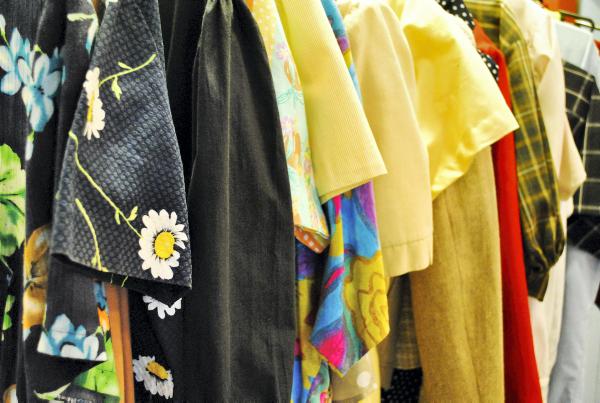
Right throughout the recession, one business that has had no shortage of custom is, not surprisingly, local charity shops. In fact, when Irish Country Living stepped into the Irish Cancer Society’s charity shop on a Friday evening, it was buzzing with customers looking for the best deals.
Donations are down
However, a good deal is harder to come by now than it was in the past as there is a serious decline in donations to charity shops. Words like Rehab scandal and the CRC affair may spring to mind, but Paul Hughes of the Irish Charity Shops Association (ICSA) says there are a lot of other factors that started coming into play long before these revelations were made.
“Charity shops experienced a bit of a delayed reaction to the recession, but donations started to really take a hit in 2012. At the same time, we had a surge in customers and it was very clear that our need for donations wasn’t meeting the demand.”
Textile merchants
However, the decline in donations isn’t just because people don’t have as much to donate these days, or they are getting better wear out of their clothes, it’s often down to textile merchants. These merchants, who have always been lurking in the background, have really started to capture the market recently.
Every time the local school or sports club runs a campaign where you get €5 for a bag of clothes, it is usually textile merchants at play. Paul says: “Textile merchants have been in operation for years. They take a lot of the rags that we can’t even sell in charity shops and make money from them. For example, there isn’t a big market for bras in charity shops as this is something that women don’t tend to buy second-hand, but they are worth about €1,000 a tonne when they are sold onto developing countries.”
Now, however, these textile merchants are getting far more donations because they pay people for a full bag of good-quality clothes. And they can afford to fork out €5 a bag because they can make about €40 from it. In the past though, that €40 would have been made by the local charity shop.
As a result, consumers may be faced with a dilemma – donating to a local charity or getting your €5.
Paul says: “It is possible to do both. We would recommend donating the higher-quality garments that could have a good resell value to your local charity shops. However, the textile merchants can resell any kind of clothes, regardless of the quality, so put the clothes that are more worn in those bags and still get your €5.”
Door-to-door collections
Convenience has always been a factor when it comes to charitable donations and, not surprisingly, the drop-and-collect service, where a bag is dropped to your front door and collected by the charity a few days later, has always been popular. However, it’s worth having a good look at the bag you are filling and asking, who is collecting it? There are bogus collectors at play.
These bogus collectors fell off the radar for a while last year after an expose on Prime Time, but they are back in action now as there is no legislation to deal with what they are doing. Even if they collect a bag from your front door belonging to a charity, it is difficult to prosecute because you have to establish the ownership of the bag, which can be difficult.
Ditch Stickers
It doesn’t just stop there, you need to ask where your donation is really going? Ditch those stickers because Paul says there are no legitimate charities in Ireland that use them. Instead, they give the bags.
There is an infamous company called “Do Not Delay” and they have a pink ribbon that says they donate to a breast cancer charity. However, you can’t contact them and they are definitely not operating in Ireland, just collecting. They claim to donate €5,000 from clothes sales a month to a Lithuania breast cancer charity. However, there is speculation that they collect more than €500,000 a month in the UK and Ireland, so their donation is just a drop in the ocean.
That’s not to say that you shouldn’t donate through the drop-and-collect charity collections, but it’s important to be more savvy.
Paul says: “First of all, look for a charity that is a household name and that you know to be a reputable charity. You can log onto www.icsa.ie to see the full list of charity shops and they are all reputable organisations that you would be familiar with: the Irish Cancer Society, Barnardos, Enable Ireland, Simon and St Vincent de Paul to name a few. Then look for an Irish landline number and a postal address. And if you are unsure at all, ring them up and confirm they are collecting in your area and when.”
How legitimate is your local charity?
Checking the reputability of the charity you donate to isn’t just for the charity bags. Is your local shop 100% legitimate? Again, because there is no legislation yet in place (expected in 2016), anyone can just set up a charity shop.
Paul says: “We know of some charity shops that claim to be doing good work and donating to various charities, but the thing is, because they are not a registered charity, they are not transparent in their accounts. Yes, they may be donating to charities, but just how much of their business?” A registered charity will have nothing to hide and will clearly detail how they pay wages and administration costs before the donation is made.
So next time you decide to clear out the wardrobe or do a bit of a spring clean, where are you going to put your old clothes? While charities abroad should be supported, there is still a lot that needs to be done closer to home.


SHARING OPTIONS