



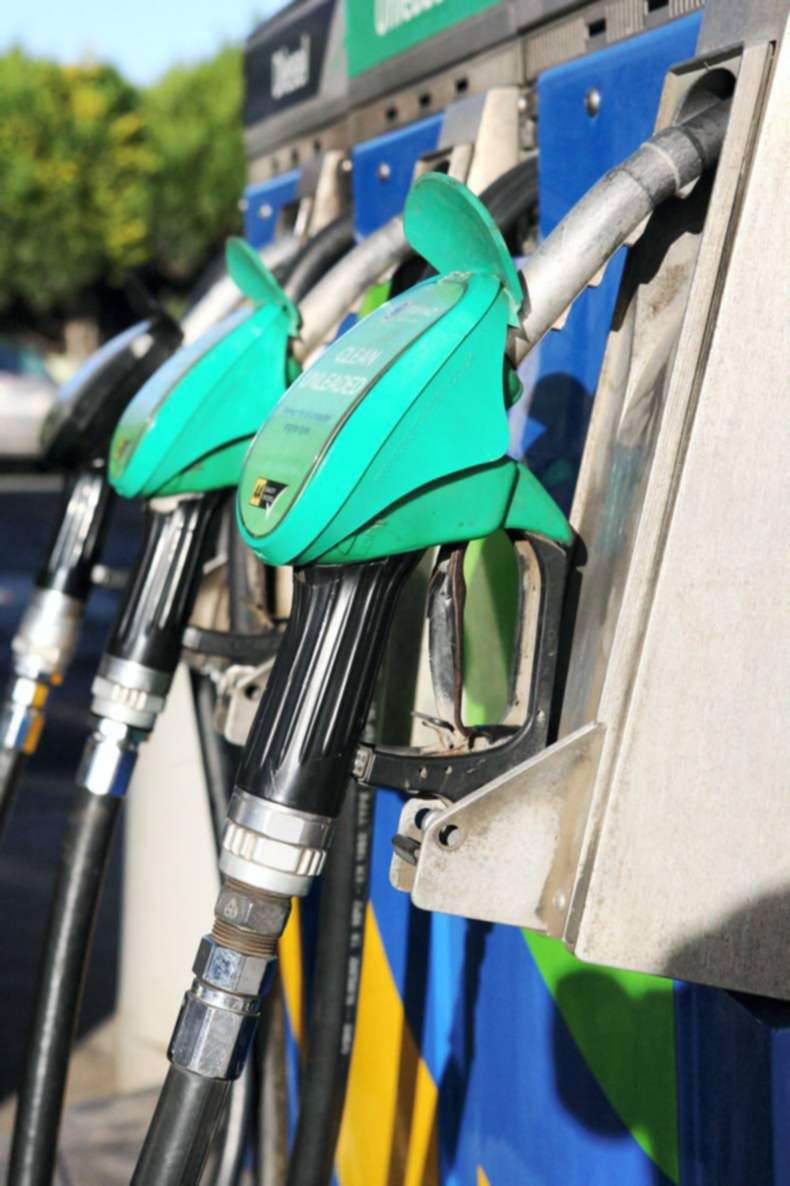
Finding the cheapest price for fuel has almost become a competition, with people eager to proclaim their local garage to be “the cheapest in the country”. Many motorists are happy with prices changing rapidly and with some garages now as low as 113c/litre for diesel, we have reached prices last seen in 2008.
In fact, consumers have seen an 8% drop in fuel prices in just six months.
However, given that crude oil prices have dropped by 45% internationally, why haven’t consumers benefitted more? Michael Griffin, CEO of the Irish Petrol Retailers Association (IPRA) explains.
“There are a multitude of factors that impact the price we get at the pump. First of all, it is the price of refined oil and not crude oil that determines the wholesale price, and refined oil is very susceptible to currency exchange rates.
“Refined oil is sold in US dollars and the euro has been weak in comparison. The euro has decreased from being worth $1.40 last year to just $1.16 recently. Quite simply, if the euro was stronger we would be seeing even better prices at the pump.”
To delve further into the issue, however, we need to look inside the petrol pump at what makes up the price of fuel.
“By far the single largest component of the pump price is made up of Irish tax,” says Michael. This includes:
As our graphic demonstrates, this means that at recent rates taxation amounts to 60% of the price of diesel and 65% of the price of petrol.
“No matter what price refined oil costs, these amounts remain unchanged and limit how much the price of fuel can realistically drop. On top of that, you still have to factor in items like distribution and transport costs,” says Michael.
Conor Faughnan, director of AA Ireland, adds: “Since October 2008 we have had five tax increases on fuel, which has worked out as an extra 23c/litre. To put this into more real terms, consider that a typical motorist uses 150 litres of fuel a month.
“This works out as an extra €34.50, or over the course of a year €414. And remember that’s just extra tax. Our total tax bill on fuel works out at over €2,000 a year and that’s just for ordinary mileage.”
“Instead of consumers complaining about how much retailers are charging and the driving test going up by €5, this is what we should be giving out about. In fact, retailers are only getting about 4c/litre from fuel. So, if you as a consumer go into a service station and buy €20 of fuel, the retailer is getting more profit from the cup of coffee you buy rather than what you put into your car,” says Conor.
Because so many components of the price of fuel will go unchanged, namely the amount of tax we have to pay, neither the IPIA or AA Ireland predict that the price of fuel will go as low as €1/litre.
“For us to get below €1 oil would probably need to go to $20 or $25 a barrel and I can’t see it going that low. Really, the only person that can bring fuel down to the €1 mark in Ireland is Michael Noonan, ” says Conor.
“It would be great to see prices drop even more and it may go a few cent cheaper, but not much more than that. I think we have bottomed out, or are very close to it at least,” adds Michael.
What about home heating?
“While you might be filling up your car every week and enjoying the decreases on a regular basis, your oil tank is a different matter. Filling up now could benefit you right into next winter when prices may have risen again, but do you fill now or wait and see if prices fall further?” says Michael.
Tom Noonan, CEO of the Maxol Group says advice can only be given as a prediction.
“Even though I would be watching prices very carefully I still got it wrong. When prices dropped earlier this winter I filled up my tank thinking I was getting a great deal, but they have fallen even further since then.”
However, similar to petrol and diesel, taxes also account for over half the cost, it means that levels can only bottom out so much.
“There is an economic level that prices can’t go further than and I think we are nearly there. Prices are good value at the moment and they will definitely bounce back so buying now would be a safe enough bet,” says Tom. CL
Find the best price
Irish Country Living hit the road to find where we could get the lowest prices (see table 1). The best price we found for diesel was at the Maxol station at the west end of Ballincollig, Co Cork, coming in at 113.9/litre. We also found that same price at the Tesco filling station in Tullamore, although the Maxol station on the same road had diesel at 118.9/litre. However, not all prices were this low. Nilands 24/7 in Tuamgraney, Co Clare, had their diesel price at 125.9/litre.
At the petrol pumps, Tesco in Tullamore had the best price at 118.9/litre. The most expensive petrol that we found was in Ballinamore, Co Leitrim, where prices hit 130.9/litre, a significant 12c difference from the cheapest price that we found.
All prices were obtained last weekend from 23 to 26 January.


SHARING OPTIONS