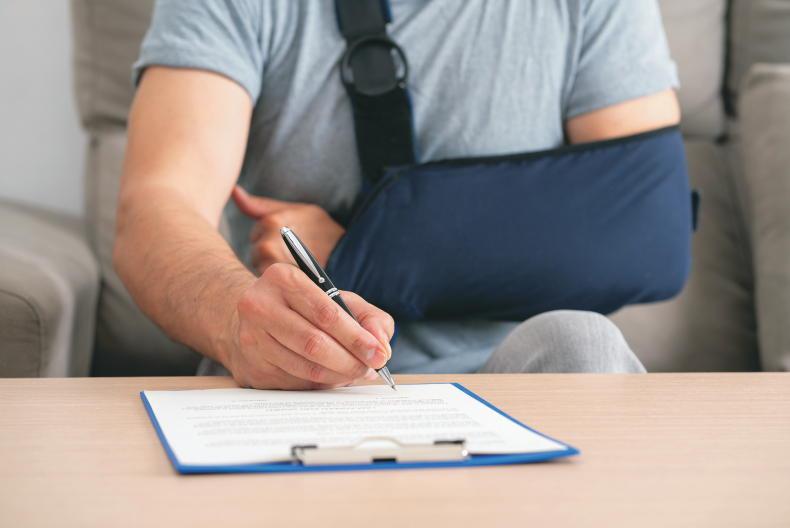
I recently had an accident involving a farm worker on my farm. He got burned with acid from washing the milk tank. Thankfully, he was okay but the whole episode has been traumatic. I was oblivious to what things I should have had in place in the event of an accident and the insurers had to make a big payout. I enjoy reading your column and think it would be very worthwhile for you to set out things people should know if they find themselves in my position.
What should you do in the aftermath of an accident?
ANSWER: Thank you for your query and I am glad to hear your farm worker is okay following his accident.
In the event of an accident, the first priority is always the treatment of the injured person. Depending on the severity this might involve GP care, hospitalisation or emergency services. Ensure that you have the Eircode of the farm on prominent display on a building in the yard. Secure the scene and if applicable, make sure that no one else is exposed to the same hazard.
It is important to keep a written record of what happened – dates, times including names and contact details of witnesses.Take some photos of the scene of the accident. Do not admit liability and let the insurer handle legal matters. Contact your farm insurance provider as soon as possible, give them details honestly and fully.
Under the Safety, Health and Welfare at Work Act 2005, if the accident results in death or causes a person to be unable to carry out normal work for more than three consecutive days, the farmer (as employer/self-employed person) must report it to the Health and Safety Authority (HSA).The report is made via the HSA’s online accident reporting system or by completing Form IR1. Fatal accidents must be reported immediately by phone.
The HSA may decide to investigate, depending on the seriousness of the case. Inspectors can visit the farm, interview witnesses, take photographs, and inspect machinery. They may issue improvement notices (requiring safety measures) or prohibition notices (halting unsafe activities). In cases of serious breaches, they can prosecute in the courts.
It’s worth noting that even family farms (where no outside employees are involved), can fall under HSA oversight if safety failures put people at risk. A HSA investigation is about safety compliance and enforcement whereas an injury claim is a civil process brought by the injured party seeking compensation. The processes are separate but can overlap where, for example, the HSA report might be later used as evidence in a civil claim.
Insurance matters
Most farmers carry public liability and employer’s liability insurance. This insurance is designed to cover claims from employees, contractors, or visitors injured on the farm. However, policies often have conditions for example, proper maintenance of machinery, use of guards, or adherence to safety regulations. If a farmer ignores these, an insurer may refuse to pay out, leaving the farmer personally liable.
Regularly reviewing insurance policies and checking cover levels is essential. Given rising claims costs, under-insurance could be financially devastating.
Making a claim
If someone is injured, the process usually begins with an application to the Injuries Resolution Board. This independent body assesses the injury and proposes a compensation figure based on the personal injuries guidelines. If both sides agree, the case ends there.
However, if liability is disputed, or if either side rejects the assessment, the claim can move into the courts. Depending on the severity, it may be dealt with in the Circuit Court or the High Court. The court will decide liability (whether the farmer was negligent or breached statutory duties) and quantum (the amount of compensation). Compensation can include:
General damages.Special damages for medical costs, rehabilitation, or equipment.Loss of earnings for past and future income losses if the injured person cannot work as before.In farm accident cases, the amounts can be significant. For example, injuries caused by machinery or livestock often lead to lengthy rehabilitation or permanent disability. While knowing the legal process is important, the best protection against claims is good safety practice. Some practical steps include:
Risk assessments: walk the farmyard and fields with fresh eyes. Identify hazards and deal with them.
Machinery safety: always fit and maintain guards, especially on PTO shafts. Replace defective equipment promptly.
Livestock handling: never underestimate the risk posed by cattle. Use proper facilities and avoid unnecessary risks during calving season.
Training and supervision: ensure anyone working on the farm is properly trained.
Children: keep children away from machinery, animals, and slurry at all times.
Disclaimer: The information in this article is intended as a general guide only. While every care is taken to ensure accuracy of information contained in this article, Aisling Meehan, Agricultural Solicitors and Tax Consultants does not accept responsibility for errors or omissions howsoever arising. E-mail aisling@agrisolicitors.ie
I recently had an accident involving a farm worker on my farm. He got burned with acid from washing the milk tank. Thankfully, he was okay but the whole episode has been traumatic. I was oblivious to what things I should have had in place in the event of an accident and the insurers had to make a big payout. I enjoy reading your column and think it would be very worthwhile for you to set out things people should know if they find themselves in my position.
What should you do in the aftermath of an accident?
ANSWER: Thank you for your query and I am glad to hear your farm worker is okay following his accident.
In the event of an accident, the first priority is always the treatment of the injured person. Depending on the severity this might involve GP care, hospitalisation or emergency services. Ensure that you have the Eircode of the farm on prominent display on a building in the yard. Secure the scene and if applicable, make sure that no one else is exposed to the same hazard.
It is important to keep a written record of what happened – dates, times including names and contact details of witnesses.Take some photos of the scene of the accident. Do not admit liability and let the insurer handle legal matters. Contact your farm insurance provider as soon as possible, give them details honestly and fully.
Under the Safety, Health and Welfare at Work Act 2005, if the accident results in death or causes a person to be unable to carry out normal work for more than three consecutive days, the farmer (as employer/self-employed person) must report it to the Health and Safety Authority (HSA).The report is made via the HSA’s online accident reporting system or by completing Form IR1. Fatal accidents must be reported immediately by phone.
The HSA may decide to investigate, depending on the seriousness of the case. Inspectors can visit the farm, interview witnesses, take photographs, and inspect machinery. They may issue improvement notices (requiring safety measures) or prohibition notices (halting unsafe activities). In cases of serious breaches, they can prosecute in the courts.
It’s worth noting that even family farms (where no outside employees are involved), can fall under HSA oversight if safety failures put people at risk. A HSA investigation is about safety compliance and enforcement whereas an injury claim is a civil process brought by the injured party seeking compensation. The processes are separate but can overlap where, for example, the HSA report might be later used as evidence in a civil claim.
Insurance matters
Most farmers carry public liability and employer’s liability insurance. This insurance is designed to cover claims from employees, contractors, or visitors injured on the farm. However, policies often have conditions for example, proper maintenance of machinery, use of guards, or adherence to safety regulations. If a farmer ignores these, an insurer may refuse to pay out, leaving the farmer personally liable.
Regularly reviewing insurance policies and checking cover levels is essential. Given rising claims costs, under-insurance could be financially devastating.
Making a claim
If someone is injured, the process usually begins with an application to the Injuries Resolution Board. This independent body assesses the injury and proposes a compensation figure based on the personal injuries guidelines. If both sides agree, the case ends there.
However, if liability is disputed, or if either side rejects the assessment, the claim can move into the courts. Depending on the severity, it may be dealt with in the Circuit Court or the High Court. The court will decide liability (whether the farmer was negligent or breached statutory duties) and quantum (the amount of compensation). Compensation can include:
General damages.Special damages for medical costs, rehabilitation, or equipment.Loss of earnings for past and future income losses if the injured person cannot work as before.In farm accident cases, the amounts can be significant. For example, injuries caused by machinery or livestock often lead to lengthy rehabilitation or permanent disability. While knowing the legal process is important, the best protection against claims is good safety practice. Some practical steps include:
Risk assessments: walk the farmyard and fields with fresh eyes. Identify hazards and deal with them.
Machinery safety: always fit and maintain guards, especially on PTO shafts. Replace defective equipment promptly.
Livestock handling: never underestimate the risk posed by cattle. Use proper facilities and avoid unnecessary risks during calving season.
Training and supervision: ensure anyone working on the farm is properly trained.
Children: keep children away from machinery, animals, and slurry at all times.
Disclaimer: The information in this article is intended as a general guide only. While every care is taken to ensure accuracy of information contained in this article, Aisling Meehan, Agricultural Solicitors and Tax Consultants does not accept responsibility for errors or omissions howsoever arising. E-mail aisling@agrisolicitors.ie
SHARING OPTIONS