



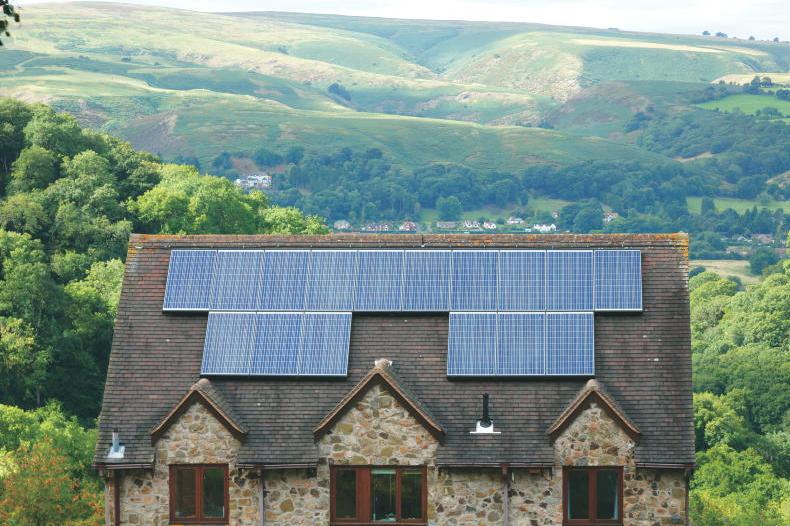
Question: We recently installed solar panels on the roof of our home. My house is completely separate from our family farm, located a few miles down the road. Between the fine weather and the fact that I am away working the land for most of the day, the house is exporting a massive amount of electricity back to the grid per my app. I requested my electricity supplier to send me a few cheques as it’s a lot compared to what we use, and it looks like it could add up to a handy few hundred euros over the year. Am I taxed on this, and do I have to declare it?
Answer: This is an excellent question that affects a growing number of families who have solar panels and are not on a solar Targeted Agriculture Modernisation Scheme (TAMS).
The short answer is this income is technically taxable in Ireland. However, there is a specific tax break introduced limited to €400 by the Government to reward households for feeding green power back into the national grid.
Rules of the €400 exemption
The way this works is that Revenue provides an automatic tax exemption on the first €400 of profit you make from selling electricity back to the grid. The downside is you cannot deduct the capital cost of buying or installing the panels against this income, your ‘profit’ is effectively just the total amount of Clean Export Guarantee (CEG) credits that show up on your utility bills over the calendar year.
Some suppliers have limits to the number of names and there can be issues with settling income on minor children.
‘Cliff edge’ versus ‘excess’ rule
A common worry with household tax breaks is that if you go even one euro over the limit, the whole relief is wiped out.
Fortunately, this exemption does not have a ‘cliff edge’. If your domestic solar panels are highly efficient and you end up earning €500 in export credits over the year, you do not lose the tax break. The first €400 remains completely free from tax, USC, and PRSI. You are only subject to tax on the excess amount – in this case, the remaining €100.
That excess is taxed at your standard marginal rate (20% or 40%), plus the normal USC and PRSI cuts.
Must I declare it on Form 11?
For a standard PAYE worker, Revenue explicitly states there is no requirement to declare microgeneration income if the total stays at or below the €400 limit.
However, because you operate a farm business, you are already registered for self-assessment and filing an annual Form 11 return by 31 October.
The practical side of this is very straightforward:

The verdict
The current €400 exemption has been extended in the tax code to run until at least 31 December 2028. For a typical household with a standard domestic solar setup, annual export credits usually land somewhere between €150 and €350, meaning most families stay comfortably inside the tax-free bracket.
Keep your residential electricity statements safe in a folder so you can verify the exact export total received each year.
Marty Murphy is head of tax at ifac, the professional services firm for farming, food and agribusiness.




SHARING OPTIONS