



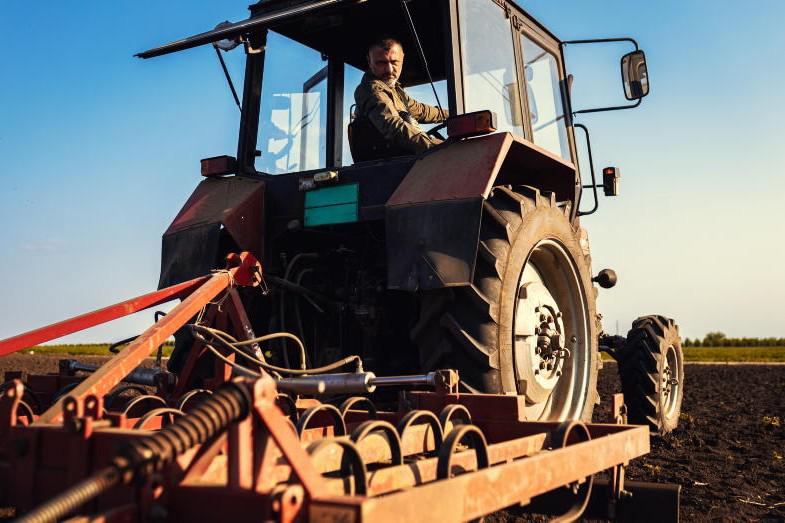
I’ve been a tillage farmer for more than 30 years and it’s time to face an issue I have with my tractors. I own three, all over two decades old, and they’re constantly breaking down. The repairs are costing me a fortune each year, and I’m getting tired of dealing with the stress. I don’t like the idea of taking out a large loan to replace them, but I also don’t see this situation improving. Would it make more sense financially and practically to invest in three new tractors, or would spending money on overhauling the existing ones be the smarter option?
ANSWER: Farm machinery decisions are rarely straightforward, especially on a tillage farm where breakdowns, during planting or harvesting, could be very costly. It’s hard to know whether to buy new, second-hand, or refurbish what you already have. Let’s have a look at the options and weigh up the pros and cons of each over a five-year period:
Option one – refurbish existing tractors: to overhaul the engine, transmission, electrics and potentially fit new tyres, it is a costly process, and it could average approximately €10,000 per tractor. Once this has been completed, do expect to still have annual maintenance costs of approximately €3,000 per tractor over the next five years.
The real downside to this option is that you will still have 20-25-year-old tractors and despite the refurbishment, there is an increased risk of breakdown and further repair costs. In terms of value in five years’ time, it is worth noting that it may not be high. They would most likely require further refurbishment at the end of the period.
Option two – purchase new tractors: this option is not without it’s pain, namely the monthly repayments over the five-year period. However, there is potentially an opportunity to avail of TAMS grant funding to assist with the purchase of one tractor. Let’s assume the cost of a new tractor was circa €100,000. It is possible that a TAMS grant of €36,000 could be available (€90,000 x 40%). In certain circumstances the grant available may be higher, however, we’ll assume a 40% grant here.
Based on the above, you could be facing financing of €264,000 over five years. This would equate to over €60,000 in repayments per year and there would still be some repair costs over the five-year period.
Option three – purchase secondhand tractors: this option does not fully mitigate the risk of larger-scale repairs over the next five years; however, it comes with a much more affordable price point than buying new. If we assume a cost of €60,000 per tractor, the annual finance cost could be approximately €42,000. They will still require some maintenance, costing about €1,500 a year.
So which option?
The reality is that the right option is individual to each farmer. The value placed on mitigating risk of downtime and missed harvesting dates may vary. Below is a guide on the estimated cost over a five-year period, along with average cost per year:
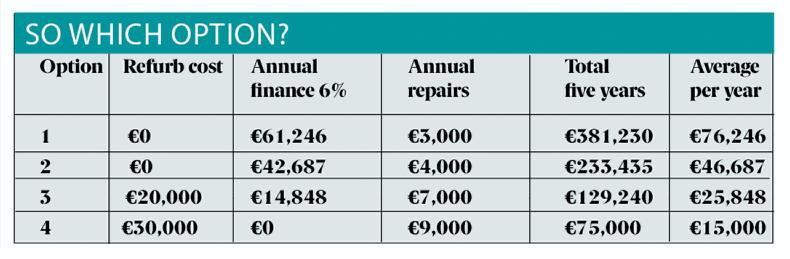
1. Replace all three tractors with new tractors (40% TAMS claim on one).
2. Replace all three – one new tractor (40% TAMS claim) and two second-hand tractors.
3. Replace one tractor for a new tractor (40% TAMS claim) and refurbish two tractors.
4. Refurbish all three tractors. Looking solely at the table, the easy choice would be to refurbish the three tractors. There are two key considerations in addition to the above, as there is a significant increase in the risk of further significant repairs being required. It is also a case that in five years’ time, any new or secondhand options will carry a higher market value.
Take for example option three – you would have a five-year-old tractor at the end of the period, with a market value of €60,000-€65,000. Perhaps at this time, the opportunity may present itself to replace one of the remaining tractors and avail of a grant, if any, at that time.
A gradual replacement programme may be the most optimal solution, and it could very well be a case that a further grant opportunity could present itself within the period.
The decision is very individual to every farmer. Weighing up the cost and risk factors: option three could very well suit your needs best. It would offer you the potential to replace each tractor gradually over the coming years without inflicting large finance repayments, and it would mitigate the risk of further large-scale repair costs.

Andrew Brolly is fractional cfo with ifac, which is the professional services firm for farming, food and agribusiness.


SHARING OPTIONS