McHale
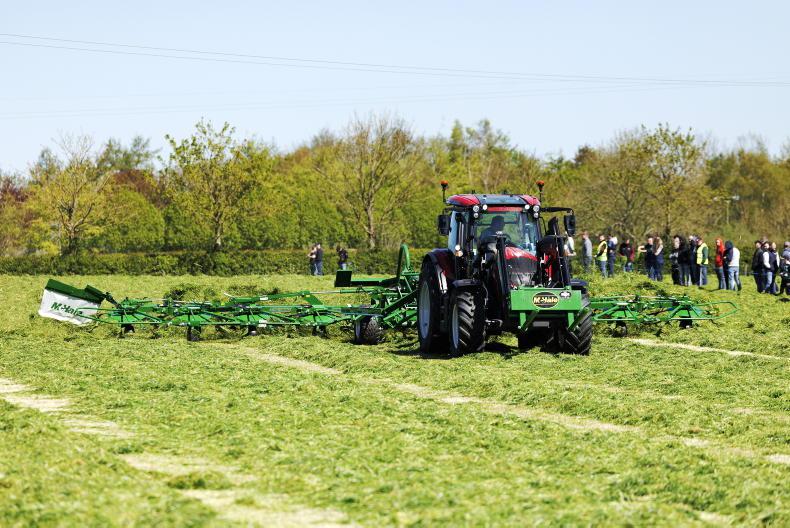
McHale demonstrated its flagship ProPel T10-1260 model from the three-model Prop-pel range. The 10-rotor model has a 12.6m working width and features a heavy-duty drive line. Each of its 1.58m rotors are fitted with seven tine arms and double-hook tines. Rotor angle adjustment is possible through five preset positions. The model working was equipped with the optional, hydraulic headland management curtain.
The two-point linkage pivoting headstock reduces the overall length of the machine on the headland while turning. The ProPel range also includes the M6-770 six-rotor, mounted model and the T8-1020 eight rotor model.
SIP
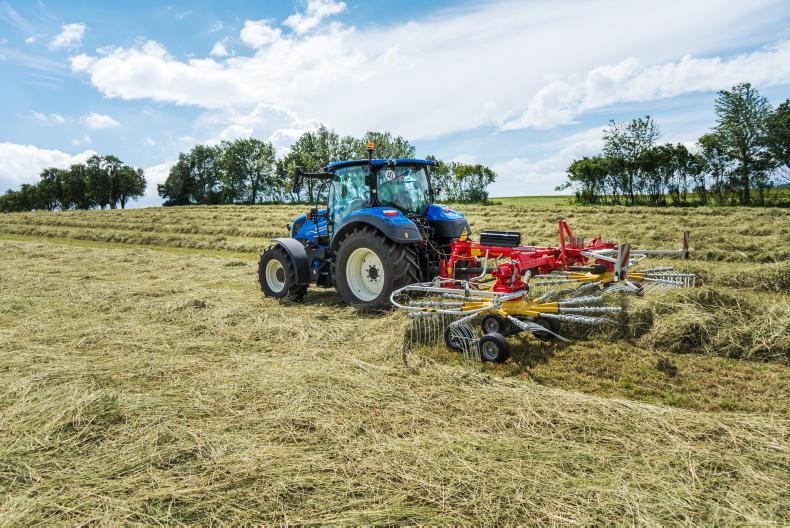
Irish SIP importer, Farmec demonstrated the Spider R775/6 mounted tedder. The R775/6 has a 7.6m working width, positioned centrally within the Slovenian manufacturers 4.5m to 17m range.
Unique to SIP is that it offers the option of hook type and straight tines. Each of the six rotors measure 1.7m in diameter and feature six tine arms. Depending on the crop, spreading angle can be adjusted from 12° to 18°.
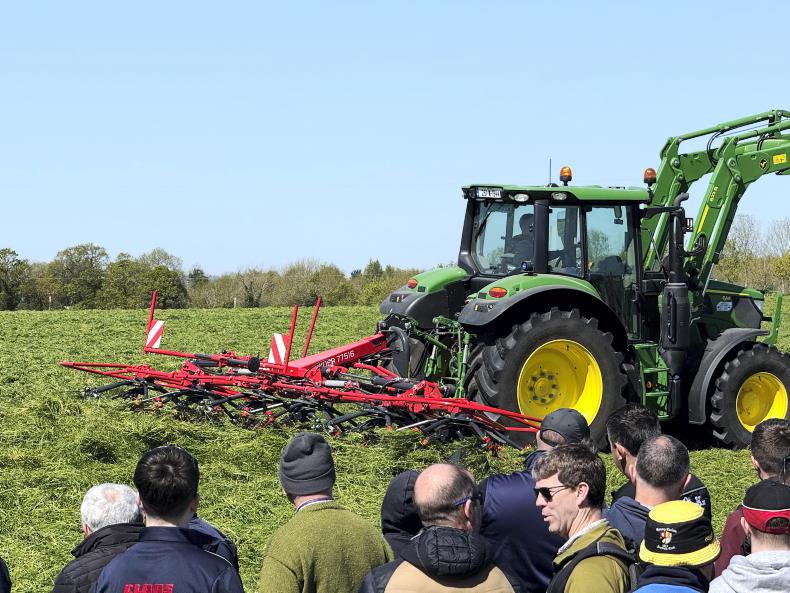
When tedding along field boundaries, the tedder can be shifted left or right to angle crop away from the boundary.
Malone
Malone showcased its Tedd-Air 1120T trailed tedder at Grass 2026 last week.
The eight-rotor 1120T offers a 11.2m working width and builds on the Tedd-Air range, which has been in existence since 2015. The trailed model uses two-point linkage headstock and features three-position height adjustment. The tedder is fitted with 1.6m diameter rotors, each equipped with seven tine arms and double-hooked tines.
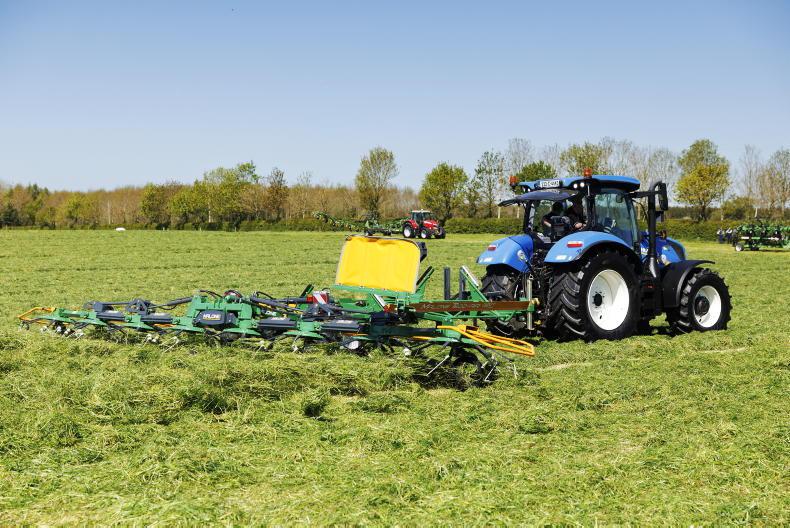
Both the angle and height of the rotors can be adjusted. When it comes to tedding out the headland swath, a curtain is manually lowered to deflect the crop away from the edge of the field. Other features include Kennfixx hydraulic connections, a spare wheel and an LED lighting kit.
Kverneland
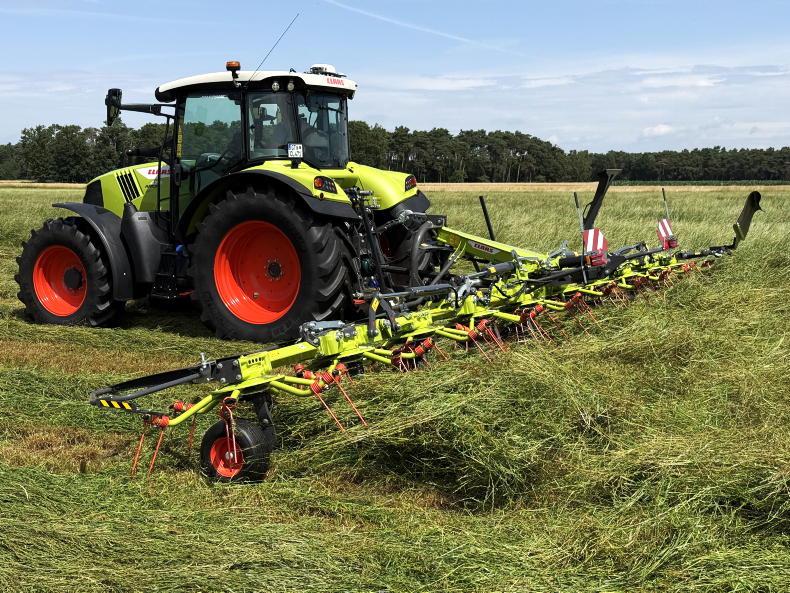
Kverneland put its latest offering in the high-output trailed tedders to the test at Grass 2026, with its 85156 C 14-rotor trailed unit. Across the 15.6m working width of the 85156 C are 14 small rotors, which the manufacturer says provide a generous rotor overlap and so account for good pickup and turning of the crop.
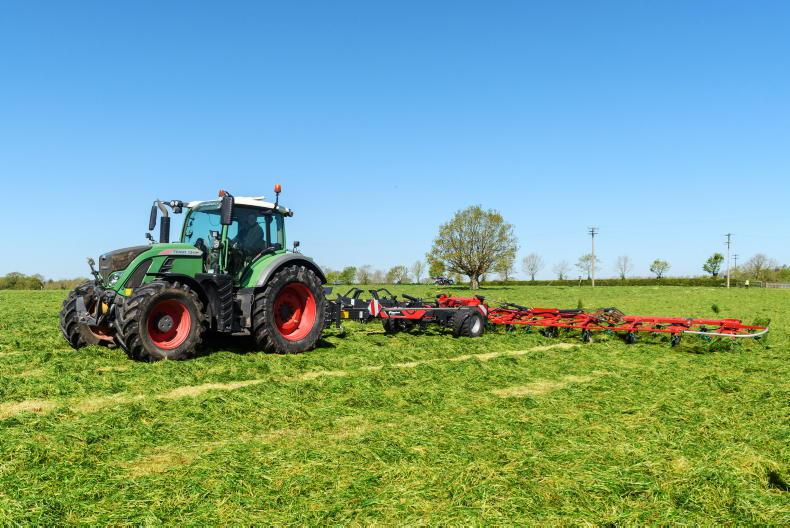
Ground following is where the 85156 C shines thanks to its new TerraFlow system. The tedder itself is built on a linkage that pivots independent of the chassis in working position. Kverneland says all joints have been designed to be maintenance-free, with grease points kept to a minimum. It requires one single-acting and one double-acting spool. Hydraulic height adjustment and a hydraulic swath board is optional.
Samasz
Egmont Agri put the Samasz P12-1330 T trailed tedder to work in Kilkenny last week. The 13.3m 12-rotor unit comes equipped with 1.53m rotors that are supplied with six arms each and fitted with straight tines. The firm claims that the close mounting of the wheels to the tedder tines allows for optimised adaptation to the ground’s contours.
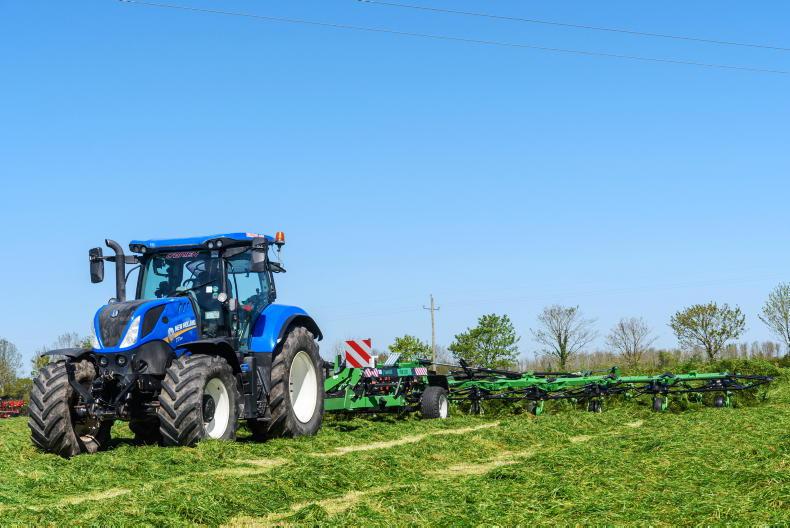
The P12 tedders use finger joints between the outer rotors. This allows the machine to be folded from the 11m and 13m working positions to a transport position of no more than permissible 3m. The joints are made of castings, which are durable and maintenance-free. The P12 is equipped with a headland kit as standard.
Krone
Farmhand demonstrated the Krone KWT 1600 14-rotor trailed tedder, the second-largest in its range after the 18-rotor KWT 2000 model. With a working width of 15.3m, the KWT 1600 features a double-jointed contour control system independent of its running gear.
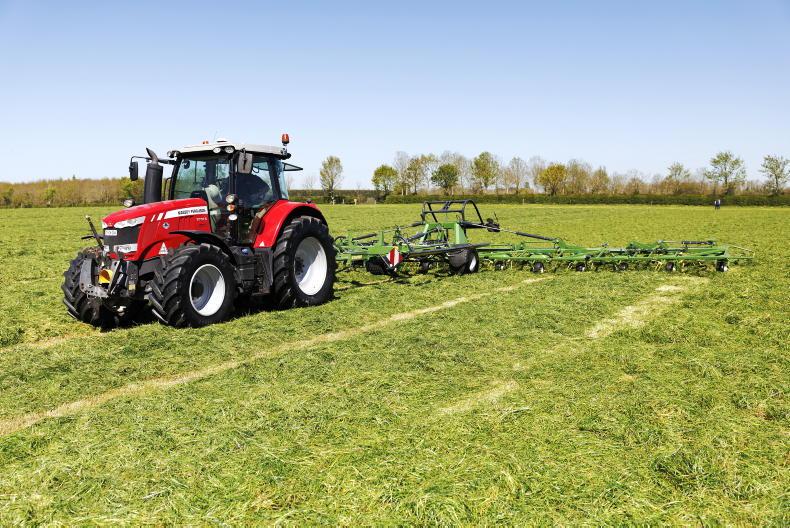
The 1.53m rotors have six tine arms. Krone uses a 9.5mm-thick unequal length tine on all tine arms. Transferring drive between rotors are the OctoLink eight-finger clutch and rotor gearboxes immersed in a semi-fluid grease. Working height is centrally adjusted via a crank located at the centre of the machine. A hydraulically driven border spreading curtain is an option to prevent the crop from being thrown outside the field boundary.