There are now many farmers and contractors producing wrapped bale silage around the country. How the bales are wrapped usually falls into two categories: those wrapped by combination baler wrappers like the McHale Fusion, or those baled by conventional baler then picked up and wrapped in-field by a trailed wrapper.
There is a third option; we’ll call it the Wexford option because that seems to be where this practice is most commonly found. This technique involves silage bales being made with a conventional round baler, usually a chopper baler, then drawn back to the farm where they are wrapped and stacked, more often than not on an old silage clamp.
The wrapper is generally a three-point linkage machine with its own power source, not a tractor but a power-pack of some type. Hi-Power Ltd in Cork used to make one version, based on a small diesel engine with its own hydraulic and electrical system that was ideally suited to the task of driving a wrapper. There are many other variants, largely from other sectors of the industry adapted for the task.
Seamus O’Leary from Monamolin, Co Wexford, has been operating this type of system for nearly two decades. “We adopted baled silage back in 1994 and 1995 because we can produce high-quality silage for ourselves and if we want to do just 10 acres (or less) we can.”
Today, Seamus combines suckler farming with tillage farming, assisted by son Brian, who recently completed a course at Kildalton Agricultural College.
Seamus makes about 8,000 bales of silage a year and some straw. An average ‘job’ would be producing around 300 bales a time. That is mowing, baling, drawing in, wrapping and stacking. “Some jobs are smaller and some are much bigger, depending on the year and customer,” explains Seamus.
The key point is that none are wrapped in the field. “In this part of the county the vast majority of people bale their silage and then draw it to the yard where it is then wrapped and stacked,” says Seamus. While he would love to convert his silage wrapping operation over to the Fusion system (combination baler-wrapper) and drop all bales wrapped in the field, he adds “it won’t happen in this county”.
There appears to be a number of reasons for this. The first is the number of bales being wrapped; individual job sizes can vary from 50 bales to several hundred bales at a time. There are lots of bales to handle and stack so it is faster to handle them non-wrapped.
Secondly, many stack their bales close to or in the yard, where they will be consumed, usually on or very close to concrete and again usually an old silage pit yard. Brian also points out that if the bales were to be wrapped in-field, getting them home would be a problem. Most ditches are populated by overgrown sceach-thorn, gorse or other trees that could damage the plastic wrap.
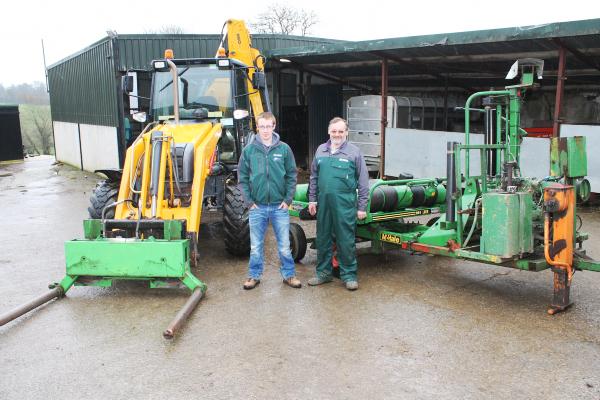
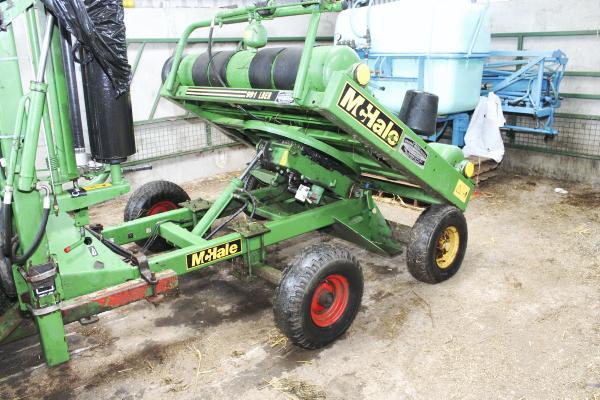
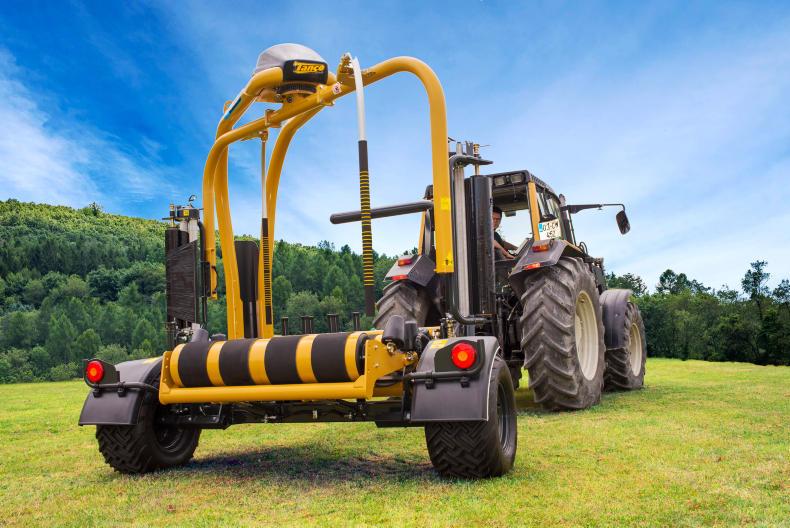
Key to the O’Leary operation is an engine-powered three-point linkage McHale 991LBER wrapper with remote control. This is the latest in a line of wrappers that Seamus had adapted since he first began making baled silage.
Rather than tying up another tractor to power and transport the three-point linkage machine, Seamus added an engine plus wheels. This arrangement allows it to be towed around and operated from the tractor seat of the loading tractor, which is also stacking the bales.
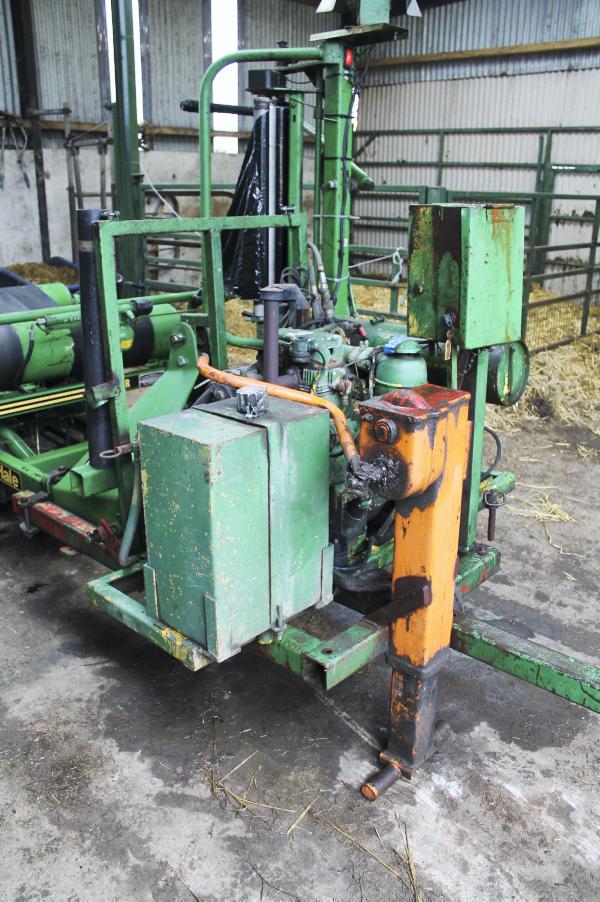
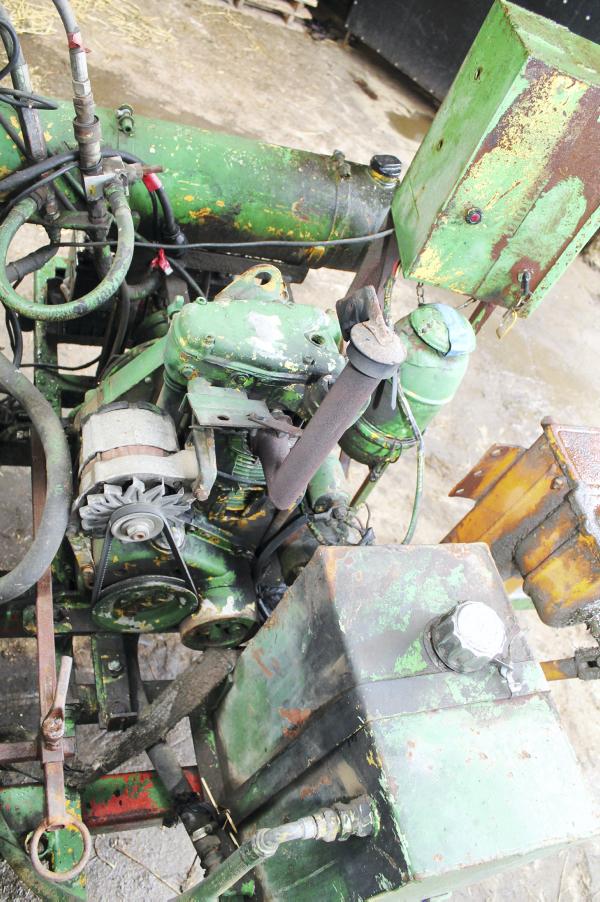
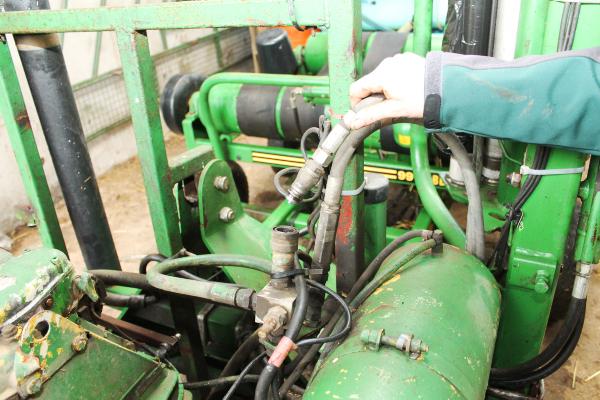
Seamus has used the same power-pack since he began his silage operation. It is an air-cooled single-cylinder Hatz diesel engine. “The engine and its hydraulic system came off a road machine from England,” explains Seamus. “It’s about 14 horsepower and has a very fast hydraulic pump.”
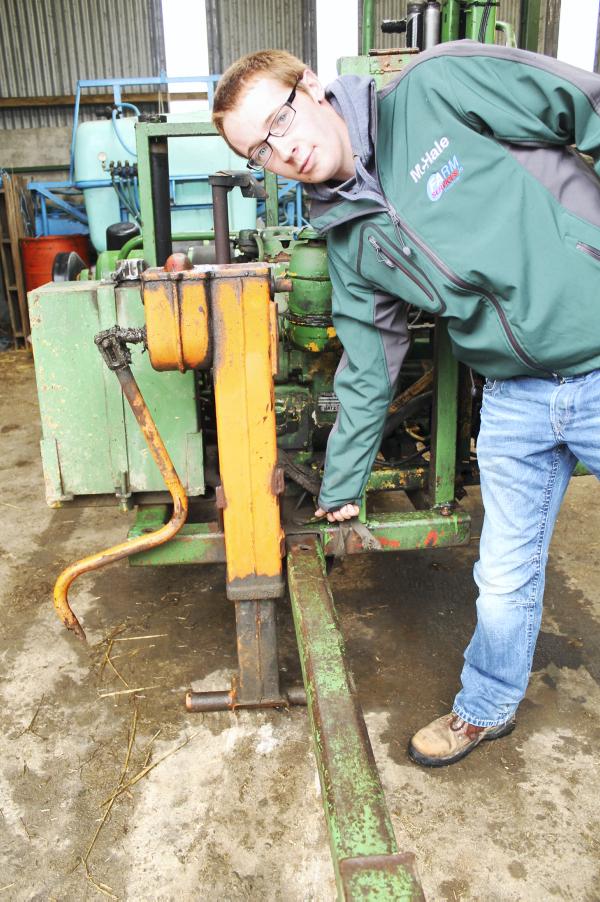
The engine and its hydraulic system sit in a frame at the front of the wrapper which Seamus has adapted. He adapted the Hatz unit to each wrapper over the years adding two axles from combine headers and a drawbar so it could be towed behind the digger used for stacking. The drawbar can be removed to make it more compact in tight yards and the machine is then levelled with truck-trailer jack onsite.
In operation, the wrapper is strategically positioned for loading the unwrapped bale directly from the trailer onto the wrapper. The bales, once wrapped, are stacked close by.
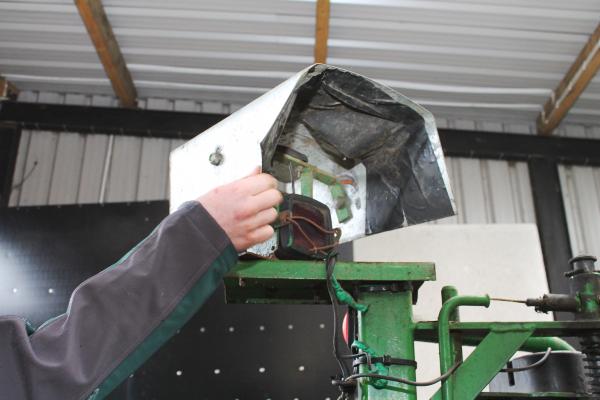
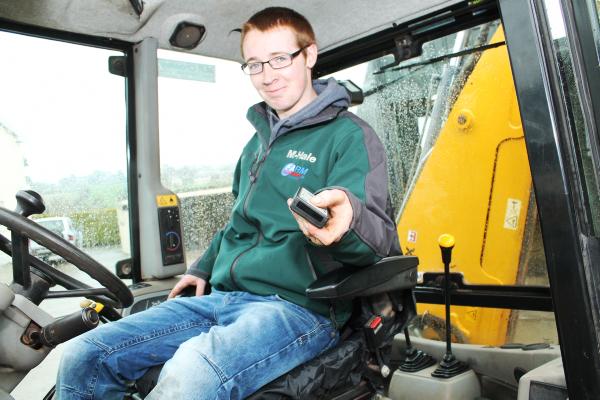
Performing this task this year will be a Terex 860, which had just arrived from MP Crowley’s in Cork at the time of visiting and replaced an older 860. Control of the wrapper is by a McHale remote control system, a zapper pointed at the wrapper.
Typical work rate, according to Brian, is in the region of 40 to 50 bales per hour. Brian adds smiling that he did once wrap and stack 78 bales in one hour. “That was a once-off thing,” he concedes.
The wrapper travels with two cow mats on board which are placed in the drop-off zone to prevent wrapped bales from being punctured on concrete or rough surfaces.
When Seamus began making round bale silage he ran a Deutz-Fahr round baler and a static wrapper with the Hatz engine. Today, he is an all-McHale operator with a McHale bale handler, McHale wrapper and McHale F5500 baler which was bought new last year from local dealer Richard Swain of Farm Services, Coolgreaney.
The weakest link in the operation is drawing in the bales. “You need a minimum of two trailers depending on the length of draw to keep the wrapper going continuously,” says Seamus. “As soon as the first bale hits the ground out of the baler it needs to be loaded. Otherwise it makes it awkward on everybody and you can’t really move with the baler to the next place until the job is done,” Seamus says. “A lot of organisation is required but it is a very fast system when it is working well.”
Despite the speed of operation, there are down sides, including getting the bales in quick enough plus wear and tear, especially on the digger.
How is such a complex operation priced?
Seamus divides it into three separate operations:
Mowing is priced per acre €23+vat depending on fuel prices.Baling, wrapping and stacking are priced together at €6 to €7 + vat depending on fuel prices.Drawing in bales is priced as per job with one or two trailers, with or without tractors and these with or without drivers.Seamus O’Leary’s silage kit
2013 McHale F5500 baler 2008 John Deere 6630 tractor2008 Terex 860 digger with McHale bale handler1994 Deutz-Fahr 606 Agroprima (two-wheel drive)McHale 991LBER three point linkage wrapper – adapted by Seamus with engine and drawbarKuhn mower – 10ft trailed.24-foot bale trailer carrying 14 bales a time.
There are now many farmers and contractors producing wrapped bale silage around the country. How the bales are wrapped usually falls into two categories: those wrapped by combination baler wrappers like the McHale Fusion, or those baled by conventional baler then picked up and wrapped in-field by a trailed wrapper.
There is a third option; we’ll call it the Wexford option because that seems to be where this practice is most commonly found. This technique involves silage bales being made with a conventional round baler, usually a chopper baler, then drawn back to the farm where they are wrapped and stacked, more often than not on an old silage clamp.
The wrapper is generally a three-point linkage machine with its own power source, not a tractor but a power-pack of some type. Hi-Power Ltd in Cork used to make one version, based on a small diesel engine with its own hydraulic and electrical system that was ideally suited to the task of driving a wrapper. There are many other variants, largely from other sectors of the industry adapted for the task.
Seamus O’Leary from Monamolin, Co Wexford, has been operating this type of system for nearly two decades. “We adopted baled silage back in 1994 and 1995 because we can produce high-quality silage for ourselves and if we want to do just 10 acres (or less) we can.”
Today, Seamus combines suckler farming with tillage farming, assisted by son Brian, who recently completed a course at Kildalton Agricultural College.
Seamus makes about 8,000 bales of silage a year and some straw. An average ‘job’ would be producing around 300 bales a time. That is mowing, baling, drawing in, wrapping and stacking. “Some jobs are smaller and some are much bigger, depending on the year and customer,” explains Seamus.
The key point is that none are wrapped in the field. “In this part of the county the vast majority of people bale their silage and then draw it to the yard where it is then wrapped and stacked,” says Seamus. While he would love to convert his silage wrapping operation over to the Fusion system (combination baler-wrapper) and drop all bales wrapped in the field, he adds “it won’t happen in this county”.
There appears to be a number of reasons for this. The first is the number of bales being wrapped; individual job sizes can vary from 50 bales to several hundred bales at a time. There are lots of bales to handle and stack so it is faster to handle them non-wrapped.
Secondly, many stack their bales close to or in the yard, where they will be consumed, usually on or very close to concrete and again usually an old silage pit yard. Brian also points out that if the bales were to be wrapped in-field, getting them home would be a problem. Most ditches are populated by overgrown sceach-thorn, gorse or other trees that could damage the plastic wrap.
Key to the O’Leary operation is an engine-powered three-point linkage McHale 991LBER wrapper with remote control. This is the latest in a line of wrappers that Seamus had adapted since he first began making baled silage.
Rather than tying up another tractor to power and transport the three-point linkage machine, Seamus added an engine plus wheels. This arrangement allows it to be towed around and operated from the tractor seat of the loading tractor, which is also stacking the bales.
Seamus has used the same power-pack since he began his silage operation. It is an air-cooled single-cylinder Hatz diesel engine. “The engine and its hydraulic system came off a road machine from England,” explains Seamus. “It’s about 14 horsepower and has a very fast hydraulic pump.”
The engine and its hydraulic system sit in a frame at the front of the wrapper which Seamus has adapted. He adapted the Hatz unit to each wrapper over the years adding two axles from combine headers and a drawbar so it could be towed behind the digger used for stacking. The drawbar can be removed to make it more compact in tight yards and the machine is then levelled with truck-trailer jack onsite.
In operation, the wrapper is strategically positioned for loading the unwrapped bale directly from the trailer onto the wrapper. The bales, once wrapped, are stacked close by.
Performing this task this year will be a Terex 860, which had just arrived from MP Crowley’s in Cork at the time of visiting and replaced an older 860. Control of the wrapper is by a McHale remote control system, a zapper pointed at the wrapper.
Typical work rate, according to Brian, is in the region of 40 to 50 bales per hour. Brian adds smiling that he did once wrap and stack 78 bales in one hour. “That was a once-off thing,” he concedes.
The wrapper travels with two cow mats on board which are placed in the drop-off zone to prevent wrapped bales from being punctured on concrete or rough surfaces.
When Seamus began making round bale silage he ran a Deutz-Fahr round baler and a static wrapper with the Hatz engine. Today, he is an all-McHale operator with a McHale bale handler, McHale wrapper and McHale F5500 baler which was bought new last year from local dealer Richard Swain of Farm Services, Coolgreaney.
The weakest link in the operation is drawing in the bales. “You need a minimum of two trailers depending on the length of draw to keep the wrapper going continuously,” says Seamus. “As soon as the first bale hits the ground out of the baler it needs to be loaded. Otherwise it makes it awkward on everybody and you can’t really move with the baler to the next place until the job is done,” Seamus says. “A lot of organisation is required but it is a very fast system when it is working well.”
Despite the speed of operation, there are down sides, including getting the bales in quick enough plus wear and tear, especially on the digger.
How is such a complex operation priced?
Seamus divides it into three separate operations:
Mowing is priced per acre €23+vat depending on fuel prices.Baling, wrapping and stacking are priced together at €6 to €7 + vat depending on fuel prices.Drawing in bales is priced as per job with one or two trailers, with or without tractors and these with or without drivers.Seamus O’Leary’s silage kit
2013 McHale F5500 baler 2008 John Deere 6630 tractor2008 Terex 860 digger with McHale bale handler1994 Deutz-Fahr 606 Agroprima (two-wheel drive)McHale 991LBER three point linkage wrapper – adapted by Seamus with engine and drawbarKuhn mower – 10ft trailed.24-foot bale trailer carrying 14 bales a time. 







SHARING OPTIONS