Every year in early February, the fertiliser and wider agricultural industry turns to the Fertilizer Association of Ireland’s spring scientific seminar. This year, as has been the long-standing tradition, the event will be held at the Horse and Jockey Hotel, Thurles, Co Tipperary on 6 February. The theme of the event is nutrient management – adapting to a changing world.
Over the course of the afternoon, attendees will hear how current Government policy is shaping and driving nutrient management now and into the future.
It will look at how current fertiliser planning can be improved in light of experience learned in the UK and across Europe.
Finally, to tie it all together, there will be first-hand experience of how one farm is adopting the latest nutrient management practices and putting the latest technology to test.
There is an excellent lineup of speakers, which will be chaired by Paul O’Brien, farmer from south Kilkenny and IFA regional chair for south Leinster.
Our first speaker is Gary Lanigan, principal research officer in Teagasc, Johnstown Castle.
Gary has been fundamental in developing the marginal abatement cost curve (MACC) and has recently updated the MACC 2023 to reflect the Government’s climate targets for reducing the 2018 level of GHG of 23MT CO2 eq per year by 25% to 17.25MT CO2 eq per year by 2030.
Gary will go through the MACC and focus particularly on the measures relating to on-farm fertiliser use. Some measures have been adopted already while others will be adopted over the coming years if the climate targets are to be met.
While nitrogen is the headline grabber (CAN to protected urea), the real effort will be on soil fertility (soil pH, soil phosphorus levels and soil potassium levels), slurry management and utilisation of legumes and multispecies swards.
The seminar will also hear from Peter Scott, president of the European Fertilizer Manufacturer Association.
In his paper, The role of balanced nutrition in sustainable agriculture, he makes a compelling argument for the need for “balanced nutrition” when it comes to the use of fertilisers, particularly as we face into an era of reduced nitrogen allowances to meet our climate targets.
Peter will explain how we can act smarter with our fertiliser use by better matching our fertiliser requirement, be it for animals or crops to the fertiliser that we spread (a balanced nutrition approach).
Prescription nutrition is already well established in the UK, US, New Zealand and throughout northern Europe
Balanced nutrition implies extending the focus beyond N, P and K through an integrated approach to nutrient management planning to determine the specific nutrient requirements at crop or individual field level, and then matching them through prescription fertiliser formulations.
Prescription nutrition is already well-established practice in the UK, US, New Zealand and throughout northern Europe. It is emerging in many more countries and is likely to continue to grow as more farmers and advisers realise the agronomic, economic and environmental benefits.
In Ireland, fewer than 100 different fertiliser analyses were available to the market, with only five products accounting for almost 72% of all compound fertiliser sales nationally, according to Peter. This is in comparison to Britain where the number of different fertiliser analyses available to the market has grown from 250 in 2011 to nearly 18,000 in 2023.
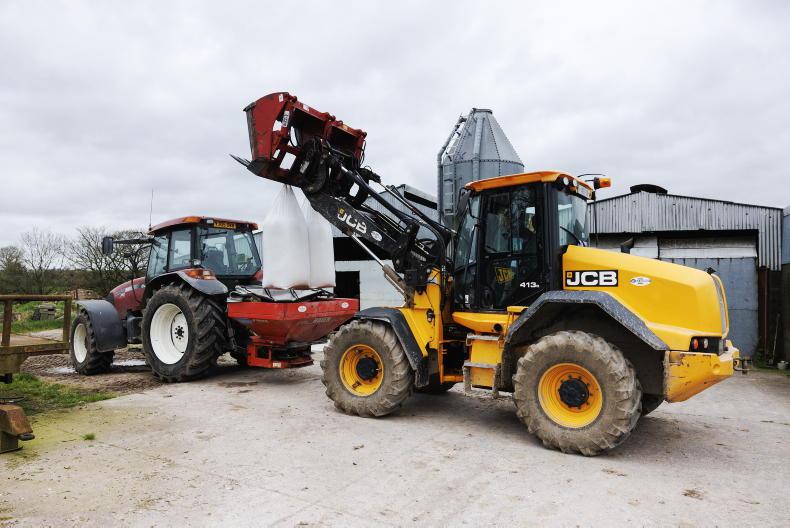
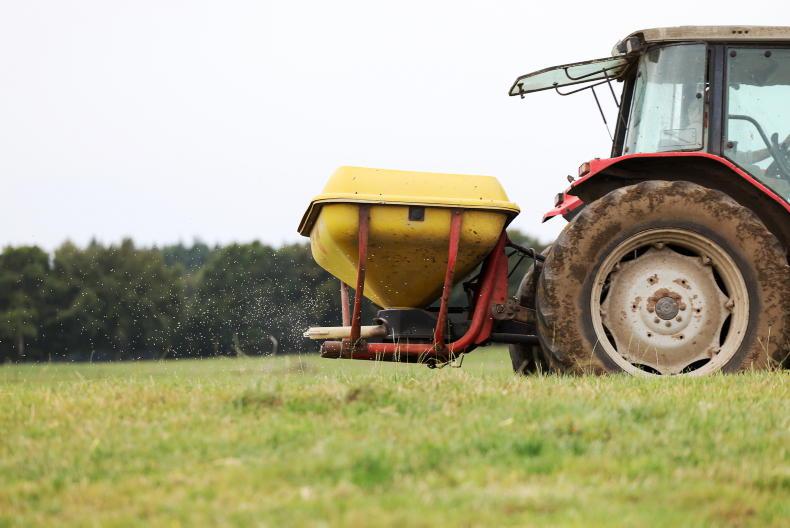
The result of a balanced approach to fertiliser planning and application are greater efficiency gains at farm level on grass growth and animal performance. \ Donal O' Leary
The result of this balanced approach to fertiliser planning and application is greater efficiency gains at farm level on grass growth and animal performance which, in turn, will lead to better nutrient use efficiency at farm level, greater output and greater farm profit.
Objectives
Finally, Kevin Ahern from the Shinagh Dairy Farm and John McNamara of Teagasc will explain the key objectives, challenges and lessons they have learned to date to attendees.
The Shinagh Dairy Farm extends to 102ha, milking 250 cows in a spring-calving system. The farm is part of the Farm Zero Climate (FZC) programme run by Biorbic, Carbery and Teagasc and funded by Science Foundation Ireland (SFI).
The farm was set up in to 2011 to initially demonstrate a profitable farming model but has evolved (as has national farm policy) to now focus on improving farm sustainability and reduce farm emissions without compromising on profit.
Key technologies adopted include improving soil fertility, using slurry more effectively and promoting clover.
Kevin will explain how he has maintained productivity, reduced nitrogen input and increased nitrogen use efficiency on the farm.
Kevin will share with attendees the key lessons that he has learnt in his attempt to make the farm more sustainable. The Shinagh farm is emerging as a key demonstration farm to showcase Irish agriculture at its very best and a talk that should not be missed.
A full report on the spring seminar will feature in the Fertilizer Association of Ireland fertiliser Focus supplement that will appear in the Irish Farmers Journal on 17 February edition.
For anyone who wants to join the Fertilizer Association of Ireland to be part of our mailing list, see notifications of upcoming events and receive an invitation to our annual dinner, send an email to info@fert-assoc.ie with your details.

Every year in early February, the fertiliser and wider agricultural industry turns to the Fertilizer Association of Ireland’s spring scientific seminar. This year, as has been the long-standing tradition, the event will be held at the Horse and Jockey Hotel, Thurles, Co Tipperary on 6 February. The theme of the event is nutrient management – adapting to a changing world.
Over the course of the afternoon, attendees will hear how current Government policy is shaping and driving nutrient management now and into the future.
It will look at how current fertiliser planning can be improved in light of experience learned in the UK and across Europe.
Finally, to tie it all together, there will be first-hand experience of how one farm is adopting the latest nutrient management practices and putting the latest technology to test.
There is an excellent lineup of speakers, which will be chaired by Paul O’Brien, farmer from south Kilkenny and IFA regional chair for south Leinster.
Our first speaker is Gary Lanigan, principal research officer in Teagasc, Johnstown Castle.
Gary has been fundamental in developing the marginal abatement cost curve (MACC) and has recently updated the MACC 2023 to reflect the Government’s climate targets for reducing the 2018 level of GHG of 23MT CO2 eq per year by 25% to 17.25MT CO2 eq per year by 2030.
Gary will go through the MACC and focus particularly on the measures relating to on-farm fertiliser use. Some measures have been adopted already while others will be adopted over the coming years if the climate targets are to be met.
While nitrogen is the headline grabber (CAN to protected urea), the real effort will be on soil fertility (soil pH, soil phosphorus levels and soil potassium levels), slurry management and utilisation of legumes and multispecies swards.
The seminar will also hear from Peter Scott, president of the European Fertilizer Manufacturer Association.
In his paper, The role of balanced nutrition in sustainable agriculture, he makes a compelling argument for the need for “balanced nutrition” when it comes to the use of fertilisers, particularly as we face into an era of reduced nitrogen allowances to meet our climate targets.
Peter will explain how we can act smarter with our fertiliser use by better matching our fertiliser requirement, be it for animals or crops to the fertiliser that we spread (a balanced nutrition approach).
Prescription nutrition is already well established in the UK, US, New Zealand and throughout northern Europe
Balanced nutrition implies extending the focus beyond N, P and K through an integrated approach to nutrient management planning to determine the specific nutrient requirements at crop or individual field level, and then matching them through prescription fertiliser formulations.
Prescription nutrition is already well-established practice in the UK, US, New Zealand and throughout northern Europe. It is emerging in many more countries and is likely to continue to grow as more farmers and advisers realise the agronomic, economic and environmental benefits.
In Ireland, fewer than 100 different fertiliser analyses were available to the market, with only five products accounting for almost 72% of all compound fertiliser sales nationally, according to Peter. This is in comparison to Britain where the number of different fertiliser analyses available to the market has grown from 250 in 2011 to nearly 18,000 in 2023.

The result of a balanced approach to fertiliser planning and application are greater efficiency gains at farm level on grass growth and animal performance. \ Donal O' Leary
The result of this balanced approach to fertiliser planning and application is greater efficiency gains at farm level on grass growth and animal performance which, in turn, will lead to better nutrient use efficiency at farm level, greater output and greater farm profit.
Objectives
Finally, Kevin Ahern from the Shinagh Dairy Farm and John McNamara of Teagasc will explain the key objectives, challenges and lessons they have learned to date to attendees.
The Shinagh Dairy Farm extends to 102ha, milking 250 cows in a spring-calving system. The farm is part of the Farm Zero Climate (FZC) programme run by Biorbic, Carbery and Teagasc and funded by Science Foundation Ireland (SFI).
The farm was set up in to 2011 to initially demonstrate a profitable farming model but has evolved (as has national farm policy) to now focus on improving farm sustainability and reduce farm emissions without compromising on profit.
Key technologies adopted include improving soil fertility, using slurry more effectively and promoting clover.
Kevin will explain how he has maintained productivity, reduced nitrogen input and increased nitrogen use efficiency on the farm.
Kevin will share with attendees the key lessons that he has learnt in his attempt to make the farm more sustainable. The Shinagh farm is emerging as a key demonstration farm to showcase Irish agriculture at its very best and a talk that should not be missed.
A full report on the spring seminar will feature in the Fertilizer Association of Ireland fertiliser Focus supplement that will appear in the Irish Farmers Journal on 17 February edition.
For anyone who wants to join the Fertilizer Association of Ireland to be part of our mailing list, see notifications of upcoming events and receive an invitation to our annual dinner, send an email to info@fert-assoc.ie with your details.
SHARING OPTIONS