



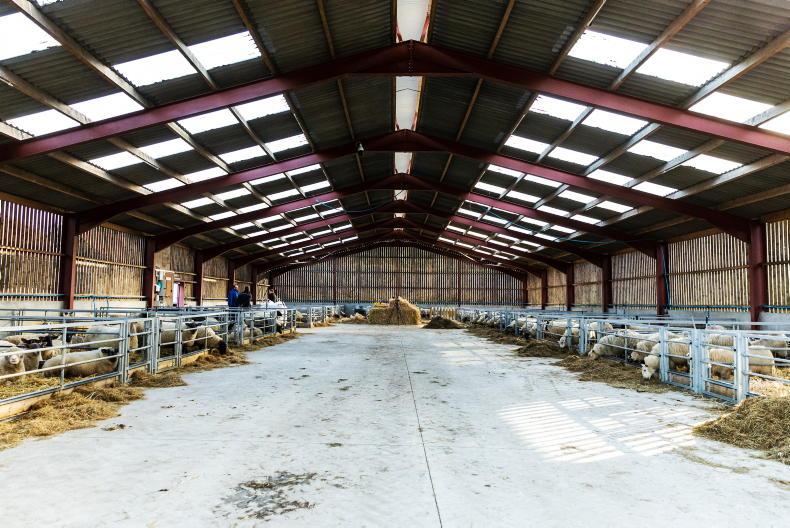
Tynan Abbey Estate in Co Armagh is no stranger to the pages of the Irish Farmers Journal, having been featured regularly as a participant in the Northern Ireland Sheep Programme.
The 850-acre estate is owned by James Kingan and for the last decade has been run by Kate Kingan, assisted by farm manager, Peter Mant, and the staff at the estate.
Prior to this, the farm was rented out for decades and, during this time, fell into poor shape with productivity falling to a very low level.
Kate and Peter have guided the farm through a complete transformation, building stock numbers and reviving its production potential.

Kate and Peter acknowledge that there is still room for improvement, but the changes made to date have been impressive, given the low starting point and poor infrastructure initially in place.
NI sheep programme
The farm participated in the Northern Ireland Sheep Programme run by the College of Agriculture Food & Rural Enterprise (CAFRE), Dunbia and the Irish Farmers Journal from 2019 to 2022.
One of the first tasks undertaken was the development of a three- and five-year farm plan in 2019. This reviewed and set out clear objectives, with the overall aim of developing a farming system sustainable from the point of view of physical, financial and environmental sustainability.
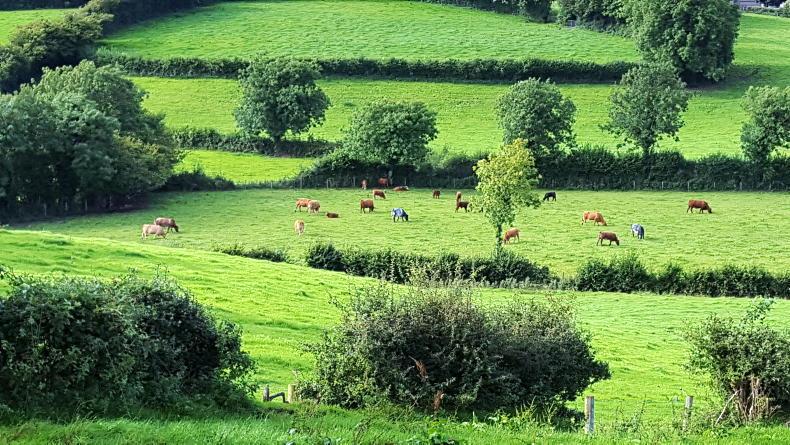
Within the 850 acre estate, there are 550 acres of grassland, along with mature woodlands. The key changes are summarised below and will be discussed at the event on Tuesday 4 July.
Soil fertility
Building soil fertility is an ongoing process. In the region of 500t of lime was applied in the first few years of running the farm, with another 200t applied in 2019/2020 and 50t in 2021.
Soil pH has lifted over the last three to four years from an average of pH 5.9 to 6.3, and the focus is now on addressing any remaining deficits and moving to maintenance applications.
The farm has access to large volumes of imported slurry and the importation of over 700,000 gallons of slurry has allowed nutrients to be targeted to deficient soils, while also reducing chemical fertiliser use from 36t in 2019 to zero in 2022.
Grassland management
Improving farm infrastructure has been a major area of investment. With boundary-fencing sorted, the target now is improving internal infrastructure to further improve grassland management.
A reseeding programme has been central in sustaining an increased stocking rate and growing higher volumes of grass at the shoulders of the year.
In the region of 250ac is designated as an Area of Special Scientific Interest (ASSI), with swards that are over 60 years old.
These are protected swards, where chemical fertiliser and reseeding, etc, is prohibited – but their performance has still been improved by greater attention to detail around how grass is managed.
With 120ac of this area often flooded for large parts of the winter, the stocking rate is higher than listed on paper.
The other big focal point in the programme has been increasing silage quality and significantly reducing concentrate use.
Breeding and genetics
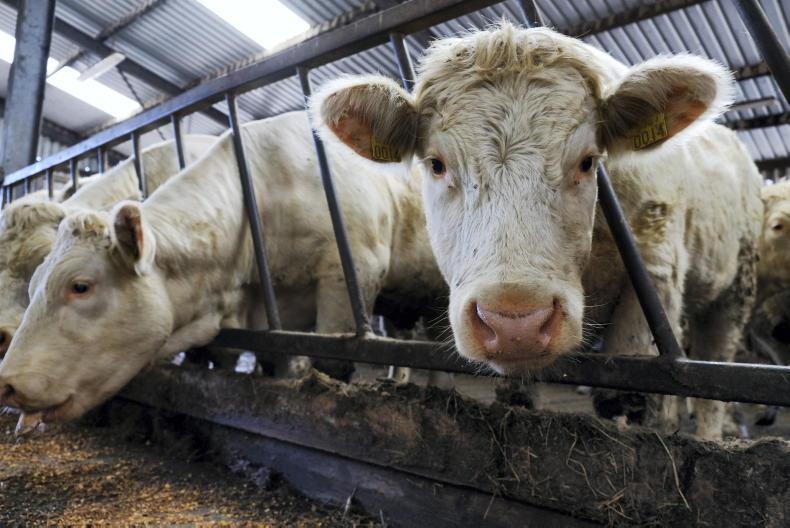
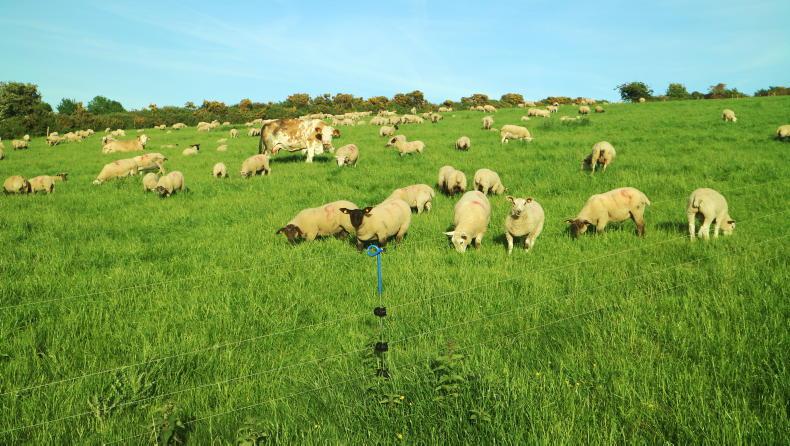
Stock numbers now stand in the region of an average of 570 ewes, 100 ewe lamb replacements, 25 continental cross suckler cows and a 50-head Dexter herd, with all progeny brought through to beef.
While on the Dexter herd, a steak from a full-bred Dexter produced on the farm was awarded the best grass-fed rib-eye steak at the 2022 World Steak Challenge.
After several years of purchasing ewe lambs and ewes to build numbers, it is only in the last couple of years that Kate and Peter have got to their desired position of having more control over genetics. Replacements are now bred within the flock, which also contributes to reducing health risks.
The farm has successfully experimented with Romney sheep and grown numbers to 200 head and rising, with these ewes mainly lambed outdoors.
Lambing has been streamlined from several batches lambing from February onwards, to now having the main batch of Suffolk-cross ewes lambing indoors from the end of March onwards, followed by the Romneys in April.
This has greatly cut workload on the farm and the systems continue to be compared with regard to labour input, mortality, animal performance, potential output, etc. Concentrate feed costs have also dropped, with the lambing dates coinciding with the time of year when typical grass growth rates are on the rise.
Health planning
Growing livestock numbers has been challenging from a health perspective. There is also a robust health programme in place and this includes an extensive quarantine protocol for any purchased sheep, which in the future will be primarily rams.
There have been niggling issues in the past, with lameness and watery mouth in lambs in the first 48 hours of life. These problems have been largely resolved with a focus on preventative measures. For example, a new footbath has been installed and the lameness vaccine, Footvax, is used at key high-risk periods.

A renewed focus on nutrition, colostrum management and hygiene has reduced any problems with E. coli scour (watery mouth) and an extensive vaccination protocol is in place, including chlamydial abortion (enzootic abortion), toxoplasmosis and clostridial disease. Good use is made of faecal egg counts to determine the need to carry out worm treatments and test the efficacy of products used.
Monitoring performance
A farm plan provides direction for the farm, but to get the most from the exercise, it needs to be reviewed on a continual basis; asking hard questions on whether or not it is still the best fit for the farm.
Electronic identification has been adopted as a means of tracking performance in the sheep flock, and benchmarking allows performance to be compared from year to year – and against a wider pool of similar systems.
The farm was planning to continue to drive on stocking rate.
However, due to the escalation in input costs in 2021, the decision was taken to pause any future expansion for now and ensure that they are getting the most from their current sheep flock and suckler herd, while trying to insulate their system from high costs. This has been a sensible decision, given that general input costs remain stubbornly high.
The farm has achieved a great deal over the last decade and the NSA event will prove an excellent opportunity to see these changes in the flesh.



SHARING OPTIONS