On my way back down from Northern Ireland last August, I called into the Farrelly dairy farm at Crossakiel, Kells, Co Meath. Brothers Michael and Pat Farrelly have been milking their spring-calving Holstein Friesian/Jersey crossbred herd with four milking robots for the last three years.
The Farrellys farm 135ha between Crossakiel and Stackallan, Co Meath, and they have just completed year three with milking robots.
They started milking 150 cows (with two robots) in spring 2011, adding two more robots in spring 2013 as numbers increased. All milk is supplied to Lakeland Dairies. Michael and Pat enjoy farming with their father, Tom, who still keeps a tight eye on operations.
One of the big differences on this farm compared with others where robots have been installed is that Michael and Pat do not want to get into a system of high yield, high feed and all year round milking.
Their advice is: “Set your system up for what works for your farm.
‘‘We have gone down the grass route and, after three years milking with robots, I think it is largely irrelevant how they are milked, whether it is by robot, rotary, herringbone or hand.
‘‘It probably takes more time for the farmer than the cows to get used to the robot set-up.”
Michael explained that their existing yard structure and farm layout circumstances pushed them down the robot route and minimised capital expenditure on new concrete and steel when they were planning the investment.
Background
The Farrellys were milking 240 cows in a 12-unit herringbone parlour operating a liquid milk production system until a BSE outbreak on the farm in 1999.
They then opted out of milk and the milk quota was sold but the farm continued as a beef farm run by their father, Tom.
Option analysis
Both Michael and Pat worked off-farm until circumstances changed in 2009 and they returned to farming, seeing an opportunity in milk production with the pending removal of milk quotas.
However, they decided that liquid milk was not the system of the future so, instead, a compact spring-calving system producing milk solids from grass was chosen as the preferred option.
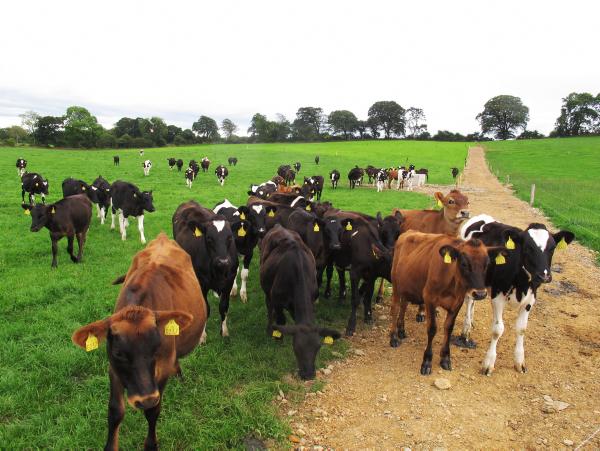
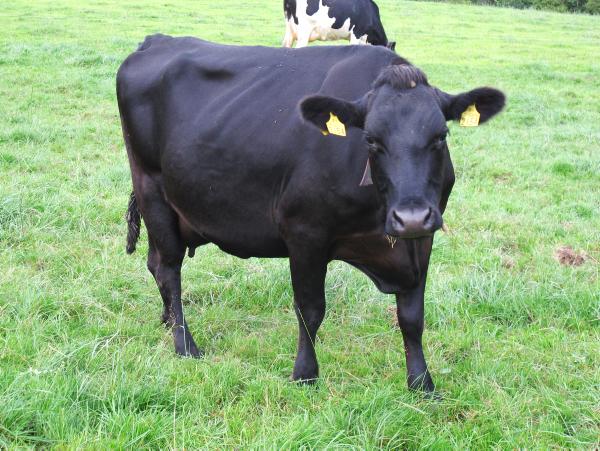
They also decided on a Friesian/Jersey crossbred animal to maximise hybrid vigour, achieve higher solids and extend shoulder grazing from a lighter animal.
The next step was to look at farm infrastructure and milking parlour options.
The old 12-unit herringbone parlour was still in place but non-functional, so the brothers carried out an audit of sheds on the farm and yard space with their Teagasc adviser, Vincent Treacy. The goal was to set the farm up to milk 300 cows in a spring-calving operation, producing milk mostly from grazed grass.
Options
They looked at various milking options for the farm.
Option one was to extend the existing 12-unit to a 30-unit parlour. This would not have been a good idea as there was a boundary ditch close to the back and side of the parlour, with silage pits in front and a 200-cow cubicle shed to the other side.Option two was to build a new 30-unit herringbone parlour in the middle of the farm (approximately 750m from the existing parlour) and build new infrastructure to support this. This would include a new entrance road for lorries, a farm road for cows and new collecting yards with associated infrastructural change to water and electricity. While this was viable, there was concern about the milking parlour being away from the main yard where cubicle, calving and calf-rearing sheds were located. There was also significant increased infrastructure costs with this option.
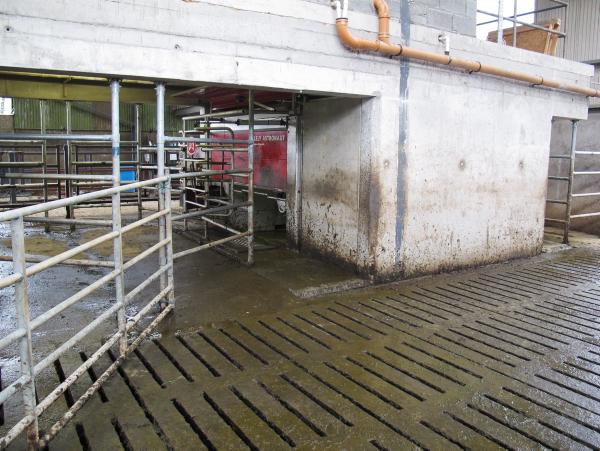
Option three was to install milking robots into the existing yard and sheds with minor modifications, hence reducing additional infrastructural costs, and keeping the parlour beside the cow and calf housing.With all this in mind, the Farrelly brothers met milking robot expert Jenny Jago from New Zealand, who was working at Teagasc, Moorepark, at the time. Jenny had previously investigated if robotic milking would work on New Zealand grass-based farms. Jenny had spent seven years in charge of this project, successfully milking 90 cows with one robot in a grass-based, compact calving system.
The Farrellys decided to copy the system Jenny had used on the research farm in New Zealand and studied her farm layout in detail, finding out what worked well and what lessons she had learned.
The basic idea was to use fresh grass in a new paddock as the catalyst to move the cows from one paddock to the next, rather than feeding meal in the robot.
So, is it all working? Three years later, the four Lely robots are milking away and while it took a little while to settle down, the system seems to be working well.
Computer wizard
In terms of the technology and software tied in with the Lely robots, Pat said: “We have it stripped down to the bare basics for what we want. We have a look every day at the milk produced and a few other key variables but I’m not big into the computer and I’m sure some who are very keen will monitor a lot more.
‘‘You can analyse almost anything from cow visits, production details, udder health, failed milkings, late cows, fat and protein levels – the sky is the limit on this.”
We walked down the farm and Michael explained the paddock set-up.
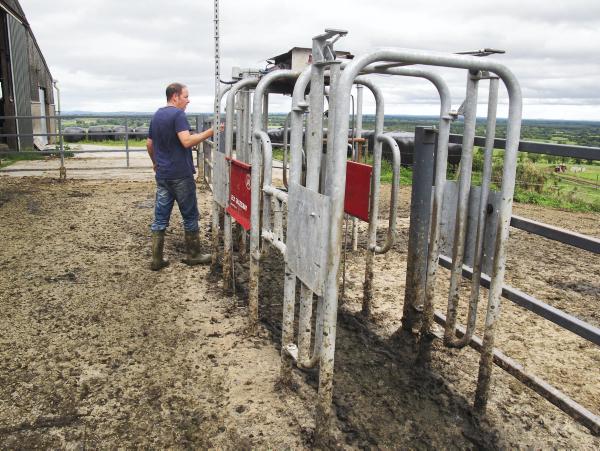
The farm is divided into A and B paddocks with cows going through a ‘Grazeway’ which opens to the different paddock lanes at different times. From 9am to 9pm, cows are directed to A paddocks and from 9pm to 9am, cows are directed to B paddocks.
Michael believes that a 12-hour allocation is essential to stimulate cows to move, so that they move back to the yard and through the robot to the new paddock.
What has changed for the Farrellys?
Instead of spending time milking, Michael Farrelly spends more time on grassland management and herding. He said: “You need to ensure that cows are going into the correct pre-grazing covers. If it is too heavy, cows won’t move and you won’t get twice daily milkings; if it’s too light, cows go hungry. As with normal grazing management, you need to manage your rotation carefully during the peak growing season, taking out surplus grass and keeping the milking cows going into nice quality grass at the correct pre-grazing cover for your stocking rate.”
The Farrellys have permanent fences dividing paddocks with strip wires used to allocate grass on a 12-hour basis. New roadways have been built with all water drinkers along roadways and no drinkers in paddocks.
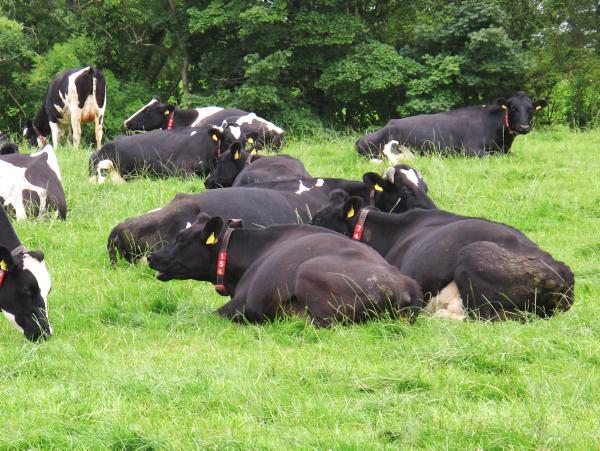
Michael observes that the cows are much less stressed and amble in and out to the milking robots at their ease when they feel the time is right. While they walk the same distance as if they were milked in a conventional parlour, he feels that there is a big reduction in lameness as cows are not rushed in and out. However, he warned that they still need to be herded every day.
So, how does he manage a job like tail-painting in a spring-calving set-up?
He said: “All cows are tail-painted one month before breeding starts and topped up regularly during breeding with Kamar alerts also used. Cows are observed at night and any cows seen with no paint/red Kamar or standing for mounting are entered into the computer for drafting.
As they come in for milking over the next 12 hours (9pm to 9am), they are drafted post-milking and held in the yard. Cows are served by AI next morning by ourselves, having done DIY training. Cows are observed during the day and entered for drafting post-milking with a second round of AI being done in the evening.
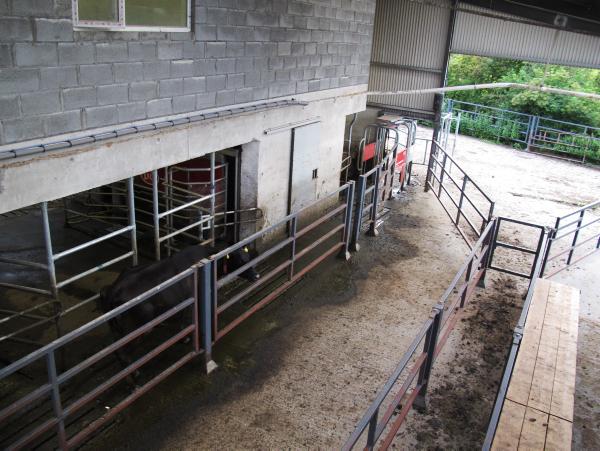
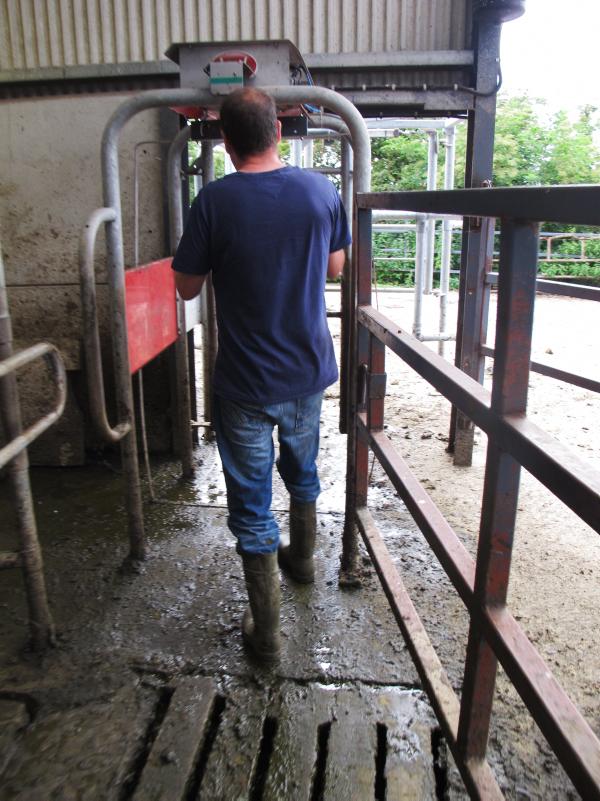
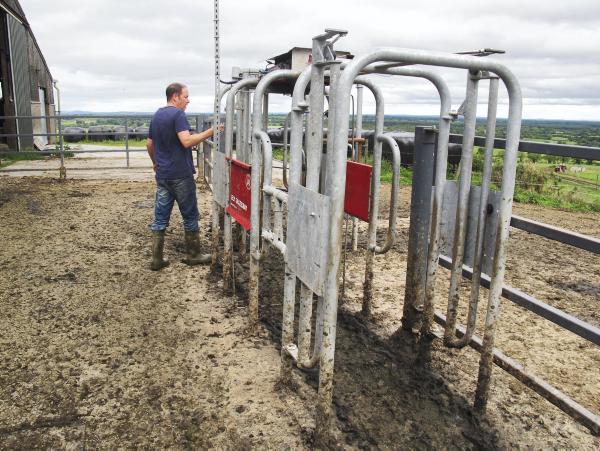
Michael explained that as cows come through the grazeway drafting gate to get access to a new paddock, they can be routed through the crush for jobs such as vaccination, top-up tail paint, apply Kamar and treat for worms/fluke. If some cows do not come in for milking while someone is in the yard, they will simply put the cow numbers in the computer for drafting and will be held in the yard with access to feed/water until they are seen.
Training heifers: One of the most important jobs when milking cows with robots is allowing sufficient time to train heifers. This job starts four to six weeks before calving with a dry run through the robots (machines off, gates open), progressing to machines turned on and heifers receive 0.5kg meal per day as they go through. Milk sold per cow this year: 5,010 litres at 3.6% protein and 4.4% fat, 401kg MS/cow.Meal fed: We target a 500kg concentrate allowance per cow for our farm. 2013 was a difficult year to achieve this with a prolonged winter and the resulting fodder shortage. Meal fed was 622kg/cow.Cost of the investment: Investment in milking robots of €300,000 financed by Lely under a seven-year hire purchase finance plan. We opted to strip out modules such as weigh floor, heat detection and feeding options, reducing the total cost by 20% off the retail list price. So, what is included for €300,000? The four robots including builder spec drawings/plans, two compressors*, computer, drafting gates, 300 identification collars and full installation. They are financed through Lely on a hire purchase scheme with the robots the only security on the loan.
The options they have include: feed-to-yield feeding system, mastitis detection through milk conductivity, three-way drafting, fat and protein recording, milk separation (milk tank to milk separation buckets to sewer or to fourth milk line that goes to calf milk trailer outside of dairy).
*One compressor supports four robots normally but as the Farrellys have two drafting systems (one three-way system in front of robots going back to the yard, to the crush or to the holding shed and a second drafting system at the exit to the paddocks), the one compressor would be on its limit so we installed two just to be safe. The compressor costs about €8,000 (oil-free).
optional extras
Weigh floors: Weigh cows at each milking. The system flags up any cow that is losing excessive weight. The cost is €2,100 per robot.Somatic cell counter: Show farmer SCC for every cow, from every milking, in bands of 100,000. The cost is €2,500 per robot, plus €0.01 per milking (cost of milking reagent).Heat detection: This costs an additional €60 per collar so about €4,500 including readers in robot (€60 x 75 cows/robot).Rumination recording: Works off collar in the same transponder as heat detection. Records how many minutes per day cows are chewing cud. It is an indicator of digestive problems. Only one type of nut can be fed in the robot used by the Farrellys. Standard robots can feed two but can spec to feed up to four types. Each extra feed dispenser option costs €650.
On my way back down from Northern Ireland last August, I called into the Farrelly dairy farm at Crossakiel, Kells, Co Meath. Brothers Michael and Pat Farrelly have been milking their spring-calving Holstein Friesian/Jersey crossbred herd with four milking robots for the last three years.
The Farrellys farm 135ha between Crossakiel and Stackallan, Co Meath, and they have just completed year three with milking robots.
They started milking 150 cows (with two robots) in spring 2011, adding two more robots in spring 2013 as numbers increased. All milk is supplied to Lakeland Dairies. Michael and Pat enjoy farming with their father, Tom, who still keeps a tight eye on operations.
One of the big differences on this farm compared with others where robots have been installed is that Michael and Pat do not want to get into a system of high yield, high feed and all year round milking.
Their advice is: “Set your system up for what works for your farm.
‘‘We have gone down the grass route and, after three years milking with robots, I think it is largely irrelevant how they are milked, whether it is by robot, rotary, herringbone or hand.
‘‘It probably takes more time for the farmer than the cows to get used to the robot set-up.”
Michael explained that their existing yard structure and farm layout circumstances pushed them down the robot route and minimised capital expenditure on new concrete and steel when they were planning the investment.
Background
The Farrellys were milking 240 cows in a 12-unit herringbone parlour operating a liquid milk production system until a BSE outbreak on the farm in 1999.
They then opted out of milk and the milk quota was sold but the farm continued as a beef farm run by their father, Tom.
Option analysis
Both Michael and Pat worked off-farm until circumstances changed in 2009 and they returned to farming, seeing an opportunity in milk production with the pending removal of milk quotas.
However, they decided that liquid milk was not the system of the future so, instead, a compact spring-calving system producing milk solids from grass was chosen as the preferred option.
They also decided on a Friesian/Jersey crossbred animal to maximise hybrid vigour, achieve higher solids and extend shoulder grazing from a lighter animal.
The next step was to look at farm infrastructure and milking parlour options.
The old 12-unit herringbone parlour was still in place but non-functional, so the brothers carried out an audit of sheds on the farm and yard space with their Teagasc adviser, Vincent Treacy. The goal was to set the farm up to milk 300 cows in a spring-calving operation, producing milk mostly from grazed grass.
Options
They looked at various milking options for the farm.
Option one was to extend the existing 12-unit to a 30-unit parlour. This would not have been a good idea as there was a boundary ditch close to the back and side of the parlour, with silage pits in front and a 200-cow cubicle shed to the other side.Option two was to build a new 30-unit herringbone parlour in the middle of the farm (approximately 750m from the existing parlour) and build new infrastructure to support this. This would include a new entrance road for lorries, a farm road for cows and new collecting yards with associated infrastructural change to water and electricity. While this was viable, there was concern about the milking parlour being away from the main yard where cubicle, calving and calf-rearing sheds were located. There was also significant increased infrastructure costs with this option.
Option three was to install milking robots into the existing yard and sheds with minor modifications, hence reducing additional infrastructural costs, and keeping the parlour beside the cow and calf housing.With all this in mind, the Farrelly brothers met milking robot expert Jenny Jago from New Zealand, who was working at Teagasc, Moorepark, at the time. Jenny had previously investigated if robotic milking would work on New Zealand grass-based farms. Jenny had spent seven years in charge of this project, successfully milking 90 cows with one robot in a grass-based, compact calving system.
The Farrellys decided to copy the system Jenny had used on the research farm in New Zealand and studied her farm layout in detail, finding out what worked well and what lessons she had learned.
The basic idea was to use fresh grass in a new paddock as the catalyst to move the cows from one paddock to the next, rather than feeding meal in the robot.
So, is it all working? Three years later, the four Lely robots are milking away and while it took a little while to settle down, the system seems to be working well.
Computer wizard
In terms of the technology and software tied in with the Lely robots, Pat said: “We have it stripped down to the bare basics for what we want. We have a look every day at the milk produced and a few other key variables but I’m not big into the computer and I’m sure some who are very keen will monitor a lot more.
‘‘You can analyse almost anything from cow visits, production details, udder health, failed milkings, late cows, fat and protein levels – the sky is the limit on this.”
We walked down the farm and Michael explained the paddock set-up.
The farm is divided into A and B paddocks with cows going through a ‘Grazeway’ which opens to the different paddock lanes at different times. From 9am to 9pm, cows are directed to A paddocks and from 9pm to 9am, cows are directed to B paddocks.
Michael believes that a 12-hour allocation is essential to stimulate cows to move, so that they move back to the yard and through the robot to the new paddock.
What has changed for the Farrellys?
Instead of spending time milking, Michael Farrelly spends more time on grassland management and herding. He said: “You need to ensure that cows are going into the correct pre-grazing covers. If it is too heavy, cows won’t move and you won’t get twice daily milkings; if it’s too light, cows go hungry. As with normal grazing management, you need to manage your rotation carefully during the peak growing season, taking out surplus grass and keeping the milking cows going into nice quality grass at the correct pre-grazing cover for your stocking rate.”
The Farrellys have permanent fences dividing paddocks with strip wires used to allocate grass on a 12-hour basis. New roadways have been built with all water drinkers along roadways and no drinkers in paddocks.
Michael observes that the cows are much less stressed and amble in and out to the milking robots at their ease when they feel the time is right. While they walk the same distance as if they were milked in a conventional parlour, he feels that there is a big reduction in lameness as cows are not rushed in and out. However, he warned that they still need to be herded every day.
So, how does he manage a job like tail-painting in a spring-calving set-up?
He said: “All cows are tail-painted one month before breeding starts and topped up regularly during breeding with Kamar alerts also used. Cows are observed at night and any cows seen with no paint/red Kamar or standing for mounting are entered into the computer for drafting.
As they come in for milking over the next 12 hours (9pm to 9am), they are drafted post-milking and held in the yard. Cows are served by AI next morning by ourselves, having done DIY training. Cows are observed during the day and entered for drafting post-milking with a second round of AI being done in the evening.
Michael explained that as cows come through the grazeway drafting gate to get access to a new paddock, they can be routed through the crush for jobs such as vaccination, top-up tail paint, apply Kamar and treat for worms/fluke. If some cows do not come in for milking while someone is in the yard, they will simply put the cow numbers in the computer for drafting and will be held in the yard with access to feed/water until they are seen.
Training heifers: One of the most important jobs when milking cows with robots is allowing sufficient time to train heifers. This job starts four to six weeks before calving with a dry run through the robots (machines off, gates open), progressing to machines turned on and heifers receive 0.5kg meal per day as they go through. Milk sold per cow this year: 5,010 litres at 3.6% protein and 4.4% fat, 401kg MS/cow.Meal fed: We target a 500kg concentrate allowance per cow for our farm. 2013 was a difficult year to achieve this with a prolonged winter and the resulting fodder shortage. Meal fed was 622kg/cow.Cost of the investment: Investment in milking robots of €300,000 financed by Lely under a seven-year hire purchase finance plan. We opted to strip out modules such as weigh floor, heat detection and feeding options, reducing the total cost by 20% off the retail list price. So, what is included for €300,000? The four robots including builder spec drawings/plans, two compressors*, computer, drafting gates, 300 identification collars and full installation. They are financed through Lely on a hire purchase scheme with the robots the only security on the loan.
The options they have include: feed-to-yield feeding system, mastitis detection through milk conductivity, three-way drafting, fat and protein recording, milk separation (milk tank to milk separation buckets to sewer or to fourth milk line that goes to calf milk trailer outside of dairy).
*One compressor supports four robots normally but as the Farrellys have two drafting systems (one three-way system in front of robots going back to the yard, to the crush or to the holding shed and a second drafting system at the exit to the paddocks), the one compressor would be on its limit so we installed two just to be safe. The compressor costs about €8,000 (oil-free).
optional extras
Weigh floors: Weigh cows at each milking. The system flags up any cow that is losing excessive weight. The cost is €2,100 per robot.Somatic cell counter: Show farmer SCC for every cow, from every milking, in bands of 100,000. The cost is €2,500 per robot, plus €0.01 per milking (cost of milking reagent).Heat detection: This costs an additional €60 per collar so about €4,500 including readers in robot (€60 x 75 cows/robot).Rumination recording: Works off collar in the same transponder as heat detection. Records how many minutes per day cows are chewing cud. It is an indicator of digestive problems. Only one type of nut can be fed in the robot used by the Farrellys. Standard robots can feed two but can spec to feed up to four types. Each extra feed dispenser option costs €650. 




SHARING OPTIONS