



For many of us, preparing to get our car tested either every two years, or once a year for older cars, is no longer a major issue. While we may be anxious that our car passes the test on the day, most drivers make the necessary preparations and want to see their car pass each test first time.
Motorists now know that it is illegal to drive a car without a current National Car Test (NCT) certificate and most make a genuine effort to comply. And there are penalty point fines for those driving a car outside its NCT due test date.
The NCT tests the roadworthiness of your car. The NCT claims that the test “provides a comprehensive diagnosis of the condition of your NCT motor vehicle at the time of the test, and enables you to find out if your car is still running safely and cleanly”.
The Road Safety Authority (RSA) manual for car testers who work at National Car Testing Service (NCTS) test centres states that: “The test is a maintenance and condition check. A detailed assessment of a vehicle’s design and construction is not part of the test.”
While it is understandable to accept that because it is not practicable to lay down limits of wear and tolerance for all components of different models of cars, testers are expected to use their experience and judgement in making an assessment of the condition of components, ie is replacement, repair or adjustment necessary at time of test?
The RSA manual states that the NCT tester must record the odometer reading (mileage) at the time of the test where an odometer is fitted. What car is not fitted with one? The manual states that when the test report or pass statement is being presented to the owner or the presenter of the vehicle, the NCT tester shall point out the odometer (mileage) reading. The owner/presenter of the vehicle must verify that the odometer reading is correct, and if not shall immediately advise the NCT tester as there will be no opportunity to change the reading at a later stage.
This is one area that appears to be open to serious fraud. We have a query on our files from a Meath-based reader who has experienced how the NCT system does not provide protection for consumers against cars with tampered mileage figures or odometer readings.
Our reader traded in a 2005 Ford Focus with over 386,000km on the clock, which he had owned since new. A month earlier he had put the car through the NCT but it had failed for an engine snag. The car had been tested in 2009, 2011, and 2013 and passed each time up until this year.
Some weeks after he had sold the NCT failed car, he came across an advertisement for his old car on a prominent website. It was advertised with a photograph of the NCT certificate dated July 2015 with a reading of 147,157km on the clock, a massive reduction of 238,843 km.
He reported this to the website. They would not do anything unless they had evidence of fraud. How much more evidence do you need? It is now a criminal offence to clock a car’s odometer reading.
Our reader then contacted the NCTS to see if they could provide him a copy of the fail certificate from his last test in March, but they wanted him to apply in writing and pay €15.50. They did, however, confirm that the new July 2015 test on his previously owned Ford Focus was valid, and that the car currently has a valid NCT.
When asked about the mileage discrepancy, the NCTS acknowledged to him that the latest test had lower mileage readings than previous tests. The person at the NCTS said this was of no interest to the NCTS and that any such discrepancy does not alert testing staff at the test centre.
This is astounding because in another situation the NCTS will inform the gardaí if a person leaves the test centre with a vehicle that has failed the test due to a dangerous defect that could constitute a direct and immediate risk to road safety. The RSA tester manual clearly states: “If a customer drives the vehicle off the premises the incident must be reported to An Garda Síochána immediately.”
What about the situation where a person presents a vehicle from an NCT that has a lower odometer reading than shown in the previous test? This is in direct contravention of the recent Road Traffic No 2 Act 2013, which states that there is a new road traffic offence of tampering with an odometer (clocking) with a penalty of €2,500 and/or three months in prison.
Should the NCTS centre not also use the same powers to inform An Garda Síochána that they have been presented with a vehicle that has been clocked? Without this level of support and enforcement for consumer protection, one wonders what is the point of inspecting cars and checking their mileage in the first place?
The NCTS says in its promotional material that: “The NCT has made a significant contribution to Ireland’s road safety. Voluntary early testing will further improve the safety of Irish roads by encouraging car owners and the motor trade to test their vehicles more often – this may be of particular benefit to buyers of secondhand cars.”
Where is the consumer protection value to secondhand car buyers if an unscrupulous person can bring a clocked car for testing, while the tester has a record of a higher odometer reading from the previous test and fails to make this known?
As our reader put is so well, “the NCT is the one point of contact where official Ireland systematically inspects cars, and records the mileage. But despite having all this data, when it comes to having any protection against clocked cars, the NCT provides no help or protection to members of the public”. And we agree.
Severely damaged car passes
The second case referred to the Irish Farmers Journal related to a Toyota Auris that was imported from the UK and given a clear NCT test in Ireland. In this case, the unsuspecting buyer had a narrow escape, thanks to the support of a Toyota dealer. Again, the car was being sold on the same prominent website.
Despite being a good-looking car and one that appeared to drive well, the detailed report carried out by the car dealer on both the condition and history of the car, revealed how dangerous the vehicle actually was. This highlights the need for a proper vehicle history check from the likes of the SIMI Car History Check system, Cartell.ie, Motorcheck.ie or other established vehicle record checking services.
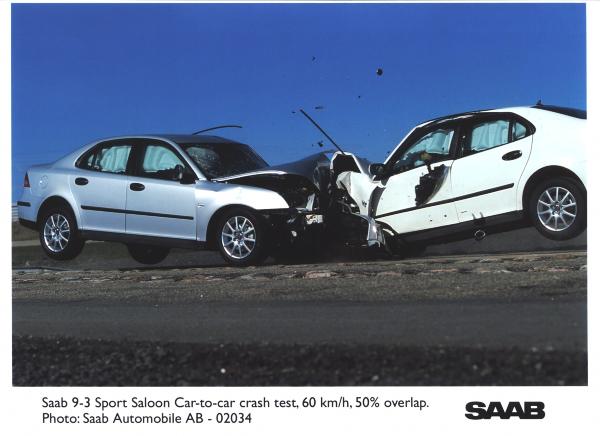
What it also points to is the fact that a car can get an NCT certificate even though its condition is described by both the dealer and an insurance company assessor as being beyond economical repair. Essentially, it was written off.
The car in question was examined by the dealer who considered that to make the car safe it required the following, new front and rear disc brakes, a full steering rack as it was unsafe and leaking fluid, a new battery support structure as well as extensive bodywork to make it safe, all with a quoted cost of almost €6,000.
And the car had passed an NCT test less than a year previous, following being written off in the UK after being involved in a serious crash. The car had been stolen in the UK, was subsequently involved in a crash which was considered to be a category D accident giving rise to damage that was uneconomic to repair, followed by another crash with was rated as category C.
Industry sources believe that close to 10% of all cars presented for NCTS testing have been involved in accidents where they have effectively been written off by an insurance company at some stage, due to the extent of vehicle crash damage.
Over 1.4m cars were put through the NCTS testing programme so far in Ireland in 2015. Of that number, 6,089 cars were failed due to being in a dangerous condition.
Industry sources believe that of the successful cars, some 10% have not been structurally examined from a safety point of view and may have been cars that have been returned to the roads following a serious crash. This is over 130,000 cars that will have passed an NCTS test and have a suspect history and are now being driven on Irish roads.
There is an urgent need for a more rigorous NCT for cars that have been written off by insurance companies and reappear on the market. This test should examine the integrity of the car in terms of structures, so that it can ensure passenger safety in the event of a subsequent accident. The NCTS system needs to be able to communicate with the insurance companies so that unsuspecting car buyers are protected from buying potentially dangerous cars.
We spoke to John Byrne of Cartell.ie, one of the leading suppliers of secondhand car information on odometer (mileage) readings. He said: “The NCT regime changed last year, in the sense that NCT certificates display mileages on the windscreen, a move meant to make mileage more transparent and assist in protecting a future potential buyer of that vehicle.
“Based on the information supplied by the Irish Farmers Journal, it appears where a vehicle is presented for an NCT with mileage lower than for a previous test this will not impact on the test result, at least not where there has been a change of ownership of the vehicle in the meantime. From a consumer point of view, this is not the ideal result and clarity from the NCT may be required to better explain how this is working.”
John said: “Clocking is now a criminal offence in the Republic of Ireland pursuant to section 14 of the Road Traffic Act 2014. Cartell had long campaigned for the introduction of such an offence. The Government then decided to move on the issue.”





SHARING OPTIONS