Different regions have different names for the type of land I’m thinking about. In Cork and Kerry, it’s known as the inches, in the midlands its known as the callows, in parts of Tipperary it would be called moors and in Limerick, Clare and Kerry it’s known as corcass land.
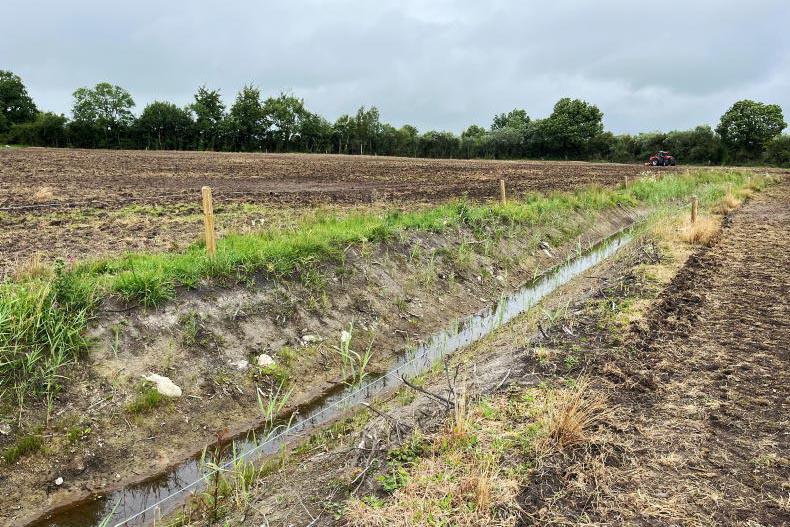
A more technical person could probably find differences in each of the above terms but what I’m referring to is low-lying land, subject to flooding and located next to a river. Oftentimes, these are predominately mineral soils over a deep marl subsoil and dominated by a high-water table making them difficult to drain.
There are of course some exceptions to this, particularly where there are gravel deposits along river banks and even though these rivers might flood, the land is very free draining and highly productive. For the purposes of this article, the type of land being referred to is heavy clay soil with poor permeability.
The high tide for most of these soils was probably the 1970s and 80s when rivers were regularly dredged and land drainage grants were still available. The dredging of the rivers was the key point as this created a sufficient outfall for field drains and open drains, particularly during the summer months when the river depth was low.
Older generations in these areas often talk about crops of cereals and beet being grown on drained land in the 70s and 80s.
In many instances it’s hard to believe that now, given the fact that many of the same fields now only grow rushes and weed grasses.
It highlights the fact that if these soils aren’t managed properly, then they quickly revert to nature.
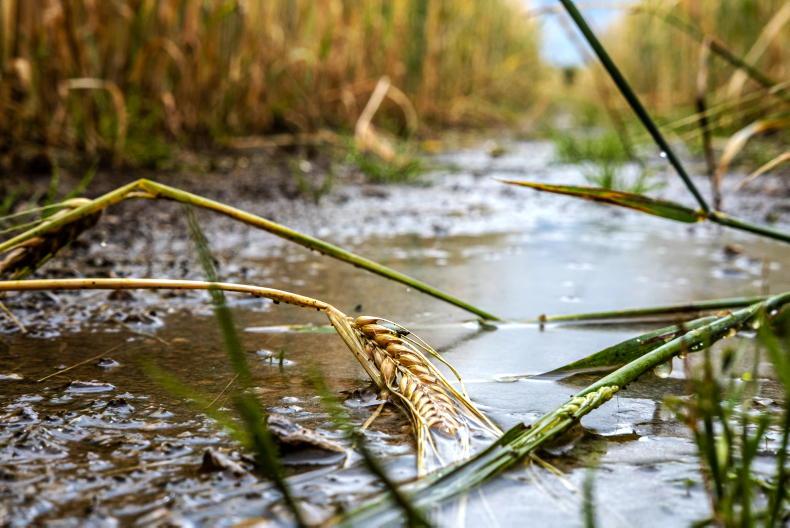
These soils are often not the most fertile or productive and they carry the risk of flooding. This is a risk which has heightened in recent years due to the impacts of a changing climate. For example, in August 2023, many of these fields were under water for weeks due to the impact of severe and prolonged rainfall. In many cases, it was eight or nine months before these fields were farmed properly once again.
Improving the productivity of mineral soils is a key part of Ireland’s climate action plan. While draining peat soils is bad from an emissions perspective, draining mineral soils is good as these soils then have a greater capacity to sequester carbon.
Rightly or wrongly, dredging of rivers is now almost a thing of the past, so in most cases, farmers are at the mercy of the river depth in order to secure an outfall for drainage.
Another big obstacle is the challenge around maintaining perennial ryegrass in these swards.
Perennial ryegrass does not like to be under water. Even if the flood rises and falls in the space of a few days, the land is usually left saturated for weeks afterwards, which is a death sentence to perennial ryegrass tillers and clover stolons. Farmers that have reseeded these fields with perennial ryegrass varieties have learned to their cost that weed grasses usually fill the spaces left by the departed ryegrass.
It’s no surprise that higher parts of the fields that dry quicker continue to maintain ryegrass plants, while the lower parts end up full of weed species like annual meadow grass, creeping bent grass and natural fescues which are more tolerant to the wet land.
The problem for farmers is that these species are less digestible for livestock so make for poor grazing and silage crops. On top of this, they have lower growth rates and are far less responsive to applied fertiliser compared to perennial ryegrass.
According to experts within the grass seed sector, alternatives to perennial ryegrass exist in the form of cultivated fescue grasses such as meadow fescue and soft leafed tall fescue. An increasing number of farmers are trying these varieties on heavy land to test their persistence relative to ryegrass.
To state the obvious, these varieties are not as good as perennial ryegrass in terms of yield potential, digestibility and overall quality. Fescues are really only sown in situations where ryegrass is not tolerant, such as in regions where the summers are very dry and hot, or to a lesser extent where waterlogging is an issue.
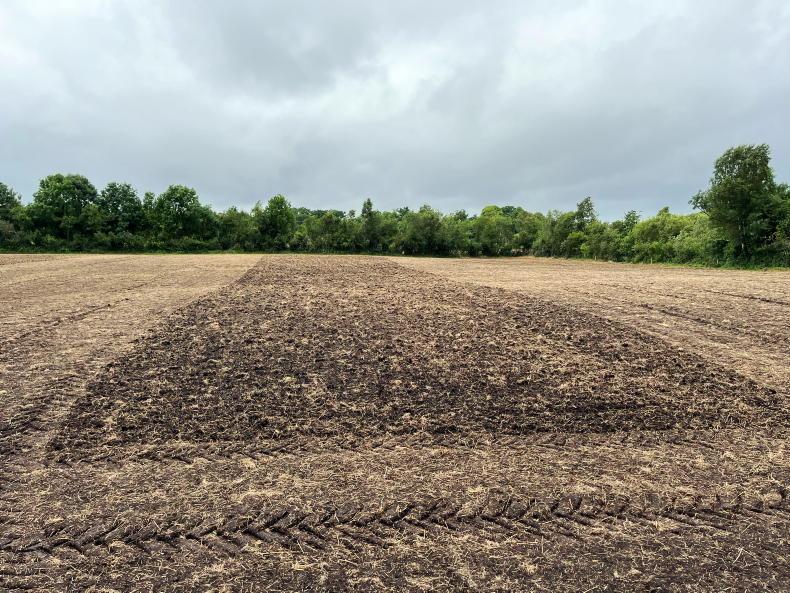
Adequate rolling after sowing is key for good seed to soil contact.
On the drought tolerance front, fescues have deeper rooting structures than ryegrass meaning they can continue to access moisture from the soil and keep growing even, in dry conditions. In New Zealand, tall fescue is commonly grown on non-irrigated farms that are prone to prolonged dry periods.
Both meadow fescue and tall fescue are more drought tolerant than ryegrass but are also more tolerant of the opposite conditions too — waterlogging.
Both fescues can be grazed and/or cut for silage but quality will be determined by the stage at which they are grazed or cut, as quality deteriorates fast after they head out. Both head out multiple times per year.
They are also slower to recover after a grazing or cutting event than ryegrass, which probably accounts for their lower overall yield. There is some evidence too that they are more tolerant of lower fertility soils — their deeper rooting depths may be a contributing factor to this as they can draw nutrients from deeper into the soil than ryegrass can.
At the end of the day, fescues are inferior to ryegrass on most of the characteristics that Irish farmers value. However, where ryegrass will not persist and is replaced by weed grasses, then fescues such as meadow or soft leafed tall fescue should be superior.
By all accounts, fescues take a little bit longer to get established than ryegrasses and the young fescue seedling is easily out-competed by other species such as ryegrass. The advice from New Zealand is to only sow fescues as a single variety although they are ofen included as part of a multispecies seed mixture.
Dairy NZ says that clover and tall fescue grow well together. However, clovers are not very tolerant of wet conditions and low soil fertility, so it is unlikely that they will persist in heavy soils prone to flooding. There are some indications that alsike clovers are more tolerant to waterlogged soils, but are unlikely to persist beyond two or three years.
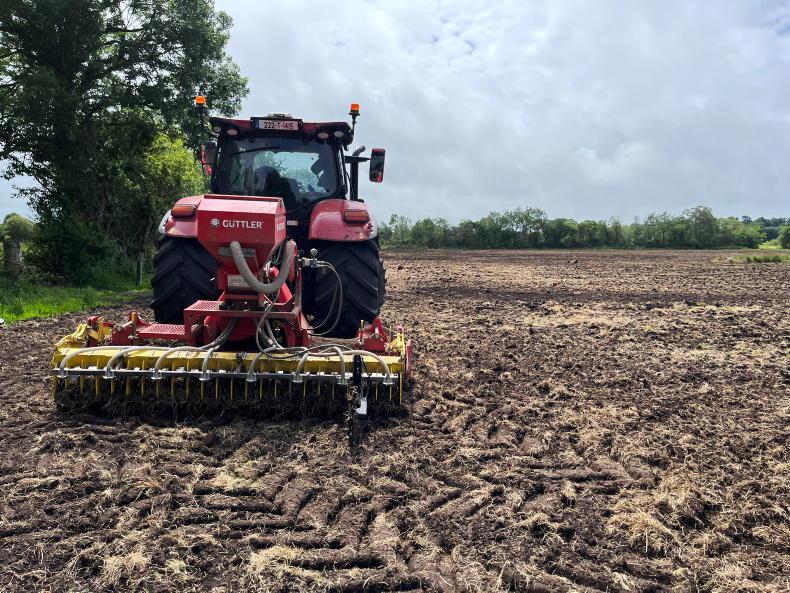
Creating a fine and firm seedbed will ensure quick germination
In terms of sowing rates, meadow fescue should be sown at a rate of 12 to 14kg of seed per acre while tall fescue can have a slightly lower rate of 10kg of seed per acre. Like with ryegrass, a fine and firm seedbed will help with quick germination.
The importance of rolling
Have you ever wondered why grass seeds emerge on the headlands and wheel tracks first, and take a lot longer to emerge and fill out on the rest of the field?
The reason for this is that headlands and wheel tracks are the firmest parts of the field and this is where the grass seedlings have the tightest seed to soil contact and so the quickest germination.
If anything, it just highlights the inadequacy of the seed-to-soil contact in the rest of the field and this is largely down to the quality of the rolling that takes place after the seeds are sown.
The typical roller on Irish farms is decades old and more often than not it no longer holds water.
This means that it doesn’t have the weight that it should have or is designed to have.
Questions can also be asked if the typical size and dimensions of a roller is sufficient in the first place. I remember the first time I travelled to New Zealand I saw a land roller on a dairy farm and was amazed by the size of it.
The diameter of the typical New Zealand roller is over 1.5m, so it is basically the same shape as the big wheels on the tractor pulling it.
In contrast, the typical Irish roller is barely the same diameter as the front wheels.
Think of the weight difference of both rollers if they are filled with water.
Essentially, bigger tractors are now highlighting the inadequacy of Irish rollers as the wheels of the tractors are more effective than the roller following behind.
To overcome this, many farmers have now moved to rolling fields twice.
However, the introduction of larger rollers would be a more effective solution and lead to faster germination of the grass seedlings and better stone burial.
Perennial ryegrass is intolerant of prolonged wet conditions and tends to die out from fields that are prone to regular flooding.Alternative species like meadow or tall fescue may not be as high yielding or good quality as ryegrass but they can persist in these types of fields. They are more productive than weed grasses such as creeping bent grass.
Different regions have different names for the type of land I’m thinking about. In Cork and Kerry, it’s known as the inches, in the midlands its known as the callows, in parts of Tipperary it would be called moors and in Limerick, Clare and Kerry it’s known as corcass land.
A more technical person could probably find differences in each of the above terms but what I’m referring to is low-lying land, subject to flooding and located next to a river. Oftentimes, these are predominately mineral soils over a deep marl subsoil and dominated by a high-water table making them difficult to drain.
There are of course some exceptions to this, particularly where there are gravel deposits along river banks and even though these rivers might flood, the land is very free draining and highly productive. For the purposes of this article, the type of land being referred to is heavy clay soil with poor permeability.
The high tide for most of these soils was probably the 1970s and 80s when rivers were regularly dredged and land drainage grants were still available. The dredging of the rivers was the key point as this created a sufficient outfall for field drains and open drains, particularly during the summer months when the river depth was low.
Older generations in these areas often talk about crops of cereals and beet being grown on drained land in the 70s and 80s.
In many instances it’s hard to believe that now, given the fact that many of the same fields now only grow rushes and weed grasses.
It highlights the fact that if these soils aren’t managed properly, then they quickly revert to nature.
These soils are often not the most fertile or productive and they carry the risk of flooding. This is a risk which has heightened in recent years due to the impacts of a changing climate. For example, in August 2023, many of these fields were under water for weeks due to the impact of severe and prolonged rainfall. In many cases, it was eight or nine months before these fields were farmed properly once again.
Improving the productivity of mineral soils is a key part of Ireland’s climate action plan. While draining peat soils is bad from an emissions perspective, draining mineral soils is good as these soils then have a greater capacity to sequester carbon.
Rightly or wrongly, dredging of rivers is now almost a thing of the past, so in most cases, farmers are at the mercy of the river depth in order to secure an outfall for drainage.
Another big obstacle is the challenge around maintaining perennial ryegrass in these swards.
Perennial ryegrass does not like to be under water. Even if the flood rises and falls in the space of a few days, the land is usually left saturated for weeks afterwards, which is a death sentence to perennial ryegrass tillers and clover stolons. Farmers that have reseeded these fields with perennial ryegrass varieties have learned to their cost that weed grasses usually fill the spaces left by the departed ryegrass.
It’s no surprise that higher parts of the fields that dry quicker continue to maintain ryegrass plants, while the lower parts end up full of weed species like annual meadow grass, creeping bent grass and natural fescues which are more tolerant to the wet land.
The problem for farmers is that these species are less digestible for livestock so make for poor grazing and silage crops. On top of this, they have lower growth rates and are far less responsive to applied fertiliser compared to perennial ryegrass.
According to experts within the grass seed sector, alternatives to perennial ryegrass exist in the form of cultivated fescue grasses such as meadow fescue and soft leafed tall fescue. An increasing number of farmers are trying these varieties on heavy land to test their persistence relative to ryegrass.
To state the obvious, these varieties are not as good as perennial ryegrass in terms of yield potential, digestibility and overall quality. Fescues are really only sown in situations where ryegrass is not tolerant, such as in regions where the summers are very dry and hot, or to a lesser extent where waterlogging is an issue.

Adequate rolling after sowing is key for good seed to soil contact.
On the drought tolerance front, fescues have deeper rooting structures than ryegrass meaning they can continue to access moisture from the soil and keep growing even, in dry conditions. In New Zealand, tall fescue is commonly grown on non-irrigated farms that are prone to prolonged dry periods.
Both meadow fescue and tall fescue are more drought tolerant than ryegrass but are also more tolerant of the opposite conditions too — waterlogging.
Both fescues can be grazed and/or cut for silage but quality will be determined by the stage at which they are grazed or cut, as quality deteriorates fast after they head out. Both head out multiple times per year.
They are also slower to recover after a grazing or cutting event than ryegrass, which probably accounts for their lower overall yield. There is some evidence too that they are more tolerant of lower fertility soils — their deeper rooting depths may be a contributing factor to this as they can draw nutrients from deeper into the soil than ryegrass can.
At the end of the day, fescues are inferior to ryegrass on most of the characteristics that Irish farmers value. However, where ryegrass will not persist and is replaced by weed grasses, then fescues such as meadow or soft leafed tall fescue should be superior.
By all accounts, fescues take a little bit longer to get established than ryegrasses and the young fescue seedling is easily out-competed by other species such as ryegrass. The advice from New Zealand is to only sow fescues as a single variety although they are ofen included as part of a multispecies seed mixture.
Dairy NZ says that clover and tall fescue grow well together. However, clovers are not very tolerant of wet conditions and low soil fertility, so it is unlikely that they will persist in heavy soils prone to flooding. There are some indications that alsike clovers are more tolerant to waterlogged soils, but are unlikely to persist beyond two or three years.

Creating a fine and firm seedbed will ensure quick germination
In terms of sowing rates, meadow fescue should be sown at a rate of 12 to 14kg of seed per acre while tall fescue can have a slightly lower rate of 10kg of seed per acre. Like with ryegrass, a fine and firm seedbed will help with quick germination.
The importance of rolling
Have you ever wondered why grass seeds emerge on the headlands and wheel tracks first, and take a lot longer to emerge and fill out on the rest of the field?
The reason for this is that headlands and wheel tracks are the firmest parts of the field and this is where the grass seedlings have the tightest seed to soil contact and so the quickest germination.
If anything, it just highlights the inadequacy of the seed-to-soil contact in the rest of the field and this is largely down to the quality of the rolling that takes place after the seeds are sown.
The typical roller on Irish farms is decades old and more often than not it no longer holds water.
This means that it doesn’t have the weight that it should have or is designed to have.
Questions can also be asked if the typical size and dimensions of a roller is sufficient in the first place. I remember the first time I travelled to New Zealand I saw a land roller on a dairy farm and was amazed by the size of it.
The diameter of the typical New Zealand roller is over 1.5m, so it is basically the same shape as the big wheels on the tractor pulling it.
In contrast, the typical Irish roller is barely the same diameter as the front wheels.
Think of the weight difference of both rollers if they are filled with water.
Essentially, bigger tractors are now highlighting the inadequacy of Irish rollers as the wheels of the tractors are more effective than the roller following behind.
To overcome this, many farmers have now moved to rolling fields twice.
However, the introduction of larger rollers would be a more effective solution and lead to faster germination of the grass seedlings and better stone burial.
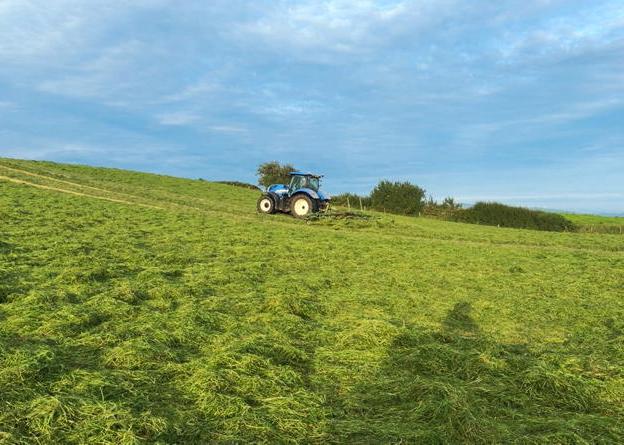
Perennial ryegrass is intolerant of prolonged wet conditions and tends to die out from fields that are prone to regular flooding.Alternative species like meadow or tall fescue may not be as high yielding or good quality as ryegrass but they can persist in these types of fields. They are more productive than weed grasses such as creeping bent grass.
SHARING OPTIONS