



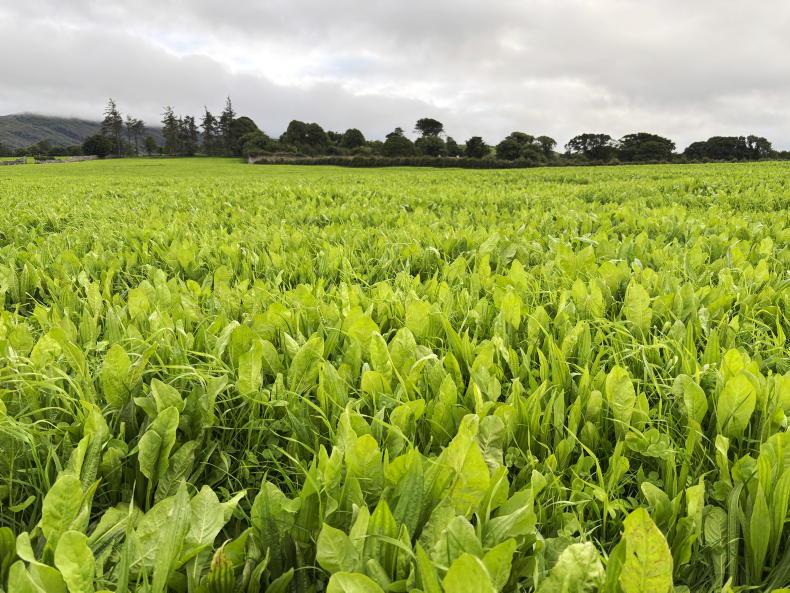
There are probably few people better qualified than Johnathan Higgins to talk about multispecies swards (MSS), with the young Sligo man having collected his PhD working on multispecies swards in UCD’s Lyons estate, under the tutelage of professor Tommy Boland. Keen to put his research in to practice, Jonathan returned to the home farm and, alongside his father Philip, is running 300 mid-season ewes and 320 contract-reared heifers (calves and yearlings) on a 92ha west coast farm – with the multispecies swards now a key part of the farm’s reseeding and lamb finishing protocol.
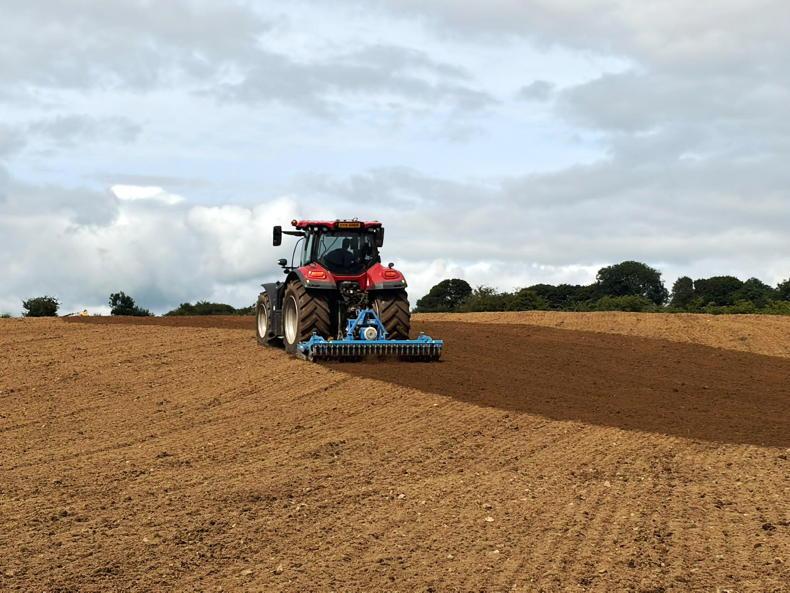
The family opened their doors to farmers in recent weeks with an Irish Grassland Association walk, where one of the key focuses was on the implementation of multispecies in the farm’s overall grassland management. Multispecies swards are sown annually as part of the farm’s reseeding programme. Paddocks are selected in the year prior and a weed control programme set in place, due to the unavailability of a selective herbicide for MSS. The MSS mix contains perennial ryegrass, timothy, white clover, red clover, plantain and chicory, with the farm applying for the MSS grant aid of €300/ha – helping to reduce increased reseeding costs. Paddocks are sprayed off and direct-drilled with an Erth seeder.
In year one, the MSS is targeted at weaned lambs, with the planting date generally seven weeks post-planned weaning. The area is subdivided in to paddocks for optimal utilisation.

“When we are turning lambs in to the MSS for the first time, our first paddock may be lighter than desirable and the last paddock heavier, but this allows us to develop a rotation,” explained Jonathan.
The rotation length is kept at 21-25 days, with Dr Lisa McGrane of Teagasc Athenry explaining that a paddock system was required to prevent over-grazing of certain varieties, eg red clover, as sheep are highly selective. In the first few years of using the MSS, the Higgins’ grazed down to 6cm, which had a negative impact on certain herbs in the mix due to shading. McGrane explained how trial work on MSS showed that 4.75cm was the optimum residual for white clover and red clover, while seeing high levels of plantain and chicory remaining in the sward.
In year two, the percentage of multispecies companion plants within the sward has dropped to 25% (from 50% in year one). These swards are primarily targeted at first-lambing ewe hoggets (two-tooth hoggets) or ewes lacking flesh, aged ewes, etc. While no baling is done in year one of the sward due to the high value for finishing lambs, in year two the Higgins’ will top a paddock or allow heifers to clean up swards, with a small percentage baled out if absolutely necessary.
Long-term use
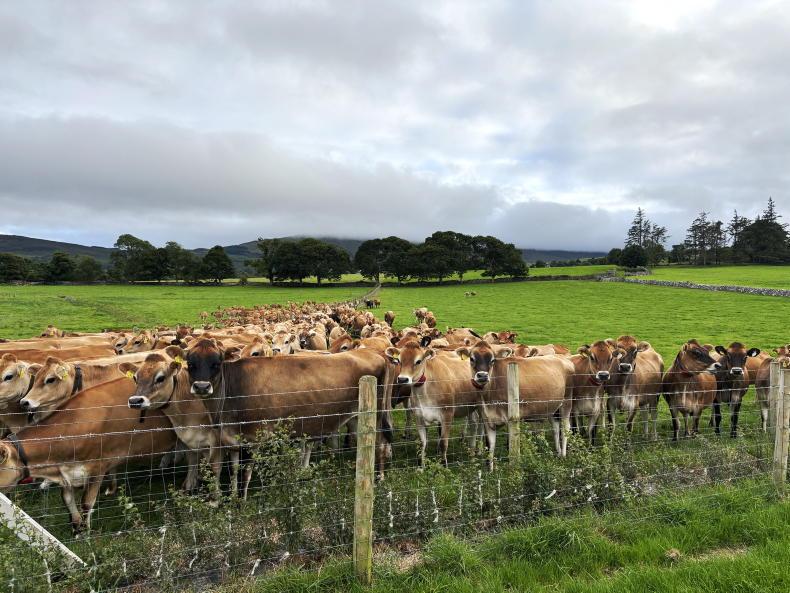
After year two, there is generally very little chicory or plantain left in the sward, but it is not something that overly excites Jonathan; the sward has done it’s duty in the first two years and he is still left with a sward of grass with high-yielding perennial ryegrasses and white clover that is suited to both the mature ewes and lambs, or the Jersey heifers reared on-contract. This was something that McGrane was also eager to highlight, in that high quality perennial ryegrasses and white clover varieties had to be used to ensure that the value of the reseed was not wasted.
“Even if the chicory and plantain are no longer in the sward, you should still have a highly productive pasture where quality ryegrass and white clover varieties are used,” she explained.



SHARING OPTIONS