The countdown to dry-off is now well underway for spring-calving herds. The decisions taken and practices put in place on farms over the coming weeks around cell count and mastitis management will have a major impact on how successful the dry period is.
Cost
The cost of mastitis can range from €250 for a mild clinical case, right up to €700 to €800 for more serious cases.
These losses are based on treatment costs, veterinary bills and lost milk production. However, while clinical mastitis is the most obvious problem, subclinical mastitis is arguably the bigger issue on Irish dairy farms.
Subclinical mastitis occurs when a cow has an infection in her udder but shows no visible signs of disease.
While the milk may appear normal, the infection causes an increase in somatic cell count (SCC). These infections can often go unnoticed without milk recording and are particularly important to identify before drying off, as they can persist into the following lactation.
A herd SCC above 200,000 cells/ml indicates that there are likely to be issues with individual cows. At milk recording, it’s easy to identify the millionaires, as they stand out from the rest. However, individual cows may also be harbouring subclinical mastitis at cell counts of 200,000 cells/ml and above. Looking at the latest ICBF data for the week gone by, close to half of Irish herds have an average SCC above 200,000 cells/ml.
This is concerning, as the cost of maintaining a herd SCC above 200,000 cells/ml is estimated at approximately 1c/l. Once SCC rises above 400,000 cells/ml, that cost increases to almost 4c/l.
Actions
So, what can farmers do over the next month to reduce SCC, lower the risk of clinical mastitis over winter and set the herd up for a good spring?
Animal Health Ireland (AHI) is currently running a series covering these questions. The series, called Countdown to Dry-Off, is available on its website.
Step 1 – milk record
‘You can’t manage what you don’t measure.’ This old saying is particularly relevant when it comes to managing cell count.
Most farms will carry out a milk recording in the run-up to dry-off. If one hasn’t already been booked, it should be a priority over the coming weeks.
The information gathered will allow farmers to identify problem cows in the herd, particularly those with persistently high cell counts or recurring mastitis issues.
AHI recommends carrying out a final milk recording approximately 30 days before drying off commences.
Once the results are available, farmers should work with their vet to put a dry cow treatment plan in place, identifying which cows require antibiotic treatment and which are suitable for teat sealer only.
Step 2 – milk samples
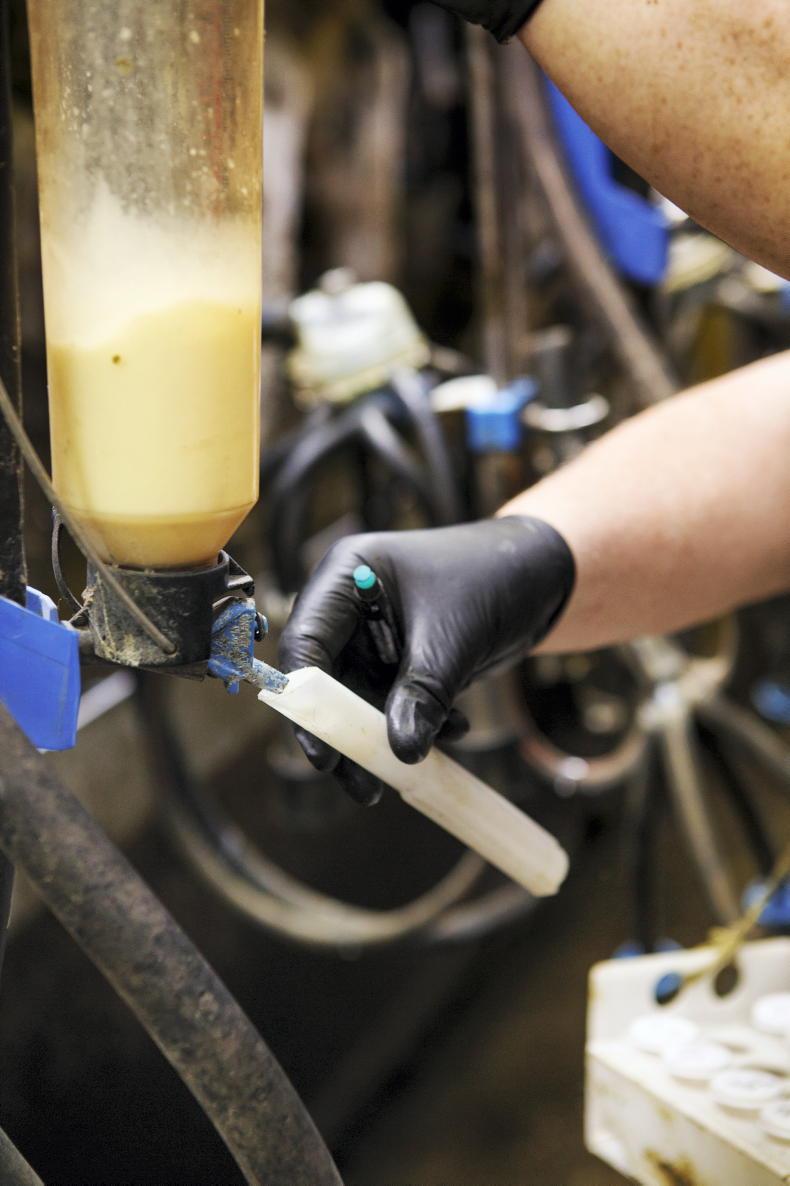
Once milk recording has been completed, AHI advises taking five or six aseptic milk samples from high-SCC cows.
The reason for this, is that different farms can have different bacteria responsible for mastitis and elevated cell counts.
Using a general dry cow antibiotic without knowing which bacteria are present may mean the treatment is not effective against the infection.
This can result in cell count problems continuing into the following lactation, while unnecessary antibiotic use also increases the risk of antimicrobial resistance.
Milk samples can be sent to a veterinary laboratory to identify the bacteria present, with the results helping the vet decide on the most appropriate treatment. Antibiotic sensitivity testing can also be carried out where appropriate.
Clipping cows’ tails a number of weeks before drying off is another worthwhile job, helping to reduce the risk of dirt and bacteria being transferred from the tail to the udder.
Step 3 – preparing the materials
Different farms will have slightly different procedures when it comes to drying off cows.
Regardless of the system, being well prepared before starting is essential.
Have plenty of disposable gloves ordered, along with clean aprons and arm cuffs to prevent clothing sleeves coming into contact with teat ends during the process.
Methylated spirits or surgical spirits, cotton wool and marker spray should also be available in sufficient quantities before drying off begins. Having all materials organised beforehand will make the process more straightforward and reduce the risk of mistakes or contamination.
Step 4 – clean sheds
One of the most important factors in achieving a successful dry period is maintaining a clean housing environment.
Cubicles should be cleaned and disinfected a couple of weeks before drying off, allowing sufficient time for the beds to dry out before cows enter the shed.
Order plenty of good-quality cubicle lime and ensure scrapers are operating correctly in the passages. A build-up of dung in passageways can quickly lead to dirty cubicles, increasing the risk of bacteria coming into contact with teat ends. Maintaining clean and dry beds is particularly important in the days immediately after drying off, when cows can be more vulnerable to new udder infections.
Step 5 – reduce milk yields
When preparing to dry off cows, they should be producing no more than 15 litres of milk per day.
Cows producing higher volumes of milk at drying off are at greater risk of udder pressure and milk leakage from the teats, increasing the likelihood of infection.
For cows housed in the days leading up to drying off, adding a couple of kilos of straw to the diet can help reduce milk production.
Cows that are still grazing should have their grass intake restricted, while concentrate feeding in the parlour should be stopped for several days before drying off.
Finally, for the dry-off process itself, organising additional help is important.
If family help isn’t available, bringing someone in for a day or two can be a worthwhile investment.
Drying off cows is a job that shouldn’t be rushed, particularly where teat sealers and antibiotics are being administered. Take your time to reduce the risk of introducing new infections during the dry period.