
We all have those special Christmas recipes we like to bring out each year. Maybe it’s a dog-eared piece of paper splattered with decades-old cake batter, or perhaps you inherited your grandmother’s handwritten recipe book, full of your family’s favourite foods.
It could be a recipe your discovered in a magazine or newspaper and you take out the clipping each year. These are our “keeper” recipes – everyone has them – and they are a huge part of what makes Christmas special in each individual household.
This year, Irish Country Living Food asked some of Ireland’s top culinary talent to share their
“keepers” with us, and they were happy to comply.
Paul McDonald
Bastion, Co Cork
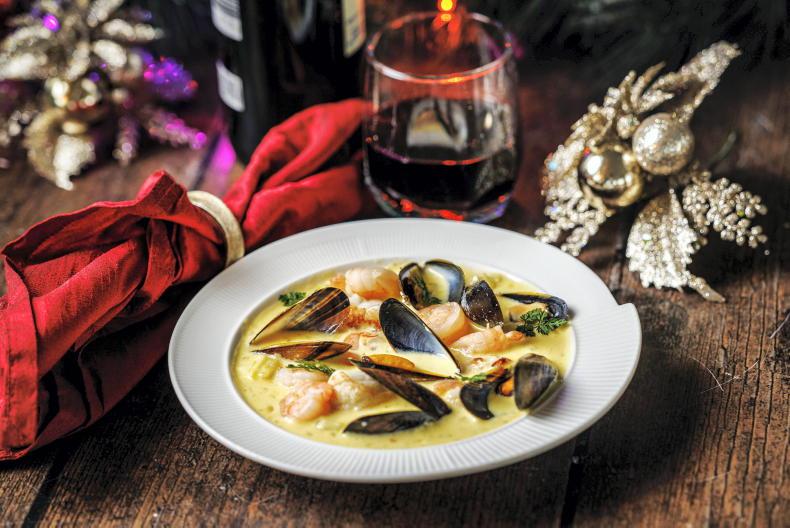
This chowder started its life in Adare Manor, where I used to work. I tried to convert diners to a tomato-based chowder, but that didn’t fly, so we reverted back to the creamier versions so many are fond of.
However, I didn’t like a cream-based chowder made with thickening agents, instead, I preferred it made with a lightly reduced base of cream. We layered up flavours, like fennel with Pernod, and finished it with some acidity from the lemon. The resulting chowder is rich and creamy with plenty of fresh seafood flavour.
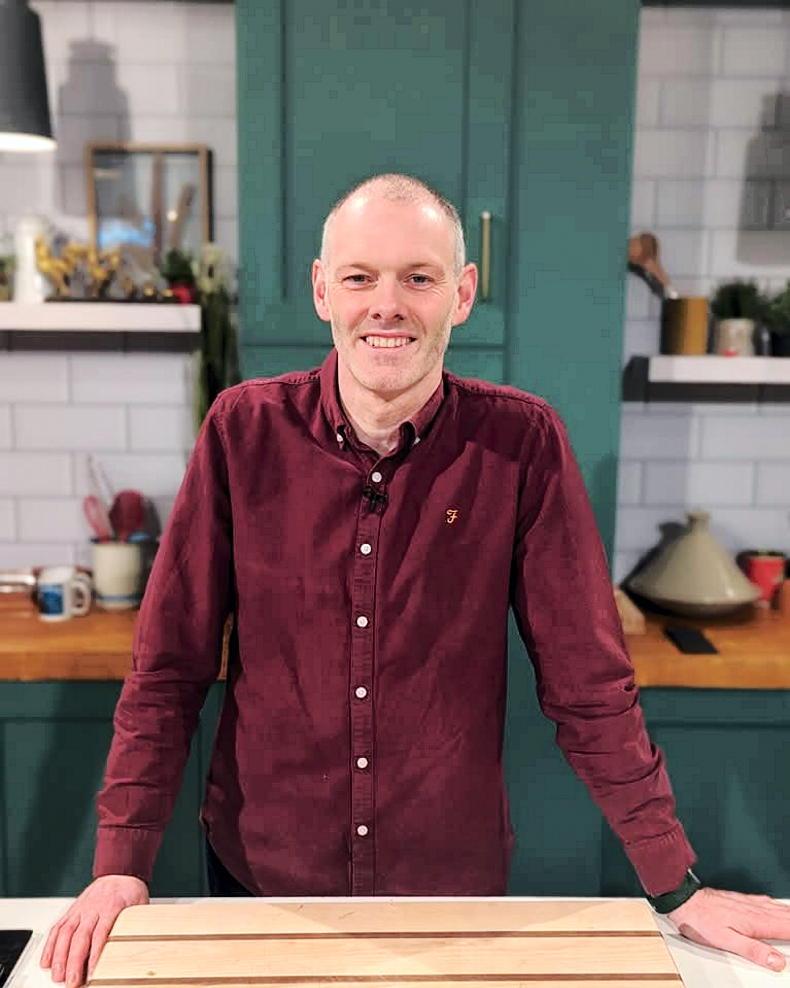
Paul McDonald, Bastion, Co Cork. \ RTE Today
Irish seafood chowder
Serves 6
Ingredients
1 tbsp butter
175g onion, finely diced
50g leek, finely diced
125g celery, finely diced
75g fennel, finely diced
200g potato, peeled and diced into bite-sized cubes
2 cloves garlic, minced
Splash of Pernod (about 15ml)
2 vegetable stock cubes
4-6 strands saffron
2 star anise
850ml cream
200g cod filet, cut into chunks
200g monkfish filet, cut into chunks
200g prawns
1kg Irish rope-grown mussels
Juice of 1 lemon
Salt, to taste, if needed
Method
1. In a large, heavy bottomed saucepan, melt the butter over medium heat and add the onion, celery, leek and fennel. Cook gently over moderate heat for 5-8 minutes, until the vegetables are tender and translucent, but not browned.
2. Add the diced potato and cook for 2-3 minutes more, again taking care not to brown the vegetables. Add the stock cubes and garlic. Cook for an additional minute. Then, add the Pernod and let it bubble and reduce slightly, for about 1-2 minutes.
3. Add the saffron strands and star anise, followed by the cream. Bring to a gentle simmer and cook for 15-20 minutes, until the vegetables are completely tender. You don’t want the cream to reduce too much,
so make sure the mixture isn’t boiling.
4. Just before you are ready to serve, add the seafood and fresh lemon juice. Continue to simmer gently until the fish and prawns are cooked and the mussels have steamed open (discard any mussels that do not open).
5. Season the chowder to taste and serve hot with warm, crusty bread.
Gary O’Hanlon
The K Club, Co Kildare
I was taught this recipe by my pal, Pat, in Boston. Her recipe has come down through the generations, and when she shared it with me, it was the first time it had gone outside their family circle. She always serves it with a big dollop of Heinz ketchup.
Christmas Eve in 2003 was the first time I tasted it. That night, when everyone had gone to bed, I woke up at 3 in the morning and sneaked downstairs. I was heating a big slice in the microwave, and I got caught rotten! It was the first time Pat had invited me to her house for Christmas, and I got caught heating up food in the middle of the night – they still joke about it to this day.
Netty, my wife, and I often make a dinner out of it with a beautiful rich jus, petit pois and chunky chips. You can have it on its own but quite often we’ve had it as a dinner; it’s so lovely.

Gary O'Hanlon, The K Club, Co Kildare.
Tourtière
Serves 8-10
Ingredients
For the pastry:
200g cold, cubed butter
400g plain flour
½ tsp salt
95ml cold water
1 egg, beaten, for egg wash
For the filling:
1 tbsp Irish rapeseed oil
225g lean beef mince
225g pork mince
1 medium onion, diced
½ tsp salt
¼ tsp pepper
¼ tsp celery salt
¼ tsp ground cloves
¼ tsp cinnamon
¼ tsp ground sage
60ml water (more, if needed)
6 potatoes, boiled and mashed (no butter, milk or seasoning added)
Method
1. Make the pastry: ensure your diced butter is very cold. Add it to a food processor with the flour and salt.
2. Pulse this mixture for approximately 20 seconds, until the dough is blended and the consistency resembles coarse crumbs.
3. Place this mixture to a large bowl and make a well in the centre. Add 60ml of the cold water and mix with your hands. As the pastry starts to come together, add the remaining water and continue working the dough until it comes together into a ball.
4. Place the dough on a lightly floured surface and knead until it is soft and the consistency of play dough (do not overmix). Divide the dough into two equal sized portions, shape into a disc and wrap each portion in cling film. Rest the pastry dough in the fridge for one hour (or overnight; the dough can also be frozen at this stage).
5. While the dough is resting, make the filling: heat a large pan or skillet on medium high. Add the rapeseed oil and the minced beef and pork. Break up the meat and brown, cooking for about 5 minutes. Add the diced onion and continue to cook for an additional 5-10 minutes, until the onion is softened and the meat is fully cooked.
6. Drain the fat from the meat, reserving 1-2 tbsp for the filling. Add the salt, pepper, celery salt, ground cloves, cinnamon and ground sage, then add the water and simmer for 15-20 minutes. Cool to room temperature.
7. While the meat is cooking, boil and mash the potatoes. Set aside to cool.
8. Add the reserved fat back into the cooled meat mixture and mix well to combine. Add enough of the mashed potato to make a pliable filling – you might not need it all, but the mixture shouldn’t be too wet.
9. Make the tourtière: preheat the oven to 200°C. Let the pastry dough sit at room temperature for about 20 minutes to make it easier to roll out (it might crumble if you roll it out while too cold). Roll out the first half on a lightly floured surface and place on the bottom of a 27cm or 29cm circular pie dish, leaving as much overhang as possible.
10. Add the filling right to the top of the pie dish (any leftover filling can be frozen). Roll out the second disc of dough and carefully place over the top of the pie. Trim the overhanging pastry, leaving about ½ inch of both the bottom and top layer. Roll the two layers up and over the top of the pie dish, then use your fingers or a fork to seal the edges and crimp.
11. Use a paring knife to make several slits in the top of the pie to allow steam to escape while cooking. Brush the top of the pie with a beaten egg and place in the preheated oven. Bake at 200°C for 10 minutes, then reduce the oven temperature to 180°C. Bake the pie for an additional 30-40 minutes, until golden brown and bubbling hot.
12. To serve, let the pie sit at room temperature to cool for at least 20 minutes. Serve on its own with a big dollop of Heinz ketchup, or as part of a larger meal with buttered peas, gravy and chunky chips.
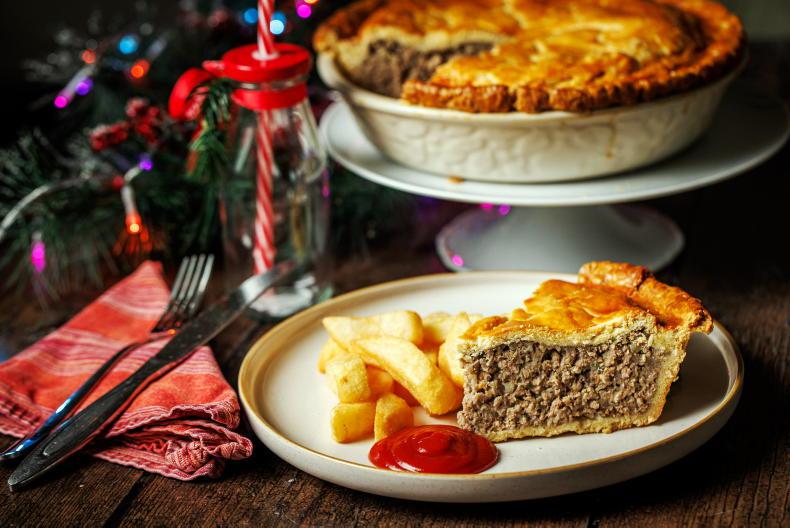
Gary O'Hanlon's tourtiere. \ Philip Doyle
Nicole Server-Pawlukojc, Arán, Co Kilkenny
This recipe is special to me because it’s something we always had for Christmas at my grandparents’ house in the Philippines. It’s more than just a part of the Christmas meal – it’s a slice of tradition, a centrepiece of warmth and a reminder of all the holidays spent laughing, sharing, and coming home.
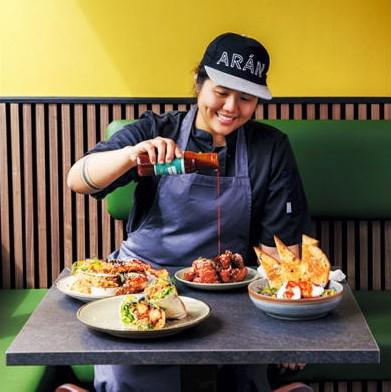
Nicole Server-Pawlukojc.
Noche Buena ham
Serves 12
Ingredients
4.5kg bone-in ham
For the poaching liquid:
300g soft dark brown sugar
2L pineapple juice
2 cans of beer (pale lager)
1 tbsp whole cloves
4 bay leaves
4 cinnamon sticks
For the glaze:
500ml prepared poaching liquid
300g soft brown sugar
100ml pineapple juice
400g tinned pineapple chunks in juice
115g honey
Zest and juice of one orange
30g Dijon mustard
5g ground cinnamon
Juice of one lemon
Method
1. Place the ham in a large pot and add the poaching ingredients. Make sure the ham is fully submerged. Bring to a gentle simmer on medium-low heat.
2. Once the poaching liquid comes to a boil, turn the heat to low. Cover and cook the ham for 1 hour, making sure the poaching liquid is just barely simmering. Rotate the ham every 20 minutes to ensure even cooking.
3. Remove the ham from poaching liquid. Remove the outer layer of skin and, using a sharp knife, score diamond-shaped patterns across the layer of fat on the ham. This will help the glaze penetrate the meat. Insert cloves at every intersection.
4. Now make the pineapple glaze: combine all of the glaze ingredients in a pot and blitz with a hand blender to lightly crush some of the pineapple pieces while ensuring it stays nice and chunky. Cook the glaze over medium-low heat until it has reduced to a thick consistency.
5. Preheat the oven to 170°C. Brush the ham with some of the glaze, setting aside one quarter of it to serve.
6. Bake the ham on the lowest rack in your oven for 1 ½ hours. While baking, baste the ham with the glaze every 20 minutes. If the glaze is becoming too brown for your liking, cover the ham loosely with foil.
7. In the final 5 minutes of cooking, increase the temperature to 200°C to let the ham brown and the glaze sizzle.
8. Remove from the oven and brush the ham liberally with the pan juices. Cover with foil and let rest for at least 15 minutes before slicing.
9. Serve with the reserved warm pineapple glaze on the side. We like to eat this ham with macaroni salad or Filipino-style spaghetti.
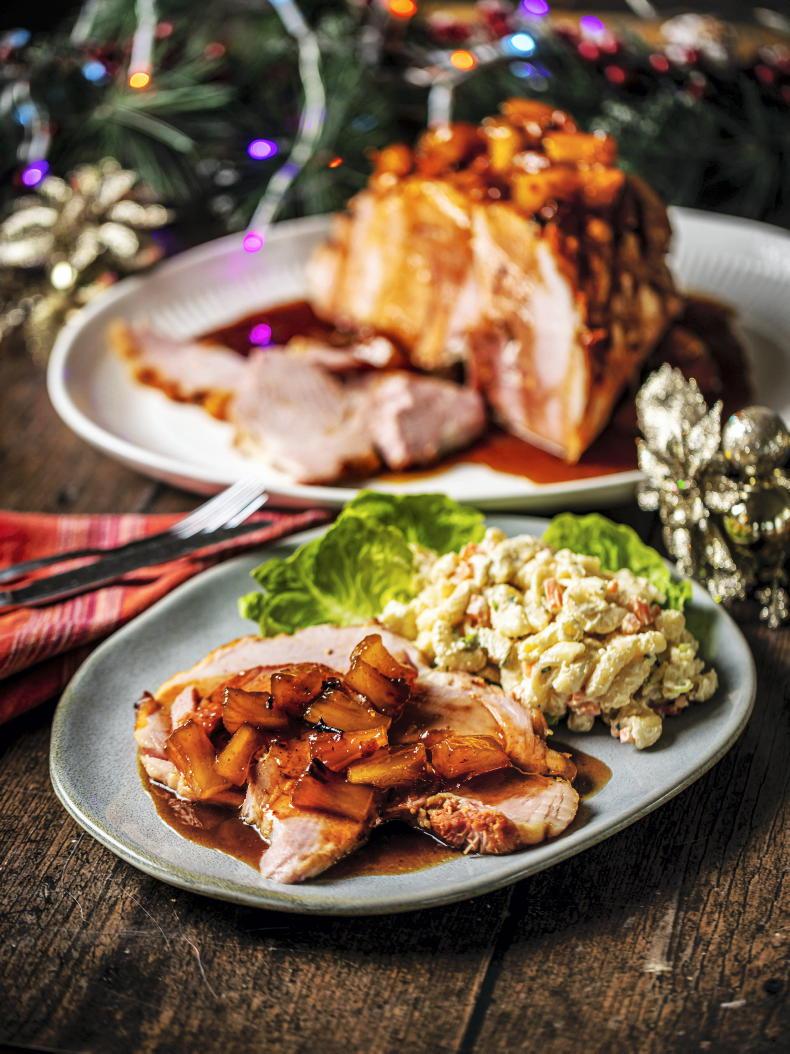
Nicole Server-Pawlukojc's Noche Buena ham. \ Philip Doyle
Stephen Holland
Dunluce Lodge, Co Antrim
In the Holland household each Christmas, we love a good pudding. This cake is usually made the previous Easter and we slowly feed it brandy, Kirsh and a little Armagnac throughout the year. The flavours are rich, spicy and – believe me when I say this – less is more. Bursting with flavour, it is a true Christmas highlight. The fruit cake is faultless without the tipples of alcohol, but there is nothing like a warming pudding on Christmas, served with fresh cream and the fire roaring.
Stephen Holland, Dunluce Lodge, Co Antrim.
The Holland family’s tipsy cake
Makes 1 cake
Ingredients
500ml water
120g raisins
120g unsalted butter
60g walnuts, roughly chopped
210g plain flour
200g granulated sugar
½ tsp salt
1 tsp baking soda
½ tsp each ground cinnamon
and nutmeg
¼ tsp ground cloves
100ml brandy (optional)
100ml Armagnac (optional)
100ml Kirsh (optional)
Method
1. Preheat your oven to175°C. Butter a 23cm x 30cm cake tin and set aside until ready to use.
2. In a large, heavy bottomed saucepan, bring the water to a boil over high heat and then add the raisins. Reduce the heat to a simmer and gently cook for the fruit for 15 minutes.
3. Remove the saucepan from the heat and add the butter. Once the butter is melted, leave to cool.
4. Once cooled, add the chopped walnuts, flour, sugar, salt, baking soda, cinnamon, nutmeg and cloves. Mix with a wooden spoon or spatula, taking care not to overmix the batter.
5. Spread the batter evenly into the prepared pan and bake for about 30 minutes. Test the cake by inserting a metal skewer into the centre. If it doesn’t come out clean, continue baking in 5-minute increments until you get a clean skewer.
6. This cake can also be baked as a loaf (bake for around 50 minutes before testing, then use the same skewer test until it’s done). It can be served immediately, once cooled, or, as the Holland’s do, made months in advance, stored in a cool, dark place and fed a mixture of brandy, Armagnac and Kirsch at regular throughout the year.
7. Once sliced, keep the cake in an airtight container for up to five days.
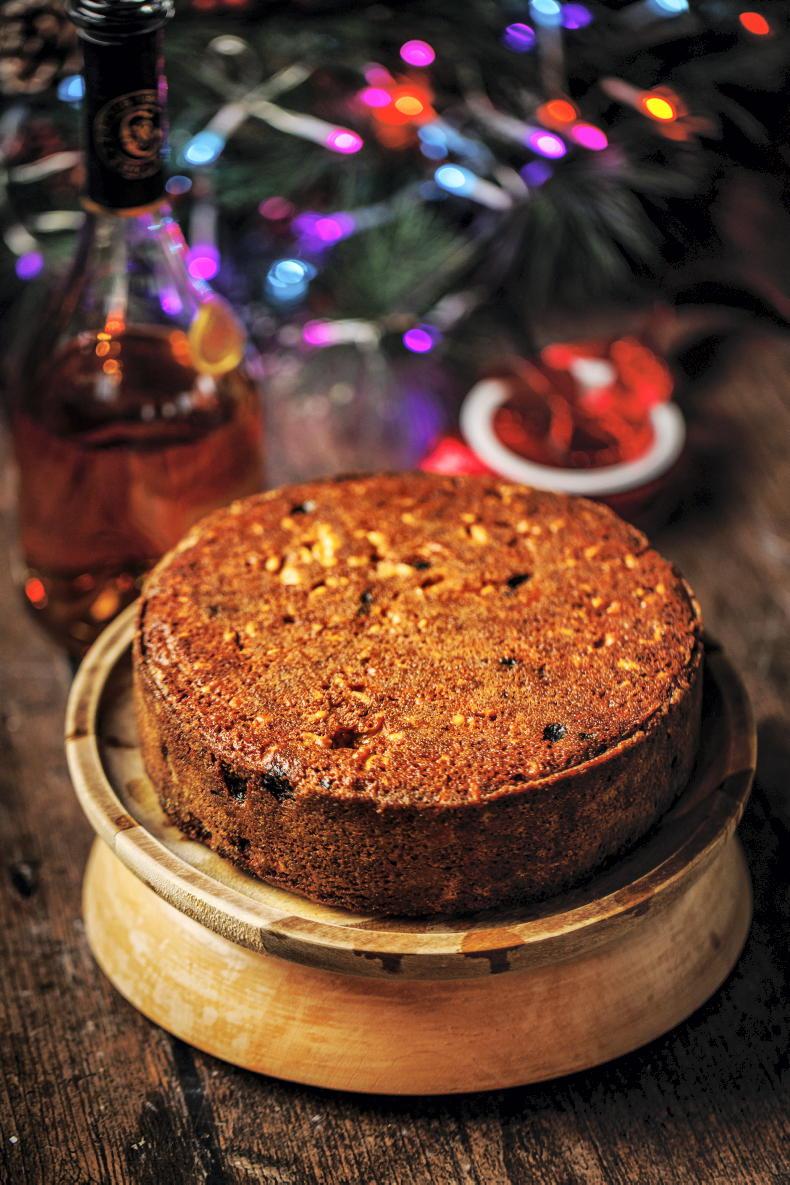
Stephen Holland's tipsy cake. \ Philip Doyle
Danni Barry
Ballinahinch Castle, Co Galway
What I enjoy most about the Christmas season is the sense of togetherness it brings. There’s something very special about seeing families and friends gather around a table to share a meal, especially here in the hotel, where we’ve become part of so many people’s Christmas traditions. The atmosphere is full of warmth and anticipation, and for us in the kitchen, it’s a privilege to be part of creating that festive feeling.
This stuffing recipe has a real sense of home for me. It’s inspired by the kind of Christmas cooking I grew up with – simple and hearty. I’ve refined it a little over the years, but it still has that comforting, nostalgic quality that reminds me of family dinners and the excitement of Christmas Day. It’s a dish that brings people together.
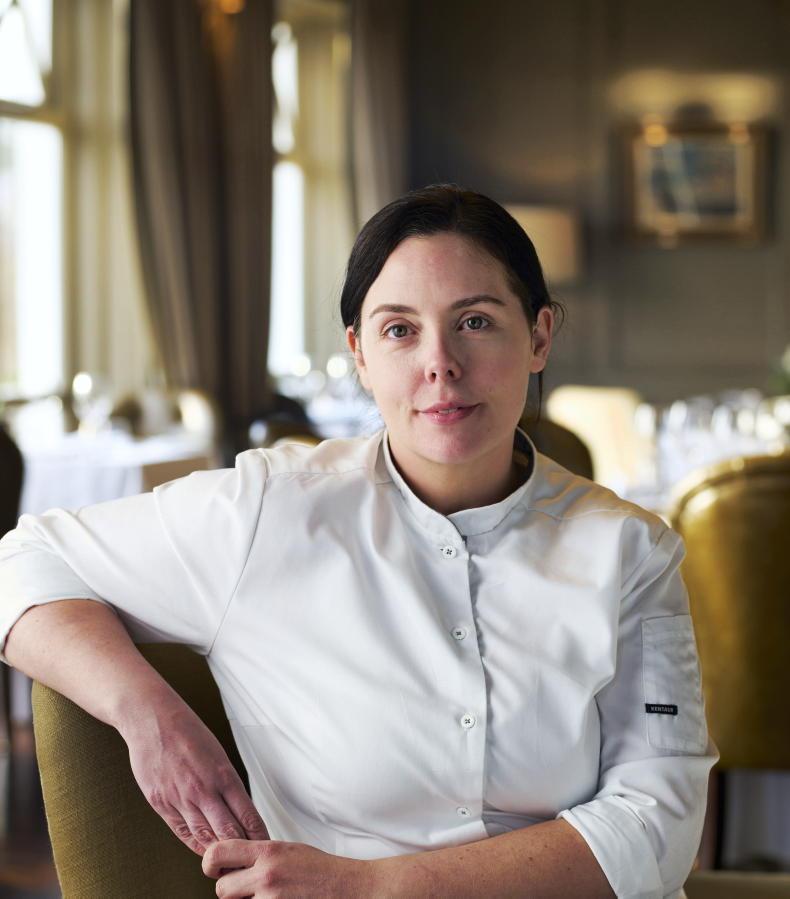
Danni Barry, Ballinahinch Castle, Co Galway.
Christmas stuffing
Serves 10-12
Ingredients
450g butter
2 onions, finely diced
80g fresh sage, finely chopped
1 bunch picked thyme leaves,
finely chopped
2 tbsp fennel seeds
200g dried apricot, finely diced
200g dried cranberries,
roughly chopped
1kg fresh breadcrumbs
1kg free range pork mince or sausage meat
1 bunch flat leaf parsley, finely chopped
Salt and freshly ground black pepper, to taste
Method
1. Cook the onion, sage and thyme with the fennel seeds slowly in the butter for 15 minutes until softened. You want the onions to be translucent, with no browning.
2. Add the chopped apricots and cranberries and stir through.
3. Place the fresh breadcrumbs in a large mixing bowl. Add the butter and onion mixture to the bowl and mix well until the breadcrumbs are fully incorporated into the butter. Cool to room temperature.
4. Once cooled, add the pork or sausage meat to the breadcrumb mixture. If you have a stand mixer, place the mixture into the bowl and mix with the paddle attachment for 5-10 minutes until well mixed. Add the chopped flat leaf parsley and season with salt and pepper before giving it one more good mix.
5. To check the seasoning, take a small amount of stuffing mixture and shape it into a patty. Fry in a frying pan until fully cooked, then taste. Adjust the seasoning, if necessary. Preheat the oven to 150°C.
6. Line a roasting tray with foil and place the stuffing into the tray. Cover with additional foil. Bake the stuffing until completely cooked through, around 30-40 minutes. Serve alongside your traditional roast turkey with gravy.
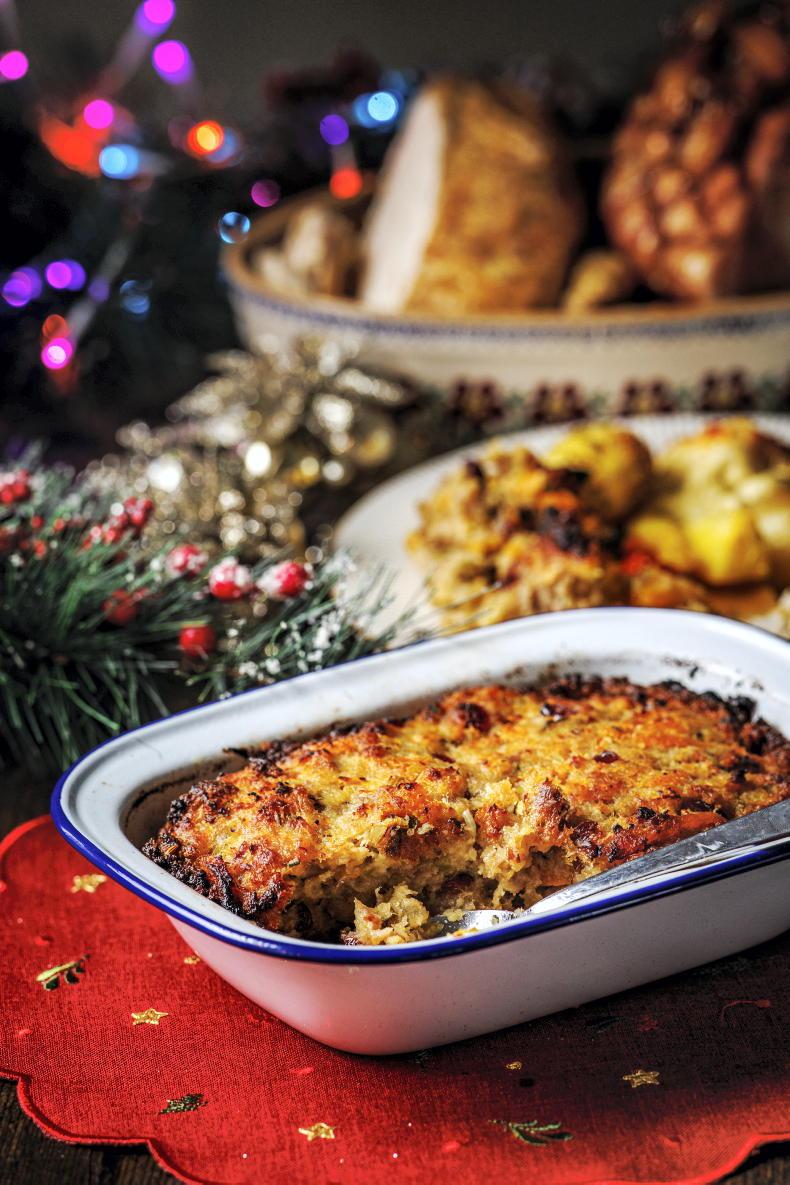
Danni Barry's Christmas stuffing. \ Philip Doyle
Donal Skehan
This is one of my favourite Christmas recipes because the warm spices, sticky glaze and soft, buttery texture fill the kitchen with festive aromas and make the perfect comforting treat to share or gift during the holidays. Also, as this recipe takes some patience and time, it forces you to slow down in the hectic time that is Christmas.
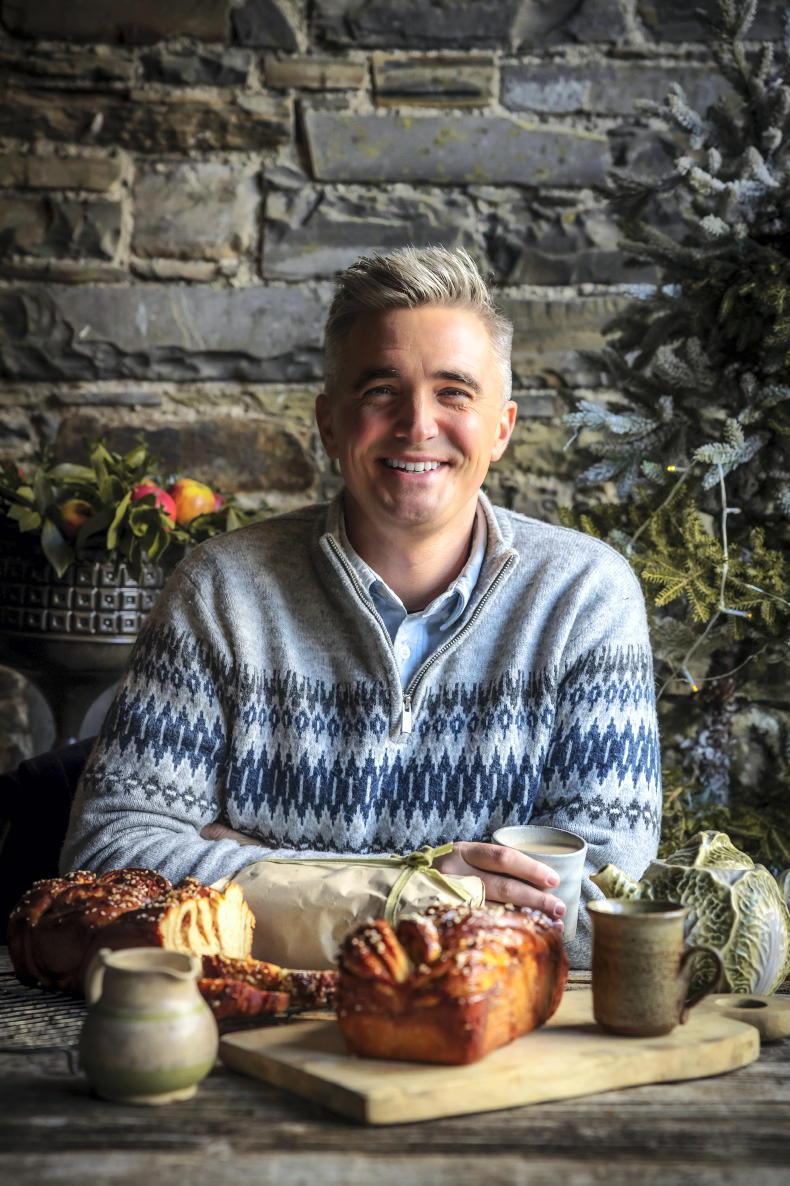
Donal Skehan.
Glazed festive loaves
Makes 2 loaves
Ingredients
500ml whole milk
110g butter
75g caster sugar
800g strong bread flour
12g fine sea salt
2 x 7g sachets of instant yeast
2 tsp ground cardamom
1 egg, beaten
4 tbsp of pearl sugar (demerara sugar will work too)
For the filling:
125g soft butter
90g soft light brown sugar
1 tsp ground cinnamon
40g pecans, quite finely chopped
For the syrup:
45g caster sugar
45ml water
1tsp ground cardamom
Method
1. Warm the milk, butter and sugar together in a pan over a medium heat until the butter and sugar are melted.
2. Mix the flour, salt, yeast and cardamom in a large mixing bowl. Make a well in the centre and pour the wet ingredients in. Using a wooden spoon or your hands, mix until you have a rough dough. Turn out onto a clean surface and knead for about 10 minutes until smooth and elastic (or alternatively knead in an electric stand mixer). The dough will start off shaggy and sticky but will come together as you knead and you shouldn’t need to add any more flour.
3. Transfer the dough to a floured bowl, cover with a towel and let it rise for 1 hour in a warm dark place.
4. Meanwhile, make the filling. Beat the butter, sugar and cinnamon together in a bowl until light and fluffy.
5. When the dough has risen, punch it down in the bowl. Turn out onto a lightly floured surface and roll the
dough into a large rectangle about 5mm thick, spreading the filling all over and scattering with the pecans.
6. Then, from the long side, roll the dough so you end up with a long cylinder. Cut the cylinder into two pieces and roll each one out lightly to form two long rectangles about 10cm wide.
7. Use a sharp knife to cut each rectangle into three long strips (leaving about 2cm at the top uncut to keep them together). Plait the strips and seal together at the ends.
8. Transfer to two 900g loaf tins. Leave to rise again, covered, for 45 minutes to 1 hour in a warm place.
9. Preheat the oven to 190°C. Brush the loaves with beaten egg and sprinkle with pearl sugar. Bake in the oven for about 25 minutes, or until it turns golden brown and is nicely risen.
10. To make the syrup, melt the sugar in the water over a low heat then add the cardamom and bubble until you have a light but sticky syrup.
11. Remove the loaves from the oven, brush all over with the syrup then transfer to a wire rack and allow to cool slightly before slicing and serving.
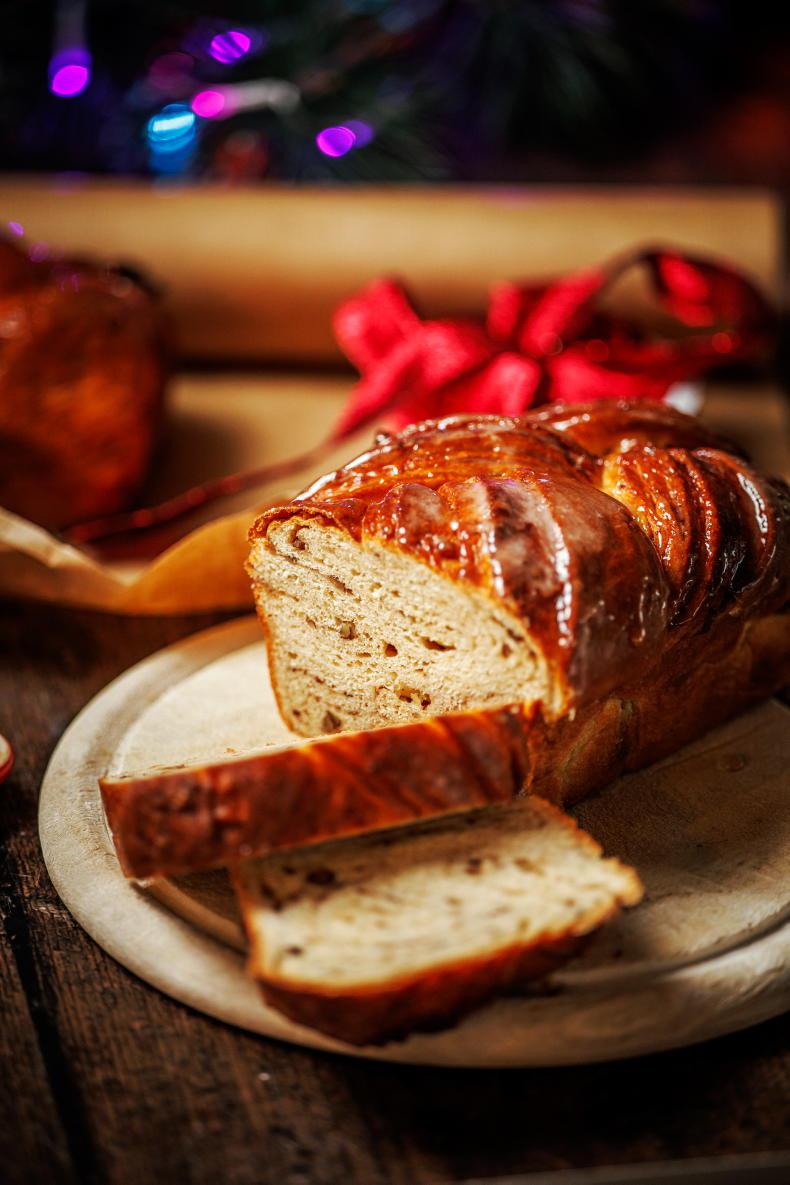
Donal Skehan's glazed festive loaves. \ Philip Doyle
Paula Stakelum
Ashford Castle, Co Galway
There’s a perception that making chocolate fondant on Christmas Day is a risky move – but I disagree. Whether you prefer it soft and flowing or more cake-like and set, the beauty of this dessert is that it’s entirely up to you. After all, there are no rules on Christmas Day. I always prepare this recipe in the morning and leave the fondants to chill in the fridge, ready to bake in the afternoon. The rich, indulgent chocolate paired with a generous spoonful of boozy cream makes for the perfect festive treat.
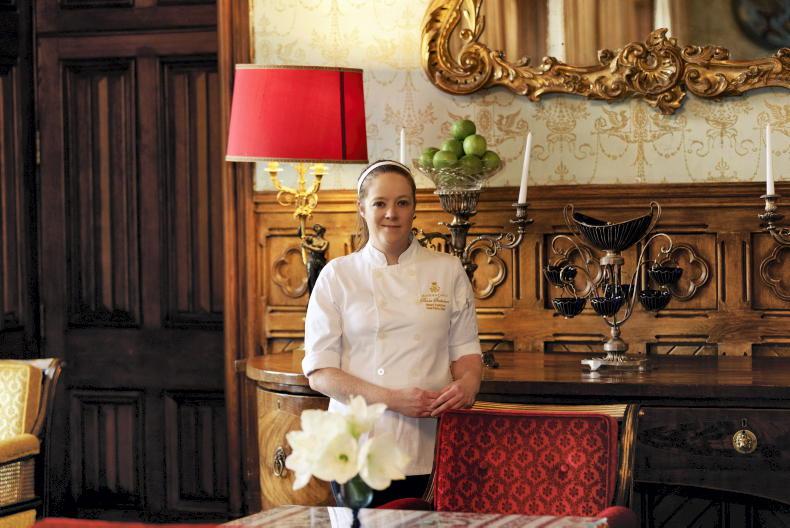
Paula Stakelum, Ashford Castle, Co Galway.
Chocolate fondant with boozy cream
Serves 12
Ingredients
200g 70% dark chocolate
100g 33% milk chocolate
225g unsalted butter
150g caster sugar
225g whole eggs
110g egg yolk
60g strong (bread) flour
50g unsalted butter, for greasing
50g cocoa powder, for dusting
For the boozy cream:
200g mascarpone cheese
400g single cream
25ml liqueur of choice (Tia Maria, Baileys or Irish whiskey)
Method
1. Prepare 12 baking moulds or ramekins by brushing with melted butter, then dusting with cocoa powder. Set aside until ready to fill.
2. Place the dark chocolate, milk chocolate and butter into a bowl. Melt gently by placing the bowl over a pot of barely simmering water.
3. In a stand mixer or using a hand mixer, whisk the eggs, egg yolks and sugar until pale in colour and doubled in volume. Whisk on a medium speed to create an even amount of air (this will keep the fondant light and airy when cooked). This will take up to 10 minutes of whisking.
4. When the mixture has doubled in volume, sieve the flour before gently folding into the egg and sugar. Fold the melted chocolate and butter into the mixture before leaving the batter to rest for 10 minutes.
5. Once the batter has rested, pipe or spoon equal amounts into each of the prepared moulds or ramekins. Each mould should be three quarters full of batter.
6. Chill the fondants in the fridge for 4-6 hours. When ready to bake, preheat the oven to 190°C.
7. If you like your chocolate fondant to be soft and flowing, bake in the preheated oven for 9 minutes, and then let sit in the moulds for 2 minutes before plating. For a more set bake, leave them in the oven for 13 minutes and let sit in the moulds for 2 minutes before plating.
8. Make the boozy cream: place the mascarpone, cream and liqueur of choice into a mixing bowl. Using a hand mixer or stand mixer, whip until soft peaks are formed.
9. Serve the fondants warm from the oven with a big dollop of cream.
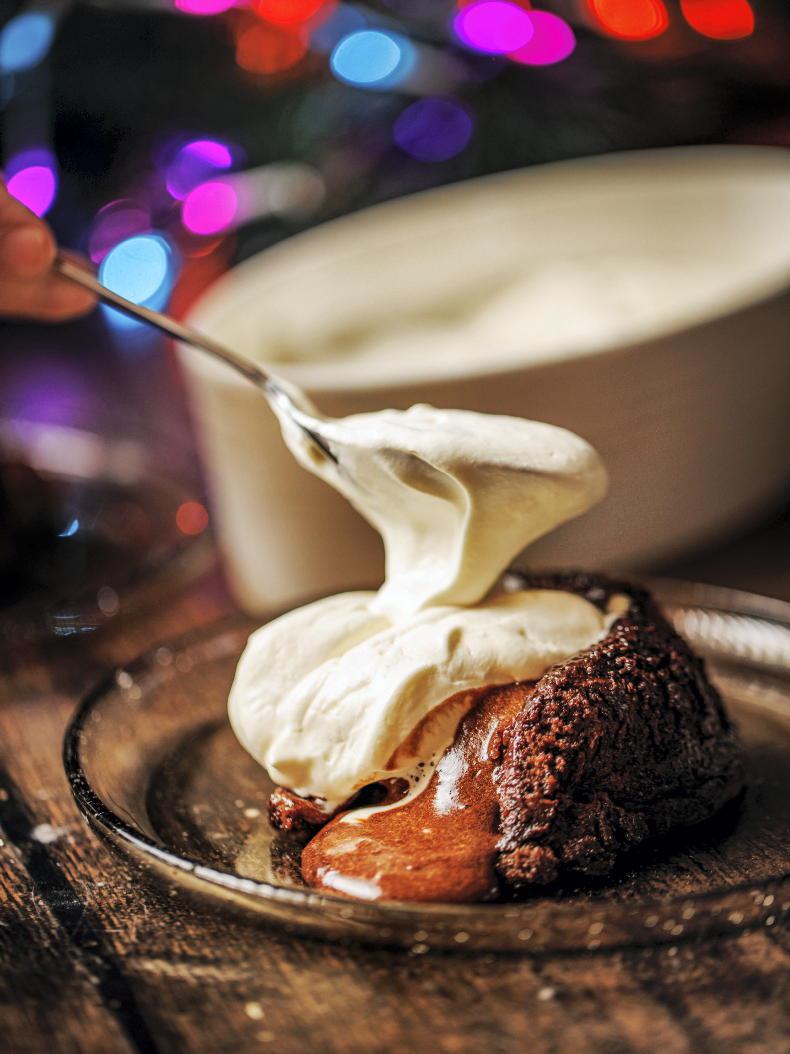

Paula Stakelum's chocolate fondant with boozy cream. \ Philip Doyle
Read more
Leave these classic Christmas cookies out for Santa
The ultimate Christmas baking project: make a gingerbread farm
We all have those special Christmas recipes we like to bring out each year. Maybe it’s a dog-eared piece of paper splattered with decades-old cake batter, or perhaps you inherited your grandmother’s handwritten recipe book, full of your family’s favourite foods.
It could be a recipe your discovered in a magazine or newspaper and you take out the clipping each year. These are our “keeper” recipes – everyone has them – and they are a huge part of what makes Christmas special in each individual household.
This year, Irish Country Living Food asked some of Ireland’s top culinary talent to share their
“keepers” with us, and they were happy to comply.
Paul McDonald
Bastion, Co Cork
This chowder started its life in Adare Manor, where I used to work. I tried to convert diners to a tomato-based chowder, but that didn’t fly, so we reverted back to the creamier versions so many are fond of.
However, I didn’t like a cream-based chowder made with thickening agents, instead, I preferred it made with a lightly reduced base of cream. We layered up flavours, like fennel with Pernod, and finished it with some acidity from the lemon. The resulting chowder is rich and creamy with plenty of fresh seafood flavour.

Paul McDonald, Bastion, Co Cork. \ RTE Today
Irish seafood chowder
Serves 6
Ingredients
1 tbsp butter
175g onion, finely diced
50g leek, finely diced
125g celery, finely diced
75g fennel, finely diced
200g potato, peeled and diced into bite-sized cubes
2 cloves garlic, minced
Splash of Pernod (about 15ml)
2 vegetable stock cubes
4-6 strands saffron
2 star anise
850ml cream
200g cod filet, cut into chunks
200g monkfish filet, cut into chunks
200g prawns
1kg Irish rope-grown mussels
Juice of 1 lemon
Salt, to taste, if needed
Method
1. In a large, heavy bottomed saucepan, melt the butter over medium heat and add the onion, celery, leek and fennel. Cook gently over moderate heat for 5-8 minutes, until the vegetables are tender and translucent, but not browned.
2. Add the diced potato and cook for 2-3 minutes more, again taking care not to brown the vegetables. Add the stock cubes and garlic. Cook for an additional minute. Then, add the Pernod and let it bubble and reduce slightly, for about 1-2 minutes.
3. Add the saffron strands and star anise, followed by the cream. Bring to a gentle simmer and cook for 15-20 minutes, until the vegetables are completely tender. You don’t want the cream to reduce too much,
so make sure the mixture isn’t boiling.
4. Just before you are ready to serve, add the seafood and fresh lemon juice. Continue to simmer gently until the fish and prawns are cooked and the mussels have steamed open (discard any mussels that do not open).
5. Season the chowder to taste and serve hot with warm, crusty bread.
Gary O’Hanlon
The K Club, Co Kildare
I was taught this recipe by my pal, Pat, in Boston. Her recipe has come down through the generations, and when she shared it with me, it was the first time it had gone outside their family circle. She always serves it with a big dollop of Heinz ketchup.
Christmas Eve in 2003 was the first time I tasted it. That night, when everyone had gone to bed, I woke up at 3 in the morning and sneaked downstairs. I was heating a big slice in the microwave, and I got caught rotten! It was the first time Pat had invited me to her house for Christmas, and I got caught heating up food in the middle of the night – they still joke about it to this day.
Netty, my wife, and I often make a dinner out of it with a beautiful rich jus, petit pois and chunky chips. You can have it on its own but quite often we’ve had it as a dinner; it’s so lovely.

Gary O'Hanlon, The K Club, Co Kildare.
Tourtière
Serves 8-10
Ingredients
For the pastry:
200g cold, cubed butter
400g plain flour
½ tsp salt
95ml cold water
1 egg, beaten, for egg wash
For the filling:
1 tbsp Irish rapeseed oil
225g lean beef mince
225g pork mince
1 medium onion, diced
½ tsp salt
¼ tsp pepper
¼ tsp celery salt
¼ tsp ground cloves
¼ tsp cinnamon
¼ tsp ground sage
60ml water (more, if needed)
6 potatoes, boiled and mashed (no butter, milk or seasoning added)
Method
1. Make the pastry: ensure your diced butter is very cold. Add it to a food processor with the flour and salt.
2. Pulse this mixture for approximately 20 seconds, until the dough is blended and the consistency resembles coarse crumbs.
3. Place this mixture to a large bowl and make a well in the centre. Add 60ml of the cold water and mix with your hands. As the pastry starts to come together, add the remaining water and continue working the dough until it comes together into a ball.
4. Place the dough on a lightly floured surface and knead until it is soft and the consistency of play dough (do not overmix). Divide the dough into two equal sized portions, shape into a disc and wrap each portion in cling film. Rest the pastry dough in the fridge for one hour (or overnight; the dough can also be frozen at this stage).
5. While the dough is resting, make the filling: heat a large pan or skillet on medium high. Add the rapeseed oil and the minced beef and pork. Break up the meat and brown, cooking for about 5 minutes. Add the diced onion and continue to cook for an additional 5-10 minutes, until the onion is softened and the meat is fully cooked.
6. Drain the fat from the meat, reserving 1-2 tbsp for the filling. Add the salt, pepper, celery salt, ground cloves, cinnamon and ground sage, then add the water and simmer for 15-20 minutes. Cool to room temperature.
7. While the meat is cooking, boil and mash the potatoes. Set aside to cool.
8. Add the reserved fat back into the cooled meat mixture and mix well to combine. Add enough of the mashed potato to make a pliable filling – you might not need it all, but the mixture shouldn’t be too wet.
9. Make the tourtière: preheat the oven to 200°C. Let the pastry dough sit at room temperature for about 20 minutes to make it easier to roll out (it might crumble if you roll it out while too cold). Roll out the first half on a lightly floured surface and place on the bottom of a 27cm or 29cm circular pie dish, leaving as much overhang as possible.
10. Add the filling right to the top of the pie dish (any leftover filling can be frozen). Roll out the second disc of dough and carefully place over the top of the pie. Trim the overhanging pastry, leaving about ½ inch of both the bottom and top layer. Roll the two layers up and over the top of the pie dish, then use your fingers or a fork to seal the edges and crimp.
11. Use a paring knife to make several slits in the top of the pie to allow steam to escape while cooking. Brush the top of the pie with a beaten egg and place in the preheated oven. Bake at 200°C for 10 minutes, then reduce the oven temperature to 180°C. Bake the pie for an additional 30-40 minutes, until golden brown and bubbling hot.
12. To serve, let the pie sit at room temperature to cool for at least 20 minutes. Serve on its own with a big dollop of Heinz ketchup, or as part of a larger meal with buttered peas, gravy and chunky chips.

Gary O'Hanlon's tourtiere. \ Philip Doyle
Nicole Server-Pawlukojc, Arán, Co Kilkenny
This recipe is special to me because it’s something we always had for Christmas at my grandparents’ house in the Philippines. It’s more than just a part of the Christmas meal – it’s a slice of tradition, a centrepiece of warmth and a reminder of all the holidays spent laughing, sharing, and coming home.

Nicole Server-Pawlukojc.
Noche Buena ham
Serves 12
Ingredients
4.5kg bone-in ham
For the poaching liquid:
300g soft dark brown sugar
2L pineapple juice
2 cans of beer (pale lager)
1 tbsp whole cloves
4 bay leaves
4 cinnamon sticks
For the glaze:
500ml prepared poaching liquid
300g soft brown sugar
100ml pineapple juice
400g tinned pineapple chunks in juice
115g honey
Zest and juice of one orange
30g Dijon mustard
5g ground cinnamon
Juice of one lemon
Method
1. Place the ham in a large pot and add the poaching ingredients. Make sure the ham is fully submerged. Bring to a gentle simmer on medium-low heat.
2. Once the poaching liquid comes to a boil, turn the heat to low. Cover and cook the ham for 1 hour, making sure the poaching liquid is just barely simmering. Rotate the ham every 20 minutes to ensure even cooking.
3. Remove the ham from poaching liquid. Remove the outer layer of skin and, using a sharp knife, score diamond-shaped patterns across the layer of fat on the ham. This will help the glaze penetrate the meat. Insert cloves at every intersection.
4. Now make the pineapple glaze: combine all of the glaze ingredients in a pot and blitz with a hand blender to lightly crush some of the pineapple pieces while ensuring it stays nice and chunky. Cook the glaze over medium-low heat until it has reduced to a thick consistency.
5. Preheat the oven to 170°C. Brush the ham with some of the glaze, setting aside one quarter of it to serve.
6. Bake the ham on the lowest rack in your oven for 1 ½ hours. While baking, baste the ham with the glaze every 20 minutes. If the glaze is becoming too brown for your liking, cover the ham loosely with foil.
7. In the final 5 minutes of cooking, increase the temperature to 200°C to let the ham brown and the glaze sizzle.
8. Remove from the oven and brush the ham liberally with the pan juices. Cover with foil and let rest for at least 15 minutes before slicing.
9. Serve with the reserved warm pineapple glaze on the side. We like to eat this ham with macaroni salad or Filipino-style spaghetti.

Nicole Server-Pawlukojc's Noche Buena ham. \ Philip Doyle
Stephen Holland
Dunluce Lodge, Co Antrim
In the Holland household each Christmas, we love a good pudding. This cake is usually made the previous Easter and we slowly feed it brandy, Kirsh and a little Armagnac throughout the year. The flavours are rich, spicy and – believe me when I say this – less is more. Bursting with flavour, it is a true Christmas highlight. The fruit cake is faultless without the tipples of alcohol, but there is nothing like a warming pudding on Christmas, served with fresh cream and the fire roaring.

Stephen Holland, Dunluce Lodge, Co Antrim.
The Holland family’s tipsy cake
Makes 1 cake
Ingredients
500ml water
120g raisins
120g unsalted butter
60g walnuts, roughly chopped
210g plain flour
200g granulated sugar
½ tsp salt
1 tsp baking soda
½ tsp each ground cinnamon
and nutmeg
¼ tsp ground cloves
100ml brandy (optional)
100ml Armagnac (optional)
100ml Kirsh (optional)
Method
1. Preheat your oven to175°C. Butter a 23cm x 30cm cake tin and set aside until ready to use.
2. In a large, heavy bottomed saucepan, bring the water to a boil over high heat and then add the raisins. Reduce the heat to a simmer and gently cook for the fruit for 15 minutes.
3. Remove the saucepan from the heat and add the butter. Once the butter is melted, leave to cool.
4. Once cooled, add the chopped walnuts, flour, sugar, salt, baking soda, cinnamon, nutmeg and cloves. Mix with a wooden spoon or spatula, taking care not to overmix the batter.
5. Spread the batter evenly into the prepared pan and bake for about 30 minutes. Test the cake by inserting a metal skewer into the centre. If it doesn’t come out clean, continue baking in 5-minute increments until you get a clean skewer.
6. This cake can also be baked as a loaf (bake for around 50 minutes before testing, then use the same skewer test until it’s done). It can be served immediately, once cooled, or, as the Holland’s do, made months in advance, stored in a cool, dark place and fed a mixture of brandy, Armagnac and Kirsch at regular throughout the year.
7. Once sliced, keep the cake in an airtight container for up to five days.

Stephen Holland's tipsy cake. \ Philip Doyle
Danni Barry
Ballinahinch Castle, Co Galway
What I enjoy most about the Christmas season is the sense of togetherness it brings. There’s something very special about seeing families and friends gather around a table to share a meal, especially here in the hotel, where we’ve become part of so many people’s Christmas traditions. The atmosphere is full of warmth and anticipation, and for us in the kitchen, it’s a privilege to be part of creating that festive feeling.
This stuffing recipe has a real sense of home for me. It’s inspired by the kind of Christmas cooking I grew up with – simple and hearty. I’ve refined it a little over the years, but it still has that comforting, nostalgic quality that reminds me of family dinners and the excitement of Christmas Day. It’s a dish that brings people together.

Danni Barry, Ballinahinch Castle, Co Galway.
Christmas stuffing
Serves 10-12
Ingredients
450g butter
2 onions, finely diced
80g fresh sage, finely chopped
1 bunch picked thyme leaves,
finely chopped
2 tbsp fennel seeds
200g dried apricot, finely diced
200g dried cranberries,
roughly chopped
1kg fresh breadcrumbs
1kg free range pork mince or sausage meat
1 bunch flat leaf parsley, finely chopped
Salt and freshly ground black pepper, to taste
Method
1. Cook the onion, sage and thyme with the fennel seeds slowly in the butter for 15 minutes until softened. You want the onions to be translucent, with no browning.
2. Add the chopped apricots and cranberries and stir through.
3. Place the fresh breadcrumbs in a large mixing bowl. Add the butter and onion mixture to the bowl and mix well until the breadcrumbs are fully incorporated into the butter. Cool to room temperature.
4. Once cooled, add the pork or sausage meat to the breadcrumb mixture. If you have a stand mixer, place the mixture into the bowl and mix with the paddle attachment for 5-10 minutes until well mixed. Add the chopped flat leaf parsley and season with salt and pepper before giving it one more good mix.
5. To check the seasoning, take a small amount of stuffing mixture and shape it into a patty. Fry in a frying pan until fully cooked, then taste. Adjust the seasoning, if necessary. Preheat the oven to 150°C.
6. Line a roasting tray with foil and place the stuffing into the tray. Cover with additional foil. Bake the stuffing until completely cooked through, around 30-40 minutes. Serve alongside your traditional roast turkey with gravy.

Danni Barry's Christmas stuffing. \ Philip Doyle
Donal Skehan
This is one of my favourite Christmas recipes because the warm spices, sticky glaze and soft, buttery texture fill the kitchen with festive aromas and make the perfect comforting treat to share or gift during the holidays. Also, as this recipe takes some patience and time, it forces you to slow down in the hectic time that is Christmas.

Donal Skehan.
Glazed festive loaves
Makes 2 loaves
Ingredients
500ml whole milk
110g butter
75g caster sugar
800g strong bread flour
12g fine sea salt
2 x 7g sachets of instant yeast
2 tsp ground cardamom
1 egg, beaten
4 tbsp of pearl sugar (demerara sugar will work too)
For the filling:
125g soft butter
90g soft light brown sugar
1 tsp ground cinnamon
40g pecans, quite finely chopped
For the syrup:
45g caster sugar
45ml water
1tsp ground cardamom
Method
1. Warm the milk, butter and sugar together in a pan over a medium heat until the butter and sugar are melted.
2. Mix the flour, salt, yeast and cardamom in a large mixing bowl. Make a well in the centre and pour the wet ingredients in. Using a wooden spoon or your hands, mix until you have a rough dough. Turn out onto a clean surface and knead for about 10 minutes until smooth and elastic (or alternatively knead in an electric stand mixer). The dough will start off shaggy and sticky but will come together as you knead and you shouldn’t need to add any more flour.
3. Transfer the dough to a floured bowl, cover with a towel and let it rise for 1 hour in a warm dark place.
4. Meanwhile, make the filling. Beat the butter, sugar and cinnamon together in a bowl until light and fluffy.
5. When the dough has risen, punch it down in the bowl. Turn out onto a lightly floured surface and roll the
dough into a large rectangle about 5mm thick, spreading the filling all over and scattering with the pecans.
6. Then, from the long side, roll the dough so you end up with a long cylinder. Cut the cylinder into two pieces and roll each one out lightly to form two long rectangles about 10cm wide.
7. Use a sharp knife to cut each rectangle into three long strips (leaving about 2cm at the top uncut to keep them together). Plait the strips and seal together at the ends.
8. Transfer to two 900g loaf tins. Leave to rise again, covered, for 45 minutes to 1 hour in a warm place.
9. Preheat the oven to 190°C. Brush the loaves with beaten egg and sprinkle with pearl sugar. Bake in the oven for about 25 minutes, or until it turns golden brown and is nicely risen.
10. To make the syrup, melt the sugar in the water over a low heat then add the cardamom and bubble until you have a light but sticky syrup.
11. Remove the loaves from the oven, brush all over with the syrup then transfer to a wire rack and allow to cool slightly before slicing and serving.

Donal Skehan's glazed festive loaves. \ Philip Doyle
Paula Stakelum
Ashford Castle, Co Galway
There’s a perception that making chocolate fondant on Christmas Day is a risky move – but I disagree. Whether you prefer it soft and flowing or more cake-like and set, the beauty of this dessert is that it’s entirely up to you. After all, there are no rules on Christmas Day. I always prepare this recipe in the morning and leave the fondants to chill in the fridge, ready to bake in the afternoon. The rich, indulgent chocolate paired with a generous spoonful of boozy cream makes for the perfect festive treat.

Paula Stakelum, Ashford Castle, Co Galway.
Chocolate fondant with boozy cream
Serves 12
Ingredients
200g 70% dark chocolate
100g 33% milk chocolate
225g unsalted butter
150g caster sugar
225g whole eggs
110g egg yolk
60g strong (bread) flour
50g unsalted butter, for greasing
50g cocoa powder, for dusting
For the boozy cream:
200g mascarpone cheese
400g single cream
25ml liqueur of choice (Tia Maria, Baileys or Irish whiskey)
Method
1. Prepare 12 baking moulds or ramekins by brushing with melted butter, then dusting with cocoa powder. Set aside until ready to fill.
2. Place the dark chocolate, milk chocolate and butter into a bowl. Melt gently by placing the bowl over a pot of barely simmering water.
3. In a stand mixer or using a hand mixer, whisk the eggs, egg yolks and sugar until pale in colour and doubled in volume. Whisk on a medium speed to create an even amount of air (this will keep the fondant light and airy when cooked). This will take up to 10 minutes of whisking.
4. When the mixture has doubled in volume, sieve the flour before gently folding into the egg and sugar. Fold the melted chocolate and butter into the mixture before leaving the batter to rest for 10 minutes.
5. Once the batter has rested, pipe or spoon equal amounts into each of the prepared moulds or ramekins. Each mould should be three quarters full of batter.
6. Chill the fondants in the fridge for 4-6 hours. When ready to bake, preheat the oven to 190°C.
7. If you like your chocolate fondant to be soft and flowing, bake in the preheated oven for 9 minutes, and then let sit in the moulds for 2 minutes before plating. For a more set bake, leave them in the oven for 13 minutes and let sit in the moulds for 2 minutes before plating.
8. Make the boozy cream: place the mascarpone, cream and liqueur of choice into a mixing bowl. Using a hand mixer or stand mixer, whip until soft peaks are formed.
9. Serve the fondants warm from the oven with a big dollop of cream.

Paula Stakelum's chocolate fondant with boozy cream. \ Philip Doyle
Read more
Leave these classic Christmas cookies out for Santa
The ultimate Christmas baking project: make a gingerbread farm
SHARING OPTIONS