


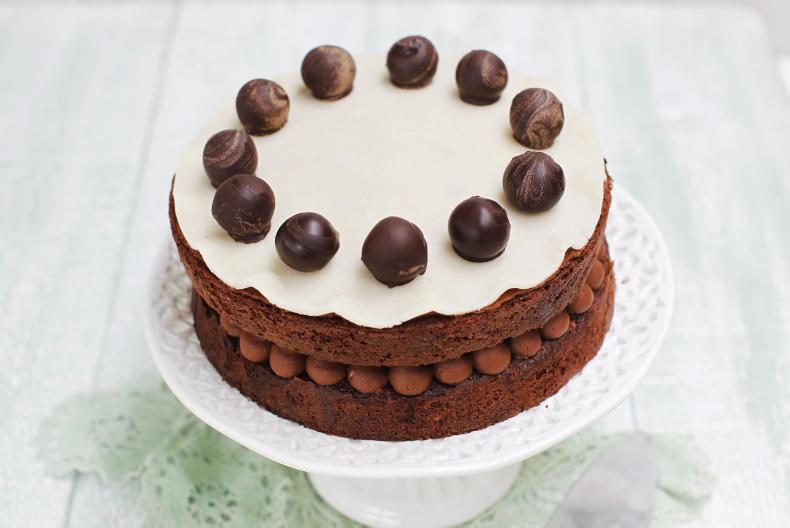
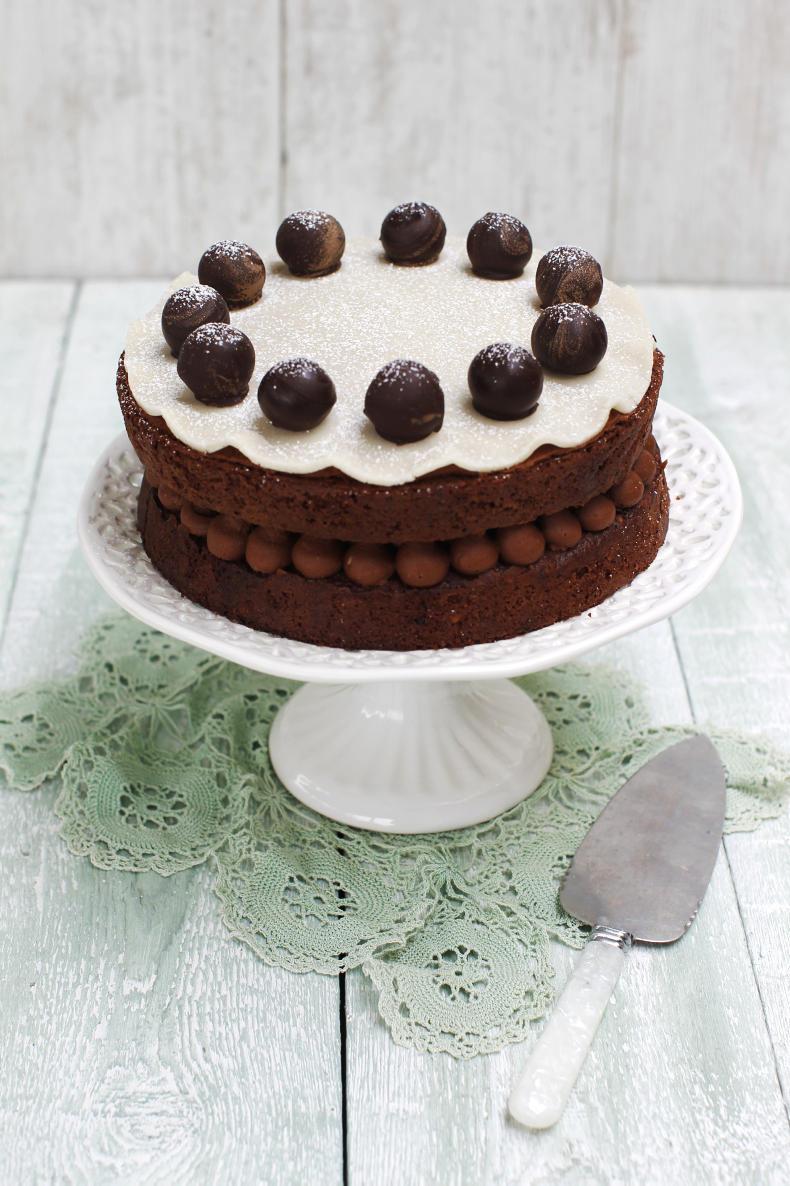
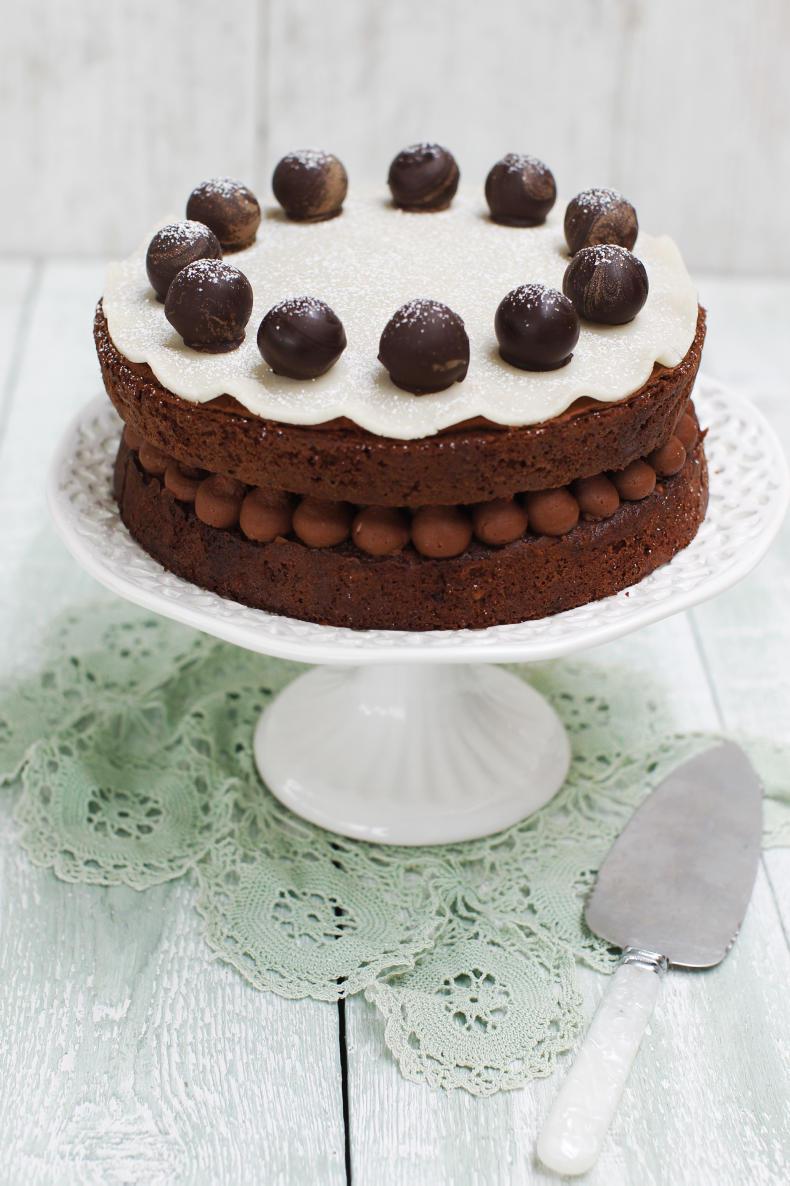
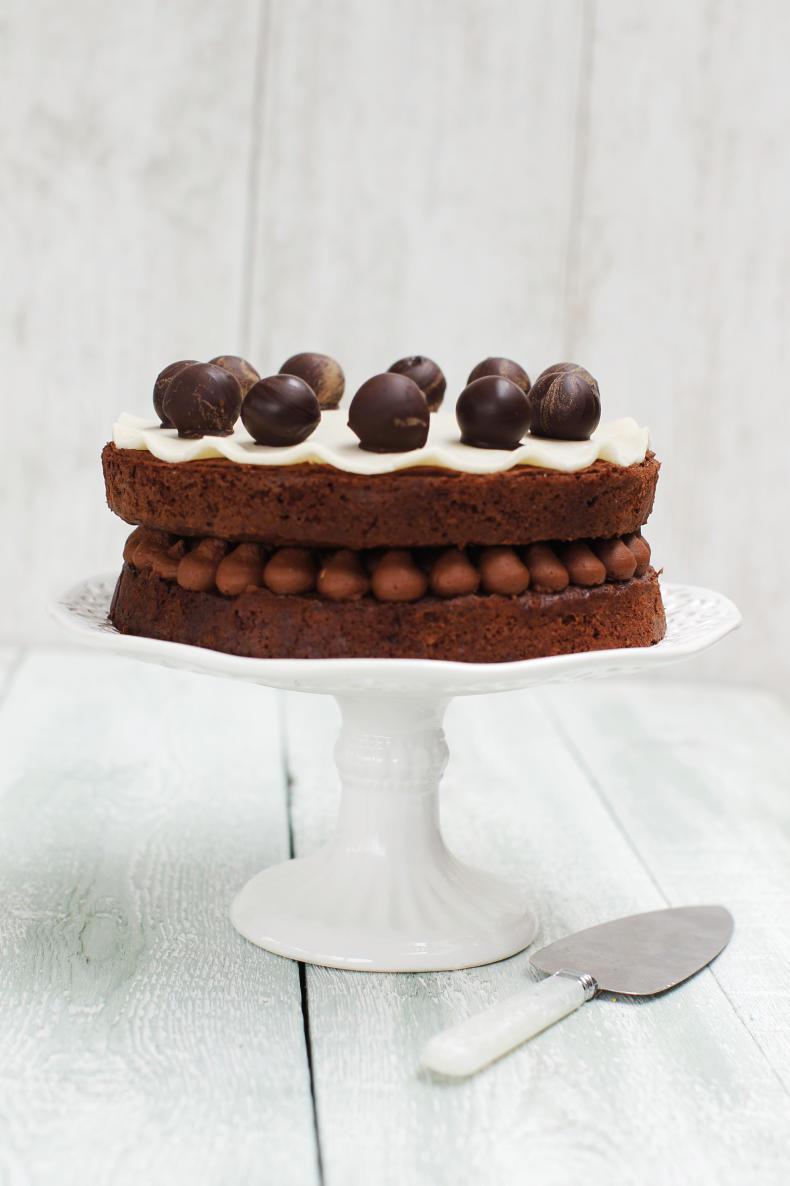

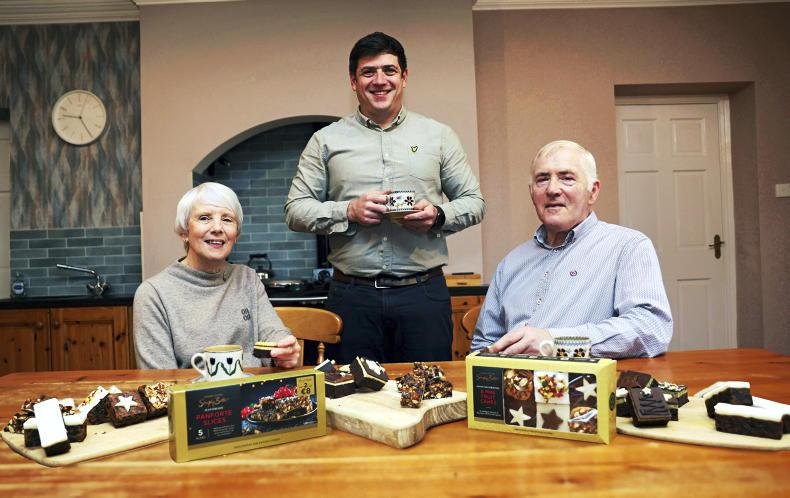
Simnel cake is traditionally made at Easter with fruit. This is my chocolate version and you can use the same recipe to make small cupcakes. It is worth buying blanched almonds. They are more expensive but are much tastier when toasted. You can toast them under the grill and then rub vigorously to get the skin off using a dry cloth or tea towel. A good chocolate to pick is Aine Chocolates from Co Cavan – it is part of the Simply Better range.
The coffee and walnut traybake is really light and is great for guests over Easter. It will keep for up to four days in an airtight container. The creme fraiche gives it that lightness and tartness. You should be able to find Camp coffee extract in any supermarket.
Happy cooking.
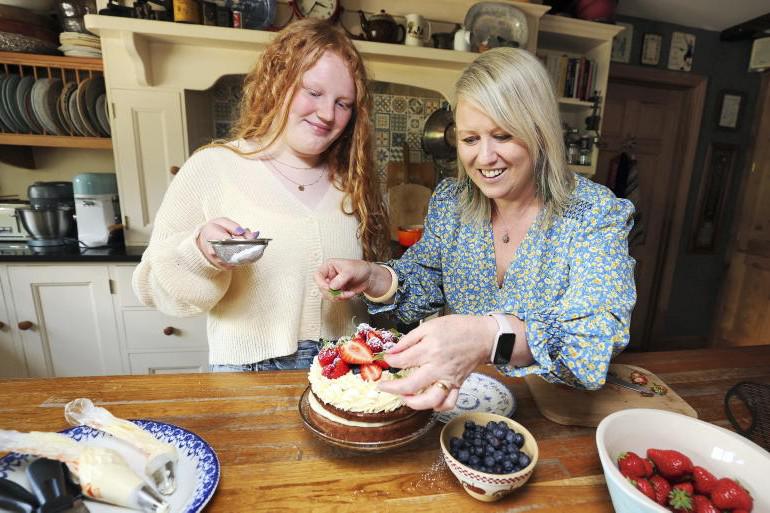
Chocolate fruit ‘n’ nut simnel cake
Serves eight to 12
For the sponge:
150g (5oz) butter, softened
225g (8oz) caster sugar
125g (4 1/2lb) sour cream
4 medium eggs
175g (6oz) self-raising flour, plus extra 2 tbsp for the raisins
40g (1 1/2lb) cocoa powder (sifted if lumpy)
½ tsp baking powder
100g (4oz toasted blanched almonds, finely chopped
25g (1oz)) toasted skinned hazelnuts, finely chopped
100g (4oz) raisins
For the icing:
75g (3oz) plain chocolate, roughly chopped (70% cocoa solids)
125g (4 1/2oz) butter, softened
225g (8oz) icing sugar
To decorate:
Icing sugar, to dust, plus extra to decorate
300g 10oz) white marzipan
100g (4oz) plain chocolate, roughly chopped (70% cocoa solids)
1 Preheat the oven to 180oC (350oF/ gas mark four) and line two 20cm (8in) round loose-bottomed cake tins with baking parchment.
2 Put the butter, caster sugar, sour cream, eggs, flour, cocoa powder, baking powder, hazelnuts and almonds into a large bowl. In a separate bowl, mix the raisins with the two tablespoons of flour. Tip this raisin and flour mixture into all the other ingredients and beat together with an electric hand-held whisk until well combined.
3 Divide the cake mixture between the prepared tins and level the tops. Bake for 25-30 minutes or until a skewer inserted into the centre of each cake comes out clean and the cakes have shrunk slightly from the edges of the tin and smell cooked. Remove from the oven and after five minutes take them out of the tins and leave to cool completely on a wire rack.
4 To make the icing, melt the chocolate in a heatproof bowl set over a small pan of simmering water or in the microwave until smooth. Set aside to cool a little. Put the butter in a bowl with the icing sugar and beat together until lightly and fluffy, then add the melted chocolate and mix to combine.
5 Place one of the cooled cakes on a serving plate with a blob of the icing underneath to stop it moving around. Flip the top half of the cake over so that the bottom side is up and you’ve got a nice smooth surface. Then spread with a thin layer of the chocolate icing and set aside. Reserve about a tablespoon of the icing for later to stick the chocolate-covered marzipan balls on top of the cake.
6 Fill a piping bag fitted with a 2cm (2/3in) plain nozzle with the remainder of the icing and then use it to pipe an even layer of icing on the bottom of the cake to give it a nice effect when sandwiched together and then used flat. Carefully put on the iced top.
7 Dust the work surface with a little icing sugar and then roll out two-thirds of the marzipan to a 3mm (1/4in) thickness. Using a small sharp knife, cut out a 20cm (8in) circle using one of the cake tins as a template. Press firmly on top of the cake and crimp the edges to decorate.
8 Line a baking sheet with baking parchment and set this aside. Melt the chocolate for the dip in the microwave or in a heatproof bowl over a small pan of simmering water. Leave to cool a little and then roll the rest of the marzipan into 11 equal-sized balls.
9 Take a ball and dip it into the melted chocolate. Then, using a fork, remove the ball from the melted chocolate and let the excess chocolate just drip back into the bowl. Then place the chocolate-coated marzipan ball on the baking parchment. Repeat with the rest of the balls.
10 Using small blobs of the chocolate icing, stick the balls on around the cake making sure they’re an equal distance apart. When you are ready to serve, lightly dust the simnel cake with the icing sugar.
Coffee and walnut traybake
Serves six to eight
For the sponge:
175g (6oz) butter, softened
50g (2oz) creme fraiche
175g (6oz) soft light brown sugar
3 medium eggs
175g (6oz) self-raising flour
½ tsp baking powder
1 tsp Camp coffee extract (or 2 tsp instant coffee mixed with 2 tsp hot water and then cooled)
75g (3oz) shelled walnuts, chopped
For the icing:
100g (4oz) butter, softened
200g (7oz) icing sugar
½ tsp Camp coffee extract (or 1 tsp instant coffee mixed with 1 tsp hot water and then cooled)
To decorate:
40g (1 1/2oz) whole walnut halves
1. Preheat the oven to 180oC (350oF/ gas mark four) . Line a 20cm (8in) loose-bottomed square tin with baking parchment. Put the butter and creme fraiche into a bowl with the sugar and cream together with a hand-held electric whisk or using a freestanding electric mixer until light and fluffy.
2. Add two of the eggs plus half of the flour and the baking powder and mix together until just combined. Add the remaining egg with the rest of the flour along with the coffee extract or mixture. Beat until well combined and then fold in the walnuts.
3. Transfer into to the prepared tin and smooth the top down with the back of the spoon. Bake for 30-35 minutes. To test that the traybake is cooked, insert a skewer in to the centre. It is ready when the skewer comes out clean. Leave the traybake to cool down completely in the tin.
4. Once the traybake has cooled down, make the coffee icing. Put the butter in a bowl and add the icing sugar and then beat it together until light and fluffy. Add the coffee extract or mixture and beat again until smooth. Using a palette knife, spread all over the traybake. Decorate the traybake with the walnut halves and serve cut into slices. CL



SHARING OPTIONS