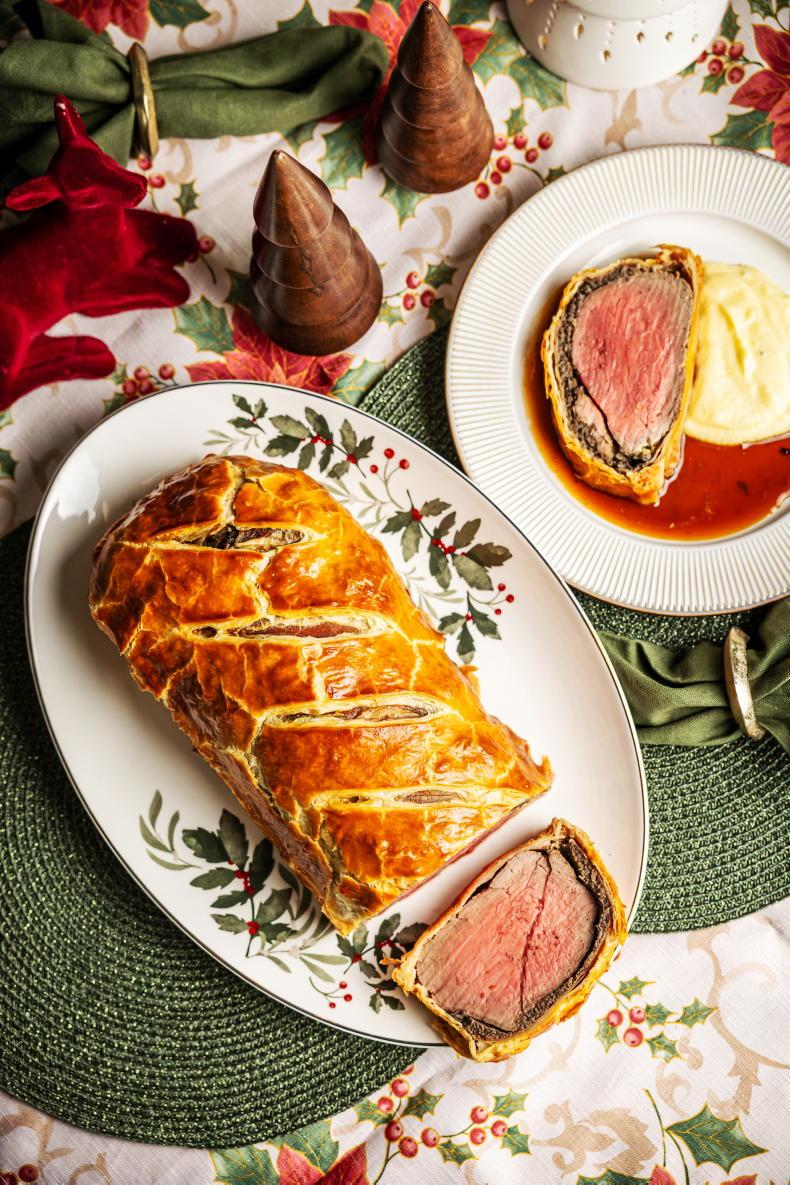

Serves 10-12
Ingredients
2.5kg beef fillet (ask your butcher to tie it for you)
2 tbsp Irish rapeseed oil
Sea salt and black pepper
4 tbsp Dijon mustard
800g mixed Irish mushrooms (we used Garryhinch Organic Mushrooms), roughly chopped
300g shallots, peeled and roughly chopped
1 tbsp butter
2 tbsp Irish whiskey
10-12 slices prosciutto
400g all-butter puff pastry, defrosted if frozen
1 egg, lightly beaten
For the jus:
3kg beef bones (ask your butcher)
1 bulb garlic, cut in half
2 carrots, roughly chopped
1 large onion, roughly chopped
1 stalk celery, roughly chopped
1 bay leaf
200ml red wine
2l bone broth or beef stock
1 tbsp butter
Salt and pepper, to taste
To serve
Potatoes and lightly steamed vegetables
Method
1. About 30 minutes before you start cooking, bring your beef to room temperature. Pat it dry with kitchen towel, then season generously on all sides with sea salt and freshly ground black pepper.
2. Heat a large pan on high. Once smoking hot, add the rapeseed oil and place the seasoned beef fillet in the pan. Sear on each side for 3-4 minutes, until the outside of the meat is dark in colour and well-sealed. Make sure you sear the ends of the fillet as well. Once seared, place the fillet on a large plate and cool.
3. While the beef is cooling, make your duxelle: add the roughly chopped mushrooms and shallots to a food processor. Blitz on high until a paste-like texture is achieved. Using the same pan you seared the beef in, add the butter and melt over medium heat. Add the shallot/mushroom mixture and cook slowly, stirring regularly, for 15-20 minutes. You want the moisture to evaporate as much as possible.
4. Add the whiskey to the duxelle and continue to cook for an additional 10 minutes. When most of the moisture has evaporated, season with salt and pepper to taste. Set aside and let cool. Untie the beef fillet and brush with the Dijon mustard. Set aside until ready to use.
5. Layer several sheets of cling film on a clean work surface. You need enough cling film to wrap the beef fillet with some overhang left on either end. Take the prosciutto and layer it, piece by piece, directly in the middle of the cling film. Again, you need to make a layer of prosciutto large enough to place the beef on. Make sure there are no holes/openings in the prosciutto layer.
6. Spread the duxelle over the prosciutto so it covers almost the entire layer. Then, place the cooled fillet of beef on the layer of duxelle with the bottom facing up. Using the cling film to help you along, wrap the beef completely in the prosciutto, as tightly as possible.
7. Once the beef fillet is wrapped in the prosciutto, wrap the whole thing in cling film, as tightly as possible, to make it into an evenly sized cylinder. Wrap it again in another layer of cling film, then place in the fridge to chill overnight.
8. While the beef is chilling, start your jus: place the bones on a baking tray and bake at 180°C for 1 hour. Add the carrot, onion, celery and garlic and roast for an additional 30 minutes.
9. Place the roasted bones and vegetables in a large pot and cover with the red wine and beef stock. If the liquid isn’t covering the bones, add more water to the pot until the bones are covered. Add the bay leaf and bring to a simmer. Simmer for 6-8 hours, then strain through a fine sieve. Let the liquid cool completely overnight.
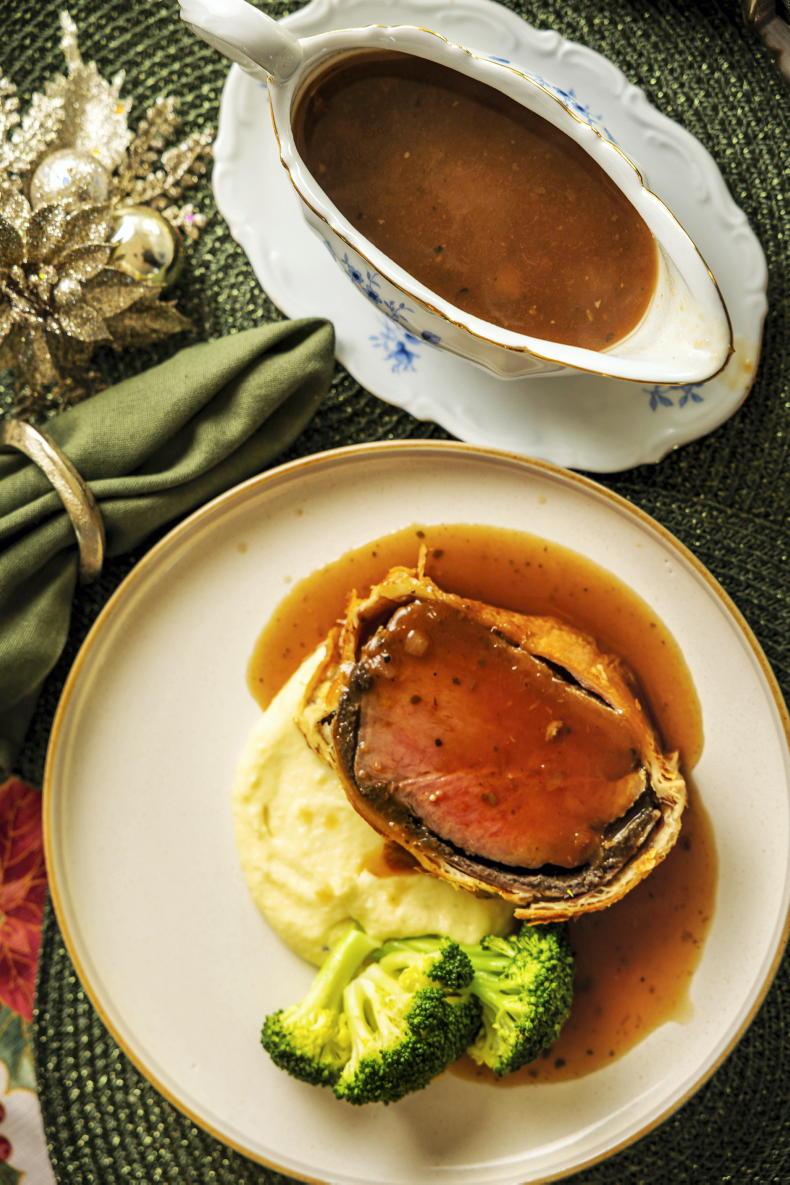
10. The next day, scrape any fat from the top of the cooled jus (it will naturally harden as it chills), then place the liquid into a saucepan (it will be a jelly-like consistency). Bring to a simmer once again. Cook, letting the liquid naturally reduce, for another hour or until the liquid has reduced and thickened to a runny sauce-like consistency. Add the butter and whisk to make a glossy sauce. Taste and adjust seasoning, if necessary. Keep warm until needed.
11. Preheat the oven to 200°C. Place a piece of baking parchment on a large oven tray and set aside until ready to use.
12. On a lightly floured surface, roll out the puff pastry until you have a rectangle large enough to completely wrap around the beef fillet. Whisk your egg and set aside with a pastry brush. Unwrap the beef fillet and place, bottom side up, directly in the middle of the rolled-out puff pastry. Brush some egg wash all around and gently wrap the fillet in the pastry. There should be pastry overhang on both ends. Seal the pastry using the egg wash as glue.
13. Place the beef Wellington, top side up, on the lined baking tray. Trim the ends lightly and fold any excess pastry under the bottom of the Wellington. Completely cover the Wellington in egg wash and, using your fingers, ensure the pastry is sealed tightly and there are no holes or cracks. Using a sharp knife, lightly score the top of the Wellington to allow steam to escape while cooking.
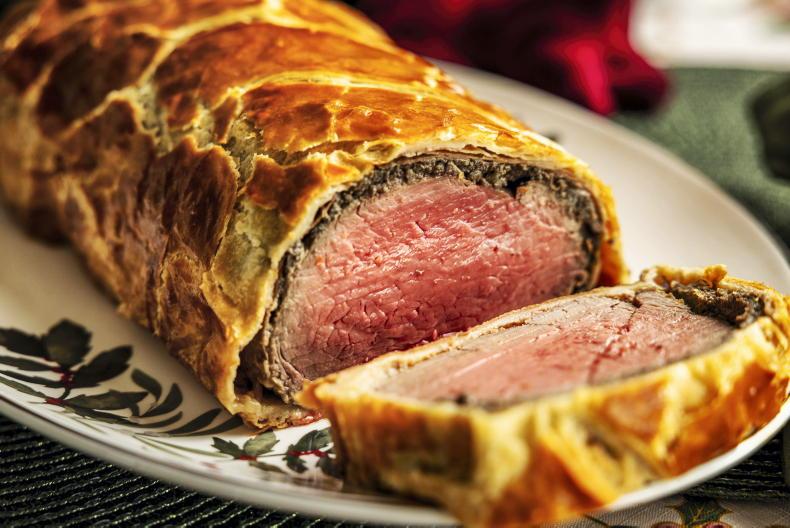
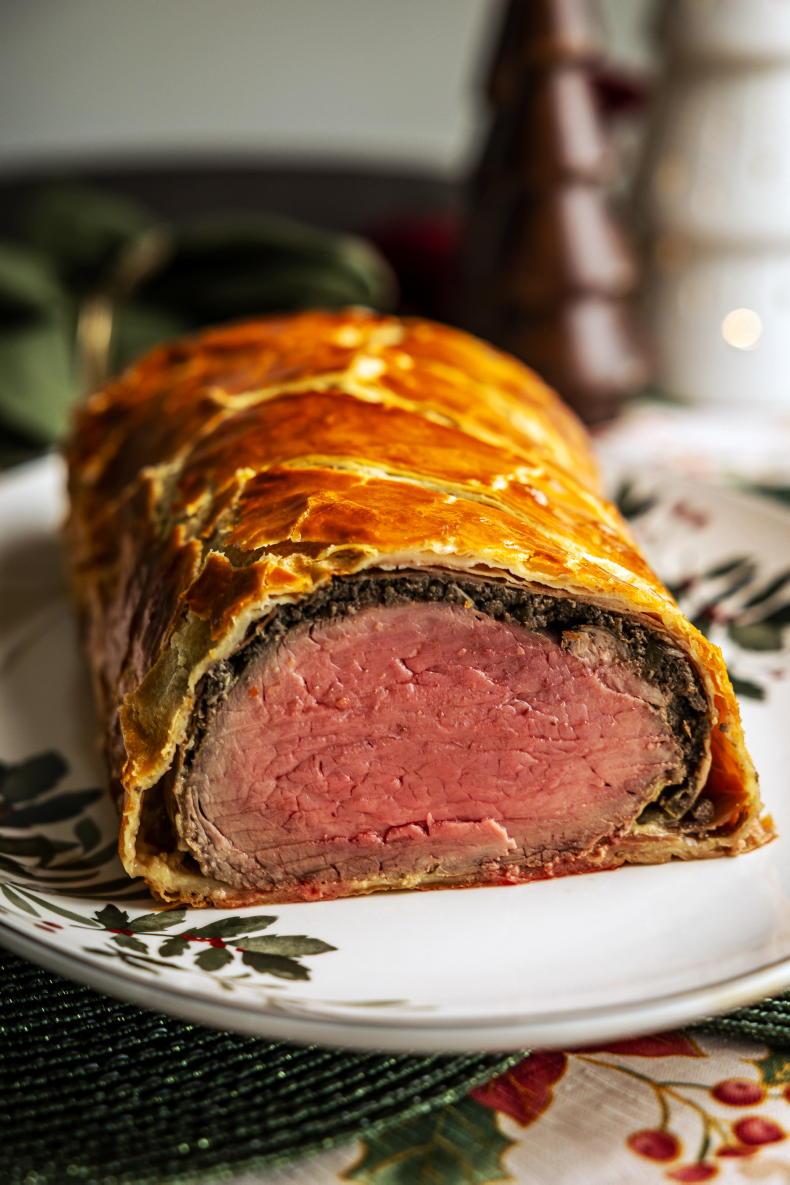
14. Place the beef Wellington in the preheated oven and bake for 40-45 minutes. You want the outside pastry to be dark golden brown and, if you like your beef medium-rare, the internal temperature should read 49-50°C when a meat thermometer is inserted into the centre (for well-done, you want a reading of 70°C but this is best eaten at medium-rare).
15. Let the beef Wellington rest at room temperature before you attempt to slice it. You want the juices to stay inside the meat and resting for 15-20 minutes will ensure they stay put. While the beef is resting, reheat your jus. Serve the beef Wellington on hot plates with a drizzle of jus alongside potatoes and lightly steamed vegetables.
Serves 10-12
Ingredients
1 Irish goose, approximately 5.5kg
Fine sea salt and freshly ground
black pepper
For the bread sauce:
2 tbsp butter
2 shallots, finely chopped
500ml milk
1 tsp Dijon mustard
1 tsp dried thyme
1 bay leaf
100g fresh breadcrumbs
60ml cream
Sea salt and freshly ground
black pepper, to taste
Method
1. Prepare your goose: remove giblets and dry the inside and outside of the goose with kitchen towel. Rub the goose, inside and out, with some salt. Place in a roasting tray and let sit overnight in the fridge.
2. The next day, wipe the goose again with kitchen towel and let sit at room temperature for 1 hour. Preheat the oven to 160°C. Place the goose on a rack fitted over a roasting tray and, using a sharp knife, make small incisions in the skin all over the goose. This will help the fat render as it roasts. Season liberally with salt and freshly ground black pepper and place in the oven.
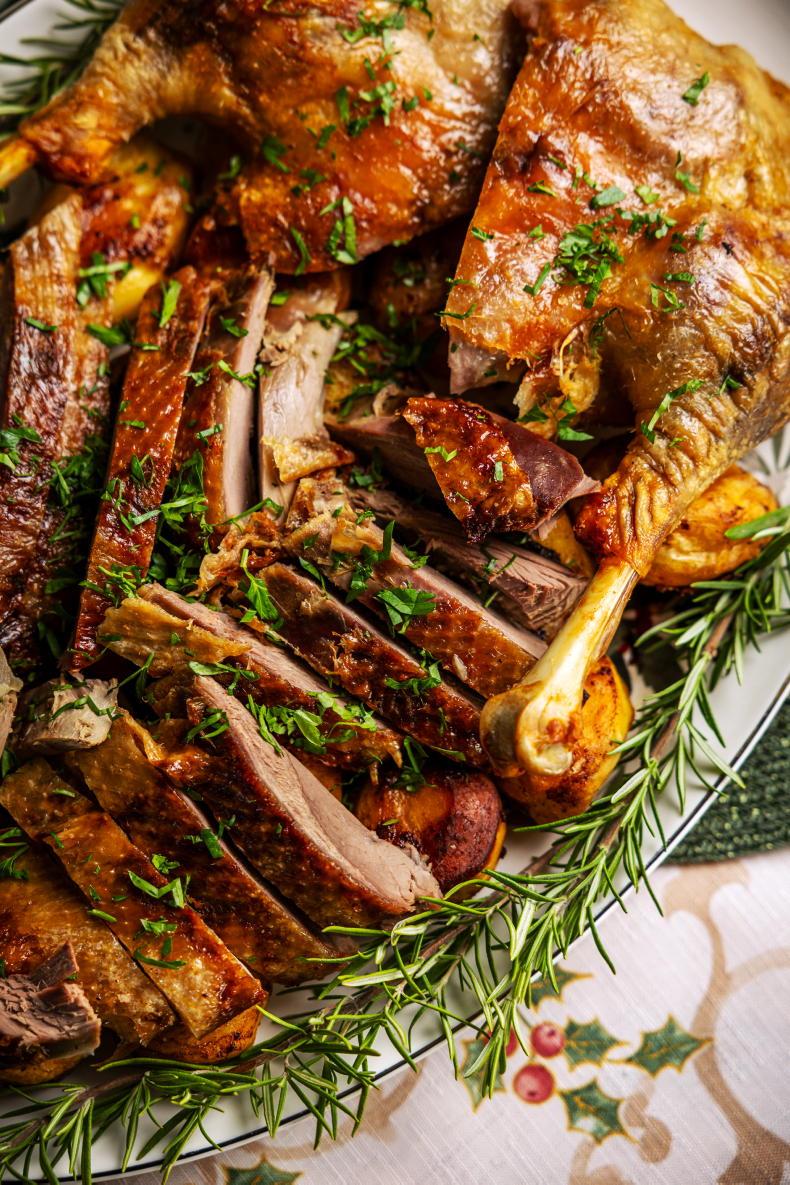
3. Roast the goose for 2 hours and then lower the temperature to 130°C. Continue to roast at this temperature for an additional 30 minutes. When the goose is ready, a meat thermometer inserted into the breast should read 75°C. Remove the goose from the oven and let rest at room temperature for 25-30 minutes.
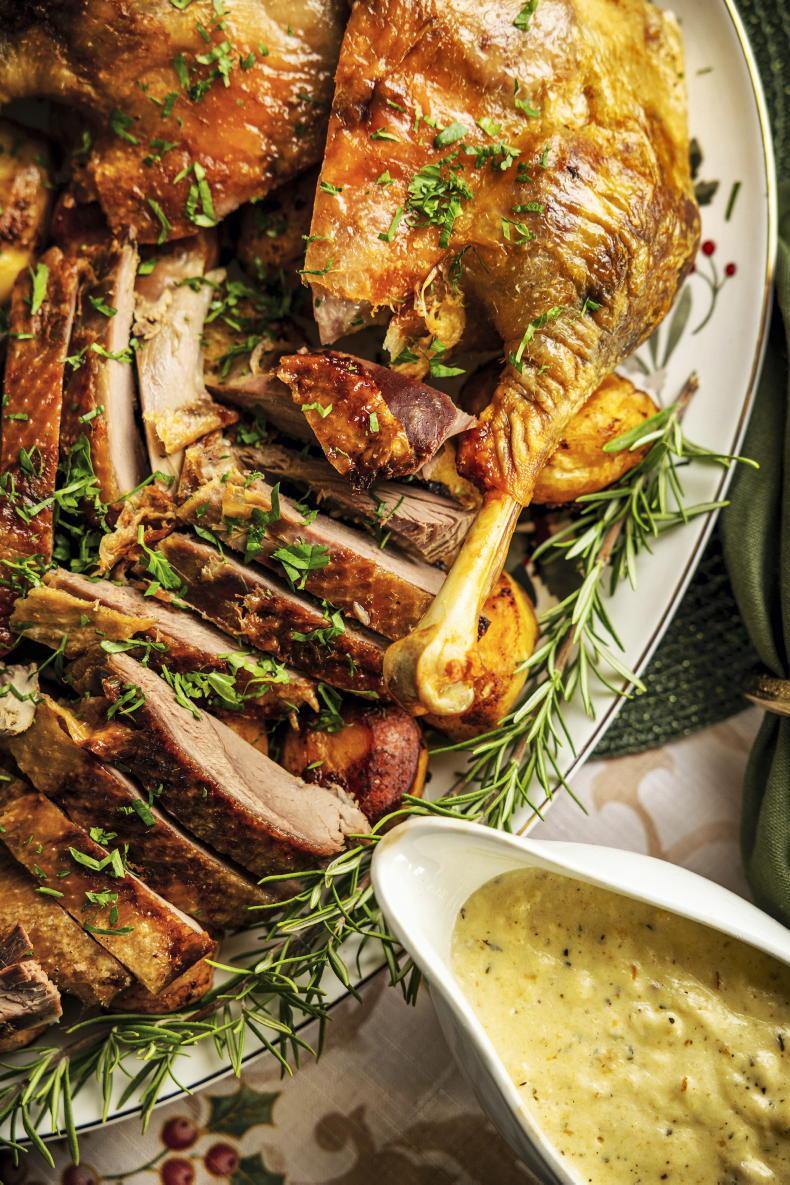
4. While the goose is resting, make the bread sauce: melt the butter in a large frying pan and add the finely chopped shallot. Gently cook the shallot for 4-5 minutes, until soft, and then add the milk, Dijon mustard, thyme and the bay leaf. Bring to a gentle simmer and cook for 10-15 minutes.
5. Remove the bay leaf and pour the milk mixture into a blender. Blend until everything is well combined, then add the mixture back into the pan. Add the breadcrumbs and stir gently on medium-low heat until the sauce thickens.
6. Add the cream and season with salt and pepper to taste.
7. Carve the goose and serve immediately on warmed plates with a big dollop of bread sauce on the side.
Serves 8-10
Ingredients
200g Medjool dates,
pitted and roughly chopped
250ml brewed tea
1 tsp baking soda
150g plain flour
1 tsp baking powder
½ tsp salt
60g softened butter
150g light brown sugar
60g black treacle
2 large eggs, room temperature
1 tsp vanilla extract
For the sticky toffee sauce:
500ml cream
1 tsp vanilla bean paste
100g dark brown sugar
3 tbsp golden syrup
½ tsp good quality Irish sea salt (we used Donegal Sea Salt)
To serve:
Good quality vanilla ice cream
Method
1. Preheat the oven to 180°C. Butter a deep baking tray or casserole dish and set aside.
2. Place the chopped dates and the brewed tea into a saucepan and bring to a simmer over medium heat. You want the dates to soften, so this will take 5-10 minutes of simmering while stirring constantly. When the dates are soft, add the baking soda and blitz with a hand blender to a slightly chunky purée.
3. Add the date mixture to a large mixing bowl and let cool. In another bowl, combine the plain flour, baking powder and salt. Set aside until ready to use.
4. Add the butter, black treacle and brown sugar to the date mixture and mix to combine. Using a hand mixer, add the eggs one at a time, mixing well after each, and then beat in the vanilla extract. Add the dry ingredients to the wet and mix until just combined.
5. Pour the batter into the prepared tin and place in the preheated oven. Bake for 30-35 minutes. The sponge is done when a skewer inserted into the centre comes out clean, without any bits of batter. Remove the sponge from the oven and place on a wire rack to cool while you make the sticky toffee sauce.
6. In a heavy-bottomed saucepan, bring the cream, vanilla bean paste, brown sugar and golden syrup to a boil. Lower the heat to medium and simmer this, stirring occasionally, until the sauce has thickened and coats the back of a spoon (this will take between 5 and 10 minutes). Remove the toffee sauce from the heat and add the sea salt. Let it cool for 30 minutes.
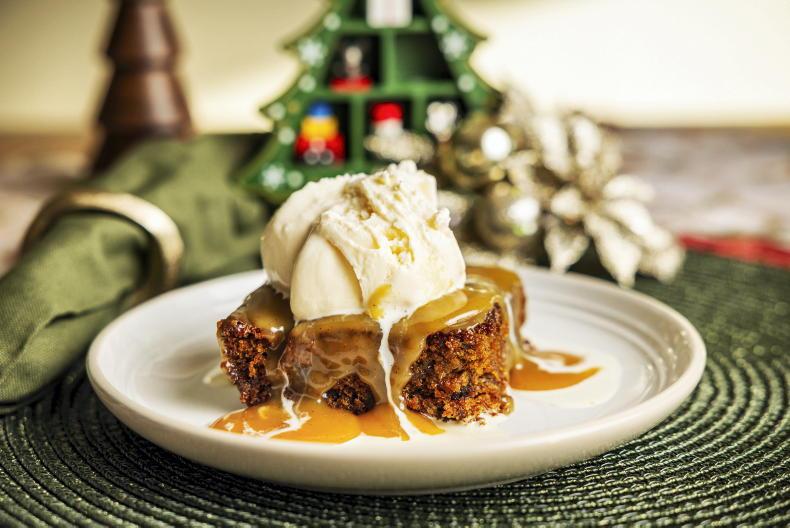
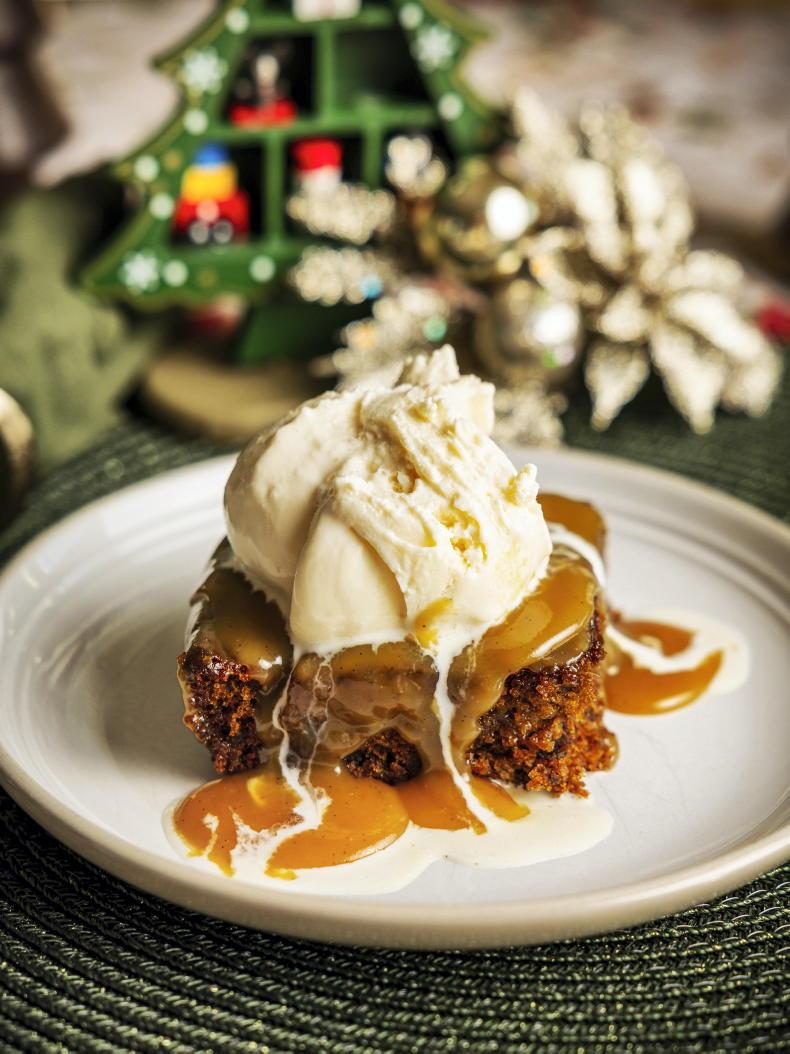
7. Using a fork, poke small holes all over the top of the cooled sponge, then pour half of the still-hot sticky toffee sauce over the top. Scoop big portions of the sticky toffee sponge onto dessert plates, add a scoop of vanilla ice cream and drizzle more warm sticky toffee sauce over to serve.
Serves 4
Ingredients
For the burnt honey and clove syrup:
160ml Irish honey (we used Galtee Honey Farm)
100ml water
3-4 whole cloves
½ lemon, sliced
For the hot whiskey:
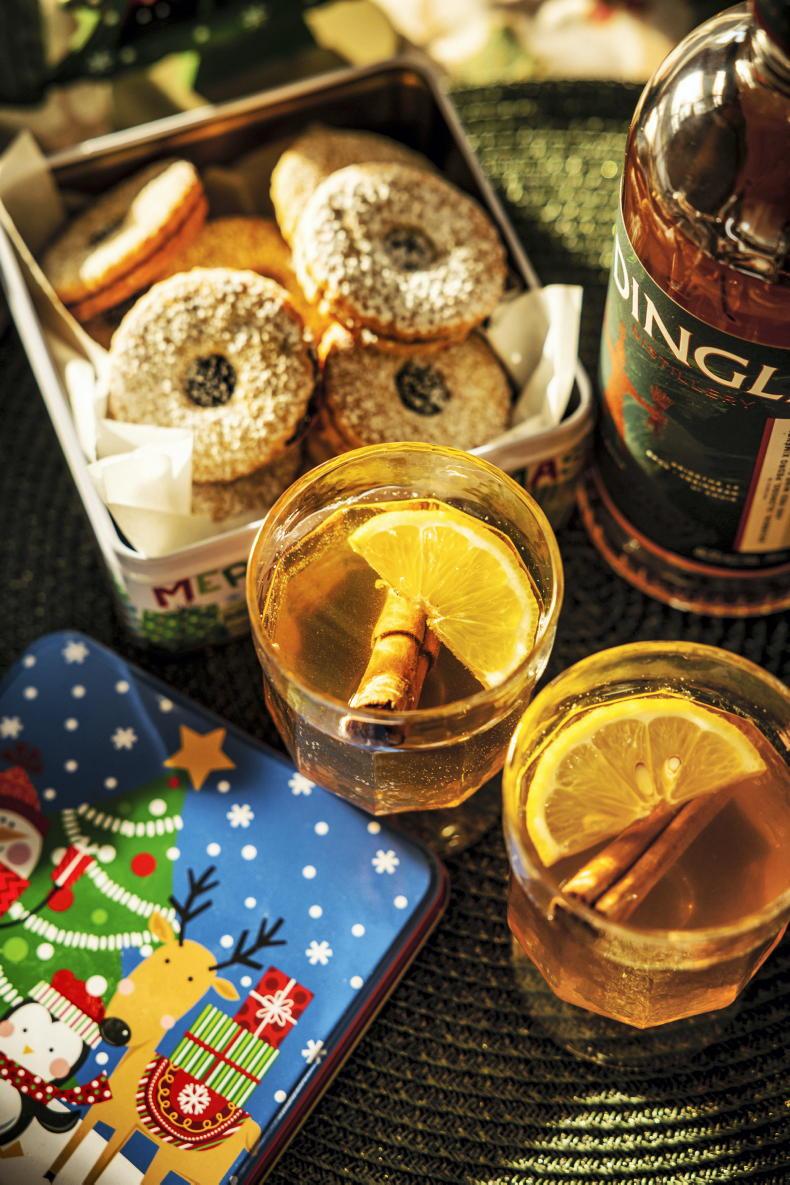
140ml good quality Irish whiskey (we used Dingle Distillery Single Pot Still)
100ml burnt honey and clove syrup
100ml boiled water
4 slices lemon
4 cinnamon sticks, for garnish (optional)
Method
1. Make the burnt honey syrup: add the honey to a saucepan and bring to a rapid boil. Boil the honey for 3-4 minutes to let it reduce and darken slightly in colour. Add the water, lemon and cloves and turn the heat down to medium. Simmer this mixture for 10 minutes, until the flavours have infused and the liquid has reduced.
2. Pour the syrup through a fine sieve to catch the lemon and cloves and cool completely. Store in a jar with a tight-fitting lid. This syrup will keep in the fridge for up to 6 weeks – it is great to have on hand for the festive season.
3. Make the hot whiskeys: for best results, warm four mugs by filling them with boiled water for 5-10 minutes. Remove the water and in each warm mug, place 35ml Irish whiskey, 25ml of burnt honey and clove syrup and 25ml of freshly boiled water.
4. Stir each hot whiskey to combine and place a slice of lemon on top. Add the cinnamon stick right before serving.
Serves 8-10
Ingredients
10 large Rooster or Maris Piper
potatoes, peeled
60g butter, softened
500ml cream
1 tsp Dijon mustard
1 tsp dried thyme
2 cloves garlic, finely grated
2 tsp sea salt
1 tsp black pepper
200g aged cheddar
(we used Knockanore Aged Cheddar)
200g fresh breadcrumbs
60g butter, melted
Method
1. Fill a large mixing bowl with cold water. Using a mandolin, cut the potatoes into paper-thin slices. Place the sliced potatoes in the cold water and set aside until ready to use (the water will keep the potatoes from discolouring).
2. Preheat the oven to 180°C. Spread the butter all over a large casserole dish and then add the sliced potatoes to the dish.
3. In a large jug, mix the cream, Dijon mustard, thyme, grated garlic, salt and pepper and pour this mixture over the potatoes. Cover the casserole dish with foil and place in the preheated oven. Bake for 1 hour.
4. While the potatoes are cooking, grate the aged cheddar and set aside until ready to use.
Then in a bowl combine the melted butter with the fresh breadcrumbs. Mix until the butter is completely combined with the breadcrumbs.
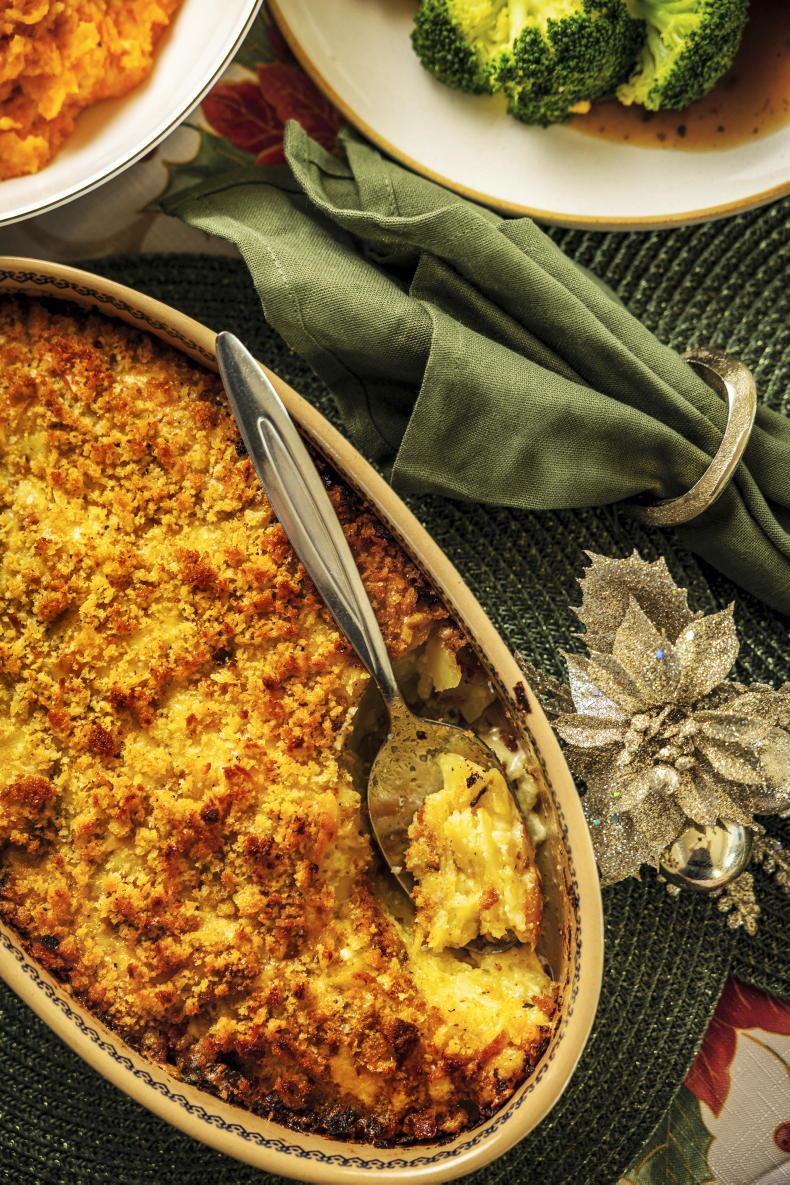
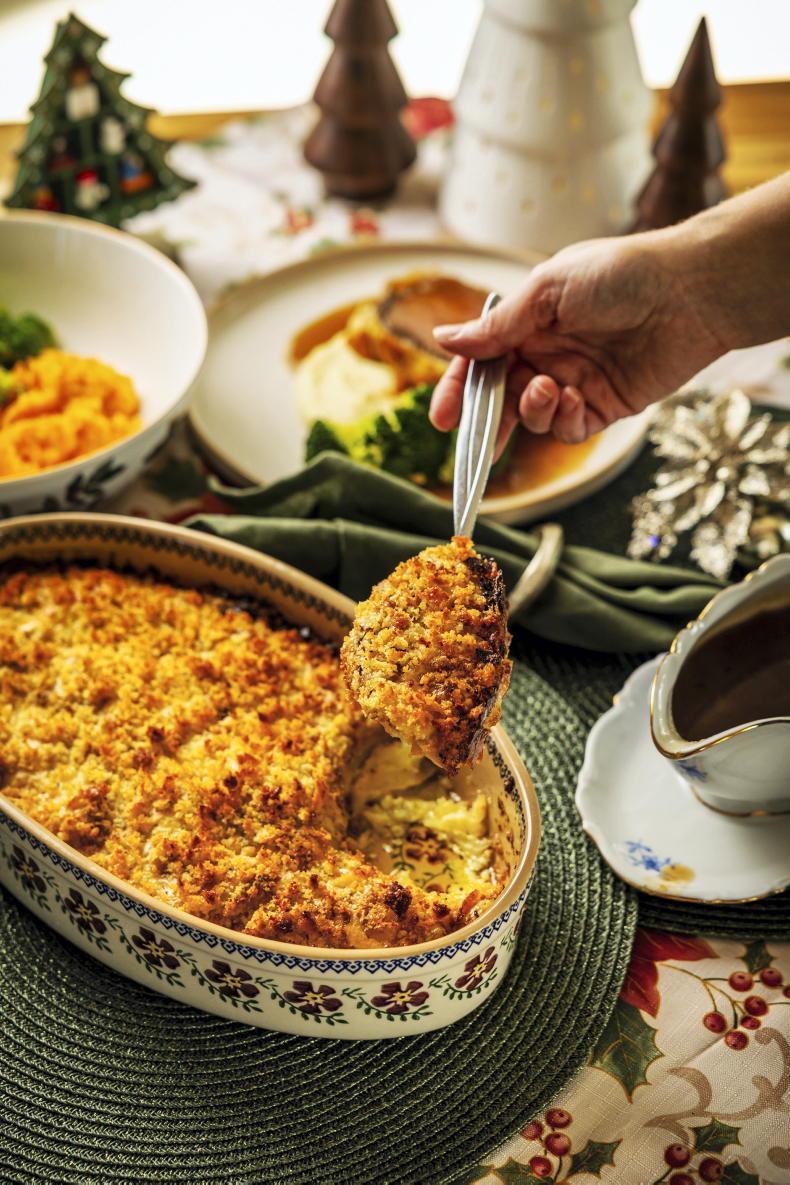
5. Take the potatoes out of the oven, remove the foil and sprinkle the cheese over the top. Then, add a layer of the buttery breadcrumbs. Place the casserole dish, uncovered, back into the oven and bake for an additional 30 minutes, until the breadcrumbs are crunchy and golden brown.
6. Serve the potatoes immediately, while hot.