


A fracture of a bone can be the result of a bad fall or a car accident, but the risk of obtaining a fracture greatly increases when one’s body is weak or mobility is lessened. Naturally, the rehabilitation of a fractured hip as opposed to a fractured wrist is quite different, however the fundamentals of the diet are the same.
If a fracture has occurred, the wound will need to heal and cells will need to be rebuilt. Protein-rich foods, such as chicken, turkey, lean beef, eggs and Greek yoghurt, will aid in this recovery. Other nutrients that play a strong role in building strong bones are calcium and vitamin D. They are especially important post-fracture but also to help with healthy bone development, so they should be encouraged into the diet from an early age.
Even though calcium is most commonly associated with dairy-rich products, it can also be found in leafy greens such as kale, broccoli and Chinese cabbage, as well as almonds and sesame seeds. While Greek yoghurt is rich in calcium, many Greek yoghurts also contain about twice as much protein as regular yoghurts, making them an ideal choice for a post-fracture diet.
The body needs the help of vitamin D to aid with the absorption of calcium. Therefore, an optimal level of vitamin D is essential for long-term bone health. Vitamin D is present in oily fish, such as salmon, trout, tuna and sardines, as well as eggs and fortified milks, but one of the best ways to top up one’s vitamin D is to take in a little daily sunshine. This may be easier said than done in Ireland, yet even if the sun is lurking behind the clouds, some vitamin D will make its way to you.
Physical activity plays an important role in maintaining good bone health. Bones which are used will keep strong. Those who maintain a good level of exercise throughout their life will lessen the possibility of trouble with their bones as they grow older. When a fractured bone has begun to heal, and once the doctor has given the go ahead, some daily, light exercise will aid recovery and, in turn, help to protect bones for the future.
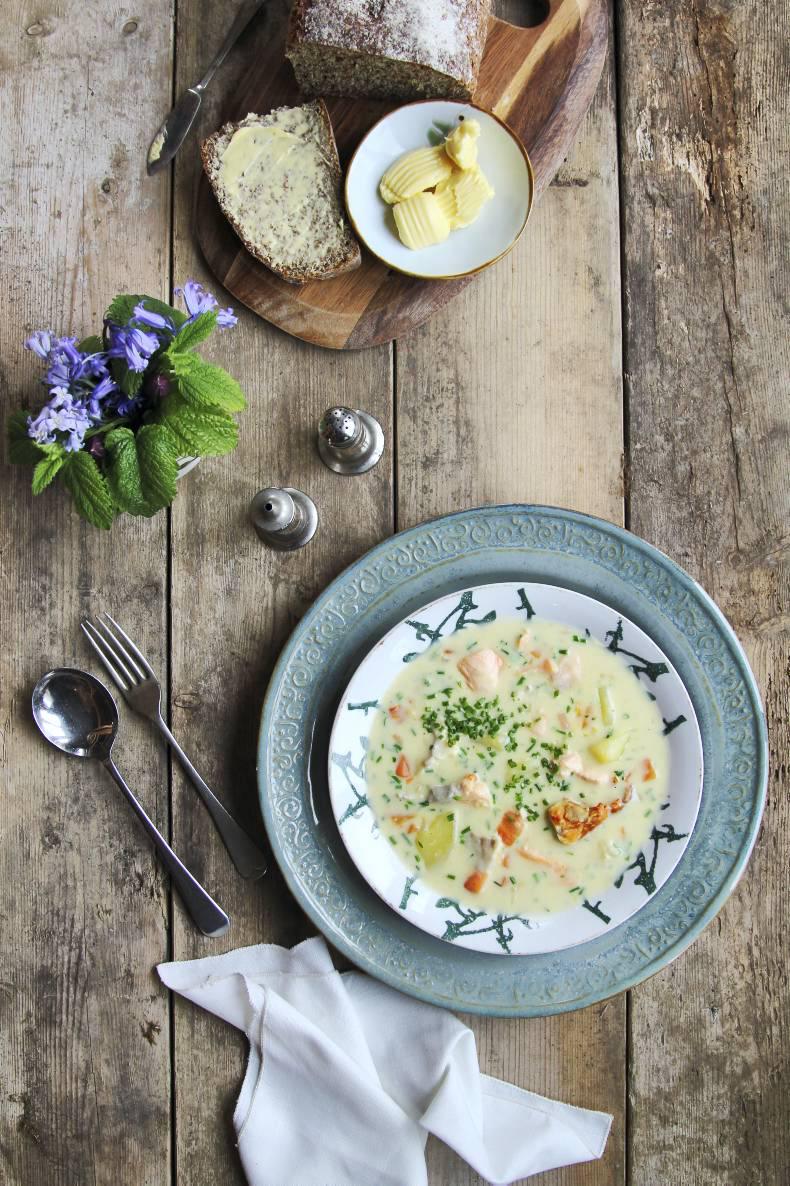
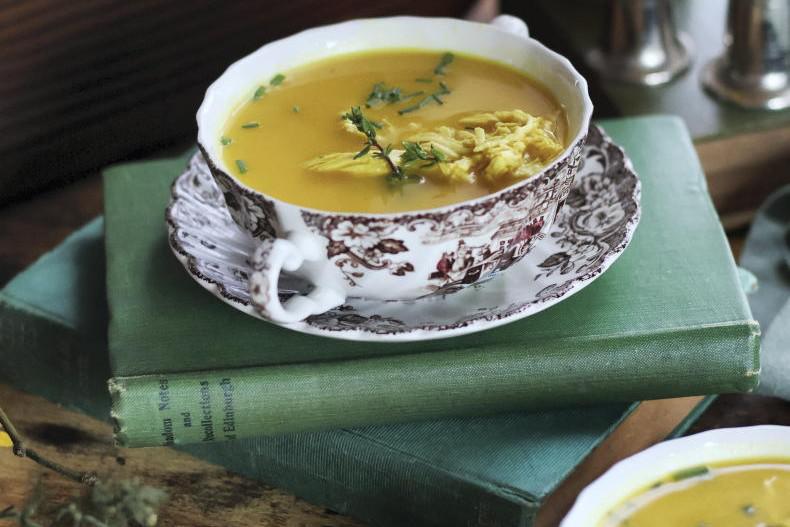
Seafood Chowder
When a calcium-rich food, such as milk, is paired with a vitamin D-rich food, such as salmon, the absorption of that calcium is easier for the body. Fish, which is bursting with omega-3 fatty acids, is a great choice for all the family as it will help keep bones healthy. This chowder is a little indulgent, so not for everyday, but, if preferred, simply substitute the cream at the end with milk.
1 tbsp olive oil
1 onion, finely diced
1 stick celery, finely diced
2 medium carrots, diced
Sea salt & freshly ground pepper
25g butter
1 tbsp flour
300mls milk, hot
700mls fish or vegetable stock
300g new potatoes, peeled and diced
150g salmon, skinned and diced
150g smoked haddock, skinned and diced
150g cod, skinned and diced
100ml cream
1 tbsp fresh parsley, finely chopped
2 tbsp fresh chives, finely chopped
1. Heat the olive oil in a large saucepan, over a medium heat. Add the onion, celery and carrots. Season with a little salt and pepper and sauté for five minutes until softened.
2. Add the butter. Once frothing, stir through the flour and cook for one minute. Continuing to stir, little by little add the hot milk.
3. Bring to a gentle simmer and pour in the stock. Add the potatoes. Simmer for 12-15 minutes, until the potatoes are almost cooked.
4. Add the salmon, haddock and cod into the saucepan. Simmer for five to seven minutes, until the fish is cooked through.
5. Stir through the cream, parsley and half of the chives. Check the seasoning and simmer for one more minute. Ladle into deep bowls, sprinkle with the remaining chives and serve with brown bread.
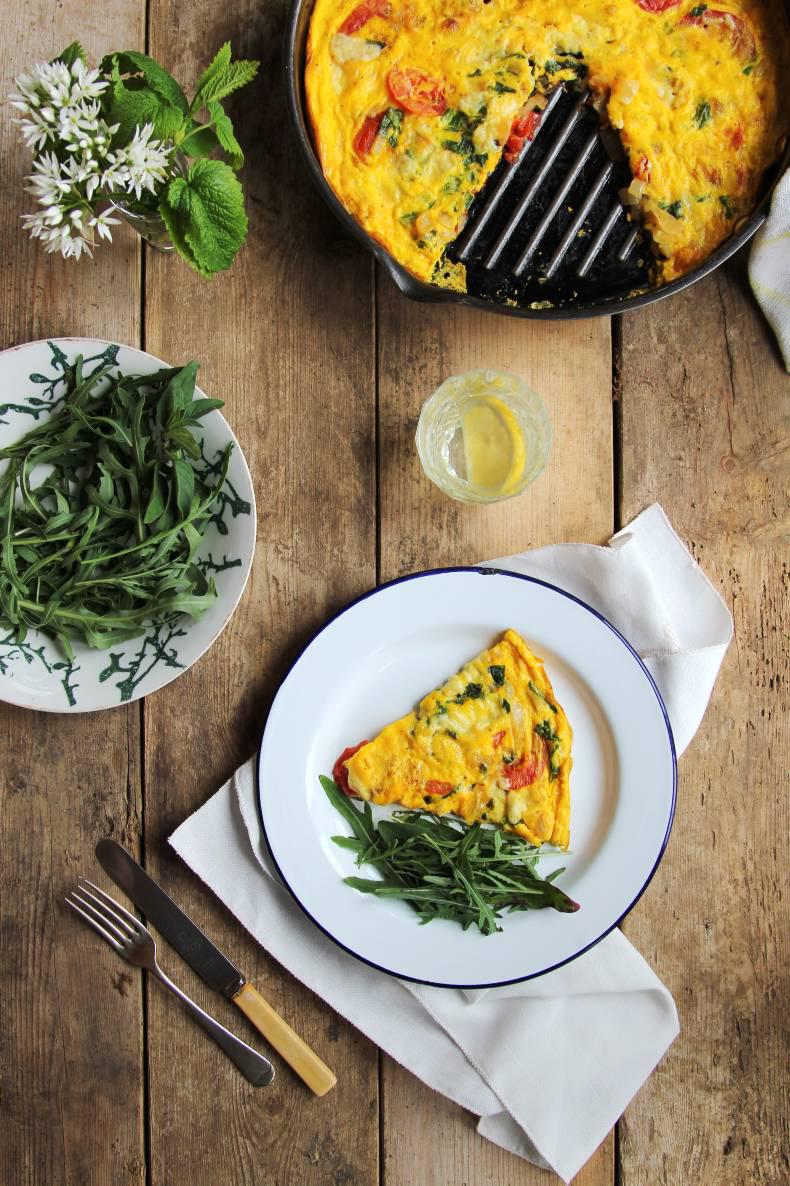
Cheddar, Tomato & Spinach Frittata
Packed with protein and vitamin D from the eggs, calcium from the cheese and iron from the spinach, this frittata makes an ideal dish to boost one’s bone health. This frittata is finished in the oven, but if you don’t have an oven-proof frying pan, simply place the frying pan under a grill for a couple of minutes until the eggs are set.
1 tbsp olive oil
1 onion, finely diced
2 ripe tomatoes, thinly sliced
75g spinach leaves, roughly chopped
75g cheddar cheese, diced
6 eggs
Sea salt and freshly ground pepper
1. Preheat the oven to 200ºC/ fan 180ºC/gas mark six.
2. Place a large, oven-proof frying pan over a medium heat. Drizzle over the olive oil and once hot, add the onion. Stirring regularly, cook for five minutes, until softened.
3. Add the tomato slices and cook for about two minutes.
4. Stir through the spinach. Once slightly wilted, sprinkle over the cheese, placing an even layer over the vegetables.
5. Whisk the eggs together and season with a little salt and freshly ground pepper. Pour over the vegetables and cheese. Tilt the pan to ensure the eggs evenly cover all.
6. Cook for two to three minutes until the eggs begin to set, then transfer to the preheated oven and cook for a further eight to 10 minutes.
7. Allow to cool slightly before cutting into wedges and serving with a green salad. CL
Nessa Robins grew up on a farm in Moate, Co Westmeath, where she lives with her husband, Diarmuid, and four children. Her first cookbook, Apron Strings: Recipes From A Family Kitchen is published by New Island. For more, visit nessasfamilykitchen.blogspot.ie



SHARING OPTIONS