

Every breeder has had the experience of standing at the ringside watching two foals, much alike to the eye, make very different money. One barely covers its keep, the other walks out of the ring paying for the mare’s year and a bit more besides.
That “why?” is at the heart of one of my recent University College Dublin studies that analysed 42,799 Irish sport horse auction records from 2003 to 2022.
To make sense of such a large data set, we did not just look at average prices. Within each age group, horses were divided into higher-priced and lower-priced groupings, so that patterns for the better-paid horses could be compared with those that made less. Some results confirm what many breeders already suspect; others sharpen the picture and offer clearer guidance on where effort and investment really pay off.
Higher-priced foals hold their value, even in a recession
The study also examined how prices behaved through the 2008-2011 economic crisis. Overall, foal prices declined sharply in those years and the number of foals offered at auction fell.
However, the higher-priced foals did not follow the same pattern. They not only held their value better, they actually widened the gap when compared with the overall average. By 2012, the mean price of these higher-priced foals was more than 110% above the overall group, and their mean price rose sharply in the recovery years that followed.
In practical terms, breeders producing better foals were more insulated from the downturn.
Within the foal sector, select sales emerged as a particularly important price determinant. Foals presented in select sales, especially those in the higher-priced grouping, attracted a clear additional premium, pointing to a distinct higher-end market segment with its own characteristics. Interestingly, this “select sale effect” did not carry through in the same way for young horses, underlining how critical early positioning and presentation can be in the foal market.
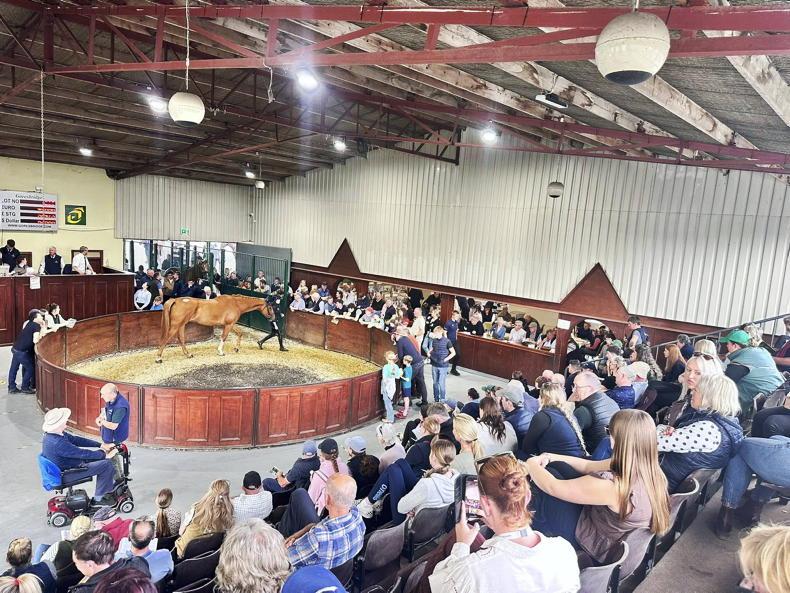
Goresbridge.
Breed with purpose rather
than fashion
On the genetic side, the data confirmed that progeny of stallions with proven competition records, particularly those competing at 1.50m and above, achieved higher prices as foals, as three and four-year-olds, and again as older horses. Buyers consistently paid more where performance appeared in the pedigree.
A more challenging finding was that progeny of stallions standing outside Ireland achieved higher prices, on average, than those by stallions based here. This should not be read as a criticism of Irish stallions, but as a reflection of how the international marketplace currently values particular bloodlines.
For breeders, the key message is to be clear about the discipline and level being targeted, and to select stallions, Irish or international, whose records and progeny type match that breeding goal.
Age, height, production, and autumn timing
For young and older horses, a clear “sweet spot” emerged. Prices were strongest for horses between 165cm and 172cm in height and under 10 years of age, with five- and six-year-olds performing particularly well. Prices fell away after 12 and were significantly lower again by 14.
Catalogue information on training and use also influenced price, but in a more subtle way than is sometimes assumed. Young horses described in the catalogue as broken (“started under saddle”) or not broken (“not started under saddle”) both achieved significantly higher prices than horses where no training status was recorded at all.
In other words, it was the clarity of the description, not simply the fact of being backed, that the market rewarded.
This effect was even stronger within the higher-priced grouping, where young horses explicitly described as “started under saddle” gained an additional premium of over €2,400. For older horses, having attended training shows or hunted was linked with higher prices, provided they remained under 10 and in the preferred height band.
Buyers, in effect, are paying for honest, specific information about what a horse has done and how far along it is, rather than for vague or incomplete catalogue entries.
Timing of sale played a role too. The strongest prices for young and older horses were seen in the main autumn sales, particularly September, October and November, when international buyers are most active and planning their next season.
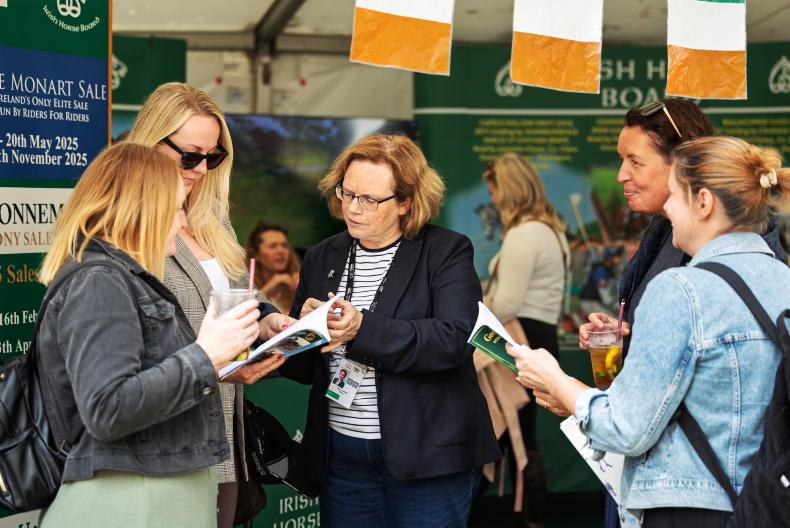
Dr Alison Corbally at the Irish Horse Board stand at Burghley Kirsty Pasto.
Registration is not just
paperwork, it is paid for
One of the clearest and most consistent signals was studbook registration. Across all age groups, horses registered in a studbook achieved significantly higher prices than those sold with identification documents alone. For foals, studbook registration was associated with a premium of more than €1,300 over unregistered foals.
Given that registration fees in Ireland are typically in the €70-€150 range (price relevant at the time of publication, unfortunately not any more), registration emerges not as an administrative burden but as a straightforward investment in value.
Because Irish studbooks require DNA verified parentage, buyers have confidence in what they are purchasing, a point that the Irish Horse Board (IHB) actively emphasises in its marketing to overseas clients.
Following the buyer, and the IHB connection
Destination market was another consistent driver. Across foals, young horses and older horses, overseas buyers, especially from North America and continental Europe, paid significantly more than domestic purchasers. Young horses sold abroad achieved close to €3,000 more than those sold in Ireland, and older horses sold overseas also carried a substantial premium.
This is where the role of the Irish Horse Board connects directly with the findings.
The IHB’s remit is promotion and marketing, opening doors to those higher value markets through trade missions, promoting the upcoming sales, hosting buyers, digital promotion and presence at major events. The evidence supports that focus, when Irish-bred horses reach the right international customers, the rewards are measurable.
Breeding and producing sport horses will always involve stockmanship, judgement and an element of risk. But using evidence such as this to guide registration decisions, sire selection, production strategy, timing of sale and target market, and combining that with the IHB’s work in bringing the best buyers to Irish horses, increases the chances that more of those ringside moments will end with the hammer falling where breeders hoped it would.
Every breeder has had the experience of standing at the ringside watching two foals, much alike to the eye, make very different money. One barely covers its keep, the other walks out of the ring paying for the mare’s year and a bit more besides.
That “why?” is at the heart of one of my recent University College Dublin studies that analysed 42,799 Irish sport horse auction records from 2003 to 2022.
To make sense of such a large data set, we did not just look at average prices. Within each age group, horses were divided into higher-priced and lower-priced groupings, so that patterns for the better-paid horses could be compared with those that made less. Some results confirm what many breeders already suspect; others sharpen the picture and offer clearer guidance on where effort and investment really pay off.
Higher-priced foals hold their value, even in a recession
The study also examined how prices behaved through the 2008-2011 economic crisis. Overall, foal prices declined sharply in those years and the number of foals offered at auction fell.
However, the higher-priced foals did not follow the same pattern. They not only held their value better, they actually widened the gap when compared with the overall average. By 2012, the mean price of these higher-priced foals was more than 110% above the overall group, and their mean price rose sharply in the recovery years that followed.
In practical terms, breeders producing better foals were more insulated from the downturn.
Within the foal sector, select sales emerged as a particularly important price determinant. Foals presented in select sales, especially those in the higher-priced grouping, attracted a clear additional premium, pointing to a distinct higher-end market segment with its own characteristics. Interestingly, this “select sale effect” did not carry through in the same way for young horses, underlining how critical early positioning and presentation can be in the foal market.

Goresbridge.
Breed with purpose rather
than fashion
On the genetic side, the data confirmed that progeny of stallions with proven competition records, particularly those competing at 1.50m and above, achieved higher prices as foals, as three and four-year-olds, and again as older horses. Buyers consistently paid more where performance appeared in the pedigree.
A more challenging finding was that progeny of stallions standing outside Ireland achieved higher prices, on average, than those by stallions based here. This should not be read as a criticism of Irish stallions, but as a reflection of how the international marketplace currently values particular bloodlines.
For breeders, the key message is to be clear about the discipline and level being targeted, and to select stallions, Irish or international, whose records and progeny type match that breeding goal.
Age, height, production, and autumn timing
For young and older horses, a clear “sweet spot” emerged. Prices were strongest for horses between 165cm and 172cm in height and under 10 years of age, with five- and six-year-olds performing particularly well. Prices fell away after 12 and were significantly lower again by 14.
Catalogue information on training and use also influenced price, but in a more subtle way than is sometimes assumed. Young horses described in the catalogue as broken (“started under saddle”) or not broken (“not started under saddle”) both achieved significantly higher prices than horses where no training status was recorded at all.
In other words, it was the clarity of the description, not simply the fact of being backed, that the market rewarded.
This effect was even stronger within the higher-priced grouping, where young horses explicitly described as “started under saddle” gained an additional premium of over €2,400. For older horses, having attended training shows or hunted was linked with higher prices, provided they remained under 10 and in the preferred height band.
Buyers, in effect, are paying for honest, specific information about what a horse has done and how far along it is, rather than for vague or incomplete catalogue entries.
Timing of sale played a role too. The strongest prices for young and older horses were seen in the main autumn sales, particularly September, October and November, when international buyers are most active and planning their next season.

Dr Alison Corbally at the Irish Horse Board stand at Burghley Kirsty Pasto.
Registration is not just
paperwork, it is paid for
One of the clearest and most consistent signals was studbook registration. Across all age groups, horses registered in a studbook achieved significantly higher prices than those sold with identification documents alone. For foals, studbook registration was associated with a premium of more than €1,300 over unregistered foals.
Given that registration fees in Ireland are typically in the €70-€150 range (price relevant at the time of publication, unfortunately not any more), registration emerges not as an administrative burden but as a straightforward investment in value.
Because Irish studbooks require DNA verified parentage, buyers have confidence in what they are purchasing, a point that the Irish Horse Board (IHB) actively emphasises in its marketing to overseas clients.
Following the buyer, and the IHB connection
Destination market was another consistent driver. Across foals, young horses and older horses, overseas buyers, especially from North America and continental Europe, paid significantly more than domestic purchasers. Young horses sold abroad achieved close to €3,000 more than those sold in Ireland, and older horses sold overseas also carried a substantial premium.
This is where the role of the Irish Horse Board connects directly with the findings.
The IHB’s remit is promotion and marketing, opening doors to those higher value markets through trade missions, promoting the upcoming sales, hosting buyers, digital promotion and presence at major events. The evidence supports that focus, when Irish-bred horses reach the right international customers, the rewards are measurable.
Breeding and producing sport horses will always involve stockmanship, judgement and an element of risk. But using evidence such as this to guide registration decisions, sire selection, production strategy, timing of sale and target market, and combining that with the IHB’s work in bringing the best buyers to Irish horses, increases the chances that more of those ringside moments will end with the hammer falling where breeders hoped it would.
SHARING OPTIONS