



It’s April 1916 in Dublin and Diarmuid O’Hegarty is enjoying the fresh spring air as he walks along Merrion St to the offices of the Department of Agriculture and Technical Instruction (DATI).
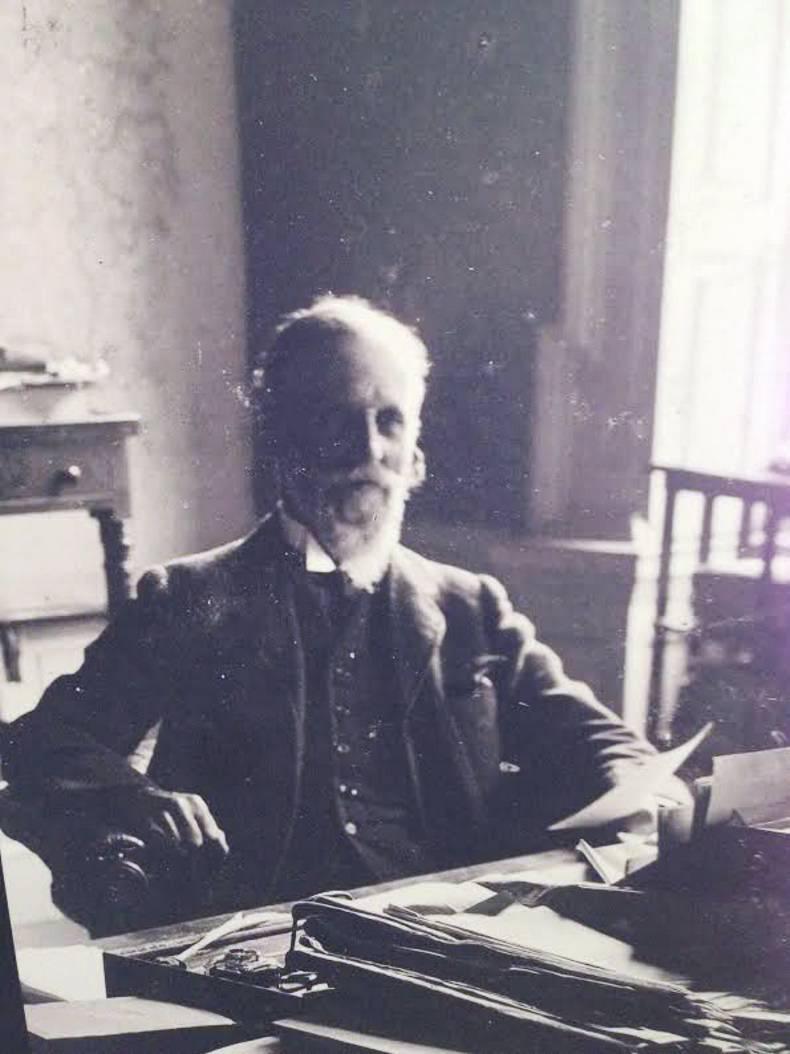
Originally from Cork, the young O’Hegarty is a civil servant in the DATI where he serves as private secretary to TP Gill, secretary general of the department and a prominent figure in Irish society in the early 20th century.
At the time, the DATI was simply referred to as “the Department” as it was the only Irish-based State agency in existence under the British administration in Ireland – a shorthand name that still survives to this day for the modern Department of Agriculture.
Whether Gill was aware of it or not, his young secretary led a double life as an active member of the Irish Volunteers and was preparing himself in those weeks to take part in the Easter Rising. On Monday 24 April 1916, O’Hegarty found himself manning the barricades on the corner of Church St and Mary’s Lane, close to the Jameson Distillery. He was one of six civil servants from the Department who failed to show for work that week as they were involved in the fighting across the city in some form or other.
Arrested
A week later when the Rising was suppressed by British forces, O’Hegarty was arrested and sent to England for trial. In a mix-up, he was released back to Ireland without facing any charges and returned to work in the Department in early May.
Following the Rising, O’Hegarty remained involved in the nationalist movement and counted Harry Boland and Michael Collins among his closest friends, with Collins even serving as best man at his wedding in 1922.
Having been sacked from the Department in 1918 after refusing to take the oath of allegiance to the crown, O’Hegarty soon found himself back at the very highest levels of a new civil service for the fledgling Irish Republic when he was appointed clerk of the first Dáil in 1919 and secretary to the Dáil cabinet.
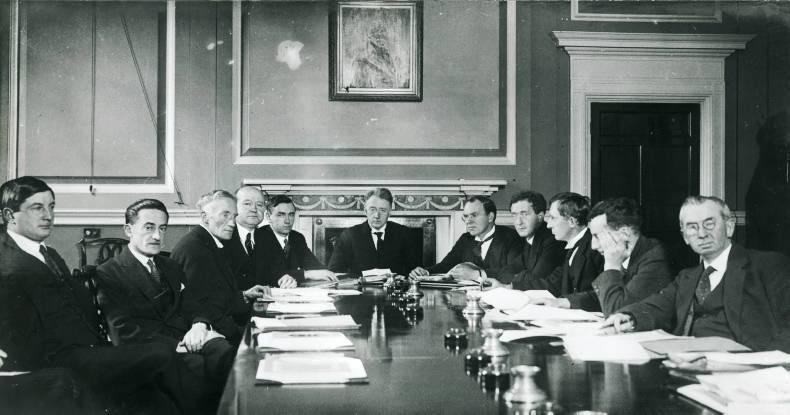
O’Hegarty also served as secretary to the Irish delegation during the Anglo-Irish treaty negotiations in London in late 1921, and remained a senior member of the Irish civil service throughout those formative years for the Irish State. Indeed, his role in the creation of a new civil service in Ireland led to O’Hegarty being called “the civil servant of the revolution”.
Fascinating
O’Hegarty’s narrative is just one of many fascinating stories that can be traced back in some shape or form to the Department of Agriculture during that period, and is remembered today in a new exhibition created by staff from the modern-day Department of Agriculture.
Entitled “1916, The Department, In Time of War and Revolution”, the exhibition recounts the stories of the many interesting characters who worked in the Department during that critical period of Irish history.
As the only State department based in Ireland under the British administration, it is no surprise that many of the men and women who comprised the Department’s staff in those early years went on to use that experience to form the backbone of the new Irish civil service of the 1920s.
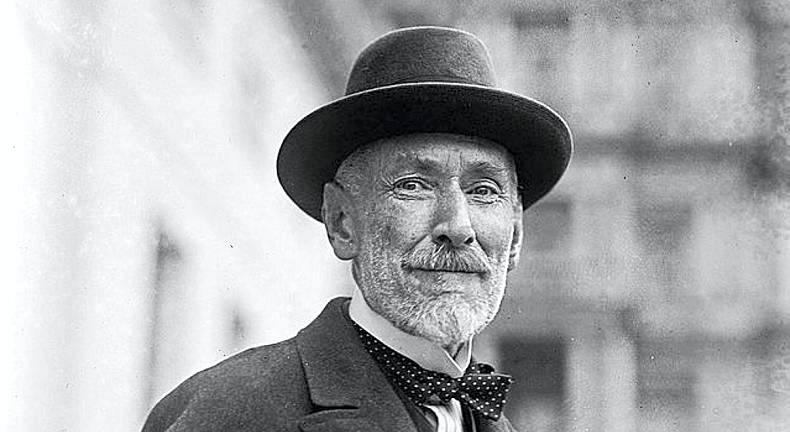
In the senior ranks of the Department, TP Gill and another pioneer of Irish agriculture, Sir Horace Plunkett, were instrumental in the early formation of the Department of Agriculture and Technical Institute. Both men were politically very active at the time and their influence ran to the very highest office in Westminster.
Agriculture development
Among the rank and file civil servants, the normal work of the Department went ahead during those years very much along the same lines as it does today, with the development of Irish agriculture the priority.
The outbreak of World War I actually brought about a boom period for Irish agriculture as the demand for food soared to feed the British armies abroad. An act of parliament was even passed in 1917 requiring all farmers in Ireland with 10 acres or more to plant at least a tenth of their land in tillage.
Interestingly, many of those working in the Department in 1914 saw it as their duty to join the British army following the outbreak of WWI, with over one-third of staff actually leaving to go and fight in the Great War.
What this new exhibition best encapsulates is that Irish agriculture, and by extension the Department of Agriculture, was as intrinsic a part of Irish rural life as it remains today. What brings it to life are the fascinating stories of the people who steered the young Department through its turbulent early years.
The exhibition “1916, The Department, In Time of War and Revolution” is on display to the public free of charge in the reception area of the Department of Agriculture, Food & the Marine, Agriculture House, Kildare St, Dublin 2.



SHARING OPTIONS