


When we were young, by the time Christmas Eve came we were like a tide held back by a strong wall that was now to burst open with a huge surge of enthusiasm. There was no holding us back. The house decorating, which had been held off until then, was about to begin. Bundles of holly and ivy were swept into the kitchen and we buried everything in greenery.
Earlier that day, my mother had boiled a black pot of potatoes over the open fire. When the potatoes were sufficiently cool to be peeled in comfort, a large green enamel dish was filled with steaming white floury potato while a galvanised bucket beside it filled up with skins. On top of the mound of potato, she landed a generous lump of yellow butter. Then came a waterfall of cooked onions, the peeling of which had brought a waterfall of tears down her face. All these were churned into a soft stuffing mixture. If she judged the mixture to be too dry, she carefully added a few drops of liquid from the saucepan of cooked giblets boiled the night before.
In another enamel basin, my mother had put breadcrumbs made from the insides of a stale two-pound loaf to which she now added salt, pepper, cinnamon, mixed herbs and a very limited amount of sage. These herbs she rubbed between her palms just as my father rubbed the layers of tobacco he peeled off his plug prior to filling his pipe. Into this mixture she grated a large green cooking apple saved from my grandmother’s apple trees. She might then add a pinch of caster sugar to balance the flavour. If it was still not to her satisfaction, another dribble of the giblet juice could be added.
When the stuffing had completely cooled, my mother began the ritual of stuffing the goose. First to be done was the breast cavity and then the body. To prevent either bursting while cooking, she allowed sufficient room for expansion. Then, like a master surgeon, she stitched up her patient with her largest darning needle threaded with a soft white flax cord.
While my mother was thus engaged, we poked branches of holly behind holy pictures, between the bannisters of the stairs and along the meat hooks in the ceiling. Paper chains were strung around the kitchen and a pleated paper went around the turnip holding the Christmas candle. It was my father’s job to procure the biggest turnip in the pit and scoop a hole in it to hold the large candle.
When my mother judged that some of our exuberance was satisfied and that it was safe to introduce them, she went up to the parlour press and brought down what she called her Christmas mottos. These were old cardboard Christmas scenes which had been in the house for many years. They had survived because she kept them safely locked up. One of them was a jovial Santa handing out parcels to rosy-faced children dressed in fancy fur capes. They definitely were not Irish children, so these pictures had probably been sent home from America by an emigrant relation.
From the wooded fairy fort behind our house came a huge block of wood off a fallen tree – the blockeen na Nollag my grandmother called it. This lay across the back of the open fire and would keep it glowing for the 12 days of Christmas. As dusk gathered in, the radio was turned on and we listened carefully to hear Santa call out the names of all the children he was about to visit. We breathed a sigh of relief when we all featured on his list.
Then we went out and stood on the doorstep to look across the valley at the distant Kerry mountains and imagine we could see Santa with his sleigh and reindeers gliding along the peaks as he made his rounds. We also saw my father, bearing a bundle of hay on his back to the sheep in the field down by the river. The sheep were the only animals to be out overnight, just as it was on the first Christmas.
With all the other farm animals locked up for the night, it was time for the Christmas Eve supper. The normal fare of brown bread was ditched and we savoured the luxury of sweet cake, butter loaf and seed loaf. Some of these had been gifted to us by shopkeepers in town and were deeply appreciated. Toast was part of our Christmas supper tradition and the bread was toasted in front of the now red glowing sods of turf. Plates of golden toast, streaming with yellow butter, joined the barmbrack and cake making a rare appearance on our table.
Before any of the niceties that had our mouths watering could be tasted, the Christmas candle had to be lit. To my mother, the lighting of the candle was the official opening of the door into Christmas. An aura of peace and joy at the sacredness of the season surrounded her at this time.
My father lit the candle and my mother sprinkled us with holy water. The candle cast a pool of light over the little cardboard crib on the sill beside it. One year, this crib had suddenly appeared in the window of our local shop. It had brought us to a standstill. We stood with our noses pressed against the glass, peering in at it in awe. Finally we plucked up the courage to go in and enquire as to the price. Two shillings? A huge sum in our eyes. How were we to procure it? But there is no barrier that can hold back a dream. And we had a dream: a dream that this crib should be part of our Christmas.
We each had a money box to hold any donations that came our way, such as ‘stands’ from visiting relatives or rare pennies earned for doing jobs for neighbours. Between us, we came up with the two shillings. Now we swelled with pride as we viewed our investment in its place beside the Christmas candle.
When supper was over, it was time to play the new records that were part of every Christmas. The gramophone was normally resident on the parlour sideboard, but for Christmas it was a welcome visitor to the kitchen. We played the new records non-stop, but when their novelty had worn a bit thin, we went back to the old favourites. John McCormack, Fr Sydney MacEwan, Josef Locke, Delia Murphy and many others warbled around our kitchen. Then it was time for lemonade and biscuits. The red lemonade came in small glass bottles and with it we crunched the rare treat of Kerry Cream biscuits.
Meanwhile, my mother made the trifle for the next day’s dinner. She took a large red bowl from the parlour press and placed it on the kitchen table. It was a seldom used cut-glass bowl she had inherited from her mother. We knew it was one of her treasures. Into this she placed circles of sponge cake, layered with strawberry jam and tinned pears to which my father was partial. The contents were then generously laced with sherry. Red jelly, already melted in a ware jug and allowed to cool slightly, was poured over the contents of the bowl, which soaked it all up. Tomorrow it would be covered with custard or cream skimmed off the top of the churn. The thought of it made our insides glow.
We did not want to go to bed and end this lovely night, but the thought that Santa might pass by if we were still up persuaded us. After a reluctant recitation of the rosary, we hung our stockings off the black crane by the fire and off the backs of the sugán chairs. Getting to sleep was not easy and we fought against it, hoping to catch sight of Santa. There was a fireplace in our bedroom and we hoped that we might catch sight of a red leg as Santa made his way down the chimney to the kitchen. But exhaustion won the day and we were fast asleep when he finally passed down.
Some say that Christmas is really only for children as if with the sophistication of adulthood we should leave such simplistic belief behind us. And yet, dormant within each one of us are the roots of the child we once were.
At Christmas, that child reawakens and we again believe that the impossible is possible. CL
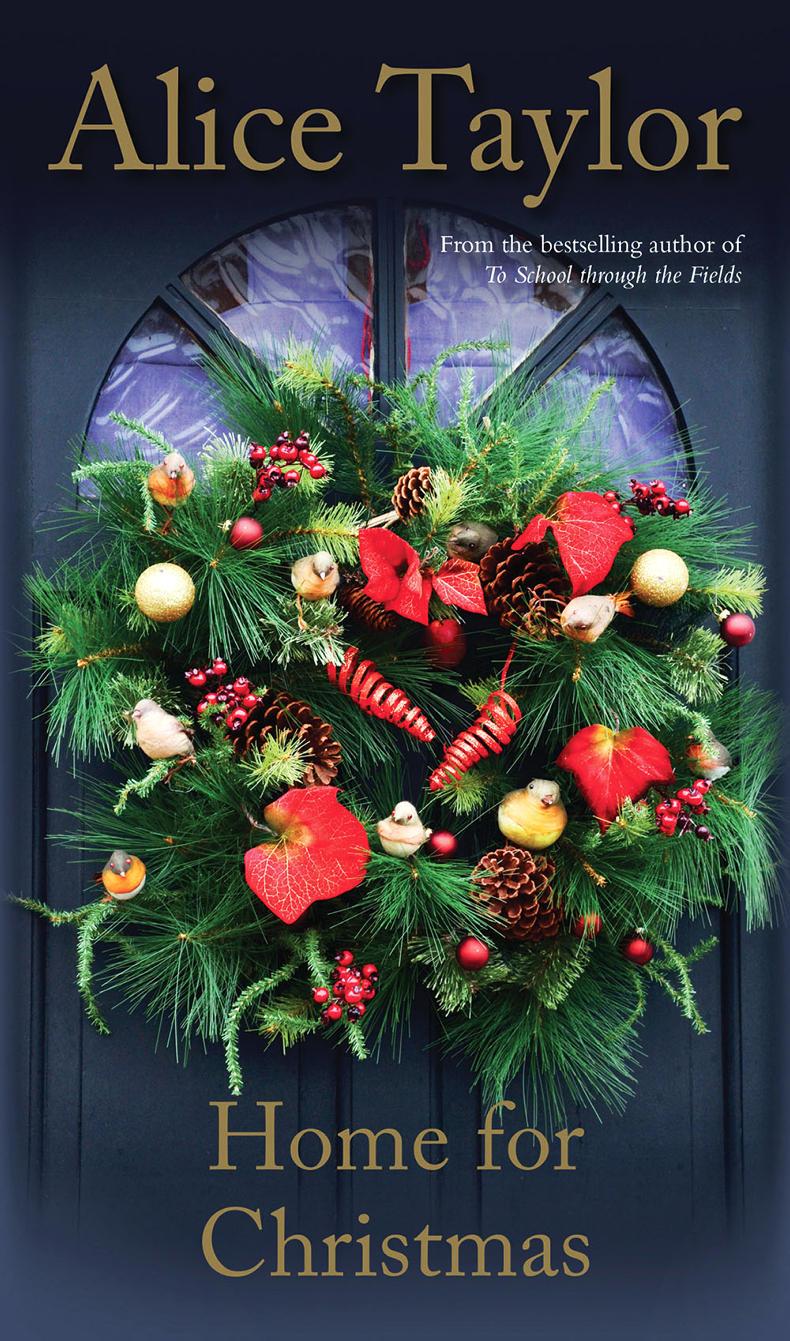
Home for Christmas by Alice Taylor is published by The O’Brien Press, RRP €19.99
*This extract is an edited version of the chapter “Christmas Eve.”





SHARING OPTIONS