This spring has been a tough one for the vast majority of farms in the country, with weather being the root of all problems.
The majority of livestock farms have struggled to get animals out to grass and if they do, they are struggling to keep them out.
The continuous rainfall with little opportunity for drying has left soils in certain parts of the country waterlogged.
Had 2025 not been such a good year and silage supplies had not been as plentiful, fodder shortages would be widespread by now.
Despite the challenging conditions, there are a cohort of farms in every part of the country that have managed to get animals to grass regularly over the past two months.
This is not just on the driest of land, but also on farms that would typically be perceived as heavy and difficult to manage.
Spring grazing in tough conditions isn’t for everyone
The differentiation between those farms and the rest is an attitude and a determination to maximise the amount of grass in the diet, reduce costs and improve performance and profitability of the herd.
Spring grazing in tough conditions isn’t for everyone, time and effort is needed, but for farms that strive to be the best in class or just more profitable overall, getting more days at grass is the key.
What the majority of the farms who are grazing from February and March have that the rest don’t – whether it’s in the context of dairy, beef or sheep farms – is infrastructure that allows them to graze more sporadically and for shorter intervals.
On/off grazing
On/off grazing is something that’s predominantly practised on dairy farms, but also something that can be applied on other livestock farms.
The principle of on/off grazing is to get animals out to grass for a number of hours to reduce the demand for silage or meal.
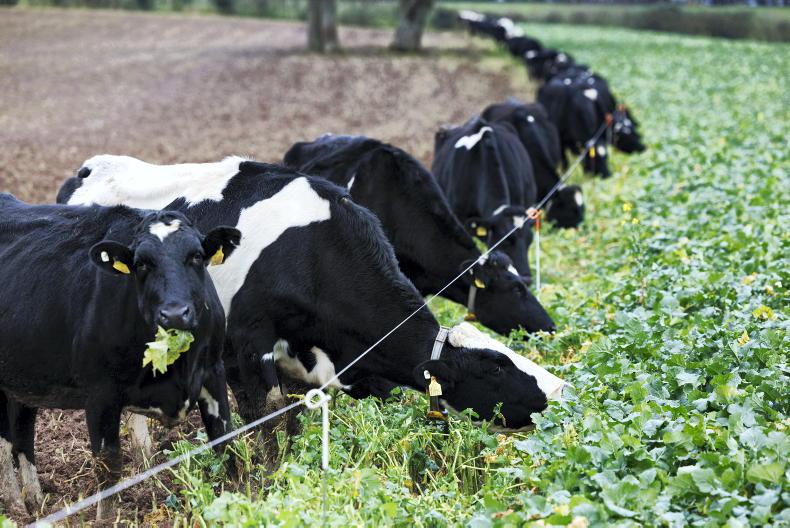
In dairy herds cows are sent out to grass for about three to four hours after the milking and then brought back into the shed. The reason for this is that a dairy cow can eat 90% of what she requires in a day, with two three-hour grazing bouts after each milking.
After the three hours the cows have eaten most of what they need. They become less interested in grazing and start to walk and become active. This is when the majority of poaching is done.
To manage on/off grazing, paddocks need to be accessible from more than one access point. Ideally, a paddock will have two or three gap handles, as this will allow for subdivisions within the paddock.
Dividing the paddock up into strips will stop animals walking over the grass and trampling it into the ground, while also reducing the level of poaching.
Getting any animals out to grass for a few hours in the day will reduce their requirement for silage or meal. One grazing of three hours could reduce the amount of silage by 40% to 50%.
The grazing of that paddock will also encourage regrowth in the field and get grass moving again.
Grass that hasn’t been grazed in months is slow to start growing, compared to a field that has been grazed recently. This is because the light from the sun, needed for photosynthesis, cannot get down into the base of the plant.
Spur roads
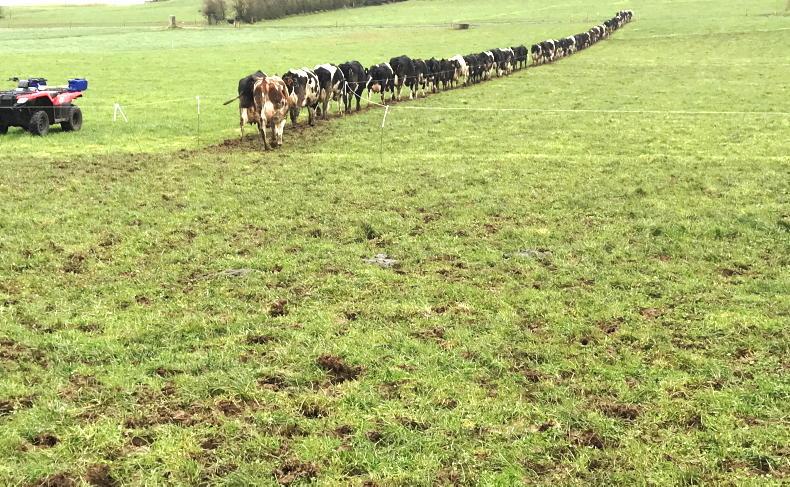
A spur road is essentially a pathway for animals off the main road of the farm. The spur is created by running an electric wire about 1m from a main fence to create a temporary path for animals to walk, as seen in the image below.
These spur roads are used on farms with long paddocks that may only be accessible from one point.
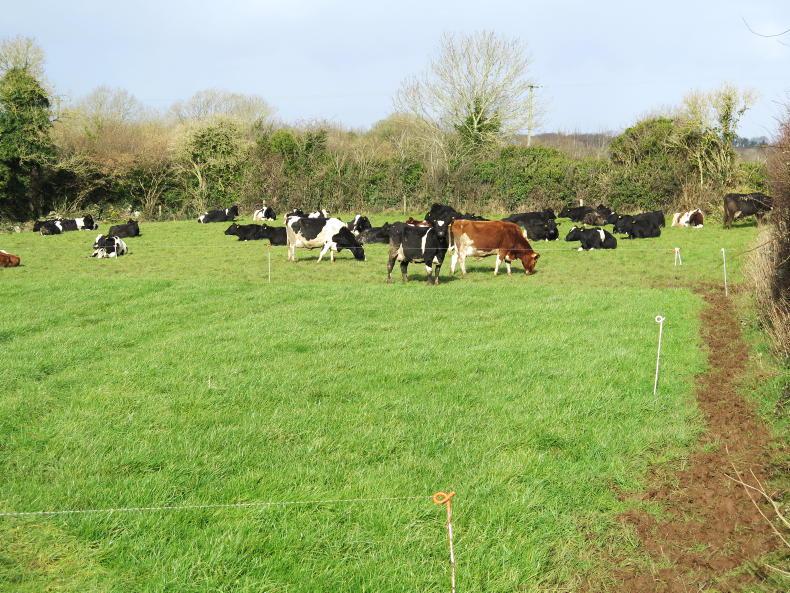
The spur road, seen here, is allowing cows to access the back of a long paddock.
Once animals get used to it after a day or two, they will walk freely in and out of the paddock via the spur.
The 1m strip will look very damaged after a couple of uses, but should recover fast. Grass seed can be thrown on top, once the spur is finished with and it normally bounces back by the third rotation.
Batt-latch
A batt-latch or an e-gate has been a game-changer on farms in recent years in terms of on/off grazing.
The batt-latch is a device attached to the gap handle and operated on a timer.

A timer-based batt-latch in use on a dairy farm. Once the timer goes off, the handle will open and the cows can walk back to the shed. \ Grasstec
The device is set to open at a certain time, say three-hours after the cows go out. Once the three hours are up the gap handle will spring open and cows will be able to return to the shed.
This means if the farmer gets delayed, the grazing is finished or there is heavy rain, the gap handle can be opened and the cows will still be able to get back inside.
An e-gate can be operated from the farmer’s phone, which is slightly different to the timer on the batt-latch, but both work on the same principle and have proven very effective.
This spring has been a tough one for the vast majority of farms in the country, with weather being the root of all problems.
The majority of livestock farms have struggled to get animals out to grass and if they do, they are struggling to keep them out.
The continuous rainfall with little opportunity for drying has left soils in certain parts of the country waterlogged.
Had 2025 not been such a good year and silage supplies had not been as plentiful, fodder shortages would be widespread by now.
Despite the challenging conditions, there are a cohort of farms in every part of the country that have managed to get animals to grass regularly over the past two months.
This is not just on the driest of land, but also on farms that would typically be perceived as heavy and difficult to manage.
Spring grazing in tough conditions isn’t for everyone
The differentiation between those farms and the rest is an attitude and a determination to maximise the amount of grass in the diet, reduce costs and improve performance and profitability of the herd.
Spring grazing in tough conditions isn’t for everyone, time and effort is needed, but for farms that strive to be the best in class or just more profitable overall, getting more days at grass is the key.
What the majority of the farms who are grazing from February and March have that the rest don’t – whether it’s in the context of dairy, beef or sheep farms – is infrastructure that allows them to graze more sporadically and for shorter intervals.
On/off grazing
On/off grazing is something that’s predominantly practised on dairy farms, but also something that can be applied on other livestock farms.
The principle of on/off grazing is to get animals out to grass for a number of hours to reduce the demand for silage or meal.
In dairy herds cows are sent out to grass for about three to four hours after the milking and then brought back into the shed. The reason for this is that a dairy cow can eat 90% of what she requires in a day, with two three-hour grazing bouts after each milking.
After the three hours the cows have eaten most of what they need. They become less interested in grazing and start to walk and become active. This is when the majority of poaching is done.
To manage on/off grazing, paddocks need to be accessible from more than one access point. Ideally, a paddock will have two or three gap handles, as this will allow for subdivisions within the paddock.
Dividing the paddock up into strips will stop animals walking over the grass and trampling it into the ground, while also reducing the level of poaching.
Getting any animals out to grass for a few hours in the day will reduce their requirement for silage or meal. One grazing of three hours could reduce the amount of silage by 40% to 50%.
The grazing of that paddock will also encourage regrowth in the field and get grass moving again.
Grass that hasn’t been grazed in months is slow to start growing, compared to a field that has been grazed recently. This is because the light from the sun, needed for photosynthesis, cannot get down into the base of the plant.
Spur roads
A spur road is essentially a pathway for animals off the main road of the farm. The spur is created by running an electric wire about 1m from a main fence to create a temporary path for animals to walk, as seen in the image below.
These spur roads are used on farms with long paddocks that may only be accessible from one point.

The spur road, seen here, is allowing cows to access the back of a long paddock.
Once animals get used to it after a day or two, they will walk freely in and out of the paddock via the spur.
The 1m strip will look very damaged after a couple of uses, but should recover fast. Grass seed can be thrown on top, once the spur is finished with and it normally bounces back by the third rotation.
Batt-latch
A batt-latch or an e-gate has been a game-changer on farms in recent years in terms of on/off grazing.
The batt-latch is a device attached to the gap handle and operated on a timer.

A timer-based batt-latch in use on a dairy farm. Once the timer goes off, the handle will open and the cows can walk back to the shed. \ Grasstec
The device is set to open at a certain time, say three-hours after the cows go out. Once the three hours are up the gap handle will spring open and cows will be able to return to the shed.
This means if the farmer gets delayed, the grazing is finished or there is heavy rain, the gap handle can be opened and the cows will still be able to get back inside.
An e-gate can be operated from the farmer’s phone, which is slightly different to the timer on the batt-latch, but both work on the same principle and have proven very effective.
SHARING OPTIONS