


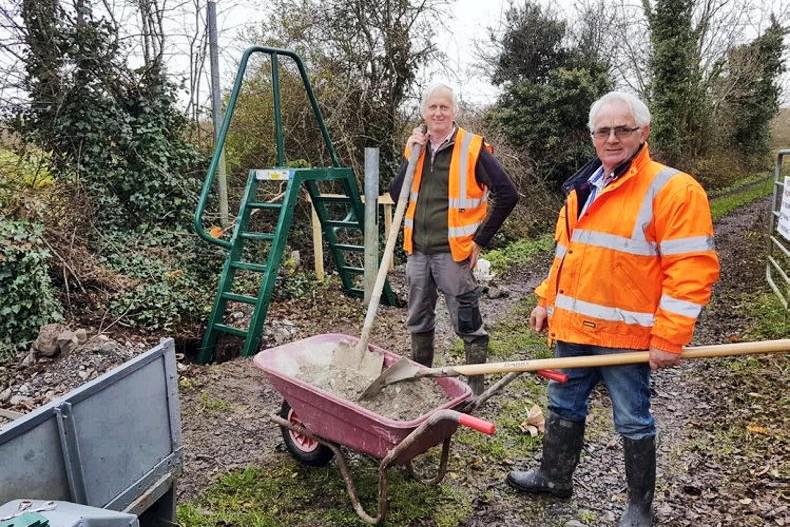
Plans to extend the Rural Social Scheme (RSS) to include people who are not involved in farming or fishing are believed to be imminent, with Minister for Social Protection Dara Calleary expected to announce that new ‘rural dweller’ applicants will be eligible to apply to the scheme from January.
The RSS scheme operates in every county in the country, supporting over 2,600 participants, who receive a top-up to their Farm Assist Payment, in return for 19.5 hours part-time employment every week that contributes to and benefits their communities.
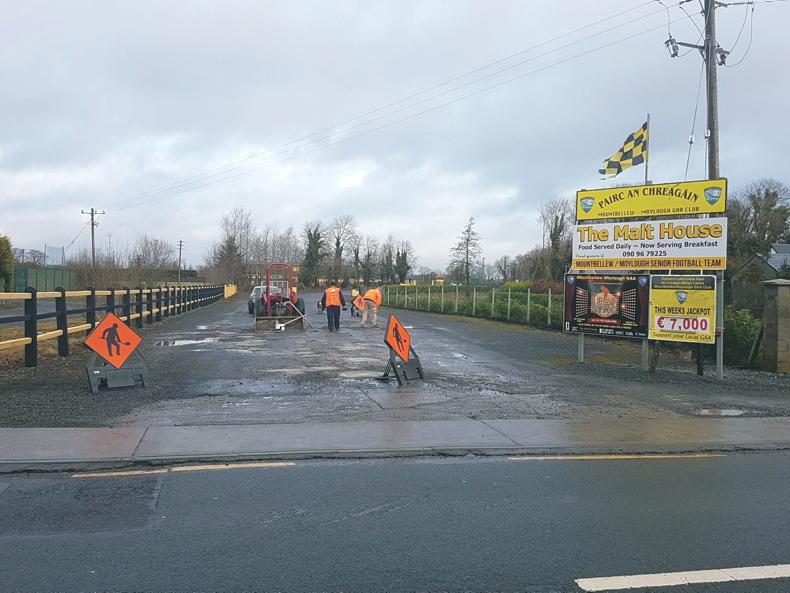
Examples of the roles offered through RSS include administration, heritage, social care and an extensive list of outdoor work from Tidy Towns engagement, sports pitches maintenance, as well as village, countryside and graveyard enhancement projects.
Aimed primarily at small farmers on low incomes, the scheme was introduced over 20 years ago and has been hailed as a hugely successful social inclusion model, utilising the skills of many in farming and fisheries who struggle to make a living from the land or sea, for the benefit of their local communities.
Rising age profile
However, the ageing profile of participants along with a national vacancy rate of 22% has led to a recommendation that the scheme be opened up to rural dwellers who do not have a direct link to farming or fishing, so that the vital community work being done by those on the scheme can continue.
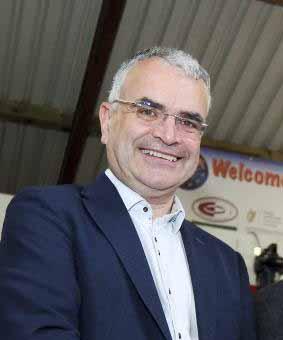
Liz McDonald is the Rural Social Scheme leader in Galway Rural Development. She says she is confident the changes recommended in last year’s RSS National Review will be implemented soon.
“There is no rural future without rural people, rural community groups, and farmers,” she says.
“RSS is so much more than an income top-up, it supports socialisation, mental health and community activation among those who participate.”
The Report on the Review of the Rural Social Scheme was published in July 2024 and outlined 19 different recommendations as to how the scheme could be improved and expanded,
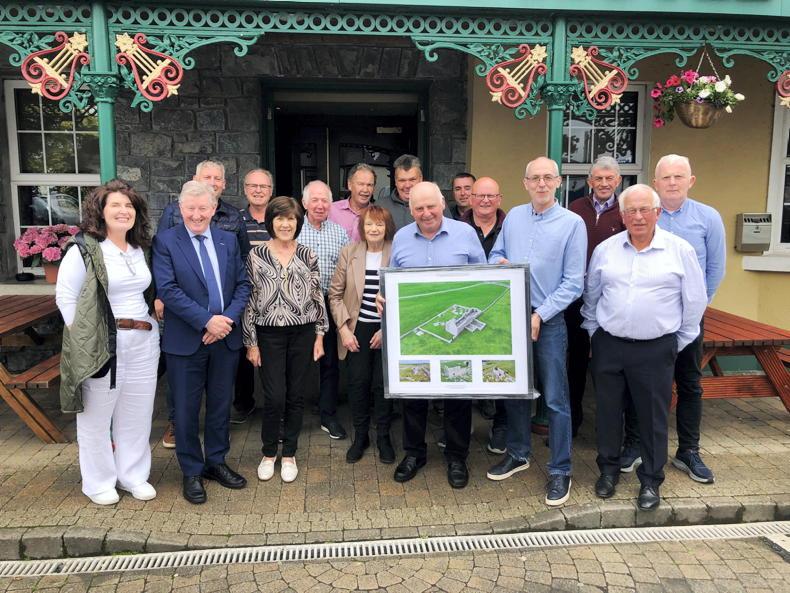
Galway Rural Development is one of 39 implementing companies that administer the RSS throughout Ireland. GRD’s quota of 220 participants makes it one of the largest in the country.
Changes to the scheme
However, a number of retirements from the scheme in recent years along with a rising age profile means it is proving difficult to fill the county’s allocation.
As part of the review, a pilot project of 250 rural dwellers, who do not have a direct link to farming or fishing, was recommended and is being expedited by Minister for Rural and Community Development Dara Calleary. These new applicants must be in receipt of a qualifying social welfare payment and be over 50 years of age to qualify.
“There are a lot of vacancies on RSS throughout the country, with 22% of places unfilled at the moment so there is certainly a need to attract more people on to the scheme,” adds Liz.
“We have almost 30 vacant posts at the moment and while that may not seem many, it amounts to one individual scheme so it means that one area of the county is not being served by RSS when there is a clear need for the service.
“The Government’s proposed pilot extension scheme is aimed at those who have exhausted their time on Community Employment (CE) or Tús schemes and are still in receipt of social welfare payments. They need to live in rural areas, and we see many who are still in a caring role, with ageing parents the most common example of this.
“I’m not sure why the pilot is only going to include 250 people when there are currently 1,500 free places on implementing bodies such as ourselves all over the country.
“But I have a waiting list for places here in Galway so any progress on getting this off the ground is to be welcomed.”
Minister Calleary, who also holds the Social Protection portfolio, has been championing the RSS since he took office earlier this year.
Speaking in the Dáil in May, he acknowledged the important role the scheme plays in the life of rural communities.
“I am very aware of the extraordinary contribution the RSS makes,” he said.
“I am also aware that, despite the fantastic work of the scheme and its supervisors and implementing bodies, there are vacancies in schemes all over the country. I know those can be filled if we have the right flexibility.”
Minister Calleary said he had asked his officials to expedite the extension of the RSS on a pilot basis to include those not directly engaged in farming or fishing but who have a connection to a rural community and the issue of two people accessing the scheme from within a family.
Great work ethic
Liz says the extension of the RSS is the only way of ensuring the scheme survives and thrives in rural Ireland.
“We welcome the extension to include rural dwellers on the scheme but we would argue that it should not be limited to 250 places.
“It wouldn’t cost any more in funding as the funding is there and it would help schemes such as here in Galway where we are sanctioned for 220 people but only have 191 participants.
“The current weekly payment through RSS is not very attractive to participants, and at €27.50 (on top of the €244 weekly Farm Assist payment) it wouldn’t even cover their petrol or diesel costs in getting to work,” she explains.
“We would call for this to be increased to €50 per week, to incentivise people who are eligible for the scheme.
“We would also like to see the scheme removed from its alignment with other job activation schemes in the social welfare system as it’s an unfair classification.
“The purpose of RSS is not to get farmers off their farms and back to work. The benefits farmers bring to this scheme are immense, through their many talents to the local knowledge and connections they have when working on a community project. Our participants have a great work ethic and are masters of many skills which they bring to each individual project.
“The assessment of the whole family income is also an unfair stipulation as many farmers from small farms have to have another job to make a living, and especially in cases where a spouse is in full-time employment, this income goes against a farmer applying for RSS. As I said, it’s not about the money, it’s about socialisation for farmers who can find themselves very isolated on farms, and supporting their mental health.”
Other changes introduced in recent months include the end of yearly means testing for RSS participants, which Liz says has removed a lot of the stress for members, especially those who are in the older cohort.
“Previously, participants on the scheme were means tested every 12 months which cast a shadow on many given the nature of farming, with one good year being followed by a bad one,” she adds.
“This has been extended to every three years, which is a huge relief for our participants, and once they reach the age of 60, they are no longer assessed.
“I hope now that the Budget has been passed a decision on the extension of RSS has been reached and even if they haven’t all their i’s dotted and t’s crossed, we will be heading in the right direction if we can look forward to this come January.”

