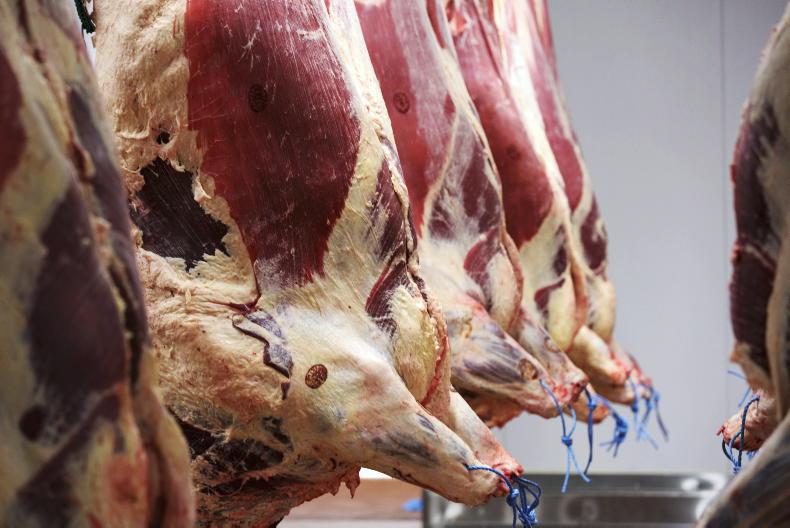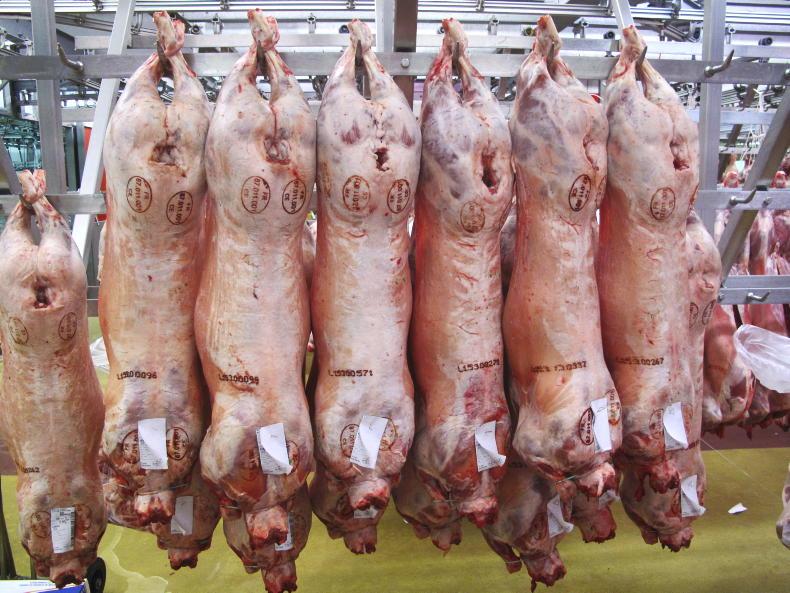
With just one month to go, it is clear that Irish factories will process over 200,000 fewer cattle and over 500,000 fewer sheep in 2025.
The decline in the sheep kill is particularly worrying, as the number processed in 2024 was down 377,000 head compared with 2023, whereas the cattle kill was only marginally lower in 2024 than it was in 2023.
A shortage in cattle and sheep supply has meant that factories have had to compete hard for livestock this year.
This was very much to the benefit of farmers and scarcity has been one of the drivers of farmgate price, as well as robust demand for beef in our main export markets.
Strong competition for cattle and sheep is what farmers need to maximise the value of stock coming off Irish farms.
However, if there are too few cattle and sheep available to utilise the capacity available for the factories to operate efficiently, then a problem develops.
Capacity utilisation
If a factory is set up to process 100 cattle per day, but can only manage to buy 75, then it is operating at 25% below capacity. This means that the 75 cattle processed have to cover all the costs for that day, as the same labour, energy and distribution costs are required as would be the case for processing the 100 cattle.
If this happens on an ongoing basis, then inevitably the factory will have to look at its cost structure and reorganise its business based on an expected throughput of 75 cattle instead of 100 cattle.
If we look at the current Irish processing capability, it has been based on throughput of around 1.8 million cattle and just under three million head of sheep in recent years.
A typical large beef factory will handle 50,000 to 70,000 head of cattle per year, so the most basic calculation shows that if there are 200,000 fewer cattle in the system, then three or four fewer factories are required to process the national kill. The same principle applies to sheepmeat processing.
Factory profitability
There is virtually no information published on the financial performance of Irish beef- and sheepmeat-processing factories. They are private businesses and therefore not obliged to publish accounts, so we can only speculate on the level of profitability (or loss) based on information published about meat processing in other parts of the world.
If there is a scarcity of information on what happens beyond the factory gate in Ireland, it is the opposite in the US, where there is detailed information published on a daily basis on pricing and major companies such as JBS and Tyson publish annual accounts with a breakdown on profit generated by their different trading divisions.
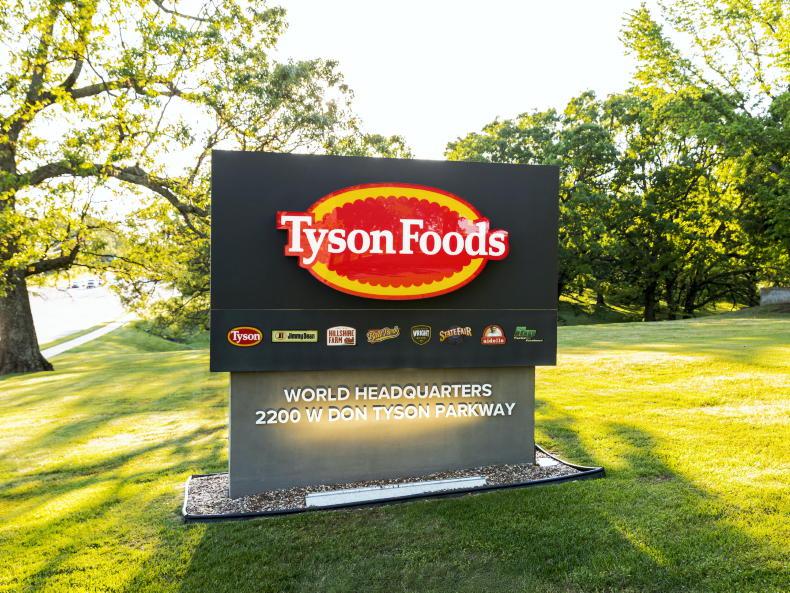
Staying with Tyson for the moment, their most recent accounts to the end of September show beef processing making a loss of $1.135bn (€980m). The previous year was also loss-making, though at a lower level of $381m (€328m).
While there are many differences between beef processing in the US and Ireland, particularly in relation to scale, the one common problem they have shared in recent times is scarcity of cattle supply. In 2025, the US cattle herd is at its lowest point for over 70 years.
Comment - fewer factories needed
In the US, Tyson has reacted by announcing the closure of a factory in Nebraska that can process over 4,000 cattle per day and moving a factory in Texas from two shifts to one.
This will reduce its surplus capacity and isn’t a surprise given the level of losses.
Without access to financial information, we don’t know the financial performance of Irish meat processors in 2025.
What we do know is that the cost of production per kilo of beef sold will have increased because of lower utilisation of processing capacity.
Whether or not this has been recovered from the market remains to be seen, but what is known is that the number of cattle killed in 2025 could have been processed by four fewer factories. It will be interesting to observe if all the factories currently operational remain active in 2026.
With just one month to go, it is clear that Irish factories will process over 200,000 fewer cattle and over 500,000 fewer sheep in 2025.
The decline in the sheep kill is particularly worrying, as the number processed in 2024 was down 377,000 head compared with 2023, whereas the cattle kill was only marginally lower in 2024 than it was in 2023.
A shortage in cattle and sheep supply has meant that factories have had to compete hard for livestock this year.
This was very much to the benefit of farmers and scarcity has been one of the drivers of farmgate price, as well as robust demand for beef in our main export markets.
Strong competition for cattle and sheep is what farmers need to maximise the value of stock coming off Irish farms.
However, if there are too few cattle and sheep available to utilise the capacity available for the factories to operate efficiently, then a problem develops.
Capacity utilisation
If a factory is set up to process 100 cattle per day, but can only manage to buy 75, then it is operating at 25% below capacity. This means that the 75 cattle processed have to cover all the costs for that day, as the same labour, energy and distribution costs are required as would be the case for processing the 100 cattle.
If this happens on an ongoing basis, then inevitably the factory will have to look at its cost structure and reorganise its business based on an expected throughput of 75 cattle instead of 100 cattle.
If we look at the current Irish processing capability, it has been based on throughput of around 1.8 million cattle and just under three million head of sheep in recent years.
A typical large beef factory will handle 50,000 to 70,000 head of cattle per year, so the most basic calculation shows that if there are 200,000 fewer cattle in the system, then three or four fewer factories are required to process the national kill. The same principle applies to sheepmeat processing.
Factory profitability
There is virtually no information published on the financial performance of Irish beef- and sheepmeat-processing factories. They are private businesses and therefore not obliged to publish accounts, so we can only speculate on the level of profitability (or loss) based on information published about meat processing in other parts of the world.
If there is a scarcity of information on what happens beyond the factory gate in Ireland, it is the opposite in the US, where there is detailed information published on a daily basis on pricing and major companies such as JBS and Tyson publish annual accounts with a breakdown on profit generated by their different trading divisions.
Staying with Tyson for the moment, their most recent accounts to the end of September show beef processing making a loss of $1.135bn (€980m). The previous year was also loss-making, though at a lower level of $381m (€328m).
While there are many differences between beef processing in the US and Ireland, particularly in relation to scale, the one common problem they have shared in recent times is scarcity of cattle supply. In 2025, the US cattle herd is at its lowest point for over 70 years.
Comment - fewer factories needed
In the US, Tyson has reacted by announcing the closure of a factory in Nebraska that can process over 4,000 cattle per day and moving a factory in Texas from two shifts to one.
This will reduce its surplus capacity and isn’t a surprise given the level of losses.
Without access to financial information, we don’t know the financial performance of Irish meat processors in 2025.
What we do know is that the cost of production per kilo of beef sold will have increased because of lower utilisation of processing capacity.
Whether or not this has been recovered from the market remains to be seen, but what is known is that the number of cattle killed in 2025 could have been processed by four fewer factories. It will be interesting to observe if all the factories currently operational remain active in 2026.
SHARING OPTIONS