We spent the summers of our youth in the magic of south Kerry, soaking in the fun and wonder of my ever-loving aunt and uncle. We were always downhearted and tearful when my father came to collect us, but to lighten the mood, as we drove away my uncle John, with a wink and smile, would shout out, ‘I’ll see ye at Puck!’
In those days my father preferred to take the mountain road over Ballaghisheen Pass, through Glencar, skirting around the base of Carrauntouhill and on to Killarney. I now know he was avoiding the chaos of getting through Killorglin when Puck Fair was on.
In my later teenage years, my great pal Patrick Creedon and I would cycle to Kerry and we used to stay with my aunt and uncle for the majority of the summer. When the first week of August came upon us, it was time to cycle off and start the journey home and with all the talk of Puck, we planned our route in perfect time to hit the fair.
Puck Fair, like most Irish fairs and gatherings, takes place over a period of three days. The 10 August is known as the ‘gathering’, while 11 August is the fair day itself and 12 August is the day of the ‘scattering’. The adoption of the Gregorian calendar in 1752 took 11 days out of the year and in the ‘old calendar’ Puck Fair would have been on 1 August, the traditional and ancient festival of Lughnasa.

A young puck goat.
It is some 45 years ago since Patrick and I cycled into the heart of Puck Fair, and when I close my eyes I can still hear, see and smell the bustling furore and excited madness that came with the chock-a-block assembly of cattle, horses and people.
The main road that ran over the bridge and into the town was never closed and cars and lorries continued to stream though the hordes of wandering people. The air was filled with the clamour of pipe bands, the melodies of ice-cream vans, tannoy announcements, Irish dancers stamping on the puck goat platform, incessant fiddlers and accordion players, rumbling tractor engines and countless street hawkers advertising their wares.
The streets had lines and lines of makeshift stalls, selling a dizzying kaleidoscope of useful and useless trite: penknives, ornaments, jewellery, holy pictures, statues, delph, pots, tools, shiny trinkets, holy water fonts, dolls, teddy bears, racing cars, water pistols, cowboy guns and holsters, footballs, radios, hats, sombreros, overcoats, slacks, skirts, tops and handbags.
Locals sat outside their front doors on chairs and there were as many sitting on high stools in the doorways of pubs as there were inside. My uncle used to tell us that Puck was famous because the pubs didn’t close their doors for the three days and the three nights of the fair, and there was plenty of evidence of men with glassy eyes and porter-stained mouths who obviously took full advantage of such abandon.
At Puck Fair, there were roulette wheels, large spin-the-wheels for prizes and every incentive and opportunity to part with money
Thimble-gigging
I remember a big crowd huddled around a man holding a fistful of pound notes, an expert at the ‘three-card-trick’, his sleight-of-hand hoodwinking the gullible, teasing them to ‘find the lady’. Such gambling tricksters have always been a feature of Irish fairs and pattern days.
Some practiced ‘thimble-gigging’ (find the pea under the three thimbles trick) while the ‘prick-o-the-loop’ scam, involved tricking people when a stick was placed inside a tightly wound looped belt. To win, one had to place the stick where it would catch in the loop, but the trickster knew which end to pull to unravel the loop so that it always came loose, and they always won.
At Puck Fair, there were roulette wheels, large spin-the-wheels for prizes and every incentive and opportunity to part with money.
Another crowd had gathered around a bare-chested strongman who had just freed himself from being tightly tied up with a long thick, heavy rope. His young accomplice went around with a hat to collect some money and to continue with his performance he pulled out a bed of nails. He lay down on the sharp iron six-inch nails before his compatriot stepped up and stood on his chest.
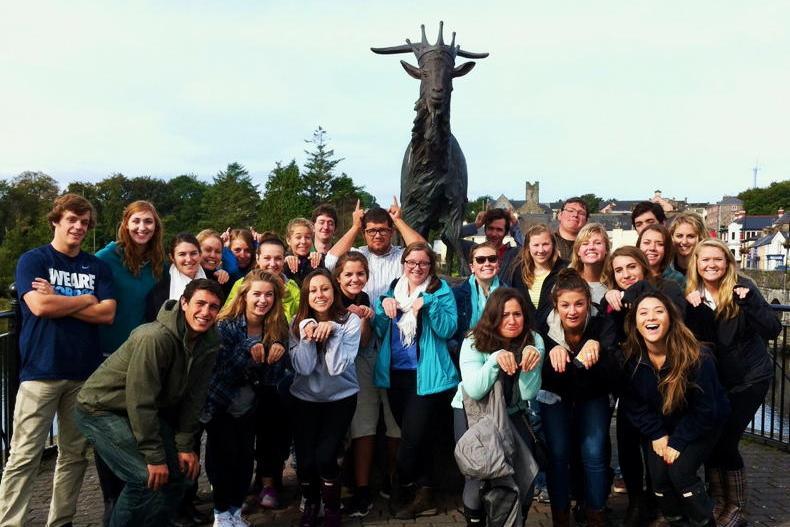
From his vantage point of a high platform, the great symbol of the fair, the male goat, King Puck once presided over such a carnival of wonder.
Whether it prevailed as an ancient Lughnasa gathering or one that stems from its first charter by James I in 1613, Puck Fair has been an annual occasion as an end of summer spectacle for generations.
Shane Lehane is a folklorist and works in UCC and Cork College of FET, Tramore Road Campus. See slehane@ucc.ie
We spent the summers of our youth in the magic of south Kerry, soaking in the fun and wonder of my ever-loving aunt and uncle. We were always downhearted and tearful when my father came to collect us, but to lighten the mood, as we drove away my uncle John, with a wink and smile, would shout out, ‘I’ll see ye at Puck!’
In those days my father preferred to take the mountain road over Ballaghisheen Pass, through Glencar, skirting around the base of Carrauntouhill and on to Killarney. I now know he was avoiding the chaos of getting through Killorglin when Puck Fair was on.
In my later teenage years, my great pal Patrick Creedon and I would cycle to Kerry and we used to stay with my aunt and uncle for the majority of the summer. When the first week of August came upon us, it was time to cycle off and start the journey home and with all the talk of Puck, we planned our route in perfect time to hit the fair.
Puck Fair, like most Irish fairs and gatherings, takes place over a period of three days. The 10 August is known as the ‘gathering’, while 11 August is the fair day itself and 12 August is the day of the ‘scattering’. The adoption of the Gregorian calendar in 1752 took 11 days out of the year and in the ‘old calendar’ Puck Fair would have been on 1 August, the traditional and ancient festival of Lughnasa.

A young puck goat.
It is some 45 years ago since Patrick and I cycled into the heart of Puck Fair, and when I close my eyes I can still hear, see and smell the bustling furore and excited madness that came with the chock-a-block assembly of cattle, horses and people.
The main road that ran over the bridge and into the town was never closed and cars and lorries continued to stream though the hordes of wandering people. The air was filled with the clamour of pipe bands, the melodies of ice-cream vans, tannoy announcements, Irish dancers stamping on the puck goat platform, incessant fiddlers and accordion players, rumbling tractor engines and countless street hawkers advertising their wares.
The streets had lines and lines of makeshift stalls, selling a dizzying kaleidoscope of useful and useless trite: penknives, ornaments, jewellery, holy pictures, statues, delph, pots, tools, shiny trinkets, holy water fonts, dolls, teddy bears, racing cars, water pistols, cowboy guns and holsters, footballs, radios, hats, sombreros, overcoats, slacks, skirts, tops and handbags.
Locals sat outside their front doors on chairs and there were as many sitting on high stools in the doorways of pubs as there were inside. My uncle used to tell us that Puck was famous because the pubs didn’t close their doors for the three days and the three nights of the fair, and there was plenty of evidence of men with glassy eyes and porter-stained mouths who obviously took full advantage of such abandon.
At Puck Fair, there were roulette wheels, large spin-the-wheels for prizes and every incentive and opportunity to part with money
Thimble-gigging
I remember a big crowd huddled around a man holding a fistful of pound notes, an expert at the ‘three-card-trick’, his sleight-of-hand hoodwinking the gullible, teasing them to ‘find the lady’. Such gambling tricksters have always been a feature of Irish fairs and pattern days.
Some practiced ‘thimble-gigging’ (find the pea under the three thimbles trick) while the ‘prick-o-the-loop’ scam, involved tricking people when a stick was placed inside a tightly wound looped belt. To win, one had to place the stick where it would catch in the loop, but the trickster knew which end to pull to unravel the loop so that it always came loose, and they always won.
At Puck Fair, there were roulette wheels, large spin-the-wheels for prizes and every incentive and opportunity to part with money.
Another crowd had gathered around a bare-chested strongman who had just freed himself from being tightly tied up with a long thick, heavy rope. His young accomplice went around with a hat to collect some money and to continue with his performance he pulled out a bed of nails. He lay down on the sharp iron six-inch nails before his compatriot stepped up and stood on his chest.
From his vantage point of a high platform, the great symbol of the fair, the male goat, King Puck once presided over such a carnival of wonder.
Whether it prevailed as an ancient Lughnasa gathering or one that stems from its first charter by James I in 1613, Puck Fair has been an annual occasion as an end of summer spectacle for generations.
Shane Lehane is a folklorist and works in UCC and Cork College of FET, Tramore Road Campus. See slehane@ucc.ie
SHARING OPTIONS