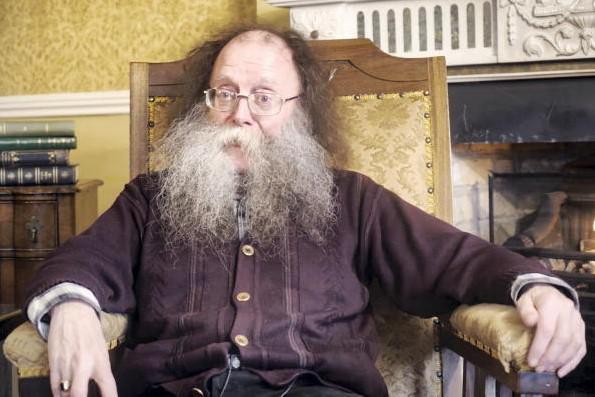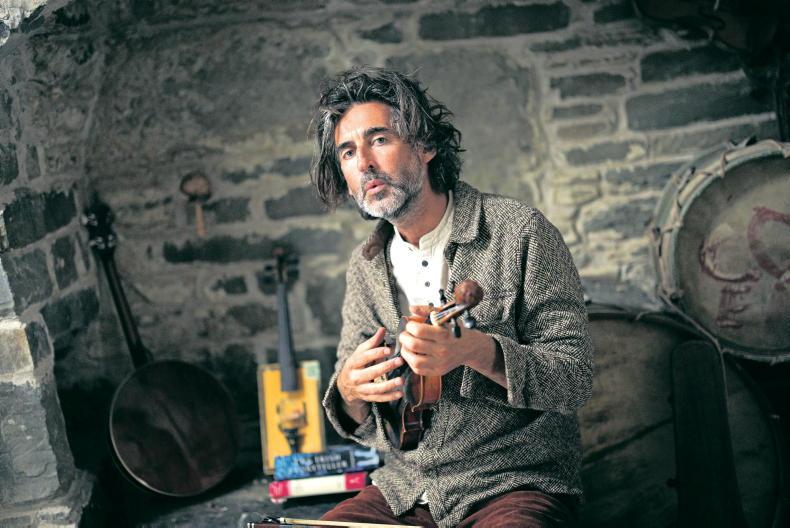
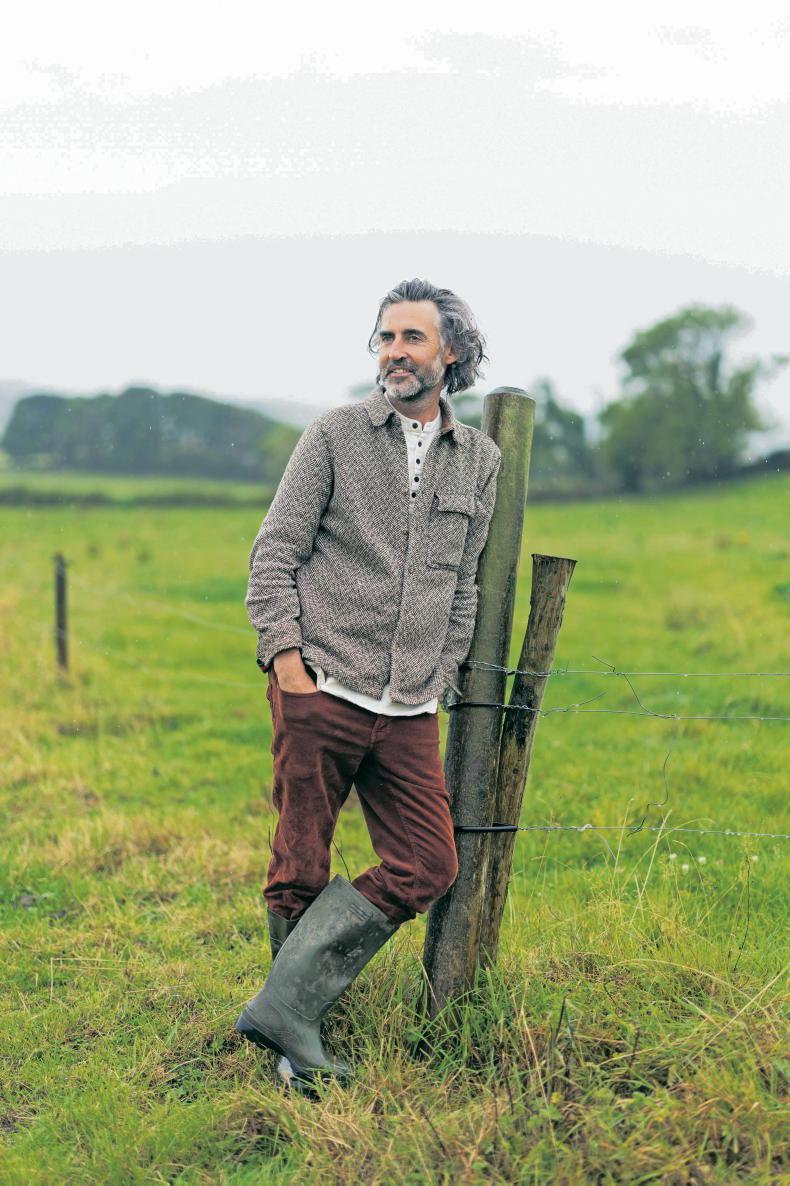
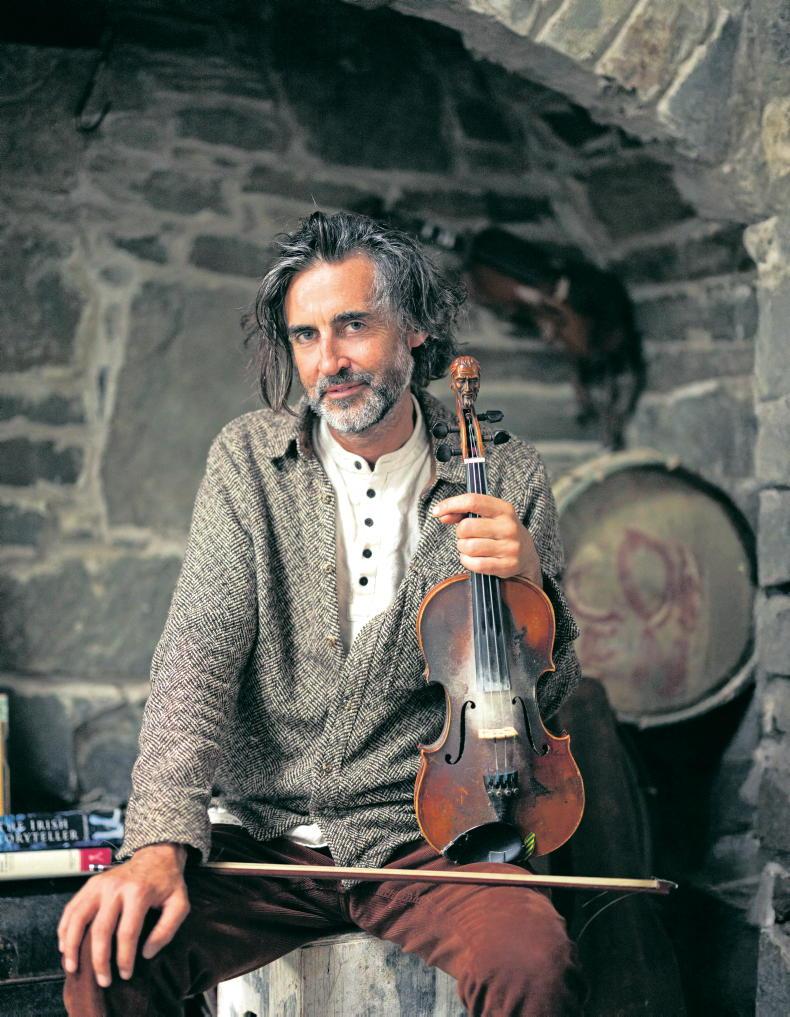
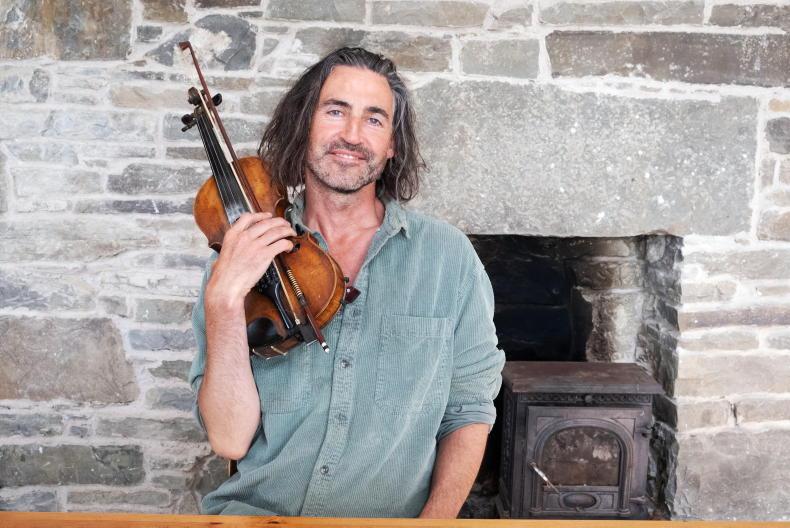
Aindrias de Staic is excitedly waving mushrooms, onions, garlic and beetroot at the camera, just some of the fruits, or veg, of the land he now calls home in Co Clare.
It’s his last day at his restored cottage, ‘built stone upon stone’, and farm close to Ennistymon before embarking on a nationwide tour, and it’s easy to detect some giddiness in the air as he chats to Irish Country Living. What he refers to as ‘a kind of wild west of Ireland energy’ has already taken him to some unusual places.
With a fiddle in hand and a tale to tell, he regaled the European Parliament in Brussels with yarns and fairy stories, which he describes impishly as “gas”, to mark the start of Ireland’s presidency earlier this summer.
He also enjoyed a recent standout appearance on The Tommy Tiernan Show and narrated an award-winning documentary inspired by one of his stories.
Over the years, Aindrias has told stories in various ways as a traditional musician in a raucous live band, The Latchikos; an actor in TG4’s Ros na Rún; a cabaret performer; an award-winning comedian; a screenwriter and TV presenter. Now, he’s combining all of the skills he’s gleaned across genres throughout his career into his most satisfying role as a modern-day musical seanchaí.
Rural Ireland is very much in his heart as he talks excitedly with expressive gestures and an animated voice about some of the smaller places he will visit with the By the Light of the Silvery Moon show. It’s a new live production that celebrates Ireland’s storytelling tradition through music, folklore and theatre with dates throughout September and right up to November.
“It’s lovely; I get to go to all the country villages like Tinahely in Wicklow," he says. "I have two nights in Cork, and we’re doing Glencorrib, where I grew up, in south Mayo. My mother is from there. We’re doing Kilconly, near Tuam, and we bring a bit of the craic everywhere we go.
“There is a kind of Ireland you might not hear about in the Dublin media or in Blindboy or The Two Johnnies. It’s another Ireland that is kind of hidden, where there are traditional arts and there is such a revival of that stuff. People are engaging again with traditions, and not just what they are being told by academics; it’s at a more grassroots level,” he observes.
Indeed, Aindrias has emerged as one of the leading voices of that storytelling revival in Ireland, and he sees his new show as very much “a nod to the file [poet] and bard” from Irish history.
“I finally got back in touch with a lot of my father’s books [on folklore] and tapes and stories,” he explains of his research, adding that he has been “tipping away with traditional storytelling ever since”.
Living off-grid
In the late 1980s, his father, Eddie Stack, a renowned writer, folklorist and musician, settled in San Francisco, where he had co-founded the Irish Arts Foundation and taught Celtic studies at the University of California in Berkeley. Sadly, he passed away in 2016. Two years later, Aindrias inherited his 28ac farm and moved from Mayo to Clare.
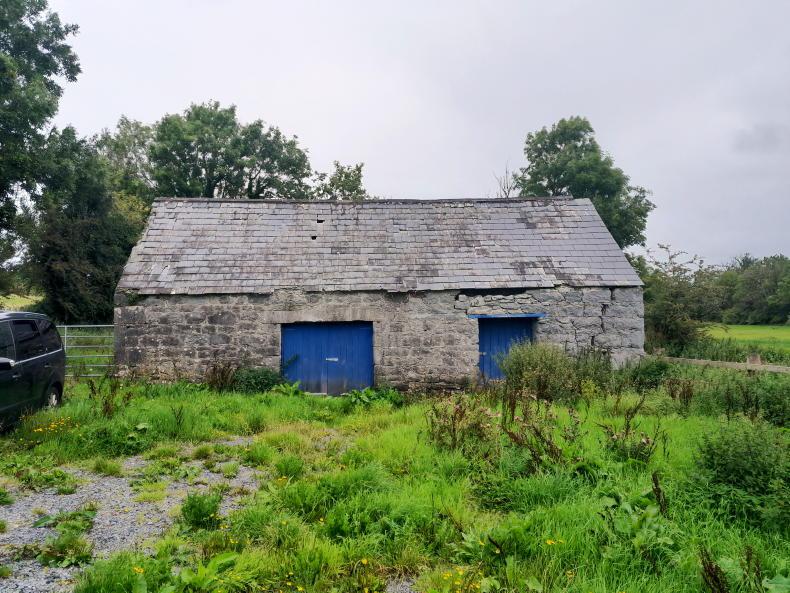
Initially, he lived off-grid in a caravan on the land, growing vegetables until his cottage, originally in ruins, was restored. It now serves as a storytelling centre where people from all over the world come to learn the art in workshops and residencies.
He is very much of the view that he’ll live “off the farm” rather than make a living from it. Half of the land is rented to a local farmer, another portion is in forestry, and some is promoting biodiversity. Then there’s the “rough beauty” of his garden.
“I was accidentally doing it [storytelling] for years, championing the Mayo madness I grew up with,” he reflects, smiling about a time when he fronted The Latchikos band. “But since taking over the family farm in Clare and engaging with the strong storytelling traditions here in north Clare at the edge of the Burren, I’ve found a lot of those things are happening organically, and I’m a bit more confident with them. I’m no longer playing in pubs, but I’m bringing the art of storytelling into the theatre, which it deserves.”
His stories, a mixture of yarns, folklore and mythology, are very much tied into landscape and place, something Aindrias is clearly passionate about. He talks affectionately about the “magic” of a ringfort on his land, and recalls the effect of studying heritage studies under the late poet and writer John O’Donahue of Anam Cara fame.
“He talked a lot about the landscape as a presence in memory, about the Burren and Connemara and Mayo," he says. "We were studying under John when the discovery of the Céide Fields was made, so there was always this connection with the land, and even if it’s an international story with an Irish version, it can have a sense of place.”
Storytelling
What makes a good story, then? “It’s very simple, a start, middle and end,” he says, chuckling. “And then after that, you can add a bit of flesh to the bones – humour, rhythm, music, audience participation, suspense, timing – you could be talking very fast one minute and then it slows down and ‘you’ll never guess what happened.’
“It’s kind of like we take flight,” he says of the new show. “I get quite high on music, and there are two musicians on tour with me.
“There’s a harpist, Ashley Lyons, who brings a mythological element to it without me working too hard. It’s never pretentious when we do a mythological tale; I just start telling it, and when she plays the harp – wow – we are there.
“Brian Fleming is playing percussion, but he also brings a lot of other noises and squeaks and bubbles and drums. I don’t want to say it’s a soundtrack to a cartoon, but for some of the funny stories, it’s kind of like it has a live soundtrack.
“The harp goes back to the pre-Cromwell style of storytelling, and Brian’s percussion stimulates the spoken-word element by adding a live soundscape.”
“I have my fiddle as well, and having travelled for 35 years since I was nine years old, that’s the kind of troubadour bardic style because after Cromwell destroyed the harp, some of the bards used the fiddle, which was a bit smaller, like Raifteirí in Mayo or Brian Merriman, who was born here in Ennistymon.”
In a digital era, one wonders where the art of storytelling fits in. Aindrias, who grew up in the 1970s, is clear he doesn’t want to appear overly nostalgic, but he does remember a time when people were not consumed by their phones.
“I don’t think storytelling is something that works in a digital format in the same way. I really struggle with digital; I use Instagram and Facebook because you have to do a bit to sell tickets, but I’m closer to silage effluent than a social media influencer,” he says, laughing.
“When people come to our shows, the phones are off, and it’s a fundamental thing. Someone said to me the other day, ‘We are not just reviving storytelling but reclaiming space.’"
It’s yet another string to his bow for the talented Aindrias de Staic, pun very much intended.
See www.aindrias.com