



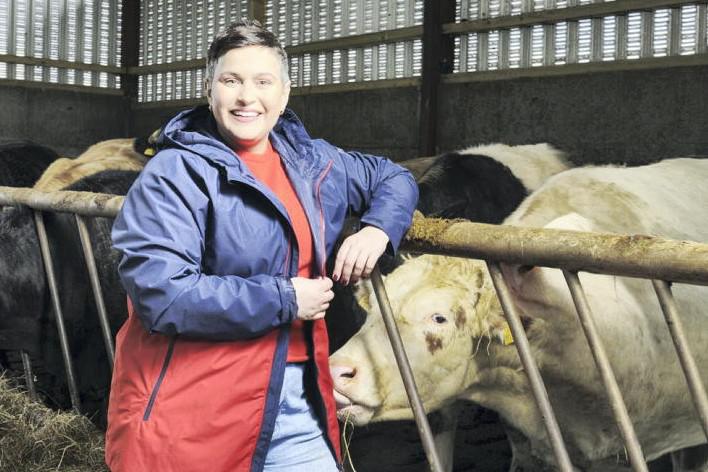
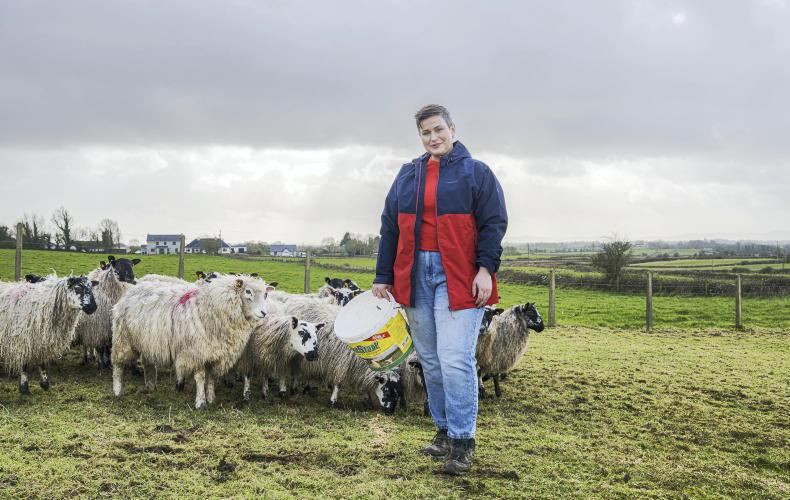
Farming is in the blood for Maria Walsh, MEP, as she strolls the fields of her family’s sheep and suckler farm on the Galway/Mayo border. The sloping hills and distinctive stone walls are a world away from the hustle and bustle of the European Parliament where she represents the Midlands North West region of Ireland.
Maria (38) has gone from being the youngest MEP in Europe when she was first elected in 2019, to securing the role of lead negotiator for the EU’s largest political grouping, the European People’s Party, as the Agriculture Committee considers the future direction and funding of generational renewal throughout member states.
As International Women’s Day is celebrated this weekend, Maria tells Irish Country Living she is looking forward to advancing opportunities for both young and older farmers, particularly women in rural Ireland, who struggle to get the support they need for farm businesses.
“My colleagues and I are very aware that there is a big issue with 18-34-year-olds connecting to politics. We all see the benefits of it and if we’re talking about young people, this gives us an opportunity to have a bigger conversation,” she says.
“I think generational renewal is the biggest conversation we are going to be having that hits so many different people, from the cradle to the grave. With a lot of challenges going on in agriculture right now we have to talk positively, and we have to figure out solutions.
“Of late we’ve seen a heavier focus on female entrepreneurs but ultimately the maths don’t add up because 40% of entrepreneurs in Europe are women but their access to cash is less than 3%.
“Many people I meet, even colleagues, will say people aren’t going into farming, we’re only seeing 12% of farm holdings being held by people under 35 across Europe.
“Up to 70%, depending on your sector, of legislation coming from Europe impacts Ireland. On a good day, it’s Ireland delivering. On a bad day, it’s Europe is making us do it. That narrative is destroying us.
“We are a hell of a lot better in Europe than out. There’s a blueprint in Brexit as to what happens outside of the EU, as well as what’s happening in the States and we’re never too far off that.”
The Fine Gael MEP has come under strong criticism throughout the farming community for her decision to vote against referring the Mercosur trade deal to the European Court of Justice when it was voted on in Parliament in January.
At the time, Maria said kicking the can down the road would not solve anything and insisted she was opposed to the deal.
“I can meet people on the street and they are enraged by something they’ve seen or heard about me which I then have to explain to them isn’t real,” she says.
“Mercosur is a great example in terms of the way I voted on the European Court of Justice referral and the reaction I got from my constituents.
“When I met people, they told me that once they saw my social media video to explain my reasoning or once they heard me on the radio, they understood it. But they also challenged me on why I didn’t come out earlier to explain my stance. And absolutely I should have been out explaining that sooner, the pros and the cons of everything and I learned a lot from that.
“If we’re not out talking with people we are talking at them.”
In terms of her new role as lead rappateur for the EPP, Maria is conscious that neither generational renewal nor rural depopulation are unique to Ireland.
“This is not just about young farmers, it’s about rural communities and with 83% of EU being rural we have to address the immense problems countries that countries including Spain, Sweden, France, and Ireland are facing with depopulation,” she explains.
“There’s a great project called the ‘Night under the Stars in France’ where a number of co-ops came together in the northern part of the country where they were looking to bring in money. Subsidies just weren’t supporting them enough so they created a whole tourism market around city slickers coming out and spending a night on the farm, seeing the stars, working on the farm and then falling in love with where food comes from.
“Over the last seven or eight years they have generated a really successful co-op business involving a number of farms. While that might not suit everyone, the idea that scares me is this notion that to be better you have to go bigger.
“With rising TB rates, I’m terrified that dairy farmers – given the amount of them we have here in Ireland – that the sector will be eroded. If that happens it will be very hard to build that DNA base back up in our stock. I want to see more sheep farmers, and not just in Ireland, there’s been thousands in decline across Europe.
Fact vs Fiction
While Maria is a keen advocate for younger farmers, she is aware of the challenges presented by succession for older farmers.
“The previous farm pension scheme we had here in Ireland didn’t work because it was based on financial incentives versus knowledge transfer,” she believes.
“Talk about cutting out the heart and soul of a farm when you’re completely removing the person who built it up for generations.
“We need to develop a best practice model around pension schemes, even though a number of farm organisations, particularly our biggest, aren’t a big fan of it. We haven’t gotten into the detail of it yet, but we will be having the debates and conversations in Parliament and I will be having round tables right throughout the constituency. We have to put fact versus fiction out there.”
Maria references the Austrian model, where a number of national policy instruments are in place when a farmer retires at State age.
“In Austria, if I am an older farmer and I hit retirement age in line with the State age, the subsidies I receive from Europe are reduced, such as ACRES. The single farm payment remains but the scheme payments would move to the successor. The State then tops up my payments because I have reached a number of milestones for succession and generation renewal. So, while I’m losing on one hand, I’m getting it back through a top up to my State pension.
“When that was first floated a number of months ago by the European Commission to say they were looking at it in the next CAP, there were a lot of bully man fears surrounding it. People were told, ‘they’re cutting us off for the Single Farm Payment and what are we meant to live on?’ but that’s not the case at all.”
The coming months will see Maria travel extensively to gain as broad a knowledge as possible on how best to push generation renewal policy forward.
“I plan on meeting a lot of farmers on different schemes across Europe, so that it’s not just the Austrian model we’re talking about. The Nordics seem to do things quite well compared to us so it’s a case of learning from each other. We should be talking about generational renewal to our children from a young age, and to those older farmers who are petrified they won’t be able to afford funeral costs because their assets have been handed over,” she adds.
“I will work with shadow rapporteurs from each political group in the Commission to find best practice. We’ll have multiple hearings, testimonies from people, but I will also be pushing to visit member States, either virtually or in person and I’m looking forward to getting out to the ag shows to chat to people face to face.”
The next six months will be critical in terms of finalising a report to feed into the next CAP.
“I don’t want to rush something as important as this. The more you talk to people, the more they want to feed into it. I will be having a fight with my Minister for Agriculture as well as my Minister for Finance, who also happens to be my party leader about ring fencing funding for young farmers and our pension schemes. If we are to make a sustainable change in agriculture, in rural development we have to invest in it.
“We’ve been told the CAP should be voted in by January 2027 and then amendments brought in over June/July time which means I would be hopefully working to have this published by September/October of this year so we can feed it into CAP. You would want really strong amendments on generational renewal that are backed by hard evidence by the time it closes out.”


SHARING OPTIONS