



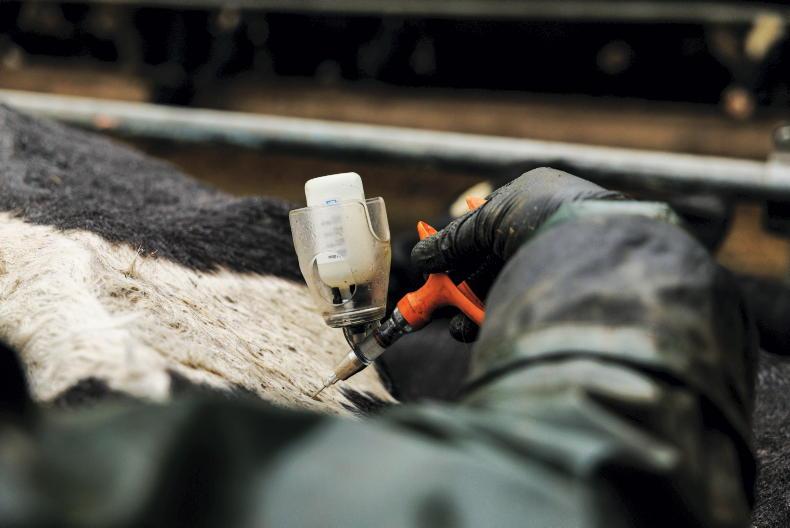
Routine Department of Agriculture factory surveillance for bluetongue serotype 3 has found antibodies in a bullock sent for slaughter from a herd in Co Tipperary.
The animal was not vaccinated, and the Department believes that it may have been infected with the virus in autumn 2025.
The discovery comes as recent days’ high average temperatures are aiding the replication of the bluetongue virus in midge, as well as acting to kickstart the midge’s breeding season.
The virus replicates quicker inside its midge vector, the higher that average temperatures rise above a 12°C threshold, and complete replication requires successive days above this average temperature.
Ireland may not however have yet crossed the critical threshold needed for complete bluetongue replication by this Wednesday, a Department of Agriculture spokesperson told the Irish Farmers Journal.
But modelling from other countries, including parts of continental Europe and southeast Britain suggests that the virus has started replicating there, for the 2026 bluetongue season.
Further modelling of midge movements suggest that the vector may have blown to Ireland from parts of western Britain, but that it is unlikely that these midge would be immediately infective.
It is very unlikely that a midge plume would be carried from continental Europe, the Department also said.
Bluetongue
The first bluetongue case was flagged on the island of Ireland in late November 2025 when a case was discovered in Co Down.
It first case south of the border cropped up in January of this year in Co Wexford.
The confirmation of this week’s case means that bluetongue serotype 3 has now been detected in counties Wexford, Wicklow, Laois, Louth, Monaghan, Kildare, Cork and Tipperary.




SHARING OPTIONS