Farmers already know their work makes a difference. Feeding people, caring for and protecting the land for future generations. As well as passing on their knowledge and skills to the next generation, it’s often taken for granted the crucial role farmers play in everyday life.
But what if the role of the farmer ran even deeper? What if simply by going about their daily farm tasks, those working in agriculture can play a crucial role in helping people overcome difficulties, be they emotional, physical or mental?
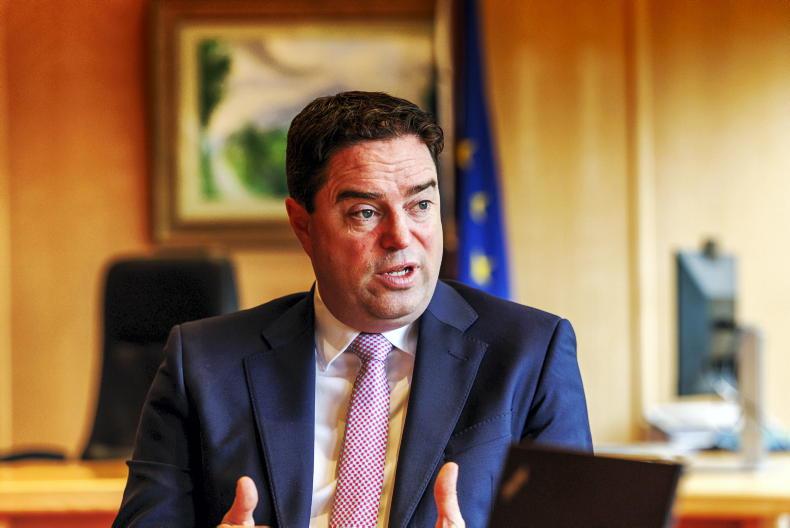
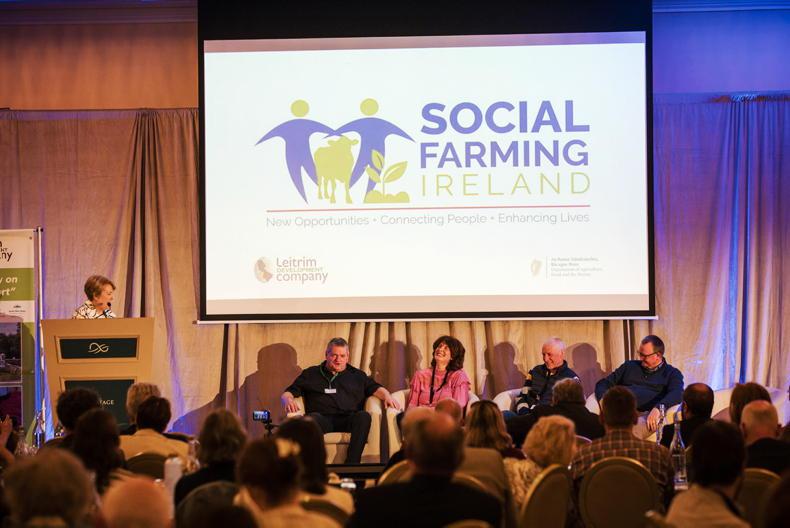
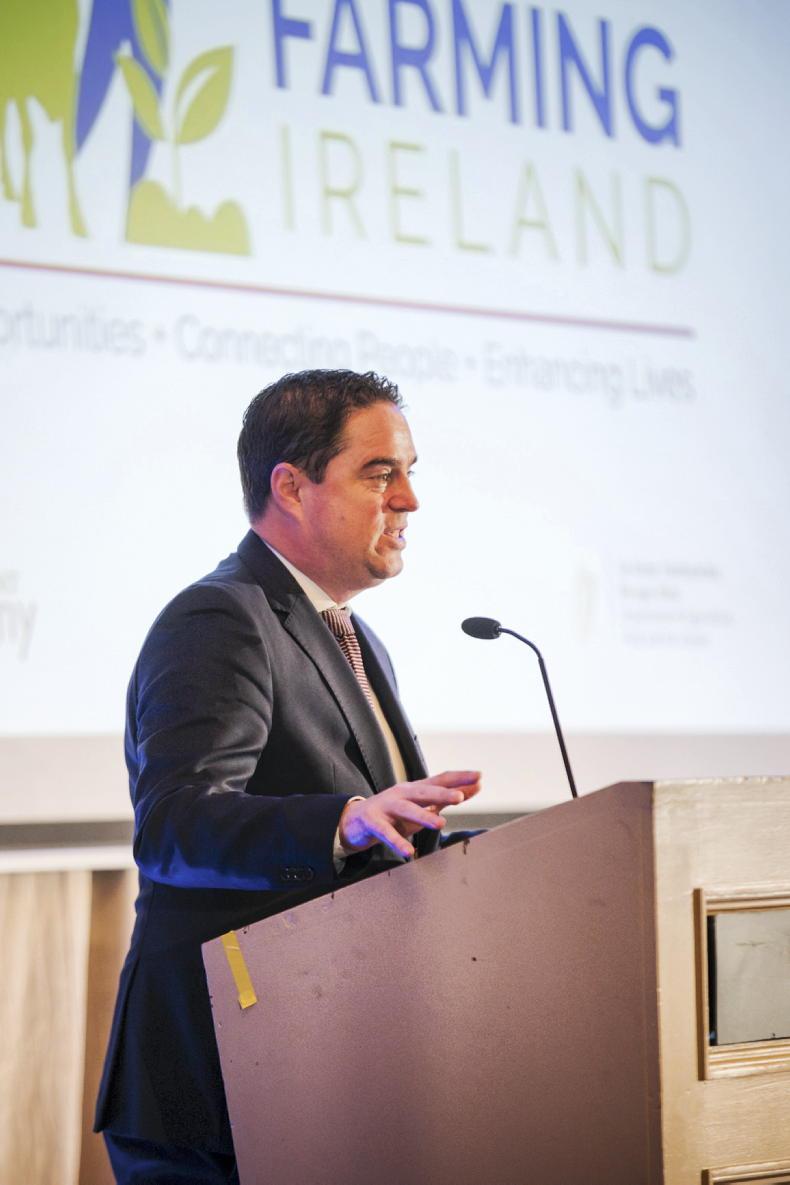
The National Social Farming Conference, held in Killenard, Co Laois last week showcased the life changing work being done by farmers all over the country. Over 200 delegates attended the event, which was formally opened by Minister for Agriculture, Martin Heydon TD, who praised social farming as a programme he was committed to championing across Government.
Social farming opens up day-to-day farmwork to vulnerable people who engage with a number of services across the country. Ordinary farmers are paid to share their land and expertise with people who gain valuable benefits from being out in nature, engaged in tasks that help them feel included and increase their self-esteem and overall health and wellbeing.
Michael O’Connor is a suckler farmer from north Tipperary who has been welcoming people to his farm through the social farming model since 2021.
Initially reluctant to get involved in social farming, Michael now says it is the best decision he has ever made, both for his farm and for his family.
“My wife suggested I sign up to social farming a few years ago. Through her work in homeless services, she had seen the difference it was making to young people in Limerick who had engaged in the programmes on a social farm outside the city,” he explains.
“I resisted it at the start, as I didn’t think I’d be any good at it. I also thought I was happier working on my own, and didn’t like the thought of having too many people in the yard at one time.
“But eventually I went and did the training, where I learned about the vulnerable people social farming was designed to support, and it was the best decision I ever made.”
Energy and enthusiasm
Michael, whose farm is in Ballynahinch, between Nenagh and Birdhill, has welcomed people of all ages, from all backgrounds and from all over the region. He says witnessing the growth of young people when they work on the farm has been hugely rewarding.
“The first group we had were from St Cronin’s Association in Roscrea, which supports people with disabilities and they had a 10-week placement with us. Some would have had a farming background but they all got stuck in and were feeding cattle and chopping wood, preparing the sheds and doing what needed doing.
“We’ve welcomed groups from Enable Ireland, Rehab, Avista Disability Services in Limerick and CAMHS North Tipperary West, the HSE’s Child and Adolescent Mental Health Services.
“I think the CAMHS groups have been the most successful of them all as I see the changes in these young people over the course of only five weeks. They’d be quiet on the first day and some of them would hold back. Once they saw the others getting stuck in, they’d do the same.
"The support staff with them, the nurses, also found it really good as it was easier to engage with them and chat while doing farmwork. One young lad told his support worker one day that she was really sound and this woman said it was the highlight of a near 20-year career in nursing.
“They have all had such energy and enthusiasm and they all wanted to be out working, whether it was moving cows or back fencing, seeing them working together was brilliant. I wasn’t doing anything different from my normal workday and they were well able to keep up with me. Even the quieter ones would give it a go and seeing their confidence grow, it was incredible. As was the fact that not one of them ever produced a mobile phone while they were here on the farm. Not once.”
Passion and investment
Ellie McDonald is a youth worker with the Youth Justice Carlow Programme, which supports young people at risk, and has been working with local farmer Helena Brennan in recent years on a social farming model.
“Farming is great because it brings our young service users out of their natural environment where they are used to having a persona that they put on. They come to the farm and can be themselves”.
“One of our girls has loved horses all her life and she can come to the farm and said straight away that she’s heading up to the horses and that’s it.
"She can groom and wash and feed them, it’s up to her because it’s her time and her space. I personally enjoy being on the farm with the young people as it’s a chance to talk to them about whatever is going on for them. If there’s any conflict that has come up, we can talk it through and discuss resolutions and possible outcomes.
“We have had a good few young people come through social farming over the past couple of years and one of them in particular is absolutely flying it at the moment. Being on the farm has made a big difference in her life and she’s now decided to stay in school as a result of social farming.
“Her school has been very accommodating as they are counting her attendance on the farm as a day at school. Her confidence has grown to such an extent that she has decided she will be able to do the Leaving Cert and she can see possibilities for herself that probably were never there for her before.”
Minister Heydon said it was encouraging to witness the passion and investment shown by farmers who had gained so much from social farming as those participating in the model, who were benefiting from their exposure to and immersion in agriculture.
He also noted that it was rare for his department to fund something that has so many beneficiaries and said he wanted to see the numbers involved in social farming grow to become an integral part of farming across the country.
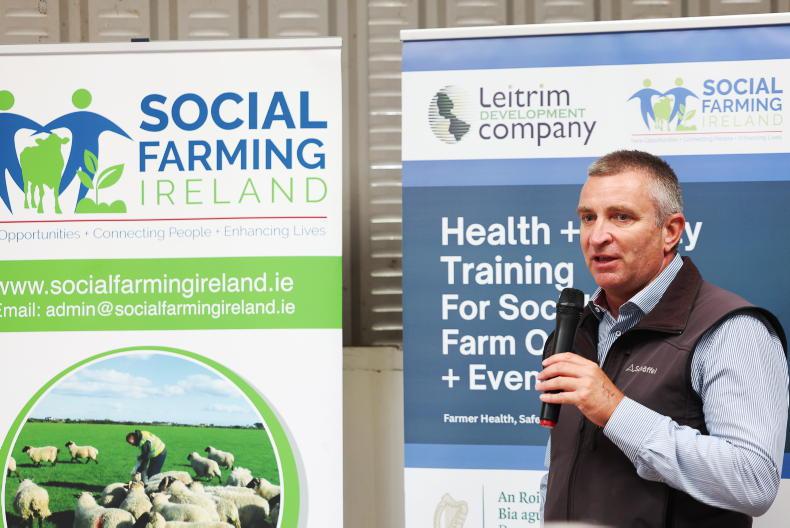
Brian Smyth, of Social Farming Ireland Network, said that despite many successes over the past two decades, there was huge potential for and need for the programme to grow.
“We’re just getting started and we’re highly ambitious to meet the growing need for social farming partnerships throughout the country,” he says.
“We remain committed to supporting vulnerable individuals, strengthening rural communities and fostering interagency collaboration.
“The potential for the network who already work extensively with Health and Social Care services provided directly and indirectly by the Department of Health, to grow and develop working relationships with other Government departments is significant.
“Work is already ongoing with the Department of Justice and huge benefits can be gained for young people in the Education sector – changing futures, and also at the other end of the spectrum reducing loneliness and isolation of our growing ageing population.”
RDS sustainability award
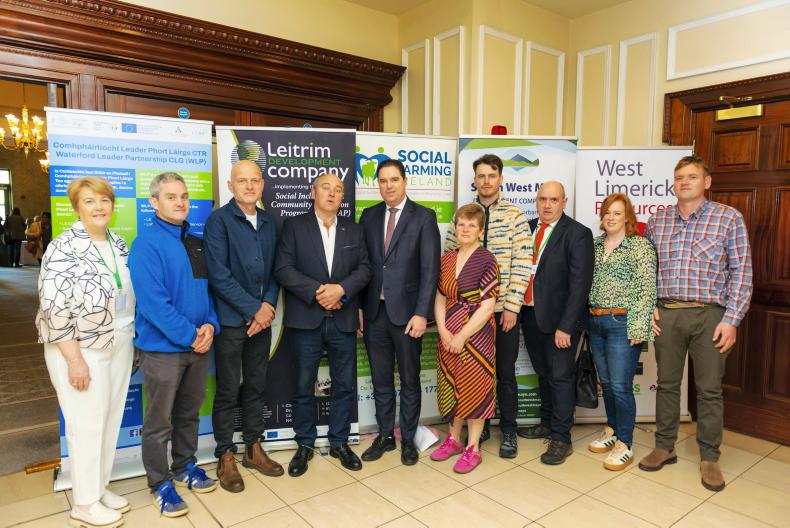
Social Farming Ireland were awarded the Sustainable Award for Rural Social Impact at the RDS Agricultural and Rural Awards earlier this month, which was also celebrated at the event in Killenard. Led by Leitrim Development Company, the national Social Farming Ireland network collaborates with South West Mayo Development, West Limerick Resources and Waterford LEADER Partnership to facilitate social farming supports across Ireland.
This is through collaboration and strong partnership between farmers, services, communities, Local Development Companies and the Department of Agriculture.
See socialfarmingireland.ie