An often-overlooked consequence of the continuing housing crisis in rural Ireland is the growing number of elderly farmers who are unable to downsize from large, rambling farmhouses to smaller, more suitable accommodation.
The farmhouse is intrinsically linked to the land and forms a crucial part of the succession discussion for many farm families. However, a chronic lack of suitable housing for older people, particularly those living alone in remote parts of the country, makes ‘right sizing’ housing options difficult to find for those who want a more comfortable standard of living.
One community that has tackled
this issue in recent years is Mayo Abbey,
a small village in south Mayo that boasts a community housing model that is quietly solving a number of housing issues for people in the region.
Irish Country Living spoke to Ger Maguire, project coordinator at the Mayo Abbey Community Centre to learn how a small rural village has become the blueprint for intergenerational living, while at the same time addressing the ongoing challenges facing people of all ages when it comes to buying a home in the locality.
“We have been providing housing in the village through the Mayo Abbey Parish Housing Project since 2011, following a collaboration with Mayo County Council who offered support to communities that were interested in developing their own social housing projects and came on board in a joint development,” he says.
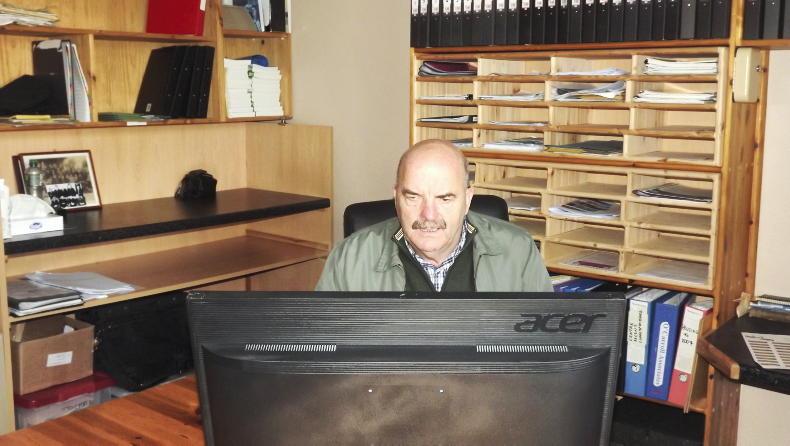
Ger Maguire, project co-ordinator at the Mayo Abbey Community Centre.
Remarkable achievement
“We originally approached the council for support with affordable housing and this initiative grew out of those contacts. We had identified a site, which the council bought and then applied for funding on our behalf to the Department of the Environment at the time, who provided 95% of the total cost of the project. The rents we charged made up the other 5% so we were able to provide this community service without the need to fundraise which is pretty remarkable.
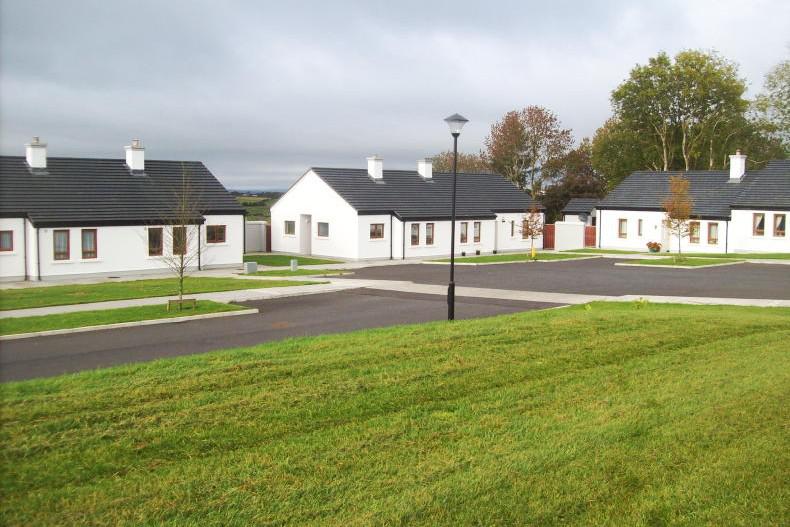
“There are 17 bungalows in total, a mix of two and three-bed dwellings, 12 of which are ours and five that are owned by the council. We charge €84 per week for the three-bed homes and €79 for the two-bed properties and it is an arrangement that is working well for everyone. The success of this initiative, that has thrived over the past 15 years, proves it can be a blueprint for other rural communities.
“Our residents are supported in a number of ways, through home help staff who call where required and also at our on-site support centre where they can avail of a range of services from meals-on-wheels to card games and coffee mornings.
“The staff here call down to the residents during the week for a chat and a check-in and the residents themselves look out for each other in a supportive environment that allows them to maintain their independence and dignity.”
Ger explains that in many cases, the residents are farmers from the area who are no longer able to remain in their homes which have become unsuitable for their needs.
“Many of our residents have either handed over their homes to a son or daughter and that home is now meeting a housing need for a young family, or they rent out their homes which again is freeing up housing stock in the area for those who need it.
“One gentleman who passed away some months back had handed over the farm and the home house to his son when he was in his late 70s and moved into one of our community houses. He lived with us for 15 years and formed wonderful friendships with his new neighbours, many of whom he regularly drove into Castlebar.”
The success of the community housing project has encouraged the committee in Mayo Abbey to reach out to landowners and developers who have shown an interest in building houses in the area.
“One of the biggest problems facing older people is the lack of suitable smaller houses, particularly bungalows, which simply weren’t built during the Celtic Tiger years when housing estates were popping up all over the country,” he adds.
“We have been talking to local landowners and builders who are in the process of applying for planning permission for development in the village and are asking them to include bungalows in their plans, so that those who wish to downsize from larger rural homes in the future will have that option.”
We charge €84 per week for the three-bed homes and €79 for the two-bed properties and it is an arrangement that is working well for everyone
The Mayo Abbey model backs up recent research by Sage Advocacy, the national advocacy service for older people and survivors of institutional abuse, that found a large majority of people wished to live independently in their own homes as they got older.
The RED C poll – carried out on a representative sample of 1,082 Irish adults, found that over 90% of Irish adults believe housing with supports for older people is urgently needed, with nearly 60% saying ‘very urgently’.
The report also found that older people who needed care, had a preference to remain living in their own home with a daily carer visiting (32%). This was followed by living independently in a care community, at 20%. Just 8% of respondents said they would choose to live in a nursing home.

Kathleen 'Katty' Delaney, (104), who has lived in a bungalow within the Mayo Abbey Parish Housing Project for the past five years.
One resident of the Mayo Abbey project is 104-year-old Katherine Delaney or Katty as she is known in her community.
While Katty admits she didn’t want to leave her own home, she has found great comfort in the two-bed bungalow where she’s been living for the past five years.
“I didn’t want to leave my house but I knew I couldn’t manage up there on my own so I was happy to come here and everyone is very good to me,” she says.
“I was the sacristan in the church here in Mayo Abbey for 70 years so I’ve seen a lot of changes down through the years but the community continues to be full of good people. I’ve written two books in my lifetime and I’ll probably get around to writing a third at some stage.”
Ger says the difference in the village over the past 20 years has been incredible as more people have come on board to help drive development and support their community.
“We opened the Mayo Abbey Centre in 2000 as our first project in delivering community services in the area and we wanted from the very beginning to meet the needs of local people. We harnessed a renewed sense of pride and interest coming from the community and it went from there,” he explains.
“Our community houses are supported by the community resource centre which is on-site and a crucial link in providing services and a meeting place for those living here. One of the most important parts of the entire operation is the daily Local Link bus service, which residents can use to get out and about during the week. Mayo Abbey is the starting point for this service to Castlebar and five other rural areas are included in the route.
Bringing services back
“This has been intrinsic to ensuring our residents can maintain their independence, where possible. We’ve always been mindful of the fact this isn’t just about housing; it’s about supporting people to live independently and that’s what most people want to do for as long as they can.
“Back in 1993 when I first started out as a community employment supervisor in the village, we had people leaving for the larger towns of Claremorris and Castlebar because of the lack of services locally.
“We’ve brought these services back but now we are struggling, like the rest of the country, to house our own. By freeing up older bigger houses for the younger generation, and providing older people with more suitable housing options, we are solving a lot of the issues associated with the housing crisis”
Sage Advocacy official Mervyn Taylor says the research findings show strong public support for communities where people can age-in-place.
“The survey highlights an overwhelming public mandate for accelerated development of supported housing for older people, underpinned by integrated ageing-in-place policies. People have made it clear that, when older, they want to stay in their own home,” he says.
“For Ireland to deliver this we need to develop a range of community-based supports to address the health and social care needs of older people and, critically, to address the central issue of social connectedness.
“The housing needs of older people is referenced in the Programme for Government, but not developed any further in the current strategy. This is a missed opportunity and needs Government focus.”
An often-overlooked consequence of the continuing housing crisis in rural Ireland is the growing number of elderly farmers who are unable to downsize from large, rambling farmhouses to smaller, more suitable accommodation.
The farmhouse is intrinsically linked to the land and forms a crucial part of the succession discussion for many farm families. However, a chronic lack of suitable housing for older people, particularly those living alone in remote parts of the country, makes ‘right sizing’ housing options difficult to find for those who want a more comfortable standard of living.
One community that has tackled
this issue in recent years is Mayo Abbey,
a small village in south Mayo that boasts a community housing model that is quietly solving a number of housing issues for people in the region.
Irish Country Living spoke to Ger Maguire, project coordinator at the Mayo Abbey Community Centre to learn how a small rural village has become the blueprint for intergenerational living, while at the same time addressing the ongoing challenges facing people of all ages when it comes to buying a home in the locality.
“We have been providing housing in the village through the Mayo Abbey Parish Housing Project since 2011, following a collaboration with Mayo County Council who offered support to communities that were interested in developing their own social housing projects and came on board in a joint development,” he says.
Ger Maguire, project co-ordinator at the Mayo Abbey Community Centre.
Remarkable achievement
“We originally approached the council for support with affordable housing and this initiative grew out of those contacts. We had identified a site, which the council bought and then applied for funding on our behalf to the Department of the Environment at the time, who provided 95% of the total cost of the project. The rents we charged made up the other 5% so we were able to provide this community service without the need to fundraise which is pretty remarkable.
“There are 17 bungalows in total, a mix of two and three-bed dwellings, 12 of which are ours and five that are owned by the council. We charge €84 per week for the three-bed homes and €79 for the two-bed properties and it is an arrangement that is working well for everyone. The success of this initiative, that has thrived over the past 15 years, proves it can be a blueprint for other rural communities.
“Our residents are supported in a number of ways, through home help staff who call where required and also at our on-site support centre where they can avail of a range of services from meals-on-wheels to card games and coffee mornings.
“The staff here call down to the residents during the week for a chat and a check-in and the residents themselves look out for each other in a supportive environment that allows them to maintain their independence and dignity.”
Ger explains that in many cases, the residents are farmers from the area who are no longer able to remain in their homes which have become unsuitable for their needs.
“Many of our residents have either handed over their homes to a son or daughter and that home is now meeting a housing need for a young family, or they rent out their homes which again is freeing up housing stock in the area for those who need it.
“One gentleman who passed away some months back had handed over the farm and the home house to his son when he was in his late 70s and moved into one of our community houses. He lived with us for 15 years and formed wonderful friendships with his new neighbours, many of whom he regularly drove into Castlebar.”
The success of the community housing project has encouraged the committee in Mayo Abbey to reach out to landowners and developers who have shown an interest in building houses in the area.
“One of the biggest problems facing older people is the lack of suitable smaller houses, particularly bungalows, which simply weren’t built during the Celtic Tiger years when housing estates were popping up all over the country,” he adds.
“We have been talking to local landowners and builders who are in the process of applying for planning permission for development in the village and are asking them to include bungalows in their plans, so that those who wish to downsize from larger rural homes in the future will have that option.”
We charge €84 per week for the three-bed homes and €79 for the two-bed properties and it is an arrangement that is working well for everyone
The Mayo Abbey model backs up recent research by Sage Advocacy, the national advocacy service for older people and survivors of institutional abuse, that found a large majority of people wished to live independently in their own homes as they got older.
The RED C poll – carried out on a representative sample of 1,082 Irish adults, found that over 90% of Irish adults believe housing with supports for older people is urgently needed, with nearly 60% saying ‘very urgently’.
The report also found that older people who needed care, had a preference to remain living in their own home with a daily carer visiting (32%). This was followed by living independently in a care community, at 20%. Just 8% of respondents said they would choose to live in a nursing home.
Kathleen 'Katty' Delaney, (104), who has lived in a bungalow within the Mayo Abbey Parish Housing Project for the past five years.
One resident of the Mayo Abbey project is 104-year-old Katherine Delaney or Katty as she is known in her community.
While Katty admits she didn’t want to leave her own home, she has found great comfort in the two-bed bungalow where she’s been living for the past five years.
“I didn’t want to leave my house but I knew I couldn’t manage up there on my own so I was happy to come here and everyone is very good to me,” she says.
“I was the sacristan in the church here in Mayo Abbey for 70 years so I’ve seen a lot of changes down through the years but the community continues to be full of good people. I’ve written two books in my lifetime and I’ll probably get around to writing a third at some stage.”
Ger says the difference in the village over the past 20 years has been incredible as more people have come on board to help drive development and support their community.
“We opened the Mayo Abbey Centre in 2000 as our first project in delivering community services in the area and we wanted from the very beginning to meet the needs of local people. We harnessed a renewed sense of pride and interest coming from the community and it went from there,” he explains.
“Our community houses are supported by the community resource centre which is on-site and a crucial link in providing services and a meeting place for those living here. One of the most important parts of the entire operation is the daily Local Link bus service, which residents can use to get out and about during the week. Mayo Abbey is the starting point for this service to Castlebar and five other rural areas are included in the route.
Bringing services back
“This has been intrinsic to ensuring our residents can maintain their independence, where possible. We’ve always been mindful of the fact this isn’t just about housing; it’s about supporting people to live independently and that’s what most people want to do for as long as they can.
“Back in 1993 when I first started out as a community employment supervisor in the village, we had people leaving for the larger towns of Claremorris and Castlebar because of the lack of services locally.
“We’ve brought these services back but now we are struggling, like the rest of the country, to house our own. By freeing up older bigger houses for the younger generation, and providing older people with more suitable housing options, we are solving a lot of the issues associated with the housing crisis”
Sage Advocacy official Mervyn Taylor says the research findings show strong public support for communities where people can age-in-place.
“The survey highlights an overwhelming public mandate for accelerated development of supported housing for older people, underpinned by integrated ageing-in-place policies. People have made it clear that, when older, they want to stay in their own home,” he says.
“For Ireland to deliver this we need to develop a range of community-based supports to address the health and social care needs of older people and, critically, to address the central issue of social connectedness.
“The housing needs of older people is referenced in the Programme for Government, but not developed any further in the current strategy. This is a missed opportunity and needs Government focus.”





SHARING OPTIONS