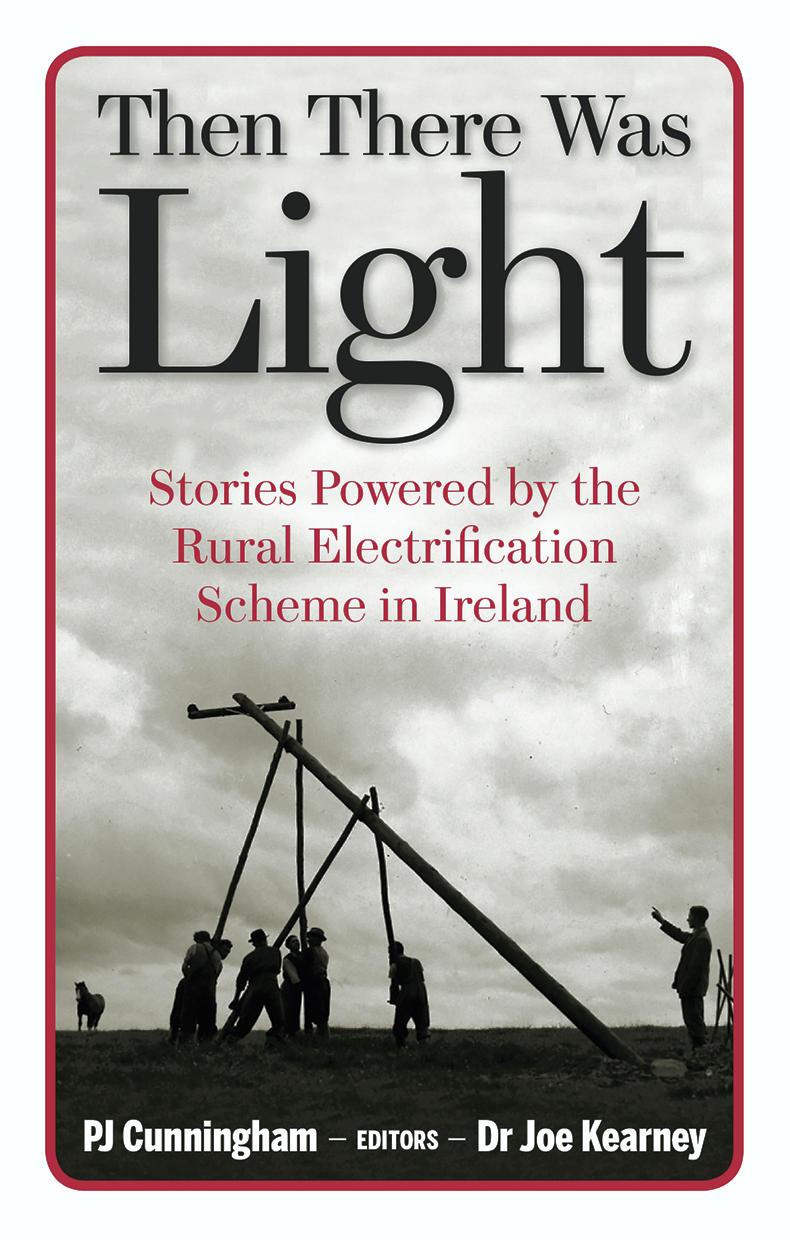
Then There Was Light is a unique collection from a wide range of contributors, recalling their memories and experiences of the Rural Electrification Scheme rolled out from the mid-1940s across Ireland.
The anthology provides a valuable snapshot of the time when Ireland left the dark ages as the ESB brought light into the midst of even the most remote communities.
This book celebrates the 70th anniversary of the commencement of the Rural Electrification Scheme, which then ran through the 1950s, 1960s and into the 1970s.
The stories for this collection come from eyewitnesses, ESB employees and the general public as they recall the suspicions, worries and welcome the scheme faced during arguably the most important rural undertaking in our history.
The stories are diverse in subject matter and geographical spread and encapsulate the pioneering work carried out on what became a rapidly changing rural landscape.
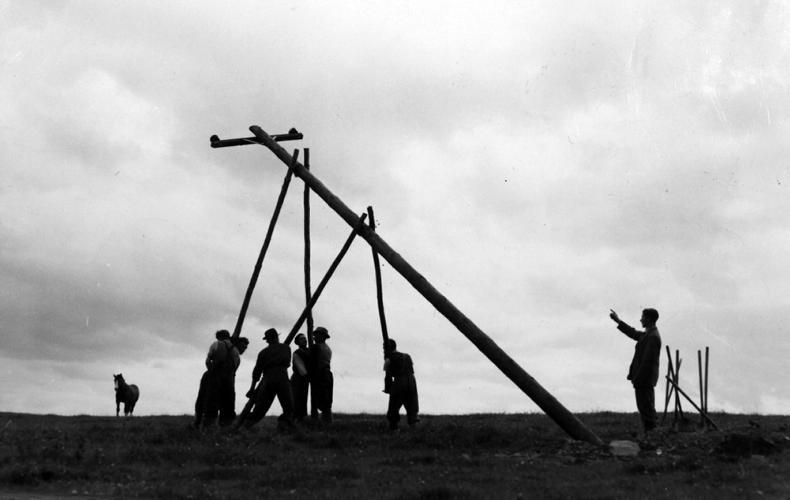
By the time the pioneering crews had finished their work, a massive 165,000km of cable – the equivalent of winding it four times around the equator – had been unfurled between the million poles that had been erected by the toil of men doing back-breaking work, mostly with no accouterments other than picks, shovels and their bare hands.
Behind every pole was a tear, a fear, a love story, a tragedy or, more often than not, a conflict in the recasting of the old Ireland into a newer and more modern version.
These myriad of tales are told and written down for the first time by people who remember the changes coming to their doorsteps. Many of those ESB gangs and officials who were part of the rollout of electricity also commit to print the memorable situations they encountered as part of their daily chores.
The late 1940s and the dawn of the 1950s was the last hurrah for the comely maidens on the village green as the newer, more pragmatic Irish female rejected the life of slavery their mothers, and indeed generations of women before them, had endured.
Indeed, the ESB’s current CEO, Pat O’Doherty, encapsulates the mood with stories he heard back from crew members who became part of communities until moving on to the next district.
“At local dances that time it became a topic of conversation where men realised the importance of electricity because they saw how interested women were in it.
“The woman would ask the farmer as they danced: ‘Have you got the electric in?’
“If he said ‘no’ then she would quickly move on. The men came to realise it was a bit of a selling point if they had it.”
Without it, they were unlikely to get the second dance!
Sometimes though, it was something as small as a neighbouring feud dating back generations which halted the rate of progress of the scheme.
Such an occurrence is recalled in a particular conflict which dated back between two families to 1798.
At the time, it brought the work in a part of Co Wicklow to a standstill and necessitated the urgent dispatch of two ESB officials to the door of the person who was “not for turning”.
They were surprised to find that it was a woman who was refusing to cooperate. Over a cup of tea they found out what her objections were to allowing poles run across her land.
Her neighbour’s ancestors had “betrayed” Michael Dwyer to the Yeomen in 1798 and she felt it was her duty both to her dead forebears and to those who fought for Irish freedom never to raise a finger to help “informers”.
The older man from the ESB, Jim Miley, came up with a solution. He told the woman that if she allowed the poles to go across her land, he would personally insure that not one bulb in her neighbor’s house would ever be powered from them.
Instead, he promised that he would get poles from another spur to go up to her neighbour’s house. The lady was delighted with the solution and immediately signed an agreement allowing the ESB to work across her fields.
It was with a fixture of such ingenuity and simplicity that the progress remained on the front foot of what was the great revolution to hit rural Ireland.
Minister for Energy, Denis Naughten, described the collection of stories as “a social record of both the events and the people behind the scheme that shaped modern Ireland”.
“This book highlights with great colour the perspiration and inspiration behind this hugely significant project for rural Ireland, from which we can draw many lessons as we face future challenges,” he added. CL
Then There Was Light is a unique collection from a wide range of contributors, recalling their memories and experiences of the Rural Electrification Scheme rolled out from the mid-1940s across Ireland.
The anthology provides a valuable snapshot of the time when Ireland left the dark ages as the ESB brought light into the midst of even the most remote communities.
This book celebrates the 70th anniversary of the commencement of the Rural Electrification Scheme, which then ran through the 1950s, 1960s and into the 1970s.
The stories for this collection come from eyewitnesses, ESB employees and the general public as they recall the suspicions, worries and welcome the scheme faced during arguably the most important rural undertaking in our history.
The stories are diverse in subject matter and geographical spread and encapsulate the pioneering work carried out on what became a rapidly changing rural landscape.
By the time the pioneering crews had finished their work, a massive 165,000km of cable – the equivalent of winding it four times around the equator – had been unfurled between the million poles that had been erected by the toil of men doing back-breaking work, mostly with no accouterments other than picks, shovels and their bare hands.
Behind every pole was a tear, a fear, a love story, a tragedy or, more often than not, a conflict in the recasting of the old Ireland into a newer and more modern version.
These myriad of tales are told and written down for the first time by people who remember the changes coming to their doorsteps. Many of those ESB gangs and officials who were part of the rollout of electricity also commit to print the memorable situations they encountered as part of their daily chores.
The late 1940s and the dawn of the 1950s was the last hurrah for the comely maidens on the village green as the newer, more pragmatic Irish female rejected the life of slavery their mothers, and indeed generations of women before them, had endured.
Indeed, the ESB’s current CEO, Pat O’Doherty, encapsulates the mood with stories he heard back from crew members who became part of communities until moving on to the next district.
“At local dances that time it became a topic of conversation where men realised the importance of electricity because they saw how interested women were in it.
“The woman would ask the farmer as they danced: ‘Have you got the electric in?’
“If he said ‘no’ then she would quickly move on. The men came to realise it was a bit of a selling point if they had it.”
Without it, they were unlikely to get the second dance!
Sometimes though, it was something as small as a neighbouring feud dating back generations which halted the rate of progress of the scheme.
Such an occurrence is recalled in a particular conflict which dated back between two families to 1798.
At the time, it brought the work in a part of Co Wicklow to a standstill and necessitated the urgent dispatch of two ESB officials to the door of the person who was “not for turning”.
They were surprised to find that it was a woman who was refusing to cooperate. Over a cup of tea they found out what her objections were to allowing poles run across her land.
Her neighbour’s ancestors had “betrayed” Michael Dwyer to the Yeomen in 1798 and she felt it was her duty both to her dead forebears and to those who fought for Irish freedom never to raise a finger to help “informers”.
The older man from the ESB, Jim Miley, came up with a solution. He told the woman that if she allowed the poles to go across her land, he would personally insure that not one bulb in her neighbor’s house would ever be powered from them.
Instead, he promised that he would get poles from another spur to go up to her neighbour’s house. The lady was delighted with the solution and immediately signed an agreement allowing the ESB to work across her fields.
It was with a fixture of such ingenuity and simplicity that the progress remained on the front foot of what was the great revolution to hit rural Ireland.
Minister for Energy, Denis Naughten, described the collection of stories as “a social record of both the events and the people behind the scheme that shaped modern Ireland”.
“This book highlights with great colour the perspiration and inspiration behind this hugely significant project for rural Ireland, from which we can draw many lessons as we face future challenges,” he added. CL






SHARING OPTIONS