



There are growing calls for changes to an “inequitable” inheritance tax regime for single people or couples who don’t have children.
Cork-based James Sexton from End Discrimination in Inheritance Tax for Childless Citizens (EDIT) set up the group more than a year ago in a bid to effect change to the inheritance tax legislation. He believes the current system is “inequitable and discriminatory” for those who don’t have children.
Under the current inheritance tax thresholds, if a couple without children want to pass on an asset like a farm or house, the tax-free amount is ten times less than those who are passing an asset to their children. Parents can pass assets of €400,000 tax-free to their children, but it is €40,000 for siblings, nephews, nieces, or grandchildren. It is even less to all other people, for example, cousins or friends. In this case, up to €20,000 can be passed on tax-free before inheritance tax of 33% kicks in.
For farming families in particular, the transfer of land and agricultural assets is not just a financial transaction but a matter of preserving livelihoods, heritage, and continuity of food production and farming. This is more complicated for farm families who have no clear successor or children to pass the farm onto.
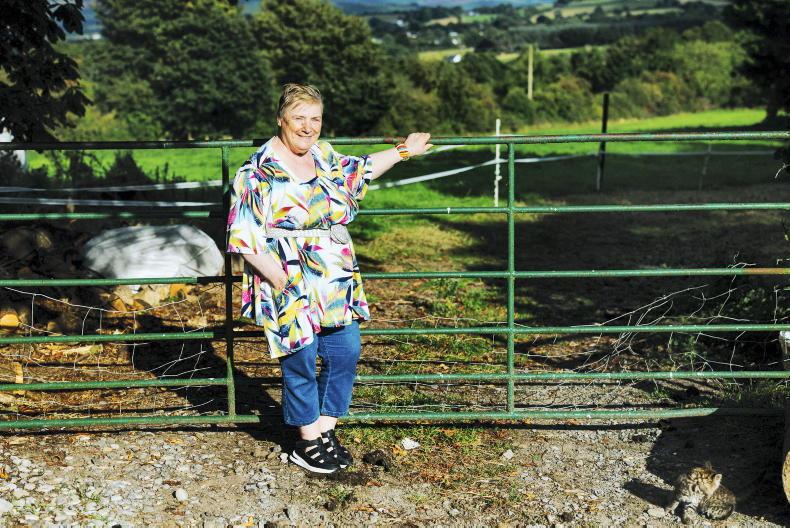
Carlow’s Marian Dalton, who is a member of the IFA Sheep Committee, is also urging the Government to make changes in this area.
She says a lot has changed in rural Ireland since she got married over 40 years ago; however, the system does not reflect the different types of family structures.
“When I got married in 1983, it was a much more traditional Ireland on farms,” says Marian, who didn’t come from a farming background. “You got engaged, got married and within a year [you were expected] to have a child. That eldest child would have been expected to inherit the farm, and the other children would have been sent to school and got jobs.
“That has all changed. We now have people living together who might not want to commit to getting married, they might not want to have children and may be same-sex couples. There are all sorts of different relationships that weren’t spoken about in 1983, which is good to see.”
Marian and her husband Eamon from Clowater, Co Carlow, are fourth-generation cattle and sheep farmers on Eamon’s family farm. They have no children and, in turn, have no successor. Marian has been living and working on the farm for 42 years and emphasises the need for change around inheritance and succession.
Inheritance tax thresholds
“The threshold definitely needs to be changed. I don’t have nieces and nephews; Eamon does. I’m of the very strong opinion that if you’re leaving a farm to someone, you like them to farm. To come back and take over a farm is a huge commitment. What do you do then? Do you look outside the box? Do you chance just giving it to someone and letting them do what they want with it?
“There isn’t enough support or information for people around succession. People are a bit afraid to speak about the possibility of divorces or what will happen to the farm; we’re still Irish and sweep it under the carpet and don’t talk about it. And that needs to change.”
Michael Purcell, IFA Carlow County chairperson, highlights the broader structural issue of the increased age profile of farmers and the need for the inheritance tax threshold to change in line with the increased value of land and assets.
“The tax allowances that are there are also vital to farm transfers, and they need to be kept. With the value of land and how it’s gone, they need to be increased to keep in line with inflation. There is no solution, but the thing is to get the correct advice and not make any decision until you get the proper financial and legal advice.”
As land values rise and succession planning becomes more complex, many in the sector argue that reform is needed to ensure that farms can be transferred smoothly to nieces, nephews, or trusted successors without forcing the sale of farmland or property to cover tax liabilities.
Currently under Group A, parents can pass assets up to €400,000 tax-free to each of their children. For Group B, assets up to €40,000 can be passed tax-free to all siblings, nephews, nieces, or grandchildren. And then in Group C, assets up to €20,000 can be passed tax-free to all other persons.
Parents can avail of Group A thresholds, as well as Group B and C. However, people without children cannot avail of the generous Group A threshold.
Call for equal treatment
Whenever this debate comes up, there is a common misconception that inheritance taxes are something that only concerns the wealthy, says James Sexton.
“This could not be further from the truth – any couple or single person who does not have a child is affected.”
He says, that asset could be the home that someone has worked so hard for throughout their lifetime.
James and his wife Sheila do not consider themselves to be wealthy, but they have some assets and savings which they would like to pass on to their loved ones when they are deceased and they have no children themselves.
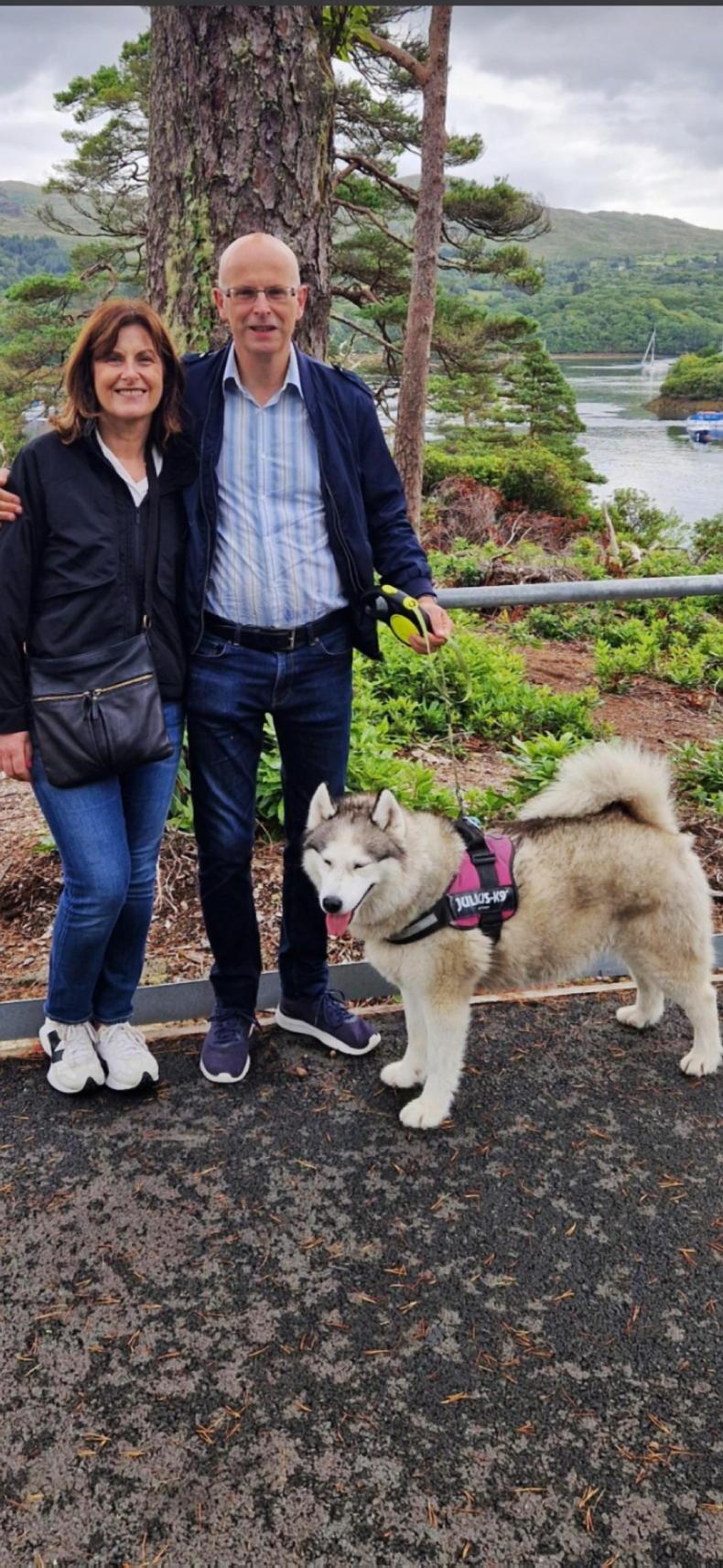
“We have always worked hard. I’m a teacher and Sheila is an accountant, and we believe that we should have the same level of control over our fully taxed assets as all parents,” says James.
“We don’t dictate the rules; they are decisions for the Government, but whatever the rules are, they should be fair and equal for all Irish citizens.
“Parents can pass assets up to €400,000 tax-free to each of their children. Sheila and I are only permitted to pass assets up to €40,000 tax-free to each of our loved ones, ten times less. This is discriminatory and inequitable and needs to change,” argues James.
Other reliefs
Agricultural and business relief can reduce the value of qualifying farms or business assets when calculating inheritance tax, provided the qualifying conditions for each relief are satisfied. Depending on the relationship between the disponer and beneficiary, this will determine the ultimate tax liability.
For those that qualify, Agricultural Relief reduces the taxable value of agricultural property and land by 90%.
Certain conditions must be met to qualify for this relief, including passing the ‘Active Farmer Test’. These are vital tax reliefs for farming families when they apply; however, in many cases, where the inheritor doesn’t meet the criteria, they are still met with the inheritance tax dilemma.
The concerns raised by EDIT were brought to the Dail this May.
In response to Irish Country Living, Martin Hayden, Minister for Agriculture says, “Taxation is an important consideration in farm transfers and Agricultural Relief is a critical support in this regard. We’ll be looking at this area in light of my examination of the new report and with the Department of Finance who hold overall responsibility in this area.”



SHARING OPTIONS