Today, there is a flood of information at our fingertips. Artificial intelligence (AI) has taken the thinking out of our hands and presents us with a free flow of information.
We need to manage this by cross-referencing the information in recognised books and publications. This helps ensure accuracy in what we write, say and understand.
With Christmas shopping only around the corner, gardening books may well be the present worth considering for the gardener and plant enthusiast.
For me, there are two types of gardening books: those that are inspirational, full of amazing images, suitable for those looking for ideas or getting a feel for what they might like for themselves, and this is a valuable exercise.
The second type of book shows you how to get the job done, books that solve the problems faced in the ordinary garden. For example, what plants might suit your aims and how, when and where to plant them. These are what I call reference books and they are worth considering.
There are many great Irish garden writers presenting information. However, the Royal Horticultural Society, the UK’s leading gardening charity, produces a greater variety of reference books with information that is relevant to our climate too.
The Royal Horticultural Society Encyclopedia of Plants and Flowers is a reference book and a fountain of solid information on what to plant where. It describes plants’ height and spread as well as the time of flowering, helping you to plan your planting schemes.
The society also produce the Encyclopedia of Gardening, which is a how-to book, equally worthwhile, with guidance on creating a garden. The book covers trees, shrubs, perennials, rock garden plants, aquatics, fruit and vegetables. It also covers garden construction in an easily understood way.
Perennial Garden Plants or The Modern Florilegium by Graham Stuart Thomas is all about perennial garden plants and their histories, with detailed descriptions. It is written in a conversational way, making it very easy to gain a great insight into plants for your herbaceous or mixed border.
Plant propagation is something gardeners love or would love to know more about. Again, the Royal Horticultural Society produces Propagating Plants. It guides the beginner through topics like learning from nature by using observation and propagation by means of cuttings, seeds, plant division, layering and grafting. It is well illustrated too.
If there is one book that can save you money, it is this, as producing your own plants from seed and cuttings can soon fill a garden inexpensively. Trees and shrubs are often the mainstay of the modern garden and, for gardeners who want to broaden their knowledge, Hillier’s Manual of Trees and Shrubs is one of the best guides I know. It gives detailed descriptions of trees and shrubs, including common and botanical names, growth habits and suitability for different soils and climates.
Botanical names for plants arise from Latin or Greek and those names are sometimes a mystery to gardeners. However, Plant Names Simplified removes the veil of mystery and explains the meaning of what is described in a plant name, e.g. hirsutus, meaning hairy.
I always suggest that gardeners should have at least some knowledge of botany.
Botany for Gardeners by Brian Capon is often suggested as the best introductory book on botany, written specifically in simple English and avoiding heavy scientific terms. It gives the gardener a good insight into why and how things in the plant world work.
If vegetable growing is where the interest is, then The Vegetable Grower’s Handbook by Klaus Laitenberger is a must. Written in a clear and concise style, it covers a wide range of vegetables to produce food for your table.
Home Grown by Barrie Quinn also deals with vegetable growing using natural and chemical-free methods, no matter what size your garden space is.
And of course, The Irish Garden Magazine is a good investment for all gardeners.
Gardening was difficult this year, our soil was compact and plants suffered. What can we do now to prevent this happening again? – Tom, Co Carlow.
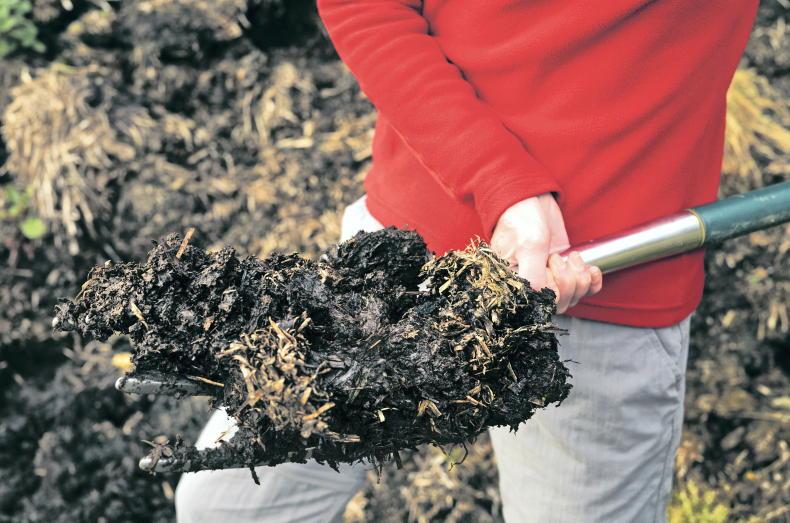
This summer was unusual by Irish standards, however, this may well be the future. It is always better to prepare gardens for even the slightest periods of drought. You do this now by adding humus to the soil in the form of well matured garden compost, or well-rotted farmyard manure.
Working around shrubs needs care so as not to disrupt roots. However, you need to get humus down into the soil at least a few centimetres. When complete, cover the soil with well composted bark mulch to a depth of eight to 10cm. Invest in water butts to store roof water.
Lawns: gradually raise your cutting height to prepare the lawn for winter. It is still time to sow grass seed in bare patches after summer drought.
Perennials: late flowering perennials are still in full bloom, so continue cutting back early flowering ones. It is okay to leave some material standing as it is beneficial to wildlife.
Bulbs: daffodil planting should be now well in hand, however, there is still time to get them planted. You can leave tulip planting a little later, if needs be.
General garden work: now is a good time to think about any planned garden construction, when conditions are favourable.