The Scarborough lily looks like a miniature amaryllis lily, a stem with bright orange-red trumpets. It gets passed around by plant-lovers and is quite common in garden greenhouses and conservatories, but rarely seen for sale.
However, it is often seen at garden club and school fund-raising days, propagated by keen growers and sold for a few cents. The reason that the Scarborough lily is so easily passed on is that it produces lots of daughter bulbs from the main bulb. These are sometimes so numerous that they push each other out of the compost in the pot and rest loose on the surface.
From there they occasionally fall out and take root in another pot, so it is not unusual for a plant to be discovered unexpectedly in a pot of another plant. Presumably this loosening is a way that bulbils move away from the parent in the plant’s native habitat. It has not been taken up much by the big bulb nurseries because it is slow to flower and flowering is erratic. The true plant-lover views this behaviour, not with exasperation, but with tantalising anticipation, a delight that is enhanced by its unpredictability.
The Scarborough lily is also known as ‘fire lily’. Its correct botanical name is Cyrtanthus elatus and it was formerly known as vallota and is still known by that name. This plant is native to South Africa, not England. Some of its relatives grow in dry grassy areas that are subject to brush fires, after which the bulbs flower. This is where they get the name ‘fire lily’, and the brilliant red colour of the flowers suits this name too.
The plant is evergreen or semi-evergreen with narrow strap-like, dark-green leaves. The bulbs have a reddish purple tinge and they push their noses slightly out of the soil. The bulbs always produce lots of small bulbs and will even fill the pot sometimes. These can be removed and potted up to reach flowering size.
The bulbs can be left in the same pot for many years, becoming crowded somewhat as the number of small bulbs increases and the flowering bulbs grow larger. The same bulbs do not flower every year, the bulbs reach flowering size in about three years but not flowering again for a year or so. Sometimes the large old bulbs just dry up and wither. If there are several large bulbs in the pot together, there is a better chance of having a show of flowers each year, and this is not difficult to achieve.
The fire lily flowers in September, sometimes earlier in a sunny year and the brilliant orange colour is very vivid. A good way to grow the plant is to have the pot, or pots, in a greenhouse and to bring them into a more visible place when they are in flower. The flowering period is just two or three weeks with each tall stem carrying three to nine flowers which open in sequence.
More regular flowering and more flowers on each stem will be achieved if the plants are looked after well, watering them regularly during the summer, feeding with a dilute feed every two weeks and keeping them slightly dry in winter. The daughter bulbs will also reach flowering size more quickly if this practice is followed. If you have despaired of seeing this plant flower, make sure to give it full sunshine, and one of these years you will be pleasantly surprised.
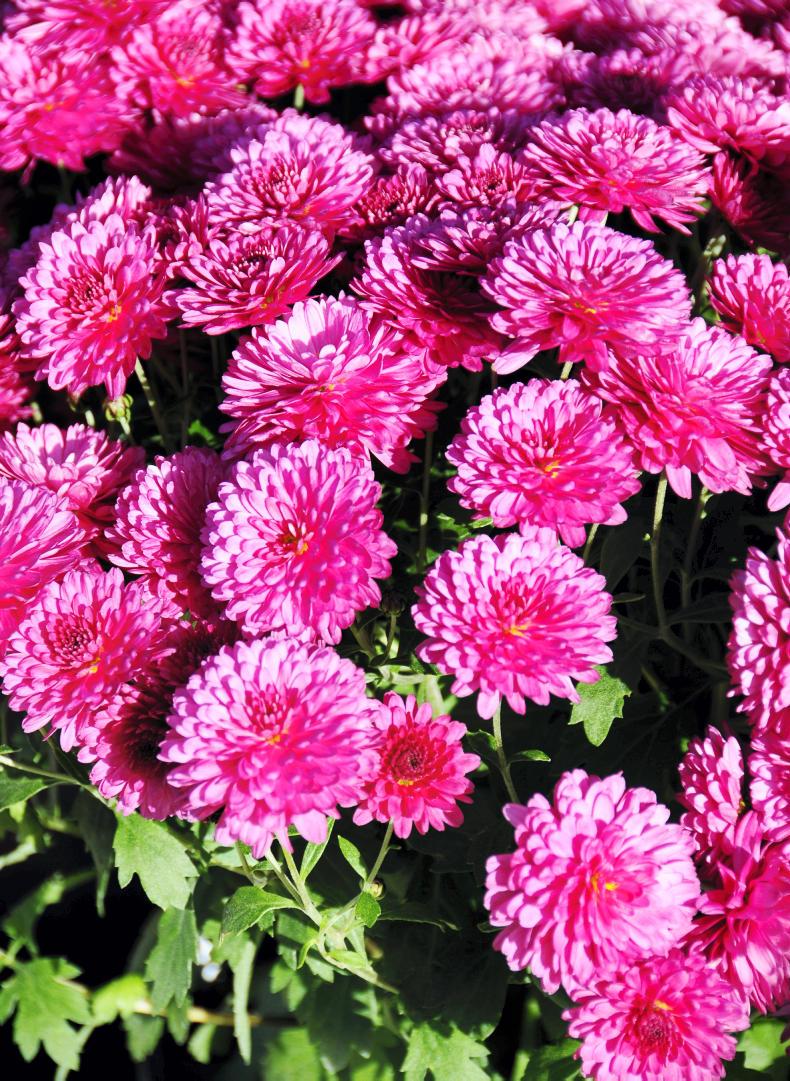
Cushion mums or ‘garden bush mums’ are offered in flower in pots and they can be used as temporary house plants, planted directly into the garden or used in containers outdoors.
Plant a few
cushion mums
Cushion mums or ‘garden bush mums’ are offered in flower in pots and they can be used as temporary house plants, or can be planted directly into the garden or used in containers outdoors. Many of the kinds being sold will prove to be perennial in the garden but not all kinds. If you want to have chrysanthemums coming year after year, you will need to ensure that the variety is hardy but it is a case of trial and error. Try them outdoors and see how they get on.
Most people do not generally want a plant that needs to be propagated and re-planted every year or two years. Some kinds are quite long-lived, others are not, and much depends on the soil. Chrysanthemums tend to do best on well-drained soil, ideally limy, in full sunshine. The vibrant colours — yellow, bronze, red, maroon, purple — are the reason for the renewed interest in this ancient flower, bringing a lively touch to the autumn garden.
Fruit, vegetables and herbs
It has been a huge crop of apples, they can be juiced, or stewed and frozen. Remove old vegetables and do not allow weeds to build up. Lift and store potatoes and carrots now for winter use. Parsnips generally keep better when left in the ground. Prune raspberries, blackcurrants and gooseberries. Plant garlic any time now, placing cloves 20cm apart.
Trees, shrubs and roses
Many woody plants are still suffering after the drought. Plant evergreens of all kinds, either from pots or as root-balled plants. All kinds of pot-grown trees and shrubs can be planted too. Check that young trees are securely staked if they need it — wind-rocking can seriously damage, and even kill young trees. Prune rambler roses.
Flowers
Plant all kinds of spring bulbs as soon as possible. Hanging baskets and other containers have lasted well but are coming to the end of their time. If they have already gone over, replace the summer plants with some plants for winter and spring, including bulbs. The mini-cyclamen are superb for winter show. Begin dividing perennial flowers.
Lawns
Use mosskiller now if necessary, particularly in shaded areas. Continue mowing and use an autumn lawn fertiliser, unless growth has stopped or the ground is too wet. There is still time to sow a new lawn, or to over-sow patches that were killed in the drought or have not fully recovered and conditions will not be as good in coming weeks.
Greenhouse and house plants
Pick tomatoes as they ripen, or if the plants have lost leaves, pick the last few green to ripen off the vine. Keep the greenhouse tidy and ventilated. Do not over-water, or splash water about, to reduce the risk of grey mould disease. Rub off summer shading, if not already done. Ripen pumpkins and winter squashes in a greenhouse to last longer.
Read more
Neon-pink nerine
Toad lily
The Scarborough lily looks like a miniature amaryllis lily, a stem with bright orange-red trumpets. It gets passed around by plant-lovers and is quite common in garden greenhouses and conservatories, but rarely seen for sale.
However, it is often seen at garden club and school fund-raising days, propagated by keen growers and sold for a few cents. The reason that the Scarborough lily is so easily passed on is that it produces lots of daughter bulbs from the main bulb. These are sometimes so numerous that they push each other out of the compost in the pot and rest loose on the surface.
From there they occasionally fall out and take root in another pot, so it is not unusual for a plant to be discovered unexpectedly in a pot of another plant. Presumably this loosening is a way that bulbils move away from the parent in the plant’s native habitat. It has not been taken up much by the big bulb nurseries because it is slow to flower and flowering is erratic. The true plant-lover views this behaviour, not with exasperation, but with tantalising anticipation, a delight that is enhanced by its unpredictability.
The Scarborough lily is also known as ‘fire lily’. Its correct botanical name is Cyrtanthus elatus and it was formerly known as vallota and is still known by that name. This plant is native to South Africa, not England. Some of its relatives grow in dry grassy areas that are subject to brush fires, after which the bulbs flower. This is where they get the name ‘fire lily’, and the brilliant red colour of the flowers suits this name too.
The plant is evergreen or semi-evergreen with narrow strap-like, dark-green leaves. The bulbs have a reddish purple tinge and they push their noses slightly out of the soil. The bulbs always produce lots of small bulbs and will even fill the pot sometimes. These can be removed and potted up to reach flowering size.
The bulbs can be left in the same pot for many years, becoming crowded somewhat as the number of small bulbs increases and the flowering bulbs grow larger. The same bulbs do not flower every year, the bulbs reach flowering size in about three years but not flowering again for a year or so. Sometimes the large old bulbs just dry up and wither. If there are several large bulbs in the pot together, there is a better chance of having a show of flowers each year, and this is not difficult to achieve.
The fire lily flowers in September, sometimes earlier in a sunny year and the brilliant orange colour is very vivid. A good way to grow the plant is to have the pot, or pots, in a greenhouse and to bring them into a more visible place when they are in flower. The flowering period is just two or three weeks with each tall stem carrying three to nine flowers which open in sequence.
More regular flowering and more flowers on each stem will be achieved if the plants are looked after well, watering them regularly during the summer, feeding with a dilute feed every two weeks and keeping them slightly dry in winter. The daughter bulbs will also reach flowering size more quickly if this practice is followed. If you have despaired of seeing this plant flower, make sure to give it full sunshine, and one of these years you will be pleasantly surprised.
Cushion mums or ‘garden bush mums’ are offered in flower in pots and they can be used as temporary house plants, planted directly into the garden or used in containers outdoors.
Plant a few
cushion mums
Cushion mums or ‘garden bush mums’ are offered in flower in pots and they can be used as temporary house plants, or can be planted directly into the garden or used in containers outdoors. Many of the kinds being sold will prove to be perennial in the garden but not all kinds. If you want to have chrysanthemums coming year after year, you will need to ensure that the variety is hardy but it is a case of trial and error. Try them outdoors and see how they get on.
Most people do not generally want a plant that needs to be propagated and re-planted every year or two years. Some kinds are quite long-lived, others are not, and much depends on the soil. Chrysanthemums tend to do best on well-drained soil, ideally limy, in full sunshine. The vibrant colours — yellow, bronze, red, maroon, purple — are the reason for the renewed interest in this ancient flower, bringing a lively touch to the autumn garden.
Fruit, vegetables and herbs
It has been a huge crop of apples, they can be juiced, or stewed and frozen. Remove old vegetables and do not allow weeds to build up. Lift and store potatoes and carrots now for winter use. Parsnips generally keep better when left in the ground. Prune raspberries, blackcurrants and gooseberries. Plant garlic any time now, placing cloves 20cm apart.
Trees, shrubs and roses
Many woody plants are still suffering after the drought. Plant evergreens of all kinds, either from pots or as root-balled plants. All kinds of pot-grown trees and shrubs can be planted too. Check that young trees are securely staked if they need it — wind-rocking can seriously damage, and even kill young trees. Prune rambler roses.
Flowers
Plant all kinds of spring bulbs as soon as possible. Hanging baskets and other containers have lasted well but are coming to the end of their time. If they have already gone over, replace the summer plants with some plants for winter and spring, including bulbs. The mini-cyclamen are superb for winter show. Begin dividing perennial flowers.
Lawns
Use mosskiller now if necessary, particularly in shaded areas. Continue mowing and use an autumn lawn fertiliser, unless growth has stopped or the ground is too wet. There is still time to sow a new lawn, or to over-sow patches that were killed in the drought or have not fully recovered and conditions will not be as good in coming weeks.
Greenhouse and house plants
Pick tomatoes as they ripen, or if the plants have lost leaves, pick the last few green to ripen off the vine. Keep the greenhouse tidy and ventilated. Do not over-water, or splash water about, to reduce the risk of grey mould disease. Rub off summer shading, if not already done. Ripen pumpkins and winter squashes in a greenhouse to last longer.
Read more
Neon-pink nerine
Toad lily








SHARING OPTIONS