



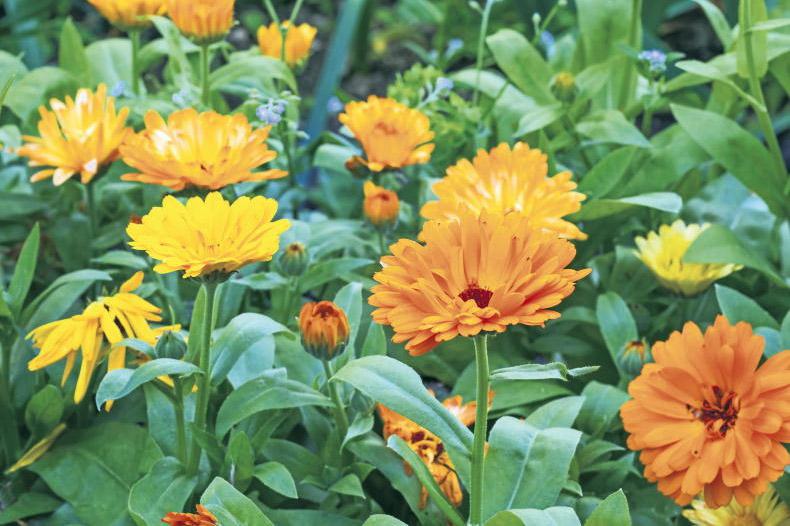
If I could grow just one annual in my flower garden, it would have to be Calendula officinalis, commonly known as pot marigold. Once a familiar sight in cottage gardens where its abundant seeds were freely shared between neighbours, it has become somewhat overlooked in favour of newer, trendier flowers.
Yet, Calendula deserves a place in every garden. Cheerful and bright, its vivid orange, daisy-like flowers appear from June into early autumn, combining beautifully with other annuals and perennials in beds, borders or containers.
The nectar-rich flowers are also attractive to pollinating insects, making calendula a useful addition to a wildlife-friendly garden. It is often planted among fruit and vegetables as a companion plant, to help attract beneficial insects and those that deter or feed on garden pests. The petals are edible, adding a splash of colour to salads and other dishes, and were traditionally added to soups and stews – hence the name pot marigold.
Calendula also has a long history of use in traditional herbal preparations and remains a popular ingredient in botanical skincare.
As a plant, calendula is wonderfully unfussy. It flowers best in full sun and tolerates a range of soils, including quite poor ones, making it an easy choice for a less-than-perfect spot in the garden. Although usually grown as a hardy annual, the plant can sometimes survive for more than one season, producing plenty of seed to ensure its continuation. Once introduced to a garden, it readily self-sows, with seedlings appearing in the most unexpected places.
Earlier this summer, I was delighted to find some potted plants of the basic species, Calendula officinalis, for sale at a plant fair.
It is surprisingly difficult these days to find this simple, old-fashioned form, with so many seed suppliers instead offering named varieties selected for particular colours, flower forms or other novelty effects. Sometimes, I think, flower breeders overdo things. For me, the old-fashioned, orange-daisy pot marigold is still the best of the lot. Its simple, open flowers have a charm that is hard to improve upon, and, importantly, they offer easy access to bees and other beneficial insects. In our enthusiasm for bigger, fancier flowers, it is easy to forget that the simplest flowers can often be the most useful.
I planted mine at the front of a sunny border where the orange flowers made a pleasing contrast with the blue flowers of Nepeta x faassenii ‘Purrsian Blue’ and Eryngium x olivierianum ‘Big Blue’. They are still flowering and some of the earlier blooms have now produced ripe seed.
This week, I chose a sunny day to gather some of those seeds to increase my stock of plants for next year. If harvested while damp, seeds can rot in storage, so it’s important to choose a dry day for collection. Once the seedheads have turned brown and become dry and brittle, they are ready to harvest. I simply snap the heads straight into a paper envelope, making sure to write the plant name and date on it. Resembling tiny fossils, the seeds are really easy to handle, which makes sowing them a joy. The easiest way to grow calendula is to sow the seed outdoors in mid-spring, directly into the ground where the plants are to flower.
While I will save half of my seed for sowing next spring, I am sowing the rest indoors now, to produce sturdy plants for earlier flowering next year. I use modular or plug trays, filled with moist, lightly firmed seed compost and sow two or three seeds per module. These are covered with a fine sprinkling of compost and watered gently. The trays are placed in a warm, bright spot to germinate, which usually takes around 10-14 days. About three weeks after germination, when the seedlings are large enough to handle, I transplant each cluster into a 7.5cm pot.
The young plants are then grown on and overwintered in cool, light, frost-free conditions, in a polytunnel or glasshouse, before planting them out next spring. Although the seedlings may only grow a few centimetres before winter, it gives them a useful head start in spring.
How can I make my garden rabbit-proof and stop them destroying my plants? Louise Nolan
The most effective way to exclude rabbits is to install a wire-mesh fence, ideally about 120cm high with a maximum mesh size of 2.5cm, around the garden perimeter. Bury the bottom 30cm below ground, bending the lower 15cm outwards in an L-shape underground to stop rabbits burrowing underneath. Raised beds at least 60cm high can also help. Alternatively, use floating covers, such as Enviromesh, a lightweight material laid loosely over plants and weighted down around the edges. Protect individual woody plants with biodegradable guards, while welded-mesh tree guards offer a more permanent solution. Animal repellents can discourage rabbits from browsing. Dogs and cats may also act as deterrents.
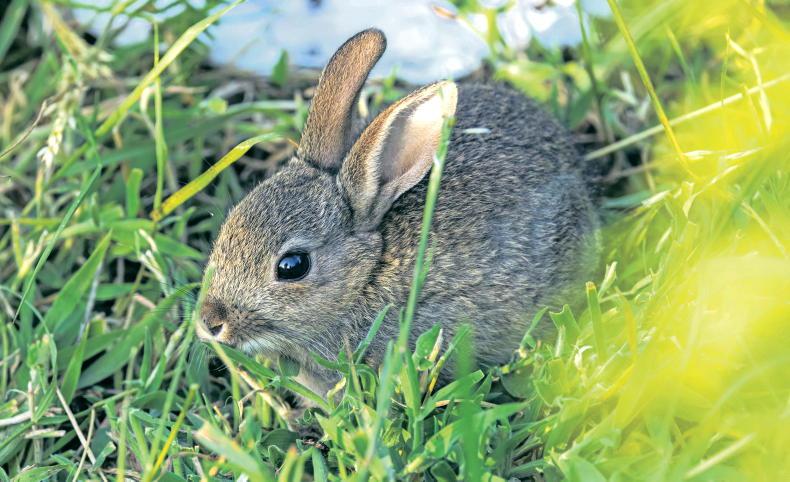
including bulbs.


SHARING OPTIONS