


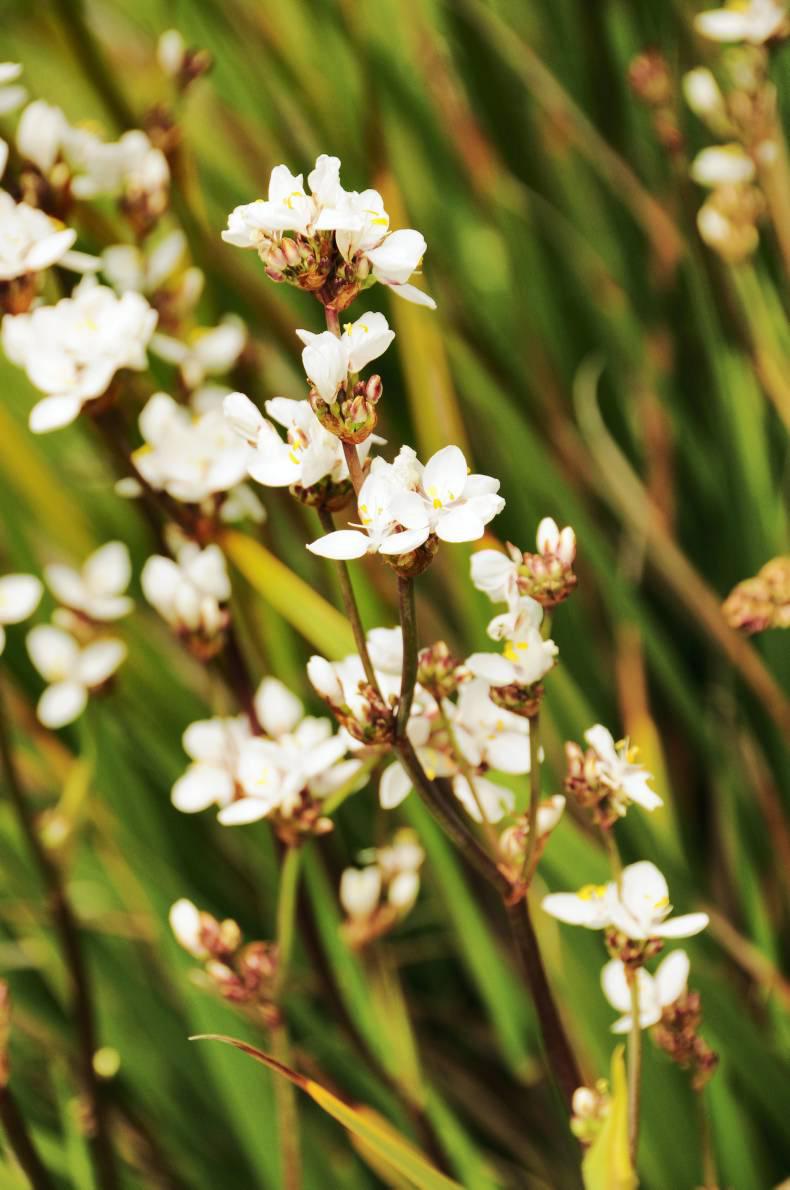
Now in full flower, libertia is a very elegant and beautiful plant. It produces tall flower stems with clusters of flowers. The flowers of the most commonly grown kinds are pure white. They are carried in groups, with the flowers of each group opening in sequence and keeping the flowering going over a period of several weeks in early to mid-summer.
The clusters are carried in a somewhat zig-zag formation at the top of the flower stems. These are generally held well clear of the foliage and visible from a good distance. The pure white of the flowers brings an appealing summer freshness to the garden, a perfect foil for other more colourful early summer flowers, such as Oriental poppies and early irises.
Libertia is an evergreen member of the iris family that grows in a dense clump of grassy leaves. These leaves are hard to the touch and robust, and well able to take exposure to gales, although they do wither a bit at the tips if they are blasted by strong winds.
The dense clump of foliage can reach over one metre tall and about as wide. So this is not really a plant for a small garden, or a small area within a larger garden. But it is a good proposition for a larger garden that has space to fill.
Being evergreen, the libertia brings greenery to the garden at a time of year when most flowers have packed up and withered back for the harsh months.
It also has value in its grassy, spiky leaves. These contrast well with rounded shrubs and small garden trees, not only filling in at the medium level, but also providing a textural contrast.
Flowering best in full sunshine, when a bigger crop of pristine flowers is produced, libertia is remarkably tolerant of shade. It likes well-drained soil, though not really dry soil as this tends to make the foliage very dry and inclined to wither. It can cope well in the shade of trees where it gets enough moisture and the touch of shade prevents it from drying up as it does in full sunlight.
While it provides plenty of greenery and ground cover in this situation, its flowering can be lessened and, rarely, it can be absent. So this plant can be used as ground cover under trees and tall shrubs, and flowers produced are a bonus. Other plants of libertia can be located in the open to give lots of space to their charming flowers.
A word of warning though about libertia is appropriate. This plant, in suitable conditions, can be a prolific producer of seeds and these can germinate in broad sheets close to the parent plants and take over a border. Now if that is alright there is no problem, but libertia seedlings are very tenacious and can come up in the middle of less vigorous flowers, eventually outgrowing them.
However, this potential problem is easily solved by simply cutting the seed heads as soon as flowering is finished to prevent the production of unwanted seeds. Libertia survives in most places, with some die-back of the foliage tips.
Thin vegetable seedlings
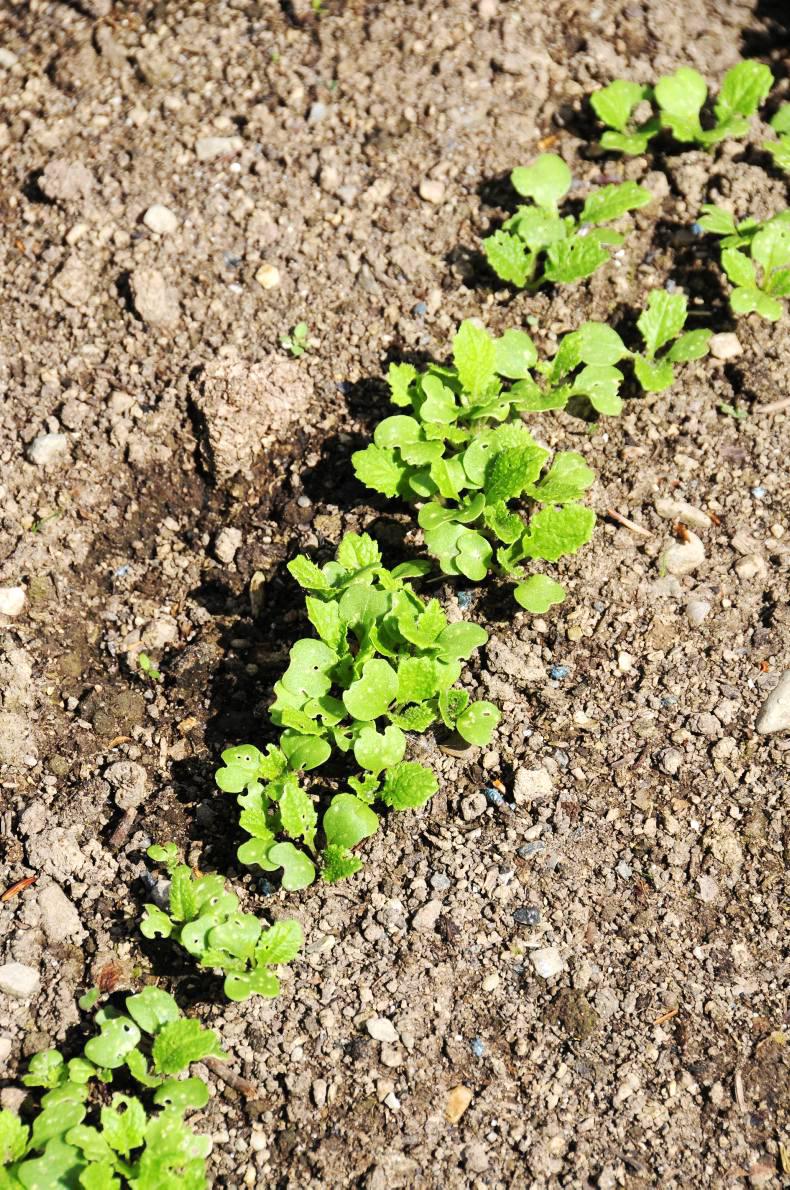
There is always a balance to be struck between thinning vegetable seedlings too early and too late. If the likes of carrots, parsnips, beetroot, chard, white turnip and radish are pruned too early there is a risk of severe snail damage. A single hungry snail can eat a whole row of seedlings in one moist, warm night. If the seedlings are left too late, the remaining plants, at thinning, can be damaged by pulling out the roots of competing seedlings close to them.
A good compromise is to half-thin these vegetables. This means thinning to half of the final spacing, or even one-third of it. In a few weeks, when the developing plants need the space, a second quick thinning can be done to leave the final spacings required.
Trees, shrubs & roses
Check young trees and shrubs for signs of drought as the young plants can suffer badly in early summer. Continue to spray roses against blackspot disease, especially in the damper parts of the country, as blackspot is a problem. Continue to tie in the new shoots of climbing roses so that they will be in the correct position.
Fruit, veg & herbs
Repeat sowings of lettuce, radish, turnip, beetroot, scallions and peas could be made. Thin out vegetables that have reached suitable size and control weeds early. Sow Savoy cabbage varieties without delay, also swede turnips. Plant out sweetcorn, outdoor tomatoes, pumpkins and runner beans without delay.
Flowers
Bedding plants can be planted and containers and baskets planted up. Be sure to control the first flush of weeds among bedding plants. Continue to watch for slugs and snails in the first few weeks after planting. Be careful not to over-water bedding plants in pots as this makes them leafy at the expense of flowers.
Lawns
Grass growth has been slow in recent weeks due to cold northerly winds. If possible, get some fertiliser on a good-quality lawn, the grass will benefit enormously during the next few weeks. If this needs to be done, it is best to wait for a settled spell of good growth after rain. Keep edges of paths trimmed for a neat finish.
Greenhouse & house plants
Tomato, chilli, cucumber and sweet pepper plants can still be planted in a greenhouse, but do not delay. Continue to feed greenhouse plants every two weeks to get good growth before mid-summer and water well. Use greenhouse shading if likely to get too hot. Pot up house plants.


SHARING OPTIONS