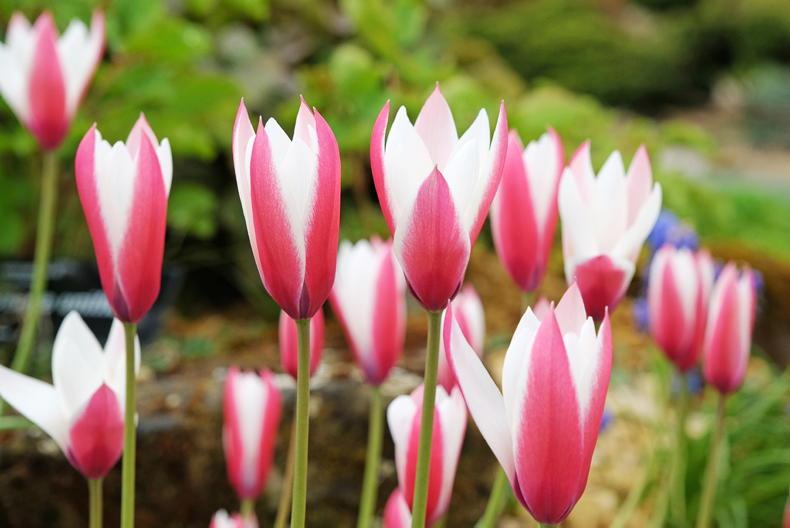
With the arrival of summer, we are enjoying the multitude of colours that come with the season. It is welcome and is the start of more colour to come after what can sometimes be a long, grey winter. Of the many opportunities to bring colour into the garden, tulips are a sure bet. They come in a myriad of colours and are statuesque in our beds and borders.
As is the case with many plants available to us today, tulips are highly bred to give us an increased range of colour, shape and form. Planted in great swathes, they are breathtaking and gardeners would love to have them reappear every year as perennials do, but with hybrid tulips this is not always possible.
The Darwin group of tulips are somewhat reliable in returning every year. Cultivars such as Tulipa ‘Apeldoorn’ with its wonderful red colour or Tulipa ‘Golden Apeldoorn’ with its rich yellow glow, both growing to 50cm will regrow once deadheading after flowering and foliage is allowed to wither naturally.
A much better bet if you want returning tulips or indeed to naturalise them is to look at the species tulips and their cultivars. Tulipa humilis ‘Persian Pearl’ is low growing to 10cm with plum-coloured flowers held above narrow grey-green foliage. It has a yellow eye inside at the base of the petal.
T. tarda is probably the most dependable for naturalising and is truly beautiful. It opens its flowers which are yellow with white tips held over narrow leaves, they grow to 10cm and look like stars growing in your border.
Tulipa clusiana, is commonly called the Lady Tulip, they grow slightly taller to 25cm tall and slender. The petals are carmine-pink with a creamy yellow edge held over narrow green foliage. They have more impact in the border than some of the smaller species.
T. clusiana ‘Peppermint Stick’ grows in our garden in the midst of an Iris clump and is in flower now. The outer petals are pink and creamy white inside. The base of the inner petals has a bluish tint to them. The flower is upright and narrow and in full sun opens flat, almost like it has its arms open to greet pollinators.
Tulipa linifolia ‘Bright Gem’ is another great performer that gets better over the years. It is a squat grower to 15cm with peach yellow flowers flushed with orange. T. linifolia ‘Red Gem’ is similar but slightly lower growing, it has an intensity of colour that catches the eye.
If a real showstopper is required try sourcing Tulipa orphanidea ‘Flava’ growing to 30cm. It has long narrow grey-green foliage which is a lovely foil for the bronze yellow flowers with an orange flare.
Tulipa greigii are noted by their mottled leaves with chocolate brown stripes.
T. greigii ‘Red Riding Hood’ grows to 20cm with bright red flowers, more like the taller hybrids.
Cultivation
Tulips are members of the lily family and easily managed if you understand their basic needs with regard to soil and planting location.
In the wild they are essentially mountain plants growing in bright light and free draining slopes and meadows, so we need to use this as our guide. When creating an area for naturalising species tulips dig in a large quantity of grit, about two buckets per square metre is good. Plant in an area where other plants are present to fill the space after they finish flowering.
Dwarf perennials are excellent partners. There is no need to add fertiliser as they thrive in hungry soils. Do not plant in straight lines and the best effect is arrived at if you throw down the bulbs without thought and plant where they land. This give a natural informality. Planting depth is crucial, so use 10-12cm as your guide, if your soil is very dry plant a little lower.
After flowering, allow foliage to die back naturally until it falls away. The quickest route to failure is being over fastidious and removing green foliage. The flowers of tulips have always held a fascination for me, I have a black and white photo on my wall of an 18-month-old me staring in wonder into a tulip flower. To me, they have a mystical air about them.
The species close their flowers at dusk to retain heat and also on dull days, but open them in full sunlight. It is a signal to pollinators to come and gather pollen and nectar, and I wonder, who or what bestowed that ingenuity on them?
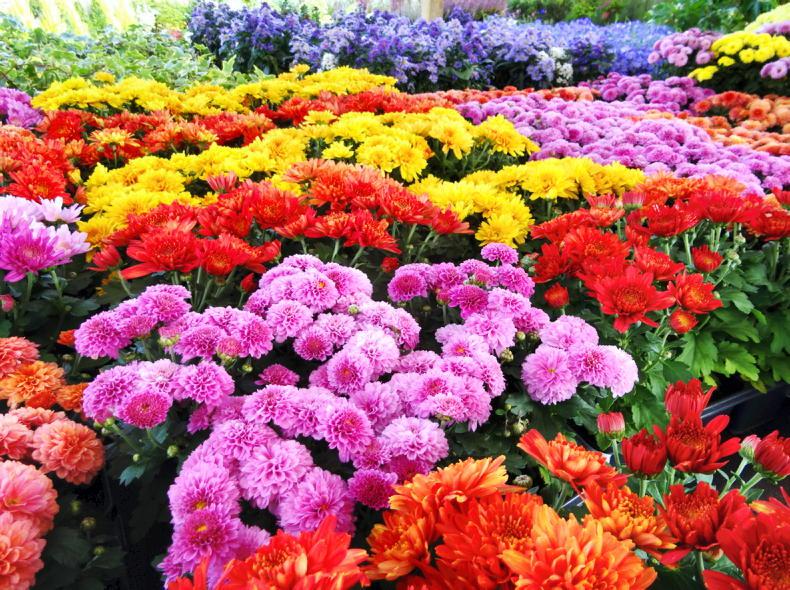
I have a pink chrysanthemum that flowers in autumn, I want to give some to a friend, can I remove a section without causing it damage? -Tommy, Adare, Co Limerick.
Chrysanthemums divide readily without doing any harm to the plant itself. In fact, it is a benefit because you get fresh strong growth. Firstly, if it is growing in ground that is dry, soak the area a day or two in advance. Decide how much you want to donate and use a sharp spade to cleanly remove a section, wrap this in wet newspaper for moving. As the sooner it gets back into soil, the better.
Depending on the quantity left behind in your garden, it might be wise to divide it also and create two new plants for your space.
Planting: spring annuals are now in full bloom, you need to monitor the planted areas for weeds and remove these.
Bulbs: stay on top of removing seed heads from daffodils and tulips.
Check all spring bulbs for seed heads remaining on plants and remove these.
Trees and shrubs: examine all newly planted trees and shrubs, if ground is dry, water with rainwater to help them establish properly.
Glasshouse: the glasshouse is more than likely in need of a good cleaning.
Plants can now be put outside with fleece at the ready if frost threatens. Remove all leaf debris and ventilate.
Do you have a gardening question? Email
icl@farmersjournal.ie or post to Irish Country Living, Irish Farm Centre, Bluebell, Dublin 12.