



Carpal tunnel syndrome is a very common condition and is three to five times more common in women,” says Stuart Edwards, consultant orthopaedic surgeon at Aut Even Hospital in Kilkenny.
The cause of the condition is unknown but inflammation is likely to be instrumental in its development.
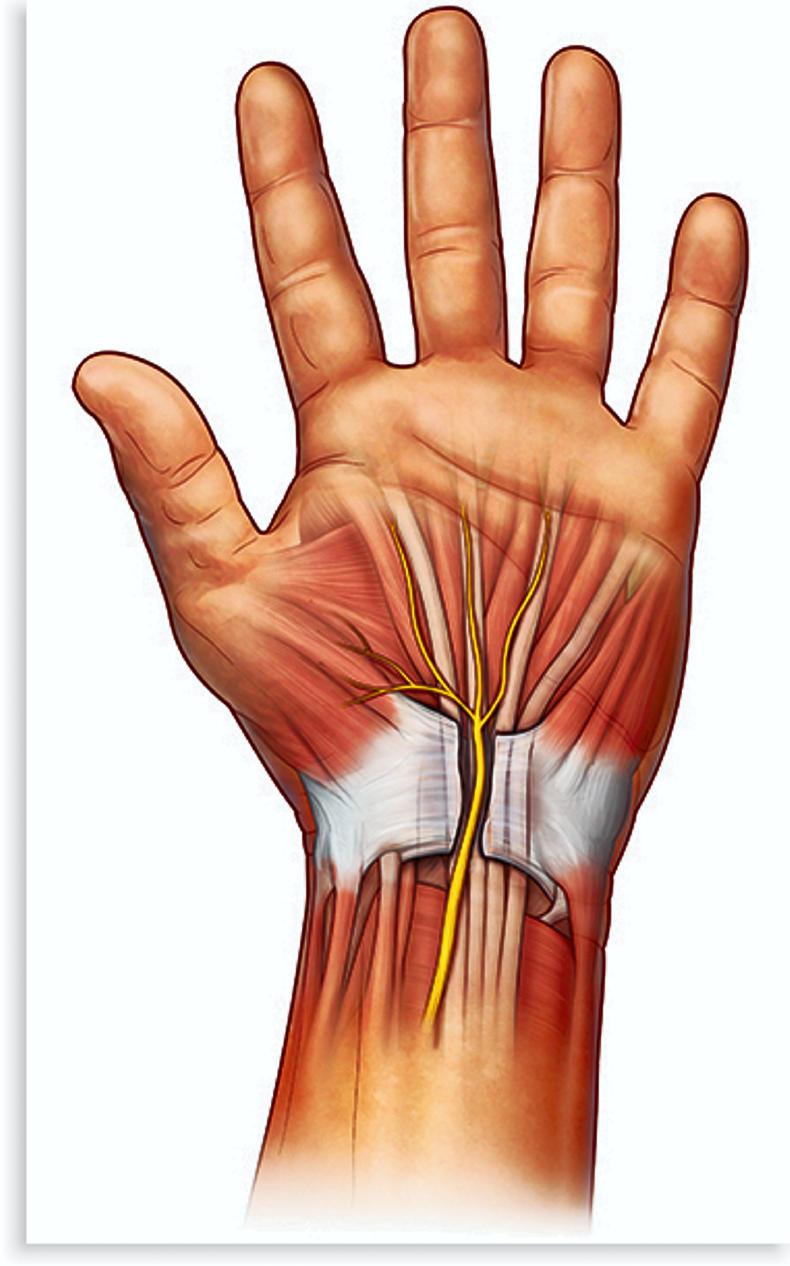
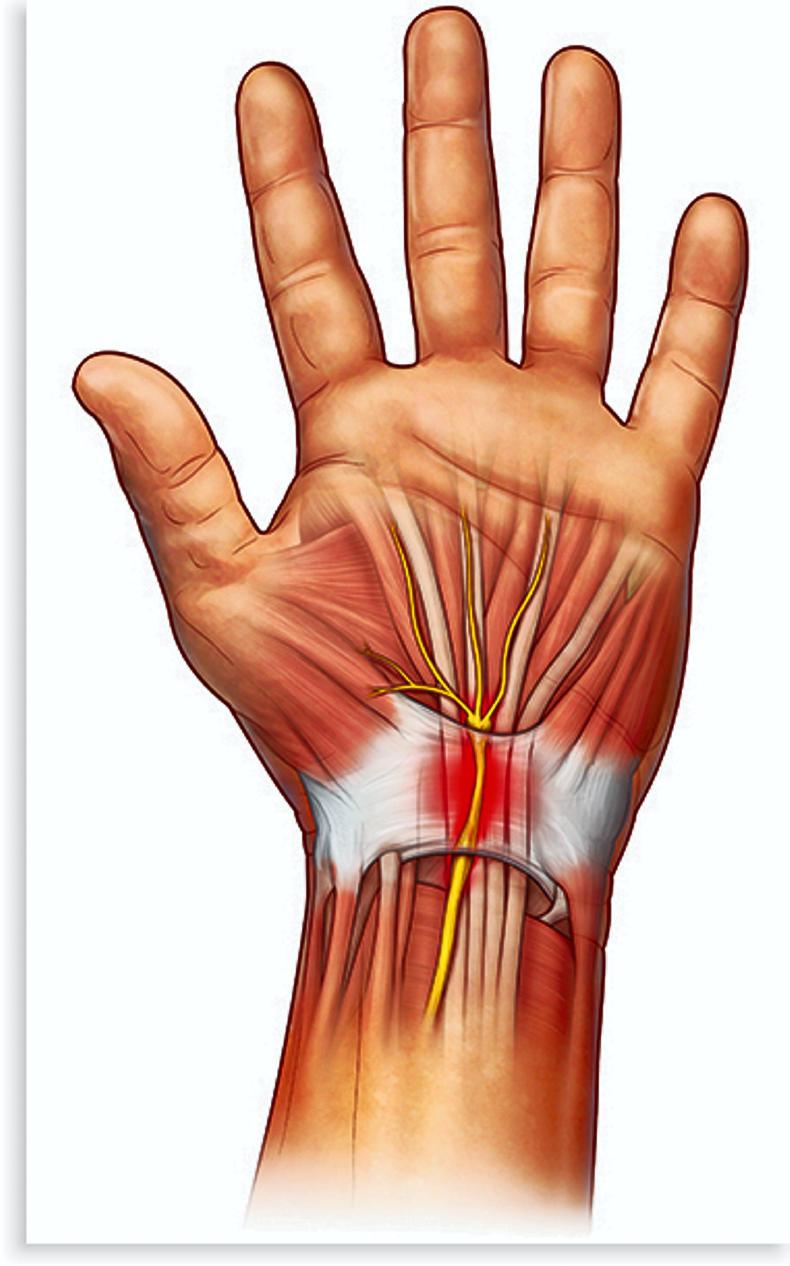
The carpal tunnel is a small tunnel that runs from the bottom of the wrist to the lower palm. Several tendons that help to move the fingers pass through this carpal tunnel, as does the median nerve that controls sensation and movement of your hand.
“Carpal tunnel syndrome is inflammation in this tunnel,” he says.
“When it’s inflamed, the space tightens and more pressure is put on the nerve. I often describe the operation to fix it as being like taking a tree off a telephone wire – that is, the ligament is divided, relieving pressure.”
The symptoms of carpal tunnel syndrome include tingling and numbness in the fingertips which, over time, progress to most of the hand as well as occasional weakness of the thumb.
It never affects the little finger, however. This helps with precise diagnosis of the condition.
“If a patient says they don’t have numbness or pain in their little finger but do in the rest of their fingers then you know immediately that it is likely to be carpal tunnel syndrome. That’s because the nerve that gets pressed on only supplies the thumb, index, middle and half of the ring finger. It never supplies the little finger. Another nerve that isn’t in the carpal tunnel serves the little finger. Numbness and tingling in the hand, without the little finger being affected, are therefore classic symptoms of the condition.”
Who is at risk?
Carpal tunnel syndrome affects 75 million people globally and the age range of those affected is between 30 and 70.
“It can affect any age group at any time,” he says, “and is not due to the ageing process.”
But who is most at risk?
“It is a very common condition but can be very common in pregnant women, mainly because when you’re pregnant you’re predisposed to more inflammation in this tunnel because of fluid retention.
“After the birth it usually gets better on its own as you lose fluid and weight. It is also common in women who take the combined oral contraceptive pill.”
Diabetes can be a risk factor also because the high glucose levels can affect the little blood vessels around the nerves in the tunnel, making you more prone to the condition. If you have rheumatoid arthritis, you are also more prone because of the inflammation associated with that condition.
“Thyroid disease – hypothyroidism – can also make you more vulnerable. Fracturing your wrist also increases your chances because it reduces the space for the tunnel. People who have arthritis in their wrists are also more liable to get it.”
Treatment options
If symptoms haven’t been present for a long time, a splint worn at night may help, the surgeon says.
“This keeps your wrist straight because the main reason you get carpal tunnel syndrome is that when you bend your wrist down that makes the tunnel smaller.
“That’s why patients get a lot of pain at night time. We all mostly sleep in the foetal position, curling our wrists out, so that’s why patients wake in the middle of the night shaking their hand because their hand feels as if it has gone dead.
“The splint to keep the wrist straight is a very simple way of treating the condition initially. Anti-inflammatory medication can be taken but there is not amazingly good evidence for that making a difference.”
The next option is a cortisone injection into the tunnel.
“It works very well initially but after one year only one in five patients have relief so it is often a short-term treatment to try and alleviate severe symptoms.”
Surgery to release the nerve
The last option is surgery – but what exactly is involved?
“We take the patient history and do an examination to exclude other possible causes. We then make sure the neck is not causing the problem because you can get pinching of the nerves in the neck that can cause similar symptoms.
“An MRI scan may be done first if we are concerned regarding the neck. We would very rarely do nerve conduction assessments. The nerve is tested to make sure it is definitely being pinched in the wrist rather than anywhere else higher up in the neck. We also make sure it’s not down to diabetes. If it was diabetes and you have peripheral neuropathy (damage to nerves) with it, it would affect your whole hand. With diabetes, you tend to get a ‘glove and stocking’ reduced sensation rather than it being particular to the distribution of the nerve that’s being pressed. If all this has been excluded, the person would be listed for surgery.”
 The success rate with carpal tunnel syndrome is 90% and can be done under local or general anaesthetic. The surgeon and patient would make the decision about which to choose before the operation.
“Some patients are needle-phobic or don’t like the idea of a surgeon working on them while they are awake, so if they’re fit and don’t have any issues with having a general anaesthetic, they would have the general rather than the local.”
And what does the operation involve?
“It involves an incision being made in the palm, about 3-4cm long, normally in line with the ring finger.
There is a ligament over the nerve – it’s like a tunnel with the bones underneath and the ligament on top and the nerve underneath the ligament. We divide the ligament over the nerve, and frequently when you do that you can see that the nerve is actually very flat and very white and you can’t see blood vessels on it, but the minute you release it you can see the coming back in – it’s the ‘tree being taken off the telephone wire’ comparison.
“It’s quite a simple operation and takes about 15 minutes to do. You have five to seven sutures (stitches) afterwards and a bandage also. Patients go home the same day as surgery. The bandage is released after two days and the stitches come out after 10 days at the GP’s surgery. Patients need to make sure to keep their fingers moving so that they don’t become stiff.
“Most patients are back to work in two to three weeks and have a full recovery in about eight weeks.”
The longer you leave it, the longer your recovery
It’s important to stress that the longer the nerve is being pressed on, the longer it takes for you to get a full recovery from carpal tunnel syndrome, he says.
“When you do the surgery, you’re taking the pressure off the wire (nerve) but the nerve has to regenerate itself. So, if the nerve has been pressed on for a long time, it regenerates and the sheath that surrounds the nerve has to regenerate all the way back up to the neck. It can take a year or more for it to completely regenerate back up to the neck. The pain that you have goes immediately but the numbness and tingling, if you’ve left it too long, may linger for a long time.
“That’s because it is affected by how long it has been pressed on and also by your age – the older you are, the longer it takes to regenerate. It is influenced quite heavily by smoking as well. If you’re a smoker, if you’ve had pressure for more than a year and you’re over the age of 75, then it may never fully recover – so it’s really important to seek help early on so. My advice would be not to wait more than six months.”


SHARING OPTIONS