



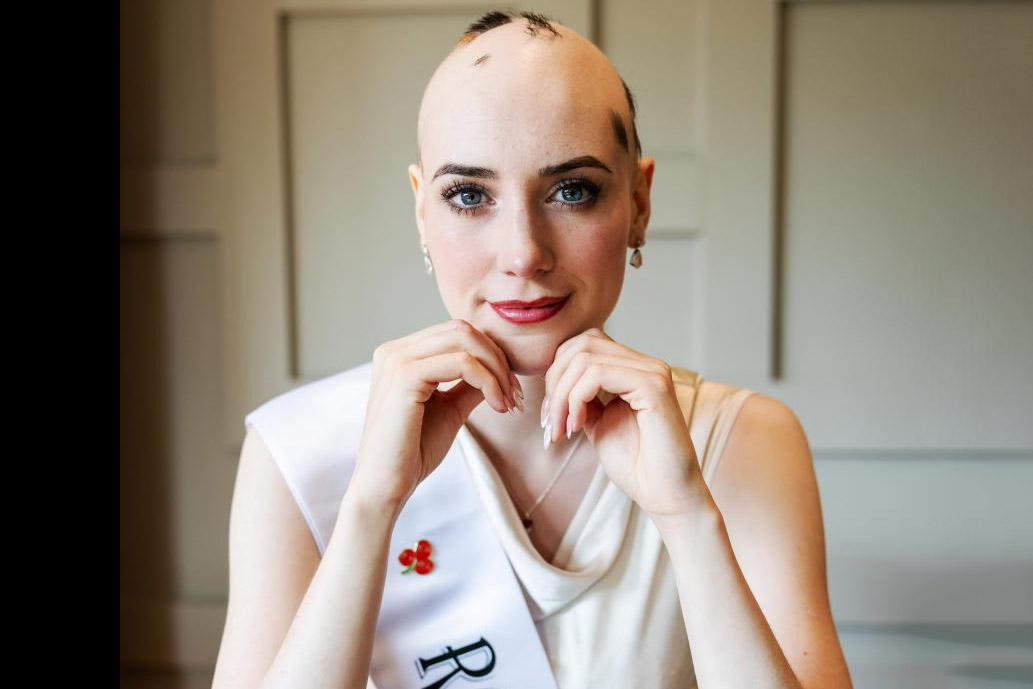
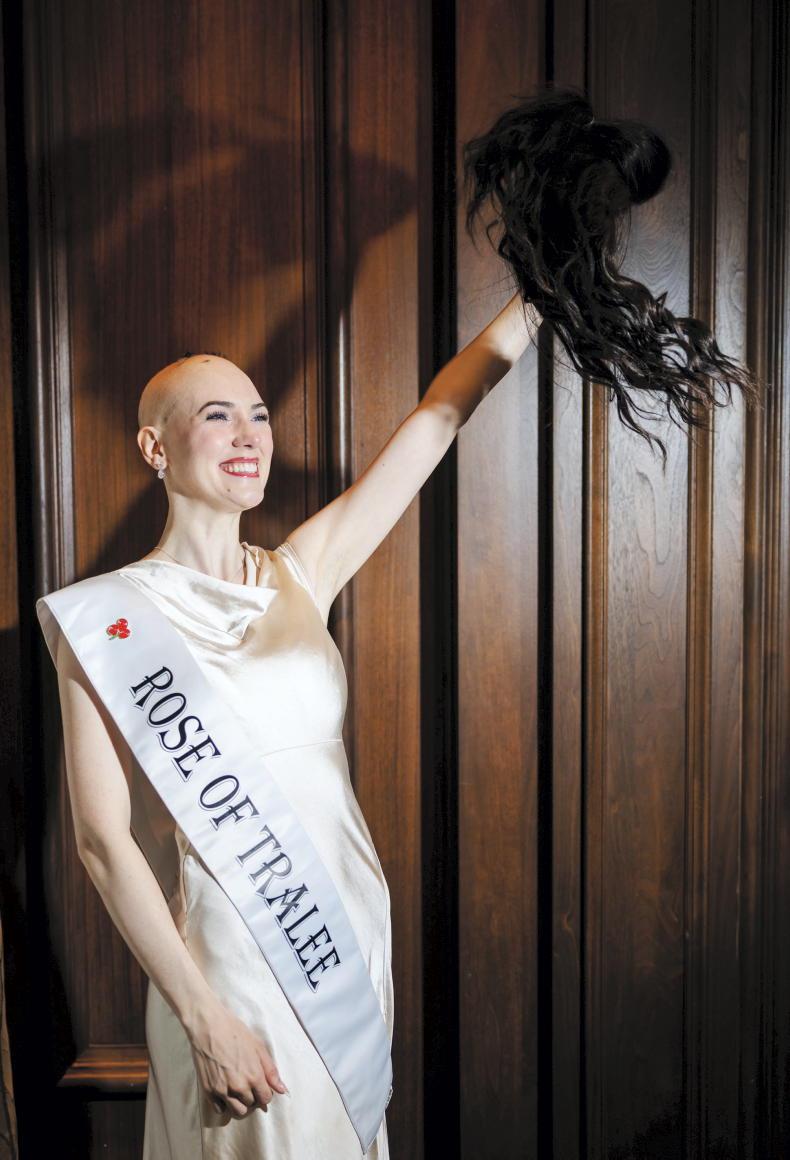
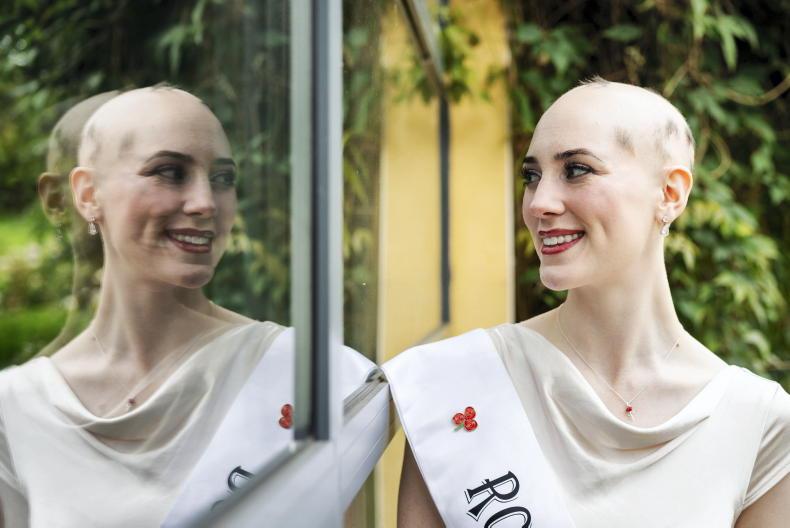
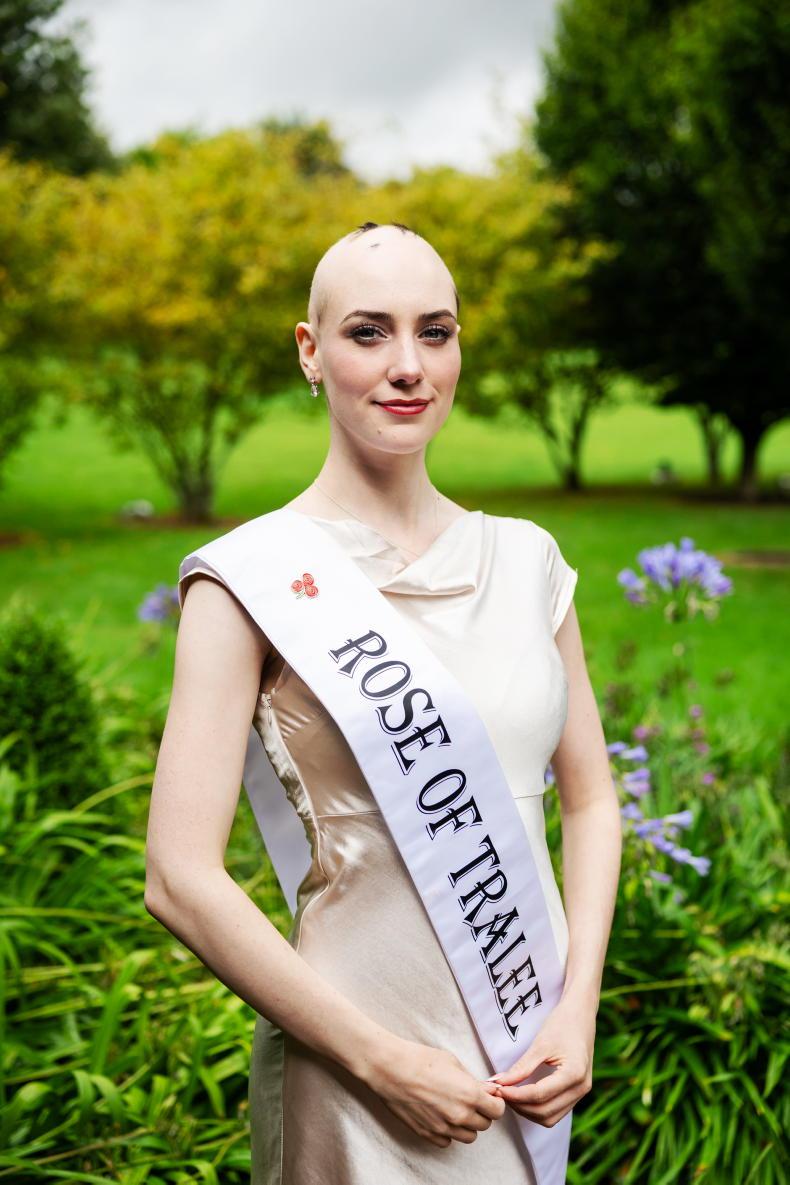
It was a powerful moment at the Kerry Sports Academy during the 66th Rose of Tralee International Festival when Caoilfhinn Ní Choiligh revealed the hair loss she experiences as a result of alopecia areata.
The reception she received in Tralee was so warm and heartfelt, it travelled through the television screen, touching those watching at home.
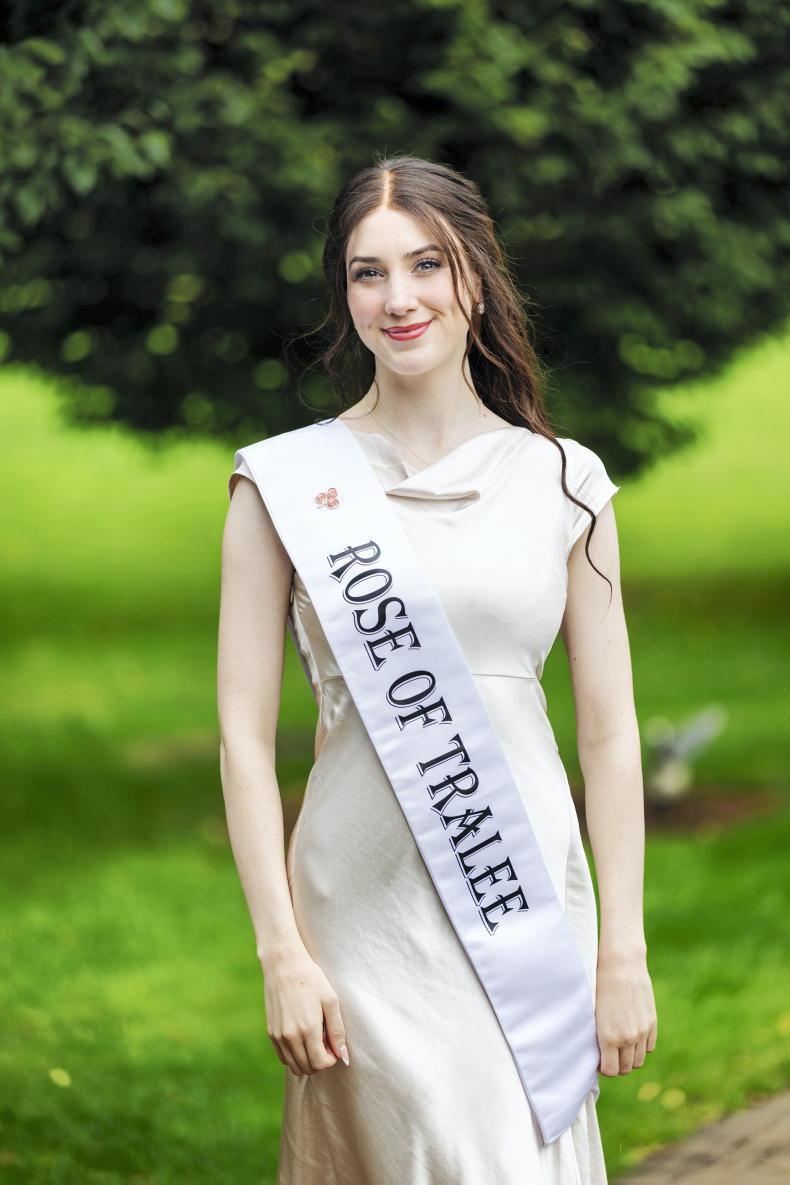
The moment became even more memorable when Caoilfhinn was later crowned the 2026 Rose of Tralee – an outcome she insists she had not remotely expected.
“No, not at all,” she says, laughing when Irish Country Living asked if she thought she might win. “I know people find that very cliché to say.”
Westmeath had produced a winner only two festivals previously and Caoilfhinn says she had entered for very different reasons.
“I was just doing this to say my piece and meet people. I didn’t go into this thinking it was a competition. I forgot about the judging.”
In fact, one of the simplest reasons for entering turned out to be one of the most rewarding.
“I did just want to meet some friends,” she says. “And I’ve certainly done that.”
After the whirlwind of Tralee, Caoilfhinn has already returned to work – she works in retail while she studies to become a wigmaker – and this has helped ground her while she considers the year ahead. She did manage to attend the National Ploughing Championships though.
“I still want to be very grassroots and genuine. That’s me.”
During her interview with Irish Country Living, this became apparent – she radiates authenticity and is remarkably articulate around discussing a personal subject.
The composure, though, was hard-won. Behind the confident young woman viewers saw onstage is a journey that began when Caoilfhinn was just 15.
Last September marked 10 years since she developed alopecia, and the anniversary prompted her to reflect on how far she had come.
“I was like, jeez, I’ve grown so much as a person in these 10 years, not just with alopecia, but in life.” She also realised she had something to contribute to a conversation she felt was not happening enough.
“There’s no one that really looks like me,” she says. Alopecia is the medical term for hair loss and can take a number of different forms. Alopecia areata, the type experienced by Caoilfhinn, is an autoimmune condition in which the immune system mistakenly attacks the hair follicles, typically causing hair to fall out in patches – distinct from the everyday shedding of up to around 100 hairs a day that most people never notice.
For some people, the hair grows back, while for others the condition can progress or reoccur over many years. More extensive forms include alopecia totalis, which involves the loss of all hair on the scalp, and alopecia universalis, where hair is lost across the entire body.
Not all alopecia is autoimmune. Other forms of hair loss can be linked to hormonal changes, illness, stress, certain medications, genetics or repeated tension on the hair. The cause patterns of hair loss and prospects for regrowth can, therefore, vary considerably from one person to another.
Developing the condition
People affected may be able to get help towards the cost of a wig or hair piece. The Department of Social Protection’s Treatment Benefit Scheme offers a grant of up to €500 a year for those with enough PRSI contributions, covering one hair replacement item per year, though it does not extend to surgical hair replacement or topical treatments.
Separately, the HSE’s Hairpiece Allowance – generally available to medical card holders – can provide up to €770, with the full amount available automatically to those in active cancer treatment, regardless of medical card status.
For Caoilfhinn, the hardest part of developing the condition as a teenager was not simply losing her hair, it was having no control over what was happening.
“I actually felt betrayed by my hair,” she says.
This time last year, I wouldn’t open the door to the postman without my wig. My friends hadn’t seen me without a wig
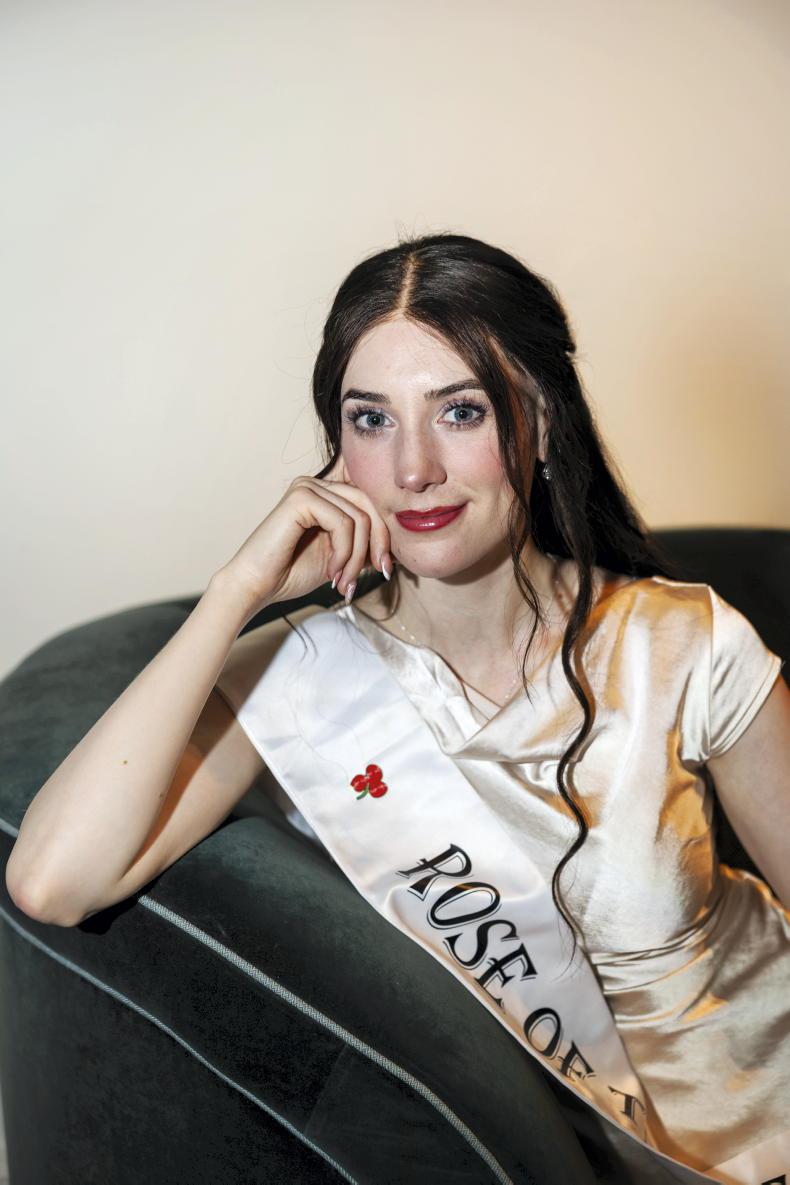
Before alopecia, she had dark ringlets and a haircare routine she followed carefully to maintain them, which only deepened the sense of betrayal when the hair loss began.
“That was hard because I didn’t know what alopecia was. I didn’t understand autoimmune conditions. No one really could tell me.”
What makes Caoilfhinn’s decision to get involved in the Rose of Tralee particularly striking is that until recently, she would have found it unthinkable to be seen without her wig.
“This time last year, I wouldn’t open the door to the postman without my wig. My friends hadn’t seen me without a wig.”
Over the past year, she began deliberately pushing herself out of that comfort zone. She removed her wig publicly at her Westmeath Rose selection night and, after that experience, decided she could do it again on the national stage.
By the time she walked out in Tralee, she says she was surprisingly calm.
“I wasn’t nervous at all, which I think people are surprised to hear because obviously it’s a big crowd, it’s national television.”
Instead, she was thinking about the ordinary practicalities of being onstage – where to stand, what she was going to say – and almost forgot about the television cameras.
When she removed her wig, “there was an eruption from the crowd”.
Rather than immediately putting it back on, Caoilfhinn made another spur of the moment decision.
“I was like, there’s no point putting it back on. They’ve seen me now.”
She had considered shaving her remaining hair beforehand, but deliberately chose not to.
If you decide to wear a wig, that’s fine. If you decide to wear a headscarf, fine. Go out and rock your bald head. It’s completely up to you what you do
“The reason I wanted to do this was to show the different types of alopecia and that there could be patchy hair loss, some of it quite severe. So, I was like, I’m going to keep my little patches.”
Caoilfhinn is candid about the effect hair loss can have on confidence and identity, particularly when it happens during adolescence.
“Femininity is always linked to having long, luscious hair,” she says. “So then you start to feel not like yourself.”
Even after years of living with the condition, acceptance does not necessarily mean never missing what she had.
“I still have moments where I’m like, I just wish I had my hair back. I miss tying it up in a ponytail.”
For a young person facing a diagnosis now, her advice is not to feel under pressure to immediately embrace it or respond in any particular way.
“It’s OK to have a bit of a journey with it. It’s OK to get upset. It’s OK to have your down days, but don’t let that keep you down.”
Whether somebody chooses a wig, a headscarf or to go out with their head uncovered is entirely personal, she says.
“If you decide to wear a wig, that’s fine. If you decide to wear a headscarf, fine. Go out and rock your bald head. It’s completely up to you what you do.”
Most importantly, she says, people should be allowed to acknowledge that losing their hair matters.
“You can say, ‘Oh, it’s just hair’ for a little bit, and it might get you over a hump. But deep down, it’s so much more than hair.”
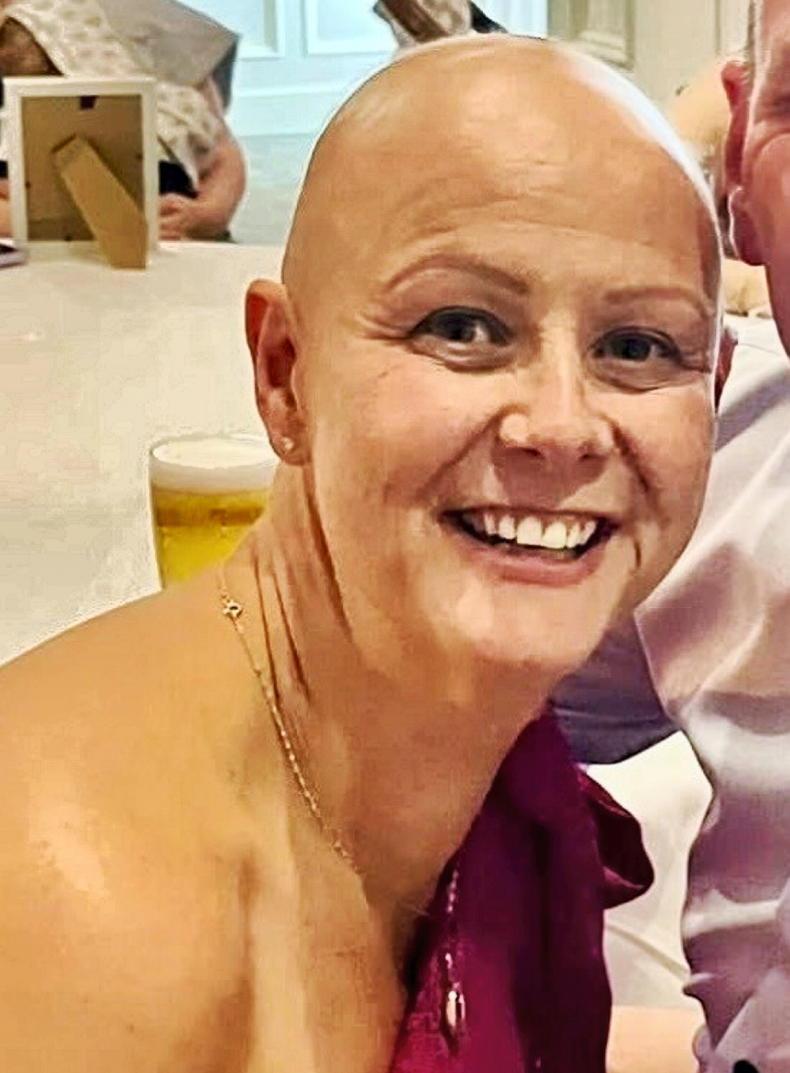
That description will be familiar to Bernadette McCarthy. Bernadette began losing her hair at 27 and later spent around a decade helping to facilitate meetings with Alopecia Ireland. She remembers a time when information was difficult to find and people often arrived at support meetings simply wanting to speak to somebody who understood.
Those early gatherings were modest and casual, with people meeting every couple of months to share their experiences.
“It started out as a support group where we were literally sitting on the mezzanine floor upstairs in the Red Cow Hotel in Dublin and people would just gather and share stories.”
The meetings grew and became a place where people from all over the country could swap practical information, contacts and, perhaps most importantly, talk openly.
Emotional impact
For Bernadette, the emotional impact of losing her hair felt remarkably like a bereavement.
“You nearly have to grieve the loss of the person you physically looked like three months ago and then come to terms with who you’re going to be.”
Acceptance did eventually come, but she is careful about what that means.
“You have to learn to live alongside it. There’s a point of acceptance.” Once she reached that point, she says, “the weight lifts”.
Alopecia affected decisions that people around her would probably never have considered.
Her daughter was 10 when the family moved into their first home together, but Bernadette felt unable to let her have friends over for sleepovers because she could not contemplate taking her wig off with other children in the house.
Over time, however, her daughter became so accustomed to her mother’s alopecia that, Bernadette says, “she was nearly my advocate then”.
Something both women echoed was: hair loss rarely affects only the person experiencing it.
Caoilfhinn says parents have contacted her describing their own helplessness when their child begins losing their hair: “They feel so hopeless and they feel like they’re letting their child down by not being able to do anything.”
Bernadette has heard the same thing for years through support groups.
“As a parent, we are all programmed to want to help our kids,” she says.
What has changed significantly since Bernadette first began losing her hair is public awareness. What she is less convinced about is the level of support available to people when it happens.
“There’s a hell of a lot more awareness,” she says, “but there’s still not enough support. We’re not experts. We’re just people that travelled the same path.”
Which is why, sitting at home watching this year’s Rose of Tralee, Bernadette immediately understood the significance of what Caoilfhinn had done.
Her own husband came home from work after a colleague, knowing Bernadette had alopecia, asked him whether he had seen the Westmeath Rose.
“It’s just the awareness that it raises,” she says. But it is younger viewers Bernadette thinks about most. She remembers how daunting it was the first time she was asked to remove her hairpiece during a television interview. Initially, her answer was an emphatic no. Eventually, she changed her mind and afterwards, she knew she had done the right thing.
She has some idea of what it took for Caoilfhinn to make that decision on one of the biggest television nights of the year.
“That took some guts to be able to do that on stage, on that platform.”
And somewhere watching, she hopes, was a girl approaching a new school year who saw Caoilfhinn Ni Choiligh and felt a little less alone.
- The average person sheds up to around 100 hairs a day as part of normal hair growth cycles – alopecia is distinct from this.
- Some people regrow their hair; for others it can progress or recur over many years. There is no single course the condition follows.
- Financial support: a Department of Social Protection grant of up to €500 a year is available towards a wig or hairpiece for those with sufficient PRSI contributions; a separate HSE Hairpiece Allowance (up to €770, generally requiring a medical card) is also available, with the full amount automatic for those in active cancer treatment.
- Support: Alopecia Ireland offers information and peer support for people affected by the condition and their families.




SHARING OPTIONS