A GP is probably your first (and ongoing) port of call if you require any sort of health services. But the difficulty is getting hold of one. Patients countrywide are waiting for appointments, and some rural areas are at risk of becoming GP blackspots as doctors retire and cannot find replacements.
The Irish College of GPs (ICGP) estimate that somewhere in the region of 4,600 GPs are actively working in the country. Dr Mike O’Callaghan, the clinical research lead with the ICGP and GP in Bruff, Co Limerick, explains that “About 460 of those GPs work in rural areas across Ireland. That means 10% of GPs are rural GPs,” he says, starkly.
Although the number of GPs being trained is increasing every year (with 350 new entrant GP training places made available in 2024 and 2025), GP numbers are falling in rural counties. A report published in June of this year by the Minister for Health, Jennifer Carroll McNeill, warns that areas in Mayo, east Clare and parts of Wexford and Westmeath, have a lower number of GPs on a regional population basis.
Dr O’Callaghan explains that a lack of GPs in remote and rural counties, particularly along Ireland’s western seaboard, is challenging because there is a higher population of older people relative to the general population. “Older people tend to live alone, experience more medical conditions, their care needs are higher and therefore there is greater demand for GPs,” he says.
Dr Jerry Cowley practised in Mulranny, Co Mayo for 43 years before retiring in 2024. Only one person applied to replace him, but never turned up for the interview. Now a locum service has taken it over and a doctor is employed by that service.
Dr Cowley dates the GP workforce shortage in rural Ireland as far back as post 2008, when payment cuts were imposed following the introduction of FEMPI measures [Financial Emergency Measures in Public Interests].
This saw the removal of ‘distance codes’, payments for GPs that enabled them to travel to treat patients at their home if they lived further away from the surgery. Dr Cowley tells Irish Country Living that the erosion of distance codes means young doctors continue to remain in the cities and towns because “there is no [financial] incentive to practice in rural Ireland anymore,” he explains.
“Older people want to be looked after locally. Younger people want to be looked after locally. Everybody wants to be looked after locally. But rural Ireland is losing its people. It’s losing its doctors.”
Dr Cowley says that younger GPs are not seeing a future for themselves in rural practice for various reasons. “The ‘elephant in the room’ is an inability to secure adequate time off due to a lack of locums, further compounding burnout and recruitment and retention difficulties in rural practices.
“As a result of this, and the ever-increasing workload of eligible patients, young doctors are voting with their feet, and rural populations continue to suffer, and our hospitals are bulging with patients on trolleys.
“The reality is people are going to out of hours [services] because doctors aren’t around.”
Locum doctors are what Dr Cowley calls a sticking plaster solution. According to Locum Express, a service provider that fills medical locum places in Ireland and the UK: “GPs in locum roles can earn between €100 to €150 per hour, with rural areas often offering higher rates due to increased demand.” The duration and experience of the locum period would also impact the cost.
“Temporary locums are the sticking plaster solution put in place by the HSE to fill rural practices that no one else will go to,” says Dr Cowley.
Instead of relying on locum doctors, the Rural Island and Dispensing Doctors of Ireland (RIDDI) – an organisation which Dr Cowley chairs – has proposed that a second doctor, fully funded by the HSE, be appointed to the single-handed practices in remote areas.
“The extra cost of a second doctor can be easily rationalised by the fact that a single HSE temporary locum is costing multiples of what it is now costing to support the original GP,” says Dr Cowley. The proposal has been adopted as Irish Medical Organisation (IMO) policy since 2023.
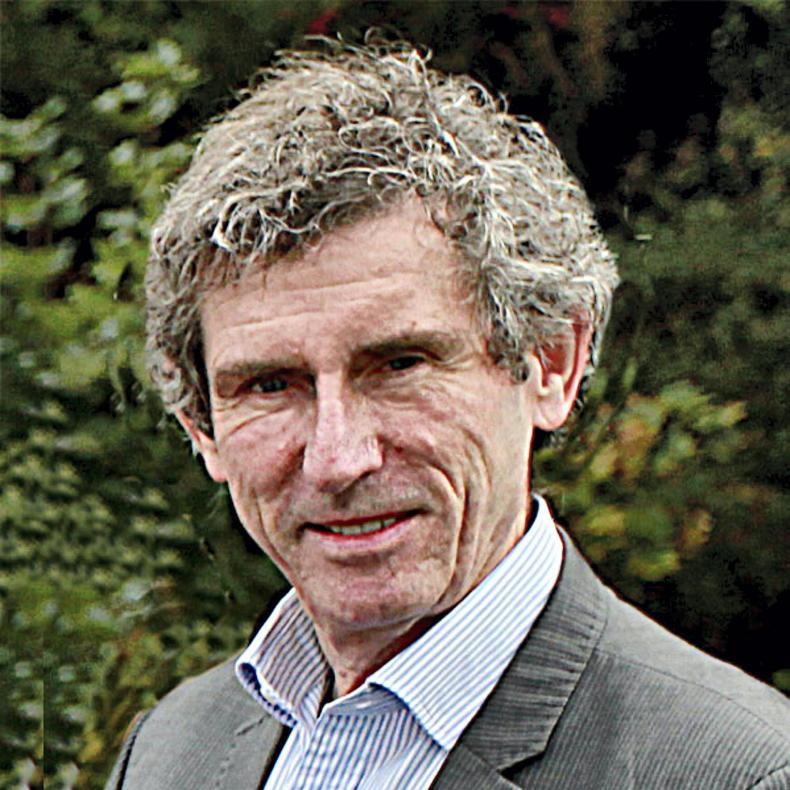
Dr Jerry Cowley practised in Mulranny, Co Mayo for 43 years before retiring in 2024.
Scope of work
Professor Tadhg Crowley says that a “perfect health storm” has contributed to a workforce shortage of GPs in Ireland. The biggest issues are recruitment and retention but another key problem is an ageing population is expected to increase the demand for GP services in the coming years.
Figures published in June by the Economic and Social Research Institute project estimate that the demand for GP consultations will increase by at least 23% by 2040. An additional 943 to 1,211 GPs will be required to meet this projected demand, which would equate to a headcount of between 4,871 and 5,139 GPs.
Professor Crowley, who is a GP in Kilkenny and also chair of the IMO GP Committee, explains that, while is difficult to attract new doctors into rural practices, retaining doctors is equally challenging. The nature of working as a GP has changed, Professor Crowley adds – and not in a way that appeals to young practitioners seeking a proper work/life balance.
“In terms of the workload that faces the GP, we do more in general practice than what we would have done 20 years ago. There are longer consultations, which reduces the amount of patients a doctor can see per day.”
The scope of work is expanding and more responsibilities are being shifted from hospitals to general practice, including delivery of mental health services and chronic disease management.
Younger GPs are no longer prepared to work the long hours required in rural practice. They also struggle to take their statutory leave.
“They don’t want to be in single-handed practices and left on their own every weekend. They want to be in a situation that they have collegiality, working in some sort of group practice,” adds Professor Crowley.
Another hurdle is the cost of setting up a GP practice. Younger doctors already facing college debt are reluctant to take on the expense of setting up in smaller communities.
“When I came out of med school 30 years ago, you could go ahead and set up a business as a GP. Setting up a general practice on your own has a huge cost implication now,” he says. “[For many], if you are going to set up, it’s going to be in an urban area,” says Professor Crowley.
Trends in ageing are not only concerning for the general population – with the 85-plus age group who experience the greatest needs for long-term care expected to treble in number over the next 20 years – but also for the GP population at large.
Dr Mike O’Callaghan of IGCP says that 11% of GPs nationally are over the age of 65. This percentage rises to 17% when it comes to rural GPs. “This means more GPs are closer to retirement age, while the general population continues to grow by 2% annually.
“Rural GPs are also twice as likely to work in solo practices.”
One measure which has been taken to expand the GP workforce in rural and difficult-to-fill areas across Ireland is to recruit GPs from abroad.
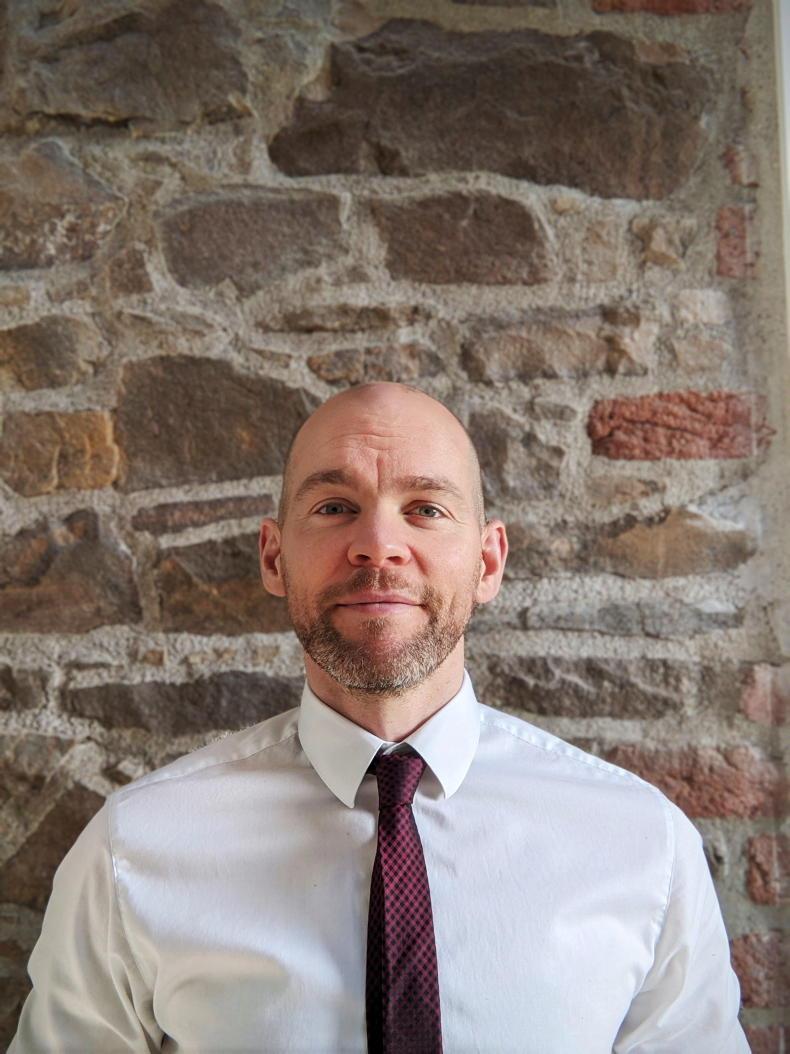
Dr Mike O’Callaghan from the ICGP.
For the past two years, the International Medical Graduate (IMG) Rural GP programme, which is supported by the Irish College of GPs and HSE, has brought significant change to rural areas.
The initiative, which commenced in 2023, enables doctors from abroad, including from countries like Sudan, Pakistan and America, to work as GPs in rural Ireland under a two-year training programme led by the college.
Dr Velma Harkins is a former GP from Banagher, Co Offaly, and is the clinical director of the Rural GP programme. She was instrumental in helping set it up, spurred on by concerns about who will service the rural population.
Dr Harkins says, as she approached retirement: “I was well aware of issues like, if I go, who is going to come after me? I had a younger partner in the practice, but he would have been left on his own. So it would have been very challenging.
“That’s why I started looking at the idea of bringing in experienced GPs from abroad to try and get them to work in rural areas.”
The HSE told Irish Country Living that: “As of the second quarter of this year, 152 candidates started the IMG Programme.” Some doctors who completed the programme have already taken up an Irish GMS contract [to provide services to medical card patients] in a rural area.
This includes the two doctors now working in Dr Harkin’s former practice.
“The numbers might sound small, but they are huge in impact,” explains Dr Harkins. “The impact in a small area means you can keep that general practice [open] and you are succession planning for it.
“It was a shot in the dark, but it’s up and running now, and the doctors who have come in are settling in, and it’s been a lifeline for these practices,” Dr Harkins goes on.
One huge bonus, she says, is that people are staying and settling in the area.
“We weren’t sure how it would be. There was no losing position because if somebody spent two years supporting
the practice, it was still a huge help, but the reality is that people are staying in the area.”
One reason for this, Dr Harkins explains, is because the doctors are older and moving to Ireland with their family.
“They’re moving to make a new life. Our experience is they’re buying houses, their kids are settled, they’re staying in the area, which is what we want,” she says.
One critique of the programme, however, is that the rural practice has to pay for the international medical graduate. This places a financial burden on the ‘host’ GP practice.
“There is no subsidy for the practice, which is challenging for somebody to have the funds to afford a full-time person with them.”
Further financial support is needed to incentivise more practices to train graduate GPs from abroad.
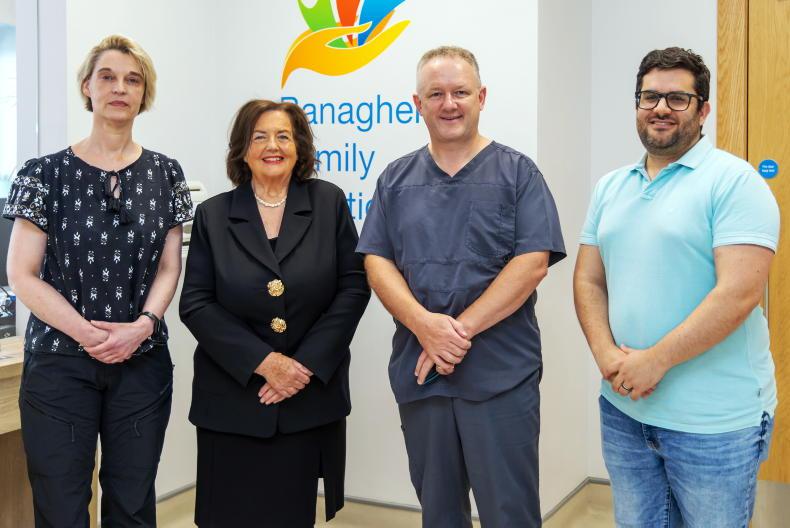
Dr Velma Harkins pictured with the principal GP at Banagher Family Practice, Dr Sahne Carroll. Also pictured are the two graduates from the programme Dr Anine Vermaak and Dr Michael
Steenkamp, both from South Africa. \ Paul Moore
- 460 GPs work in rural areas across Ireland. That’s 10% of GP population.
- Rural GPs are more likely to be older. 17% of rural GPs are over the age of 65 (compared to 11% nationally).
- Rural GPs are twice as likely to work in a solo practice than city-based GPs.
- The number of GPs being trained is increasing every year.
- The HSE told Irish Country Living that 350 new entrant GP training places were made available in 2024 and 2025. The total number of trainees undertaking the four-year programme will increase to 1,300 in 2026.
- The Department of Health is undertaking a review of GP services in Ireland, which is to be completed this year. It focuses on GP training and capacity.
The HSE told Irish Country Living that: “As of 30 July, there are 22 vacant GMS panels. Seven of these GMS vacancies are in urban areas, and 15 are in rural areas.”
A GP is probably your first (and ongoing) port of call if you require any sort of health services. But the difficulty is getting hold of one. Patients countrywide are waiting for appointments, and some rural areas are at risk of becoming GP blackspots as doctors retire and cannot find replacements.
The Irish College of GPs (ICGP) estimate that somewhere in the region of 4,600 GPs are actively working in the country. Dr Mike O’Callaghan, the clinical research lead with the ICGP and GP in Bruff, Co Limerick, explains that “About 460 of those GPs work in rural areas across Ireland. That means 10% of GPs are rural GPs,” he says, starkly.
Although the number of GPs being trained is increasing every year (with 350 new entrant GP training places made available in 2024 and 2025), GP numbers are falling in rural counties. A report published in June of this year by the Minister for Health, Jennifer Carroll McNeill, warns that areas in Mayo, east Clare and parts of Wexford and Westmeath, have a lower number of GPs on a regional population basis.
Dr O’Callaghan explains that a lack of GPs in remote and rural counties, particularly along Ireland’s western seaboard, is challenging because there is a higher population of older people relative to the general population. “Older people tend to live alone, experience more medical conditions, their care needs are higher and therefore there is greater demand for GPs,” he says.
Dr Jerry Cowley practised in Mulranny, Co Mayo for 43 years before retiring in 2024. Only one person applied to replace him, but never turned up for the interview. Now a locum service has taken it over and a doctor is employed by that service.
Dr Cowley dates the GP workforce shortage in rural Ireland as far back as post 2008, when payment cuts were imposed following the introduction of FEMPI measures [Financial Emergency Measures in Public Interests].
This saw the removal of ‘distance codes’, payments for GPs that enabled them to travel to treat patients at their home if they lived further away from the surgery. Dr Cowley tells Irish Country Living that the erosion of distance codes means young doctors continue to remain in the cities and towns because “there is no [financial] incentive to practice in rural Ireland anymore,” he explains.
“Older people want to be looked after locally. Younger people want to be looked after locally. Everybody wants to be looked after locally. But rural Ireland is losing its people. It’s losing its doctors.”
Dr Cowley says that younger GPs are not seeing a future for themselves in rural practice for various reasons. “The ‘elephant in the room’ is an inability to secure adequate time off due to a lack of locums, further compounding burnout and recruitment and retention difficulties in rural practices.
“As a result of this, and the ever-increasing workload of eligible patients, young doctors are voting with their feet, and rural populations continue to suffer, and our hospitals are bulging with patients on trolleys.
“The reality is people are going to out of hours [services] because doctors aren’t around.”
Locum doctors are what Dr Cowley calls a sticking plaster solution. According to Locum Express, a service provider that fills medical locum places in Ireland and the UK: “GPs in locum roles can earn between €100 to €150 per hour, with rural areas often offering higher rates due to increased demand.” The duration and experience of the locum period would also impact the cost.
“Temporary locums are the sticking plaster solution put in place by the HSE to fill rural practices that no one else will go to,” says Dr Cowley.
Instead of relying on locum doctors, the Rural Island and Dispensing Doctors of Ireland (RIDDI) – an organisation which Dr Cowley chairs – has proposed that a second doctor, fully funded by the HSE, be appointed to the single-handed practices in remote areas.
“The extra cost of a second doctor can be easily rationalised by the fact that a single HSE temporary locum is costing multiples of what it is now costing to support the original GP,” says Dr Cowley. The proposal has been adopted as Irish Medical Organisation (IMO) policy since 2023.

Dr Jerry Cowley practised in Mulranny, Co Mayo for 43 years before retiring in 2024.
Scope of work
Professor Tadhg Crowley says that a “perfect health storm” has contributed to a workforce shortage of GPs in Ireland. The biggest issues are recruitment and retention but another key problem is an ageing population is expected to increase the demand for GP services in the coming years.
Figures published in June by the Economic and Social Research Institute project estimate that the demand for GP consultations will increase by at least 23% by 2040. An additional 943 to 1,211 GPs will be required to meet this projected demand, which would equate to a headcount of between 4,871 and 5,139 GPs.
Professor Crowley, who is a GP in Kilkenny and also chair of the IMO GP Committee, explains that, while is difficult to attract new doctors into rural practices, retaining doctors is equally challenging. The nature of working as a GP has changed, Professor Crowley adds – and not in a way that appeals to young practitioners seeking a proper work/life balance.
“In terms of the workload that faces the GP, we do more in general practice than what we would have done 20 years ago. There are longer consultations, which reduces the amount of patients a doctor can see per day.”
The scope of work is expanding and more responsibilities are being shifted from hospitals to general practice, including delivery of mental health services and chronic disease management.
Younger GPs are no longer prepared to work the long hours required in rural practice. They also struggle to take their statutory leave.
“They don’t want to be in single-handed practices and left on their own every weekend. They want to be in a situation that they have collegiality, working in some sort of group practice,” adds Professor Crowley.
Another hurdle is the cost of setting up a GP practice. Younger doctors already facing college debt are reluctant to take on the expense of setting up in smaller communities.
“When I came out of med school 30 years ago, you could go ahead and set up a business as a GP. Setting up a general practice on your own has a huge cost implication now,” he says. “[For many], if you are going to set up, it’s going to be in an urban area,” says Professor Crowley.
Trends in ageing are not only concerning for the general population – with the 85-plus age group who experience the greatest needs for long-term care expected to treble in number over the next 20 years – but also for the GP population at large.
Dr Mike O’Callaghan of IGCP says that 11% of GPs nationally are over the age of 65. This percentage rises to 17% when it comes to rural GPs. “This means more GPs are closer to retirement age, while the general population continues to grow by 2% annually.
“Rural GPs are also twice as likely to work in solo practices.”
One measure which has been taken to expand the GP workforce in rural and difficult-to-fill areas across Ireland is to recruit GPs from abroad.

Dr Mike O’Callaghan from the ICGP.
For the past two years, the International Medical Graduate (IMG) Rural GP programme, which is supported by the Irish College of GPs and HSE, has brought significant change to rural areas.
The initiative, which commenced in 2023, enables doctors from abroad, including from countries like Sudan, Pakistan and America, to work as GPs in rural Ireland under a two-year training programme led by the college.
Dr Velma Harkins is a former GP from Banagher, Co Offaly, and is the clinical director of the Rural GP programme. She was instrumental in helping set it up, spurred on by concerns about who will service the rural population.
Dr Harkins says, as she approached retirement: “I was well aware of issues like, if I go, who is going to come after me? I had a younger partner in the practice, but he would have been left on his own. So it would have been very challenging.
“That’s why I started looking at the idea of bringing in experienced GPs from abroad to try and get them to work in rural areas.”
The HSE told Irish Country Living that: “As of the second quarter of this year, 152 candidates started the IMG Programme.” Some doctors who completed the programme have already taken up an Irish GMS contract [to provide services to medical card patients] in a rural area.
This includes the two doctors now working in Dr Harkin’s former practice.
“The numbers might sound small, but they are huge in impact,” explains Dr Harkins. “The impact in a small area means you can keep that general practice [open] and you are succession planning for it.
“It was a shot in the dark, but it’s up and running now, and the doctors who have come in are settling in, and it’s been a lifeline for these practices,” Dr Harkins goes on.
One huge bonus, she says, is that people are staying and settling in the area.
“We weren’t sure how it would be. There was no losing position because if somebody spent two years supporting
the practice, it was still a huge help, but the reality is that people are staying in the area.”
One reason for this, Dr Harkins explains, is because the doctors are older and moving to Ireland with their family.
“They’re moving to make a new life. Our experience is they’re buying houses, their kids are settled, they’re staying in the area, which is what we want,” she says.
One critique of the programme, however, is that the rural practice has to pay for the international medical graduate. This places a financial burden on the ‘host’ GP practice.
“There is no subsidy for the practice, which is challenging for somebody to have the funds to afford a full-time person with them.”
Further financial support is needed to incentivise more practices to train graduate GPs from abroad.

Dr Velma Harkins pictured with the principal GP at Banagher Family Practice, Dr Sahne Carroll. Also pictured are the two graduates from the programme Dr Anine Vermaak and Dr Michael
Steenkamp, both from South Africa. \ Paul Moore
- 460 GPs work in rural areas across Ireland. That’s 10% of GP population.
- Rural GPs are more likely to be older. 17% of rural GPs are over the age of 65 (compared to 11% nationally).
- Rural GPs are twice as likely to work in a solo practice than city-based GPs.
- The number of GPs being trained is increasing every year.
- The HSE told Irish Country Living that 350 new entrant GP training places were made available in 2024 and 2025. The total number of trainees undertaking the four-year programme will increase to 1,300 in 2026.
- The Department of Health is undertaking a review of GP services in Ireland, which is to be completed this year. It focuses on GP training and capacity.
The HSE told Irish Country Living that: “As of 30 July, there are 22 vacant GMS panels. Seven of these GMS vacancies are in urban areas, and 15 are in rural areas.”
SHARING OPTIONS