


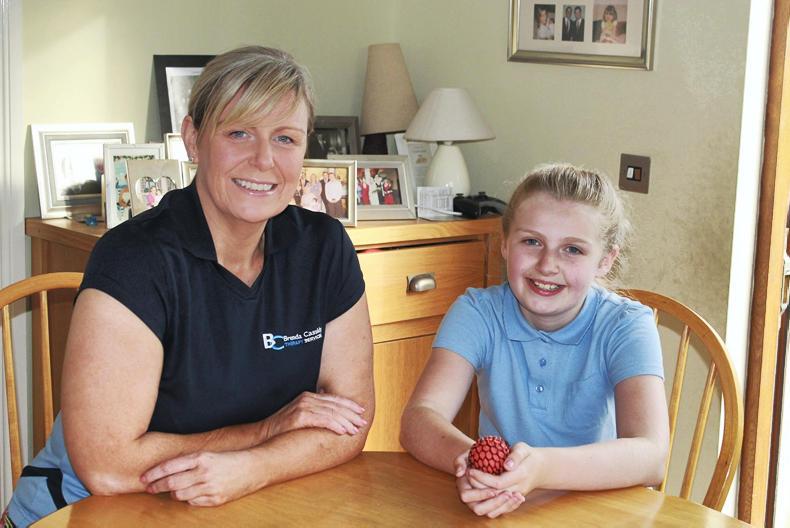
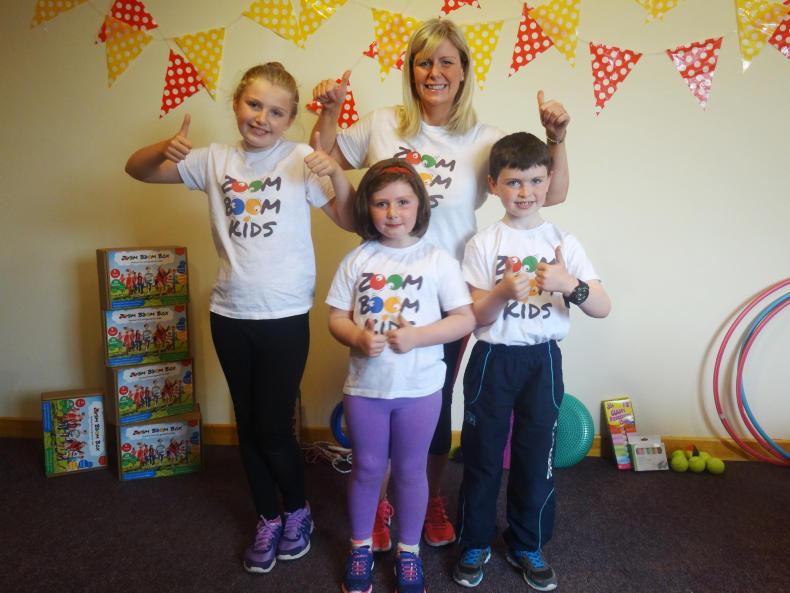
Brenda Cassidy is on a mission. She wants to improve PE classes in primary schools one school at a time.
She believes a good PE class is vital in having healthy children –and in helping the many children in Ireland who have dyspraxia.
She has seen the benefits with her own daughter, Carla (10), who has this developmental delay or sensory processing disorder.
Dyspraxia can lead to a child having messy handwriting, being disorganised, forgetful and having poor concentration.
It is often called the hidden disability because it’s not immediately obvious when you look at a child, she says.
“One of the biggest things with kids with dyspraxia is that they will avoid PE like the plague because they can’t catch the ball. They dislike PE the most but they’re the ones who need it most,” she says.
“They need to improve their balance, their leg, arm and core strength and co-ordination and overall cardio fitness. Doing that will rehab them to be as functional as possible in school and life.”
Designer of the PE on a plate programme, Brenda has delivered the PE training programme in schools around the country.
All the “mad fun and games” were tried out on her own children at home first, with her daughter Carla,getting particular value from them.
WHY DYSPRAXIA IS MORE COMMON NOW
In the past, dyspraxia wasn’t as prevalent because children were more active, she believes.
“There was more rough-and-tumble play then – climbing trees, crossing ditches, cycling miles – that doesn’t happen as much now as children are less active and inside more.
“Even in schools, running is discouraged because of the fear of lawsuits. 50% less children walk or cycle to school than they did back in my day, too. There was the odd clumsy child when I was going to school but it (the dyspraxia) was nearly therapied out of them by the fact that they were more active – cycling, running, helping on the farm and so on. Symptoms were reduced through the very nature of play back then. Now children are sitting more and moving less so they’re not at such an advantage.”
Brenda Cassidy reckons that there are five or six children in every class who have “something going on”.
“It might be autism, it might be dyspraxia, it might be dyslexia or a mish mash of several of these.”
Her goal since last January has been to give teachers the tools to understand what dyspraxia is.
“What I discovered was that many teachers didn’t know how to run a good PE class, never mind run one where you’d incorporate those with ‘something going on’, she says.
“What I’ve concentrated on is designing a good PE programme that is inclusive for all children – fit/overweight or with development delays – in order to make a difference to how children sit and write and concentrate.”
She has recently published an ebook, Funpraxia, for parents whose children may be on a waiting list after assessment by the HSE.
“After assessment, children can sit on a list for two to three years for therapy. That is horrendous for parents,” she says.
“Some people can’t afford private occupational therapy so the problem can get worse in that time. Having tried out the exercises on my own daughter, rehabbing her, so to speak, I can see the benefit of doing them from an early stage.”
What causes dyspraxia?
The jury is out on this, it seems, but hereditary factors, traumatic birth, and foetal alcohol syndrome can play a part.
“From travelling round the country, I would see the genetic aspect playing a big part. A cousin or auntie or granny could have had some form of autism so there is something going on in the bloodline.”
FARMING CHILDREN STRONGER
In research that Brenda did in conjunction with Trinity College, trialling the PE on a plate programme in a school in west Cavan, she found farm children to have better core strength than others.
“We tested 55 kids for strength and then trained their teacher to run the zoom boom programme. Two months later, these children’s balance, core strength and coordination had dramatically improved.
“Farming kids had better core and arm strength, I noticed, to start with, while the majority of children had very weak core strength.
“This results in them not being able to concentrate, having weak arms and hands, therefore, means less endurance for handwriting. These are all skills they need in order to function in school.”
Brenda has been teaching this exercise programme since 2013. However, this year there has been a huge increase in demand from parents of dyspraxic children to get the programme running in their local schools.
“They are looking for some down-to-earth advice and reassurance. Often, they see their children struggling with team sports and getting teased or maybe bullied by other kids because of the dyspraxia.”
DYSPRAXIA DOESN’T MEAN A
PROBLEM WITH INTELLIGENCE
Brenda lists several successful people who have dyspraxia – Daniel Radcliffe, who played Harry Potter, Richard Branson, has both dyslexia and dyspraxia (40% of dyspraxics have dyslexia as well).
“Children with Dyspraxia/DCD can be of average or above average intelligence but are often behaviourally immature.
“They try hard to fit in to socially accepted behaviour when at school but often throw tantrums when at home. They may find it difficult to understand logic and reason also,” she says.
Not all children with Dyspraxia/DCD have all these problems, however.
“Many parents will say that their children have some of these problems, but if your child has dyspraxia, either diagnosed or not, you may have observed a cluster of these difficulties. There is no cure for dyspraxia/DCD, but the earlier a child is treated, the greater the chance of improvement will be.
“A lot of the skills that we take for granted will never become automatic for children with dyspraxia/DCD, so they will have to be taught these skills.
“Occupational therapists, physiotherapists, and extra help at school can all assist these children with coping or overcoming many of the difficulties they face.”


SHARING OPTIONS