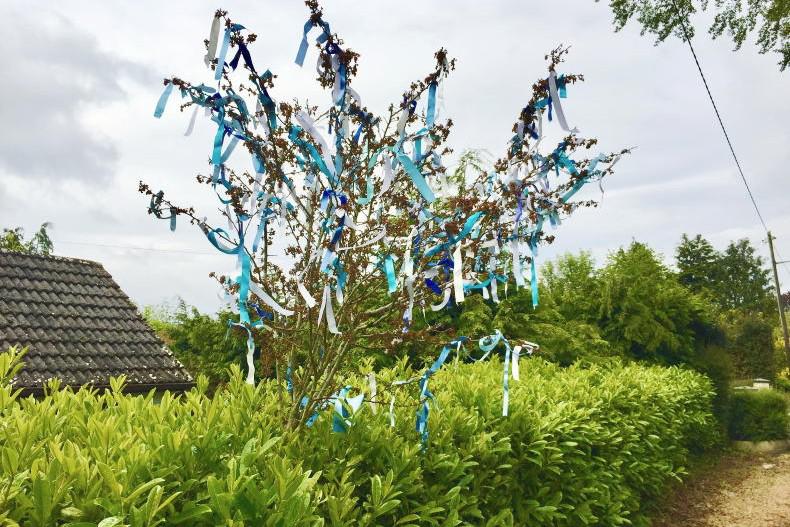
It was in the first week of May 2019, while en route to explore the wonderful avenue of Monkey Puzzle trees in Woodstock, Inistioge, Co Kilkenny, that I pulled the car to an abrupt halt.
There, at the side of the road, perched on top of a low laurel hedge in front of a house was a magnificent living exemplar of a wonderful folk tradition: a vividly decorated May bush. I am certain that there are yet many more contemporary May bushes adorning the Irish countryside, but this first sighting was memorable for me.
According to the great folklorist Kevin Danaher, the May bush custom was centred on counties Wexford, Kilkenny, Offaly, Meath, Westmeath and Cavan, perhaps as these were areas of strong Anglo-Norman influence. Apart from its defined distribution, the setting up and associated rituals of the May bush speak of an elaborate set of traditions.
The first task was to acquire the bush itself and the favourite was the Sceach Gheal, the Hawthorn, whose white blossom was in full bloom in May.
A father or consenting older brother would cut the white sceach from the root on May Eve and present it to the children to decorate it. The white May blossom was never brought into the house as when inside it would bring bad luck.
The distinctive smell of the blossom is strongly linked with the smell of death. Furze bushes or anything that was green or even a number of bare branches of any tree, fixed together, might also have made up the bush.
It was in the decoration that it took on its sense of the extraordinary. Chief amongst its décor were eggs, especially those coloured and decorated at Easter. The eggs were easily fixed on to the sharp thorns of the hawthorn. Next came the posies of yellow flowers that are in bloom at this time of the year.
The children went about collecting primroses, cowslips, buttercups and furze blossom and tying them in bunches or as they were called ‘knots’. The well-known children’s rhyme ‘Here we go gathering nuts in May, on a cold and frosty morning’ was originally ‘gathering ‘knots’ in May’.
The knots of flowers were tied with ribbons and fixed to the bush. Extra ribbons of all colours along with slivers of coloured and silver paper were tied to the branches.
The distinctive smell of the blossom is strongly linked with the smell of death. Furze bushes or anything that was green or even a number of bare branches of any tree, fixed together, might also have made up the bush
To top it all, a half dozen penny candles were cut in two, fixed into a few scooped-out small turnips and hung on the bush. The result was a veritable spectacle: one can only see it as an earlier Irish version of the Christmas tree.
May morning
The May bush was placed at the gate or on the ditch opposite the main door of the house. Another might be placed on the manure heap just outside the door of the creamery where the butter used to be made. Most schools had their own May bush. At home, children would leave a little moneybox at its base, and the parents would put money in it supposedly from the fairies.
Sometimes little toys or trinkets were left at the May bush to the delight of the children on May morning. Some fixed a rope around the May bush, securing it to a gate or the wheel of a butt to prevent it being stolen, as this was the great sport of young lads on May Eve.
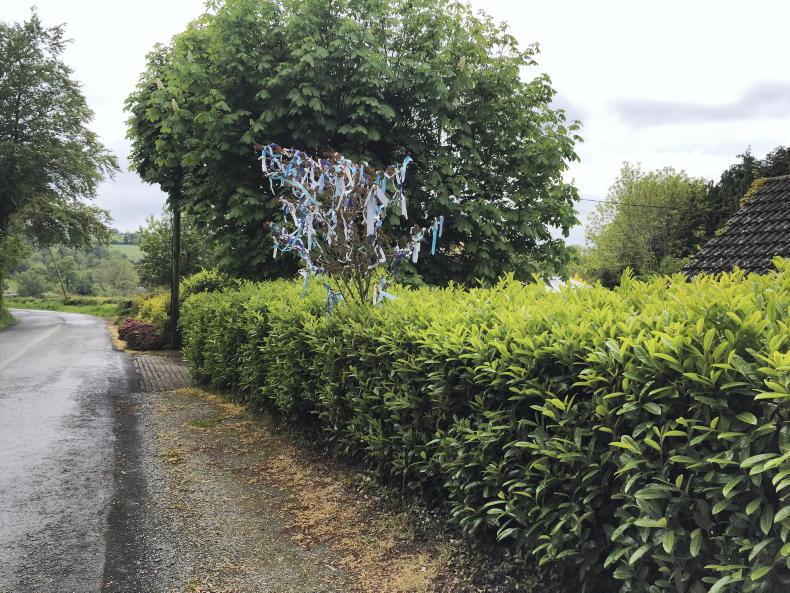
May bush.
Many felt that if their May bush was stolen, their luck for the year went with it. In many areas the May bush tradition was centred around a young girl who would have been crowned as the queen. Her selection was made by placing a number of seeds in a matchbox and whichever girl guessed the correct amount, she was given the honour.
The queen and the May bush were paraded through the village with the chant ‘a penny for our May Bush, happy wife, happy life, a penny for our May bush!’ There followed a little party of tea and cake along with the singing of May hymns, songs and dancing around a fire.
The lighting of fires and bonfires to welcome in the summer and ward off evil was a long held ancient custom on 1 May.
Many held that it was important to burn the May bush either by setting it on fire or placing it on the large bonfire. The sound of the eggshells bursting was like fireworks of today, a spectacle to welcome in the summer warmth.
Shane Lehane is a folklorist and works in UCC and Cork College of FET, Tramore Road Campus. He is contactable on
slehane@ucc.ie
It was in the first week of May 2019, while en route to explore the wonderful avenue of Monkey Puzzle trees in Woodstock, Inistioge, Co Kilkenny, that I pulled the car to an abrupt halt.
There, at the side of the road, perched on top of a low laurel hedge in front of a house was a magnificent living exemplar of a wonderful folk tradition: a vividly decorated May bush. I am certain that there are yet many more contemporary May bushes adorning the Irish countryside, but this first sighting was memorable for me.
According to the great folklorist Kevin Danaher, the May bush custom was centred on counties Wexford, Kilkenny, Offaly, Meath, Westmeath and Cavan, perhaps as these were areas of strong Anglo-Norman influence. Apart from its defined distribution, the setting up and associated rituals of the May bush speak of an elaborate set of traditions.
The first task was to acquire the bush itself and the favourite was the Sceach Gheal, the Hawthorn, whose white blossom was in full bloom in May.
A father or consenting older brother would cut the white sceach from the root on May Eve and present it to the children to decorate it. The white May blossom was never brought into the house as when inside it would bring bad luck.
The distinctive smell of the blossom is strongly linked with the smell of death. Furze bushes or anything that was green or even a number of bare branches of any tree, fixed together, might also have made up the bush.
It was in the decoration that it took on its sense of the extraordinary. Chief amongst its décor were eggs, especially those coloured and decorated at Easter. The eggs were easily fixed on to the sharp thorns of the hawthorn. Next came the posies of yellow flowers that are in bloom at this time of the year.
The children went about collecting primroses, cowslips, buttercups and furze blossom and tying them in bunches or as they were called ‘knots’. The well-known children’s rhyme ‘Here we go gathering nuts in May, on a cold and frosty morning’ was originally ‘gathering ‘knots’ in May’.
The knots of flowers were tied with ribbons and fixed to the bush. Extra ribbons of all colours along with slivers of coloured and silver paper were tied to the branches.
The distinctive smell of the blossom is strongly linked with the smell of death. Furze bushes or anything that was green or even a number of bare branches of any tree, fixed together, might also have made up the bush
To top it all, a half dozen penny candles were cut in two, fixed into a few scooped-out small turnips and hung on the bush. The result was a veritable spectacle: one can only see it as an earlier Irish version of the Christmas tree.
May morning
The May bush was placed at the gate or on the ditch opposite the main door of the house. Another might be placed on the manure heap just outside the door of the creamery where the butter used to be made. Most schools had their own May bush. At home, children would leave a little moneybox at its base, and the parents would put money in it supposedly from the fairies.
Sometimes little toys or trinkets were left at the May bush to the delight of the children on May morning. Some fixed a rope around the May bush, securing it to a gate or the wheel of a butt to prevent it being stolen, as this was the great sport of young lads on May Eve.

May bush.
Many felt that if their May bush was stolen, their luck for the year went with it. In many areas the May bush tradition was centred around a young girl who would have been crowned as the queen. Her selection was made by placing a number of seeds in a matchbox and whichever girl guessed the correct amount, she was given the honour.
The queen and the May bush were paraded through the village with the chant ‘a penny for our May Bush, happy wife, happy life, a penny for our May bush!’ There followed a little party of tea and cake along with the singing of May hymns, songs and dancing around a fire.
The lighting of fires and bonfires to welcome in the summer and ward off evil was a long held ancient custom on 1 May.
Many held that it was important to burn the May bush either by setting it on fire or placing it on the large bonfire. The sound of the eggshells bursting was like fireworks of today, a spectacle to welcome in the summer warmth.
Shane Lehane is a folklorist and works in UCC and Cork College of FET, Tramore Road Campus. He is contactable on
slehane@ucc.ie
SHARING OPTIONS