I am lucky to be blessed with a small apiary where I keep a few hives of honeybees. The wooden hives are perched on a little hillock, a short walk from my house.
When the wild winter storms are blowing and the frozen black ice covers the ground, I can’t but worry about my little bees in each hive, tightly clustered together, doing their best to vibrate their bodies to keep themselves warm and survive the cold months.
Like all of us, their reemergence from their hibernation falls naturally in and around St Brigid’s Day. This bee reinvigoration comes as a result of the improving light and availability of pollen as crocuses, snowdrops and dandelions break ground.
The timeliness of this reawakening corresponds with the feast days of a defined pantheon of Irish saints; each intimately connected with the first introduction, or the early keeping of bees in Ireland. Regardless of the fact that bees were already well established here before the arrival of Christianity in the 5th century, the new influence would have brought different apicultural approaches and methods.
The shift from a reliance on honey sourced in the wilds of the woodlands to keeping bees in wooden or wicker hives in a controlled monastic setting, came with new demands.
The church would have looked to the bees, not so much for honey, more so, perhaps, for beeswax for its sacred candles that would burn with a pure, smokeless, bright flame. Equally, the beeswax was the key component of the pólaire ‘wax writing tablets’ central to the new literacy and learning.
Introducing bees to Ireland
The saint accredited with introducing bees to Ireland was St Modomnóc of Tibberaghney, Co Kilkenny. The early 9th century text Félire Óengusso marking his feast day as 13 February, notes: “In a little boat from the east, over the pure-coloured sea, Mo Domnóc brought -– vigorous cry! – the gifted race of Ireland’s bees.”
St Modomnóc, outspoken and cantankerous in his youth went to St David in Wales and learned to achieve peace by tending to the bees there.
In his old age, he decided to return to Ireland, but when he went to leave, his beloved bees swarmed and followed him. They settled on the mast of his boat and even though he returned them to the apiary, they followed him on three occasions, swarming as a black cloud over him as he sat on the prow of his boat. Eventually St David took this as a sign, and with his blessing he gifted the bees to Modomnóc who took them inside his bell, leaving the Welsh church bereft of its stock of bees.
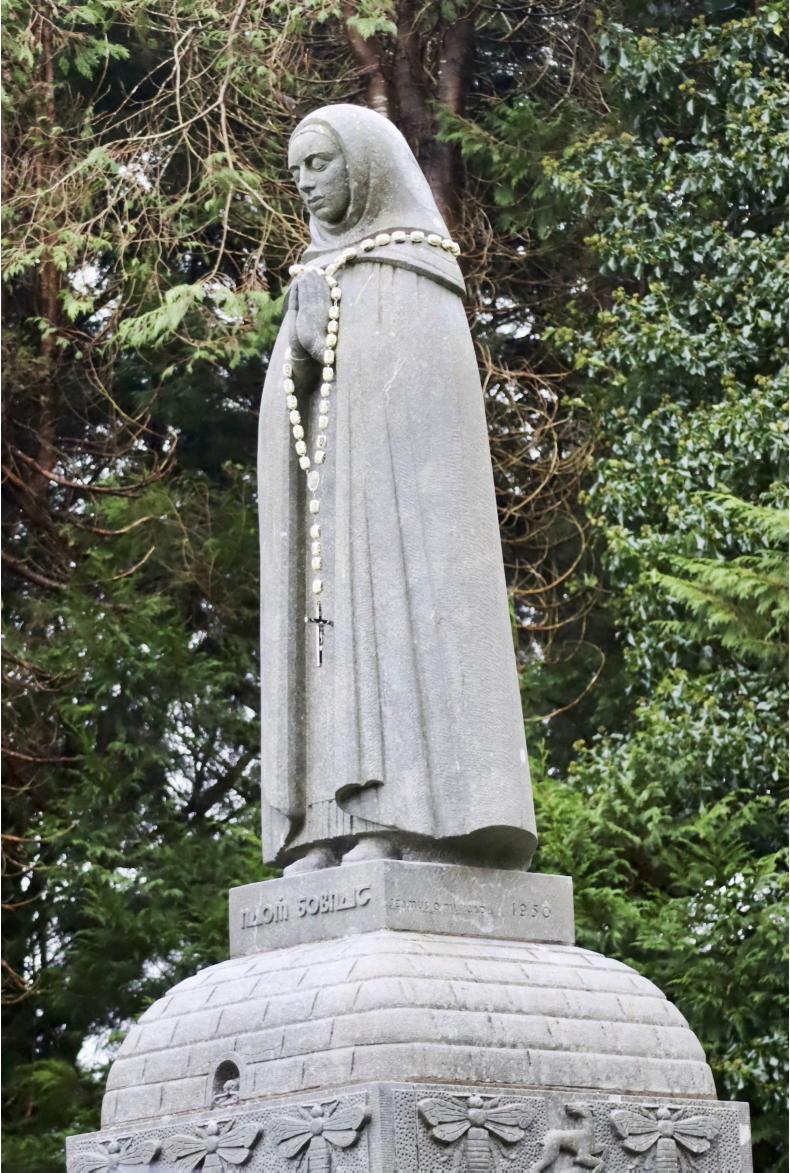
Seamus Murphy's 1950 statue of St Gobnait, standing on her beehive in Baile Bhúirne, Co Cork
Many of the hagiographies, the lives of the saints, intertwine in different ways. Such amalgamation is clear in the claim that it was St Molaga from Fermoy, Co Cork who is to be accredited with being given the gift of bees when he too spent time with St David in Wales. When Molaga landed back in Dublin, his first miracle was to cure a growth on the king’s cheek and as a reward he founded a church at Breemount near Balbriggan, Co Dublin.
The church is known as Lann Beachaire ‘The church of the beekeeper’. It is possible that the sore lump on the king’s cheek might have been the result of a bee sting. On that occasion we are told that Molaga, with his experience of beekeeping, was on hand to calm and manage the bees originally brought there by St Modomnóc.
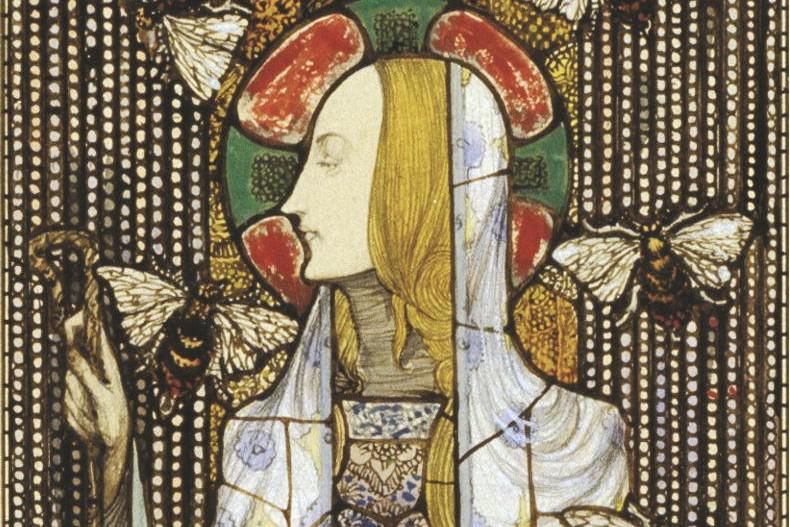
Whatever about the attribution of the introduction of bees by the male saints, the strongest association we have with bees rests firmly with St Gobnait.
Originally from Co Clare, she founded her first church on Inis Oírr before she was told by an angel to discover a special place characterised by nine snow white deer grazing.
After a walkabout through Munster, encountering different numbers of white deer, she finally settled in the tranquil, wooded glades of Ballyvourney, Co Cork. There is no written medieval life of Gobnait but a long-invested oral tradition has preserved and contributed to a vibrant legend of the female beekeeping saint.
Amongst the many accounts, we learn that Gobnait called on her bees to defend the native O’Herlihy family whose cattle had been stolen by the O’Donoghues from over the hill. She quickly remedied the situation by throwing her straw bee skep in their direction and the bees swarmed out and stung the raiders.
Gobnait’s feast day is 11 February, Modomnóc is celebrated on the 13 February, with Molaga venerated a little earlier on 20 January. There is a great affection for Ireland’s prime beekeeping saints and their feast days are fixed in the calendar when the bees reawaken from their winter of hibernation.
I am lucky to be blessed with a small apiary where I keep a few hives of honeybees. The wooden hives are perched on a little hillock, a short walk from my house.
When the wild winter storms are blowing and the frozen black ice covers the ground, I can’t but worry about my little bees in each hive, tightly clustered together, doing their best to vibrate their bodies to keep themselves warm and survive the cold months.
Like all of us, their reemergence from their hibernation falls naturally in and around St Brigid’s Day. This bee reinvigoration comes as a result of the improving light and availability of pollen as crocuses, snowdrops and dandelions break ground.
The timeliness of this reawakening corresponds with the feast days of a defined pantheon of Irish saints; each intimately connected with the first introduction, or the early keeping of bees in Ireland. Regardless of the fact that bees were already well established here before the arrival of Christianity in the 5th century, the new influence would have brought different apicultural approaches and methods.
The shift from a reliance on honey sourced in the wilds of the woodlands to keeping bees in wooden or wicker hives in a controlled monastic setting, came with new demands.
The church would have looked to the bees, not so much for honey, more so, perhaps, for beeswax for its sacred candles that would burn with a pure, smokeless, bright flame. Equally, the beeswax was the key component of the pólaire ‘wax writing tablets’ central to the new literacy and learning.
Introducing bees to Ireland
The saint accredited with introducing bees to Ireland was St Modomnóc of Tibberaghney, Co Kilkenny. The early 9th century text Félire Óengusso marking his feast day as 13 February, notes: “In a little boat from the east, over the pure-coloured sea, Mo Domnóc brought -– vigorous cry! – the gifted race of Ireland’s bees.”
St Modomnóc, outspoken and cantankerous in his youth went to St David in Wales and learned to achieve peace by tending to the bees there.
In his old age, he decided to return to Ireland, but when he went to leave, his beloved bees swarmed and followed him. They settled on the mast of his boat and even though he returned them to the apiary, they followed him on three occasions, swarming as a black cloud over him as he sat on the prow of his boat. Eventually St David took this as a sign, and with his blessing he gifted the bees to Modomnóc who took them inside his bell, leaving the Welsh church bereft of its stock of bees.

Seamus Murphy's 1950 statue of St Gobnait, standing on her beehive in Baile Bhúirne, Co Cork
Many of the hagiographies, the lives of the saints, intertwine in different ways. Such amalgamation is clear in the claim that it was St Molaga from Fermoy, Co Cork who is to be accredited with being given the gift of bees when he too spent time with St David in Wales. When Molaga landed back in Dublin, his first miracle was to cure a growth on the king’s cheek and as a reward he founded a church at Breemount near Balbriggan, Co Dublin.
The church is known as Lann Beachaire ‘The church of the beekeeper’. It is possible that the sore lump on the king’s cheek might have been the result of a bee sting. On that occasion we are told that Molaga, with his experience of beekeeping, was on hand to calm and manage the bees originally brought there by St Modomnóc.
Whatever about the attribution of the introduction of bees by the male saints, the strongest association we have with bees rests firmly with St Gobnait.
Originally from Co Clare, she founded her first church on Inis Oírr before she was told by an angel to discover a special place characterised by nine snow white deer grazing.
After a walkabout through Munster, encountering different numbers of white deer, she finally settled in the tranquil, wooded glades of Ballyvourney, Co Cork. There is no written medieval life of Gobnait but a long-invested oral tradition has preserved and contributed to a vibrant legend of the female beekeeping saint.
Amongst the many accounts, we learn that Gobnait called on her bees to defend the native O’Herlihy family whose cattle had been stolen by the O’Donoghues from over the hill. She quickly remedied the situation by throwing her straw bee skep in their direction and the bees swarmed out and stung the raiders.
Gobnait’s feast day is 11 February, Modomnóc is celebrated on the 13 February, with Molaga venerated a little earlier on 20 January. There is a great affection for Ireland’s prime beekeeping saints and their feast days are fixed in the calendar when the bees reawaken from their winter of hibernation.
SHARING OPTIONS