



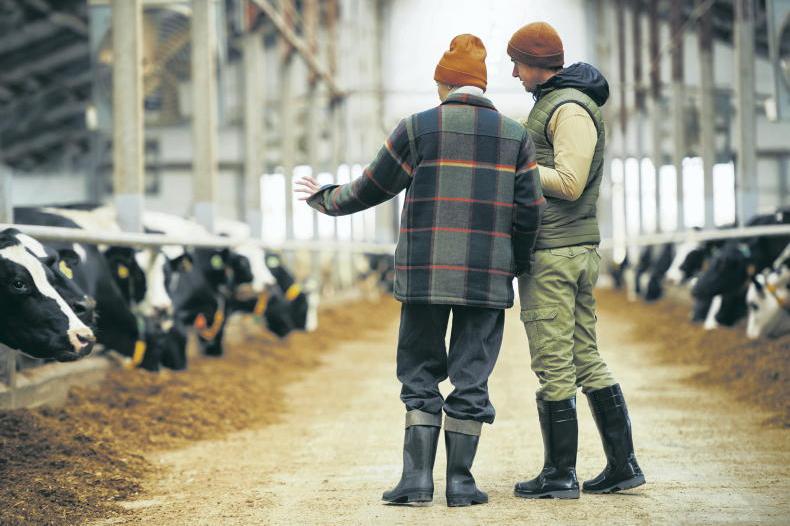
Question: I have recently inherited a farm from my father and I am farming it part-time. I am married, with two young children. I have no will at present, and do not know how to go about preparing one, given that my children are so young. Have you any advice for me?
Answer: At the outset, it is important to highlight the unfavourable situation which may arise if you do not make a will. If you leave a spouse and children surviving, your spouse inherits two-thirds of all your assets and one-third goes to your children equally. They cannot disclaim as they are minors.
If you have children but no spouse, your entire estate will automatically be divided up amongst all your children. This may create legal and tax complications down the line, if all the children cannot agree on how the land is to be farmed as each would have an equal share in the ownership of the farm.
Where do I start?
You could provide that all your assets will pass to your surviving spouse but if your spouse predeceases you, that the assets are to be left in trust until the youngest reaches a certain age. A discretionary trust is especially useful where children are young and time is needed to see if any of the children might be interested in farming.
You need not choose now who is to inherit the farm, rather list out potential people who might inherit and it is left up to the trustees to decide which child gets what once the children reach a certain age. This may mean that some children will receive more than others – that is up to the trustees to decide and often depends on what interests the children develop as they mature, for example, pursuing a farming career. If the children are likely to stay with a relative, the will trust document may also give the power to the trustee to advance money from the farm to the guardians of the children, to cover the costs of providing for the children.
Guardians and trustees
If you have children under 18 years of age, your will should give directions for the care of those children and how they are to be provided for. A guardian is the person you select to take over your role as parent in rearing your children until they are 18 years of age. People often choose a brother or sister (and their spouse/partner) to fulfil this role. The trustee will be responsible for looking after the assets of your estate and as they may have significant discretion and power under a Discretionary Trust as to how to deal with the farm and how the farm assets will ultimately be divided up, so it is important to choose wisely. An executor is the person responsible for carrying into effect the terms of your will. The same person/people can be appointed as guardians, trustees and executors under the will and it is recommended to appoint at least two people.
Discretionary trust
A discretionary trust works so that the assets are held by the trustees for the benefit of the persons who are ultimately intended to own the assets. The trustees themselves have no right to any of the assets, but have a general power, subject to whatever rules are written into the trust to give the assets to the children as and when and in whatever amounts the trustees see fit.
It is important to note that none of the children would have an absolute right to any part of the trust fund, the only interest the children would have is the right to be considered favourably for an appointment of property from the trust fund.
Incorporating your wishes
While it is up to the trustees to decide who gets what, you can have your views known in two separate ways as follows:
1. Letter of wishes: this is not legally binding but is intended to guide the trustees on how you would like the assets to be ultimately split.
2. Write legally binding rules into the trust document: such rules should include a date by which the assets must be paid out of the trust and the trust shut down, otherwise there is a danger that the trustees could keep power over the assets indefinitely.
It is important that these rules are not so specific to make the trust inflexible.
As you can see, it is relatively easy to put a will in place so I would encourage you to do so to avoid unnecessary risk for the next generation.
Disclaimer: The information in this article is intended as a general guide only. While every care is taken to ensure accuracy of information contained in this article, Aisling Meehan, Agricultural Solicitors & Tax Consultants does not accept responsibility for errors or omissions howsoever arising. Email ameehan@farmersjournal.ie




SHARING OPTIONS