Pat O’Brien is the third generation of his family to farm the family farm just outside Headford, Co Galway. Over the years his grandfather and father purchased land and grew the farm to the 57ha of owned land farmed today.
In 2014, Pat took over the farm full-time, having previously worked the land while also operating a busy contracting business. With increased demand on labour, and only so many hours in the day, Pat decided to focus fully on the farm and reduce the amount of contract work he was taking on. At peak production, Pat’s father Paddy ran up to 600 ewes on the farm, finishing all lambs and also operating a dairy calf to beef system. At that time, Pat and his brothers were actively helping feed calves and looking after the sheep flock in spring. So as the supply of labour changed on the farm, so too did the farming system.
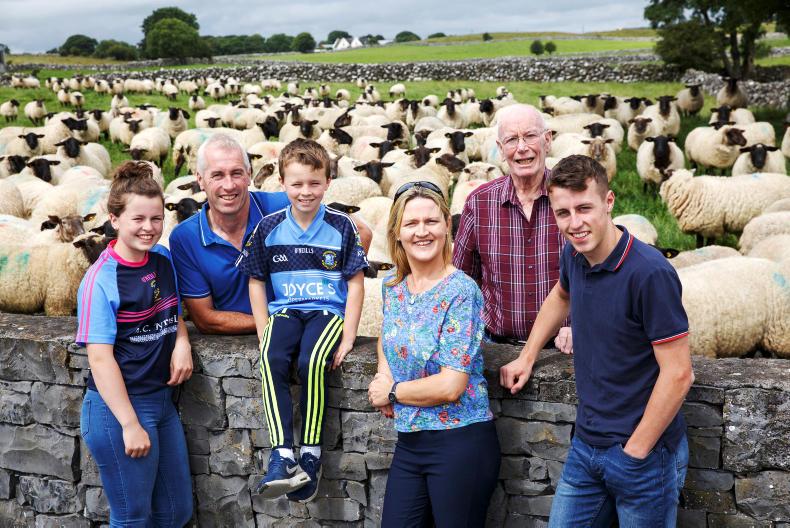
Pat O' Brien with his wife Michelle, children Michael, Ciara and Shane, and father Paddy. \ Donal O' LearyPat O' Brien with his wife Michelle, children Michael, Ciara and Shane, and father Paddy. \ Donal O' Leary
Paddy, who is now in his 80s, was a great help down through the years. At times when Pat was away from the farm with contracting work, Paddy was able to keep a close eye on things, especially in the spring, when ewes were lambing and cows were calving. As age catches up on us all, Paddy is not as fit as he was, and when unpredictable suckler cows and a stock bull are in the mix, and safety is becoming more of an issue for him, this means that he can’t do all the jobs that he used to do on the farm. However, as one generation is scaling back on workload, the next generation, Pat’s children Michael, Ciara and Shane, are becoming more involved in helping on the farm. During the summer holidays they help Pat on a daily basis, while Pat’s wife, Michelle is the backbone of the paper work and the financial planning end of the business
Mixed grazing a clear winner
The farm is currently carrying approximately 316 ewes and about 55 suckler cows. Coming from a background of intensive farming, Pat continues to push the boundaries of what output can be achieved from the farm. The mixed grazing of cattle and sheep occurred organically over the years, it was always something that happened on the farm. “The farm was always well set up for sheep; the fields may be small but the stone walls mean that sheep fencing is not an issue. The walls have to be ran on each year and fallen stones placed back on top, but they are ideal for a sheep enterprise.”
The farm itself, like most west of Ireland farms, was expanded through the years by purchasing two outfarms. As a result, it is quite fragmented, which leaves the management a little more difficult.
Sheep boost sward quality
During the spring months, the ewes and lambs get preference when it to comes to grass on the farm. From January up to lambing sheep are housed and grass is allowed to accumulate across the farm. Once lambed, the ewes and lambs are let out to grass. For that reason, the cows and calves will not go to grass on the farm until April. While having cows housed in March on a dry limestone farm may seem slightly counter-productive, there are clear benefits in terms of grass quality and selling lambs quickly off the farm. After lambing, the sheep and lambs graze the home farm and then move to the outfarms where they are rotationally grazed. Once the cows and calves are turned out, they are grazed in rotation after the sheep. Having the sheep graze ahead of the cows means that maintaining grass quality during the summer is never an issue. In addition to little to no stem in the sward during the main summer months, the sward consists of a very thick mat of grass, which helps reduce weed cover, with the sheep enterprise meaning that no ragwort exists in the grass. As demand for grass is peaking in June, most ewes are moved back to the 60 acre home block in preparation for drafting lambs after first-cut silage.
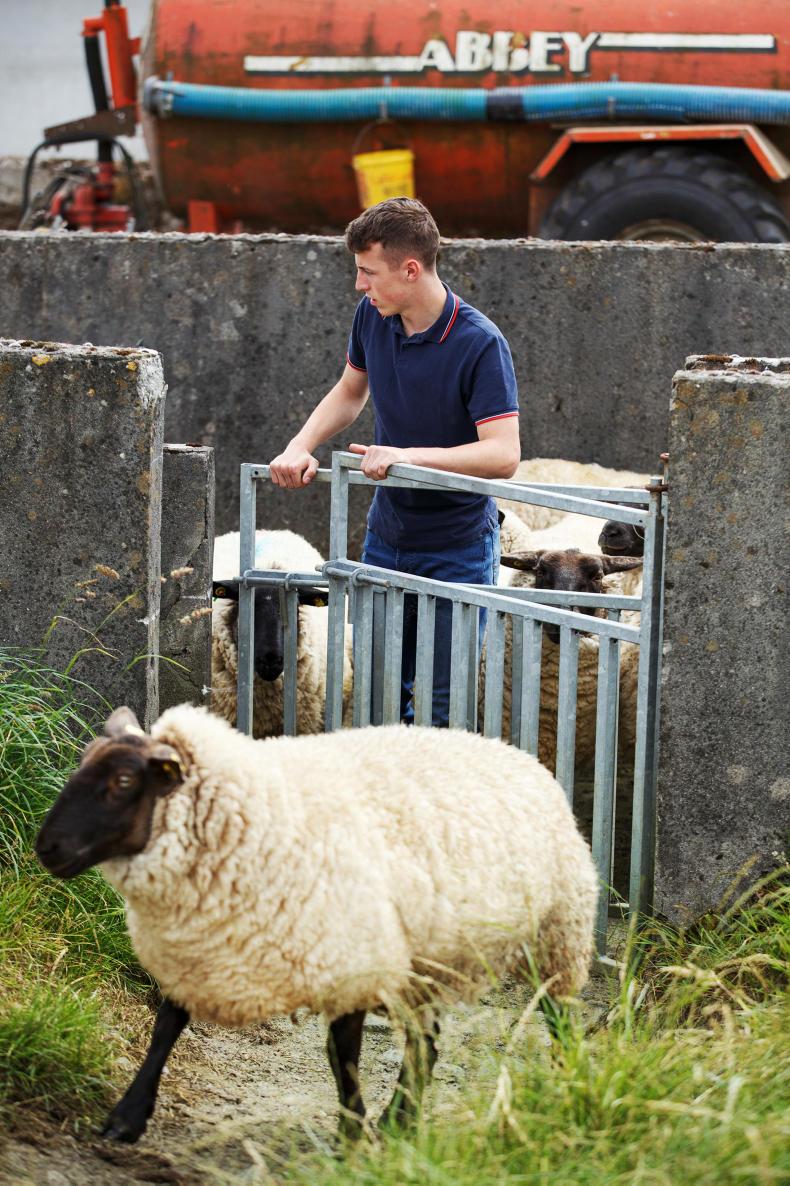
Michael O' Brien. \ Donal O'LearySimple finishing system
Simplicity is the key to the working of the farm – in both the suckler and sheep enterprises. Pat has designed the system so that breeding on both sides is geared primarily at finishing. As no replacements are bred on the farm, this means that only terminal rams and bulls are used, meaning fewer and more easily managed groups. In the past the sheep flock would have been replaced from inside the farm gate. Suitable hogget replacements are bought in from a neighbouring farmer that specialises in producing replacements. The ewe is a Suffolk-cross Mule ewe with good maternal characteristics and Suffolk and Texel rams are used on these to produce lambs that will weigh, kill out and grade well.
The suckler herd is run in a similar fashion. All replacement heifers are bought in and a terminal Charolais stock bull is used on the herd to produce Charolais-Limousin cross weanlings; weanlings that are demanded by those feeding and finishing cattle in the area. Because all calves are highly saleable, this means that output value of those sold is optimised at all times. Although it can be expensive at times to buy in suitable heifers for replacements, Pat feels that this system is the straightforward and suits the farm best.
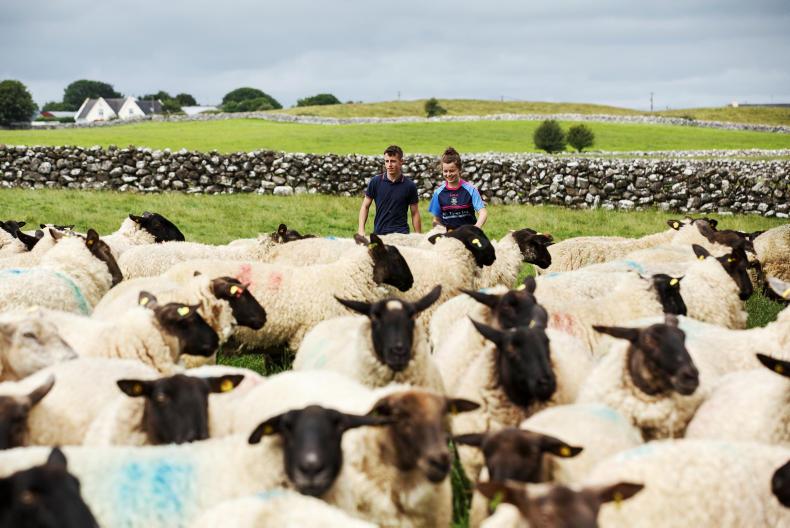
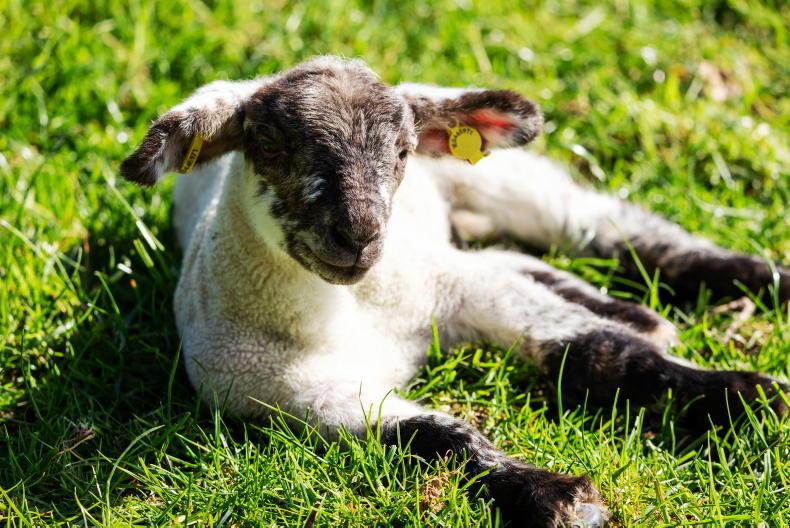
Michael and Ciara taking their turn. Donal O' LearyThis year 550 lambs were produced from the 316-ewe flock. This means that he will slaughter just shy of 1.75 lambs per ewe this year. One of the key drivers of the high prolificacy, according to Pat, is pre- flushing management. Supplementation of the ewe after lambing, combined with ad-lib supplementation of the lambs and early finishing means that the ewes are not under too much pressure to produce milk. As a result, condition loss is minimised. In addition to this, Pat delays shearing of the ewes until August prior to flushing in a bid to increase intake and obtain a better flushing effect. While this is not the sole cause of the high lambing rates, Pat feels that it is one of the contributing factors to it.
High-input/output system
The sheep system is an intensive one, based on a high input/ high output system. The farm is mid-season lambing so as to avoid excess supplementation. As the ewes lamb they are put out to grass with concentrate supplmentation carried on briefly into lactation. Once lambs are a little stronger, ad-lib creep feeding commences and continues until they are drafted for slaughter. To many farmers, this level of meal feeding would seem high. In total, about 25t of concentrates are fed to the ewes and lambs, Pat says the ewes are supplemented to the tune of €18/head, while the lambs are supplemented to the tune of €13/head. Given that this year, 1.75 lambs per ewe will be sold, the total cost of supplementation per lamb including what is fed to the ewes is approximately €23/head.
While this is costly, there are two main benefits in the system to heavy supplementation. Firstly, lambs are removed from the system quickly, allowing for more grass to be allocated to the cows and calves in late summer, early autumn. Secondly, the fact that lambs are slaughtered early means that he optimises the higher factory prices early in the year. By mid-June, about 350 of the 550 lambs born on the farm have been sold, with the remaining 200 lambs killed by mid July.
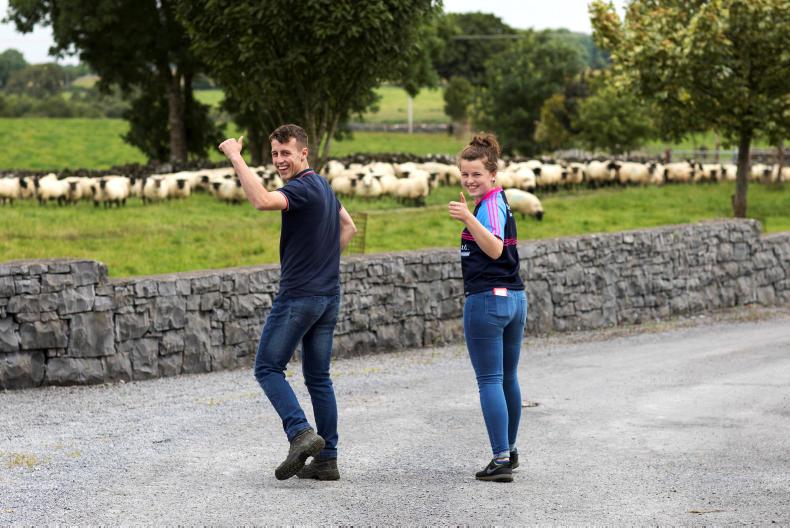
“As the 350 lambs were killed early, we took full advantage of high early lamb prices. This would be worth up to €15/head in additional sale value across the entire crop of lambs for getting as many as possible through the system before the price drops.’’ While this was a very suitable year for the system, the return for intensive early finishing in the past few years has not been quite as as lucrative as this year.
All lambs are traded through the South Mayo Lamb Producer Group which brings benefits in securing bonus payments above the base price. As well as the marketing benefits, Pat feels the group is also a great platform to interact with other producers. Of the 350 lambs drafted to mid-June, about 35% were U grades with the rest R. This is in line with annual trends of 30% to 40% U grade lambs. Carcase weight is generally pushed to 21kg to maximise the sale value with U grade lambs realising a 20c/kg bonus above the base price.
Milk driving weaning weights
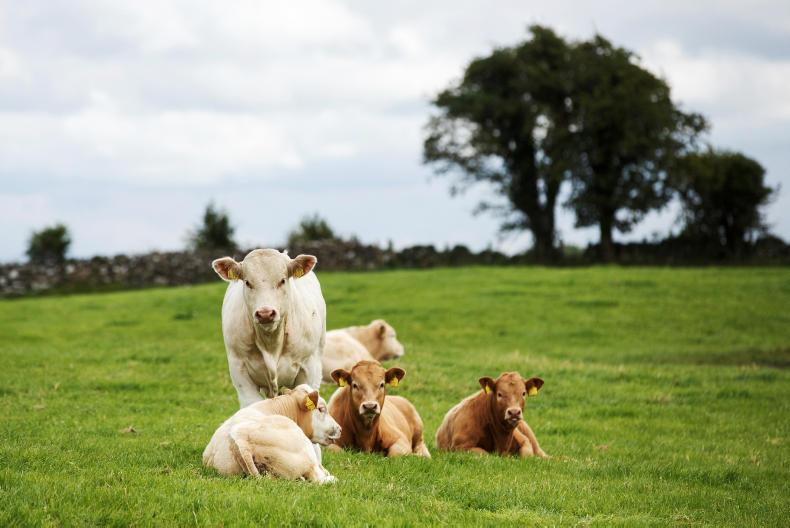
The suckler herd mainly comprises Limousin, Simmental and Charolais cross cows. As replacements have been sourced mainly from outside the herd, before the replacement index was formed, Pat was only going by visual appraisal of suitable bulling heifers. While he now is more focused on the replacement index, he still puts a lot of weight on visuals and breeding. One thing he has been focusing on is milk in the cows. Thirty-nine per cent of the cow herd are four and five-star on the replacement index, while if we look across the cows and all eligible replacement females in the herd, approximately 53% are four- and five-star on the index.
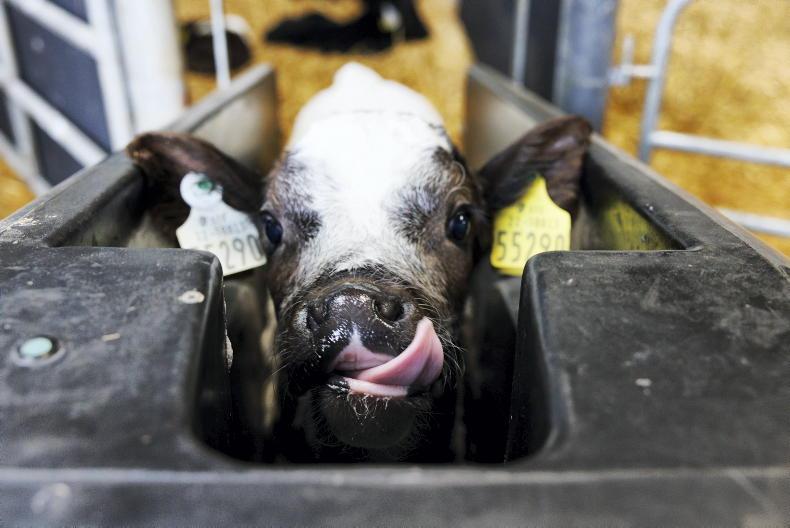
The suckler herd calves from January to March with a few stragglers in April. Most January- to March-born calves are sold in October at an average age of eight months. ICBF’s Beef Output report shows that in 2016 26 bulls and 20 heifers were sold off the farm in the autumn. The bulls weighed 375kg on average in October at sale, while the heifers had an average weight of 349kg. These weights at sale translate into an average daily gain of about 1.35kg since birth on the bulls and 1.25kg for the heifers. While creep feeding does take place from July on, Pat said most of this gain was driven by maternal milk.
Investing in the farm
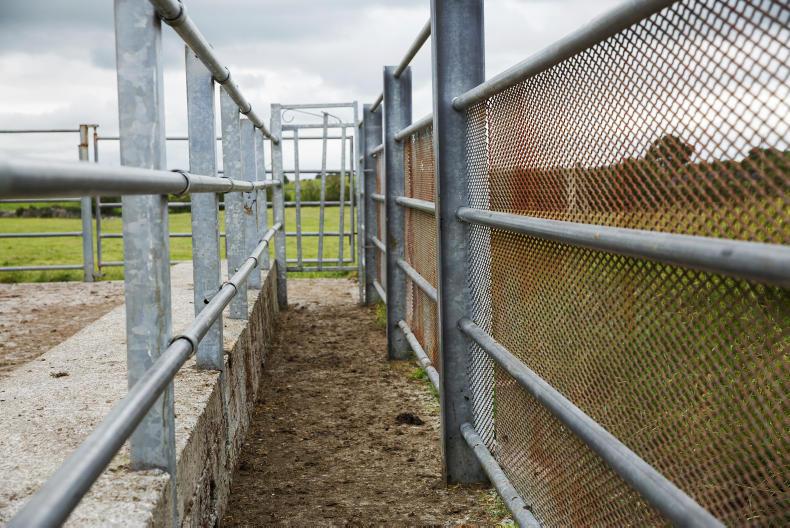
Being situated just outside Headford means that stone walls are endless on the farm. The home farm and out farms contain numerous small fields with stone walls as boundaries. ‘’The stone walls do pose a challenge in terms of keeping them standing, and maintaining them each year by rebuilding fallen stones. But they are an ideal fence for sheep and work extremely well on the farm. The cattle are harder on the walls than the sheep, and scratching at walls means that fallen stones can be common.’”
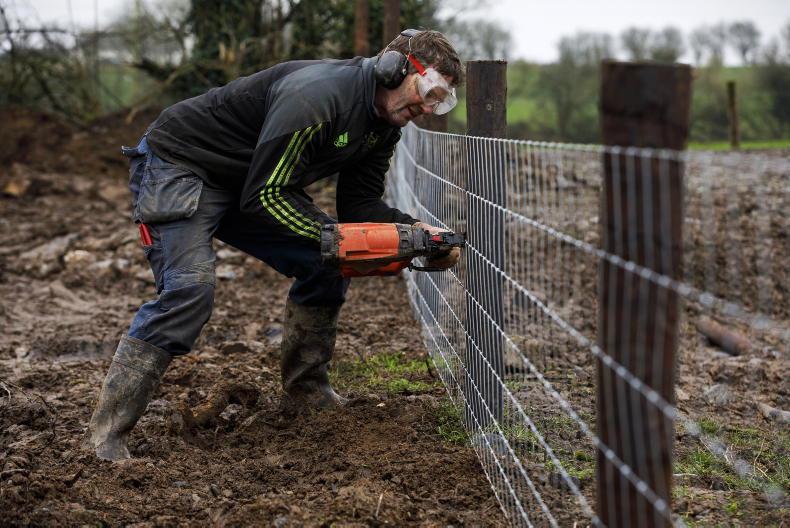
In the past few years Pat has started to erect electric fence wire along each wall to stop cattle scratching on them, and in turn to reduce fallen stones. As Pat sees these walls as a necessity on the farm, he is not only investing in maintenance, but in building some new walls on one of the out farms. This year he invested close to €8,000 between buying stone and paying for labour and a track machine to erect about 1,000m of new walls on the farm. ‘’The stone walls are a lifetime job, a great boundary and well worth investing in.’’
Pat O’Brien is the third generation of his family to farm the family farm just outside Headford, Co Galway. Over the years his grandfather and father purchased land and grew the farm to the 57ha of owned land farmed today.
In 2014, Pat took over the farm full-time, having previously worked the land while also operating a busy contracting business. With increased demand on labour, and only so many hours in the day, Pat decided to focus fully on the farm and reduce the amount of contract work he was taking on. At peak production, Pat’s father Paddy ran up to 600 ewes on the farm, finishing all lambs and also operating a dairy calf to beef system. At that time, Pat and his brothers were actively helping feed calves and looking after the sheep flock in spring. So as the supply of labour changed on the farm, so too did the farming system.
Pat O' Brien with his wife Michelle, children Michael, Ciara and Shane, and father Paddy. \ Donal O' LearyPat O' Brien with his wife Michelle, children Michael, Ciara and Shane, and father Paddy. \ Donal O' Leary
Paddy, who is now in his 80s, was a great help down through the years. At times when Pat was away from the farm with contracting work, Paddy was able to keep a close eye on things, especially in the spring, when ewes were lambing and cows were calving. As age catches up on us all, Paddy is not as fit as he was, and when unpredictable suckler cows and a stock bull are in the mix, and safety is becoming more of an issue for him, this means that he can’t do all the jobs that he used to do on the farm. However, as one generation is scaling back on workload, the next generation, Pat’s children Michael, Ciara and Shane, are becoming more involved in helping on the farm. During the summer holidays they help Pat on a daily basis, while Pat’s wife, Michelle is the backbone of the paper work and the financial planning end of the business
Mixed grazing a clear winner
The farm is currently carrying approximately 316 ewes and about 55 suckler cows. Coming from a background of intensive farming, Pat continues to push the boundaries of what output can be achieved from the farm. The mixed grazing of cattle and sheep occurred organically over the years, it was always something that happened on the farm. “The farm was always well set up for sheep; the fields may be small but the stone walls mean that sheep fencing is not an issue. The walls have to be ran on each year and fallen stones placed back on top, but they are ideal for a sheep enterprise.”
The farm itself, like most west of Ireland farms, was expanded through the years by purchasing two outfarms. As a result, it is quite fragmented, which leaves the management a little more difficult.
Sheep boost sward quality
During the spring months, the ewes and lambs get preference when it to comes to grass on the farm. From January up to lambing sheep are housed and grass is allowed to accumulate across the farm. Once lambed, the ewes and lambs are let out to grass. For that reason, the cows and calves will not go to grass on the farm until April. While having cows housed in March on a dry limestone farm may seem slightly counter-productive, there are clear benefits in terms of grass quality and selling lambs quickly off the farm. After lambing, the sheep and lambs graze the home farm and then move to the outfarms where they are rotationally grazed. Once the cows and calves are turned out, they are grazed in rotation after the sheep. Having the sheep graze ahead of the cows means that maintaining grass quality during the summer is never an issue. In addition to little to no stem in the sward during the main summer months, the sward consists of a very thick mat of grass, which helps reduce weed cover, with the sheep enterprise meaning that no ragwort exists in the grass. As demand for grass is peaking in June, most ewes are moved back to the 60 acre home block in preparation for drafting lambs after first-cut silage.
Michael O' Brien. \ Donal O'LearySimple finishing system
Simplicity is the key to the working of the farm – in both the suckler and sheep enterprises. Pat has designed the system so that breeding on both sides is geared primarily at finishing. As no replacements are bred on the farm, this means that only terminal rams and bulls are used, meaning fewer and more easily managed groups. In the past the sheep flock would have been replaced from inside the farm gate. Suitable hogget replacements are bought in from a neighbouring farmer that specialises in producing replacements. The ewe is a Suffolk-cross Mule ewe with good maternal characteristics and Suffolk and Texel rams are used on these to produce lambs that will weigh, kill out and grade well.
The suckler herd is run in a similar fashion. All replacement heifers are bought in and a terminal Charolais stock bull is used on the herd to produce Charolais-Limousin cross weanlings; weanlings that are demanded by those feeding and finishing cattle in the area. Because all calves are highly saleable, this means that output value of those sold is optimised at all times. Although it can be expensive at times to buy in suitable heifers for replacements, Pat feels that this system is the straightforward and suits the farm best.
Michael and Ciara taking their turn. Donal O' LearyThis year 550 lambs were produced from the 316-ewe flock. This means that he will slaughter just shy of 1.75 lambs per ewe this year. One of the key drivers of the high prolificacy, according to Pat, is pre- flushing management. Supplementation of the ewe after lambing, combined with ad-lib supplementation of the lambs and early finishing means that the ewes are not under too much pressure to produce milk. As a result, condition loss is minimised. In addition to this, Pat delays shearing of the ewes until August prior to flushing in a bid to increase intake and obtain a better flushing effect. While this is not the sole cause of the high lambing rates, Pat feels that it is one of the contributing factors to it.
High-input/output system
The sheep system is an intensive one, based on a high input/ high output system. The farm is mid-season lambing so as to avoid excess supplementation. As the ewes lamb they are put out to grass with concentrate supplmentation carried on briefly into lactation. Once lambs are a little stronger, ad-lib creep feeding commences and continues until they are drafted for slaughter. To many farmers, this level of meal feeding would seem high. In total, about 25t of concentrates are fed to the ewes and lambs, Pat says the ewes are supplemented to the tune of €18/head, while the lambs are supplemented to the tune of €13/head. Given that this year, 1.75 lambs per ewe will be sold, the total cost of supplementation per lamb including what is fed to the ewes is approximately €23/head.
While this is costly, there are two main benefits in the system to heavy supplementation. Firstly, lambs are removed from the system quickly, allowing for more grass to be allocated to the cows and calves in late summer, early autumn. Secondly, the fact that lambs are slaughtered early means that he optimises the higher factory prices early in the year. By mid-June, about 350 of the 550 lambs born on the farm have been sold, with the remaining 200 lambs killed by mid July.
“As the 350 lambs were killed early, we took full advantage of high early lamb prices. This would be worth up to €15/head in additional sale value across the entire crop of lambs for getting as many as possible through the system before the price drops.’’ While this was a very suitable year for the system, the return for intensive early finishing in the past few years has not been quite as as lucrative as this year.
All lambs are traded through the South Mayo Lamb Producer Group which brings benefits in securing bonus payments above the base price. As well as the marketing benefits, Pat feels the group is also a great platform to interact with other producers. Of the 350 lambs drafted to mid-June, about 35% were U grades with the rest R. This is in line with annual trends of 30% to 40% U grade lambs. Carcase weight is generally pushed to 21kg to maximise the sale value with U grade lambs realising a 20c/kg bonus above the base price.
Milk driving weaning weights
The suckler herd mainly comprises Limousin, Simmental and Charolais cross cows. As replacements have been sourced mainly from outside the herd, before the replacement index was formed, Pat was only going by visual appraisal of suitable bulling heifers. While he now is more focused on the replacement index, he still puts a lot of weight on visuals and breeding. One thing he has been focusing on is milk in the cows. Thirty-nine per cent of the cow herd are four and five-star on the replacement index, while if we look across the cows and all eligible replacement females in the herd, approximately 53% are four- and five-star on the index.
The suckler herd calves from January to March with a few stragglers in April. Most January- to March-born calves are sold in October at an average age of eight months. ICBF’s Beef Output report shows that in 2016 26 bulls and 20 heifers were sold off the farm in the autumn. The bulls weighed 375kg on average in October at sale, while the heifers had an average weight of 349kg. These weights at sale translate into an average daily gain of about 1.35kg since birth on the bulls and 1.25kg for the heifers. While creep feeding does take place from July on, Pat said most of this gain was driven by maternal milk.
Investing in the farm
Being situated just outside Headford means that stone walls are endless on the farm. The home farm and out farms contain numerous small fields with stone walls as boundaries. ‘’The stone walls do pose a challenge in terms of keeping them standing, and maintaining them each year by rebuilding fallen stones. But they are an ideal fence for sheep and work extremely well on the farm. The cattle are harder on the walls than the sheep, and scratching at walls means that fallen stones can be common.’”
In the past few years Pat has started to erect electric fence wire along each wall to stop cattle scratching on them, and in turn to reduce fallen stones. As Pat sees these walls as a necessity on the farm, he is not only investing in maintenance, but in building some new walls on one of the out farms. This year he invested close to €8,000 between buying stone and paying for labour and a track machine to erect about 1,000m of new walls on the farm. ‘’The stone walls are a lifetime job, a great boundary and well worth investing in.’’







SHARING OPTIONS