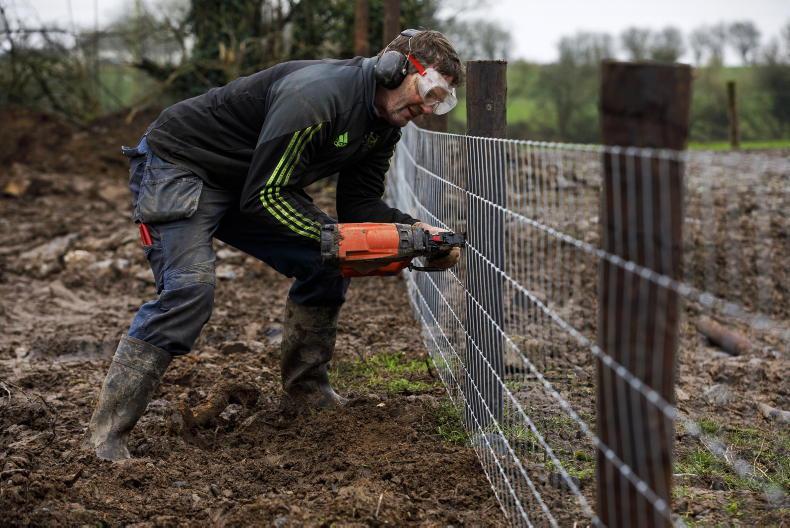
Two key requirements to any successful sheep farm are good fences and good handling facilities. A well-trained sheepdog is also a useful addition, and where fence and handling facilities are poor, there will be even greater pressure on labour resources to gather strayed sheep and for straightforward tasks.
Where fences in particular are poor, time is lost through fence repairs, gathering these strayed sheep and the possibility of male and female sheep intermingling and producing unplanned and possibly poorer quality off spring. For these reasons, and your own sanity, a good fence should be one of the first things looked at if currently operating or considering operating a flock.
Cost
Table 1 shows the costs associated with creating 500m (of a relatively straight run) of sheep fencing (all excluding VAT). Both costs have been priced against TAMS minimum specifications, with the primary difference being in the cost of strainers and intermediate posts; the higher cost options generally give a longer guarantee and expected working life, with some more aesthetically pleasing attributes to consider when fencing near a dwelling house.
Fencing reference costs under TAMS rose in September 2025. Previously, lowland fencing was costed at €6.80/m + VAT, but now stands at €8.10/m. This costing includes labour, with a farmer’s own labour and machinery being acceptable as a cost, or a farm fencing contractor. Mountain fencing also rose of late, with a new reference cost of €10.57/m (previously €8.81/m) attached to it. Some farmers question if there is separate specification for mountain versus lowland fencing.
There is actually no difference in the specifications of mountain and lowland sheep fencing; the increased payment given towards mountain sheep fencing is due to the increased labour associated with working on the difficult terrain.
Taking the above examples for a lowland fence and adding an additional €1,000 (€2/m) for labour charges, our cost/m comes to €5.93/m, significantly below the reference costs.
However, it is worth noting that we went with the cheapest materials that qualified for TAMS aid available, while the use of strainers was also conservative and would not be atypical of the amount used for rougher land or jagged fence lines.
The higher cost option, again with €1,000 of labour charges, comes to €8.36/m, just slightly above the reference cost, though again we have to note that straining posts are sparsely used in the example.
The increase in reference costs should tempt more people to opt for TAMS aid. At a minimum, your own boundary fence should be well fenced to avoid encroachment on neighbours, with subdivision within your own farm done through a mix of permanent and temporary divisions.
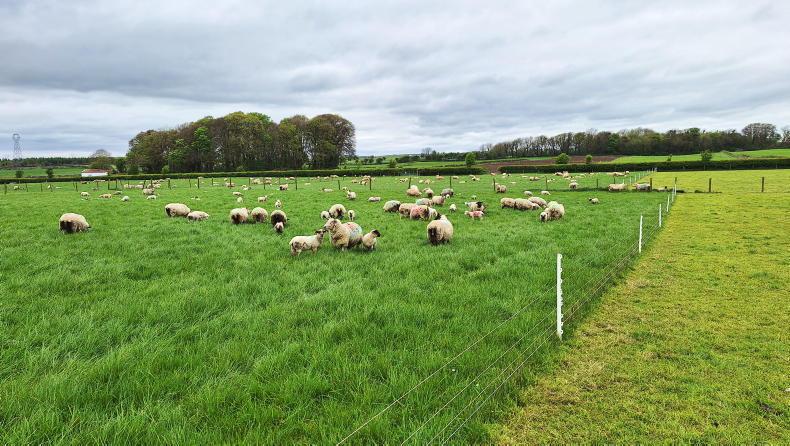
An example of polywire and posts being used to create temporary subdivisions in Teagasc Mellows Campus Athenry.
Paddock sizes
Teagasc recommendations for optimum grassland management point to a minimum of five permanent paddocks per group, with the ability to divide these into 10 temporary divisions per group. The above specifications are based on a three-day residency per division, leading to a 21-day rotation mid-season which is extended to 40-day rotation in spring and autumn.
The suggested paddock size per 100 ewes is 2ha, with this being able to be temporarily subdivided to allow for reduced grass demand or the extension of the rotation. Poly posts and wire can be used to good success where sheep are acclimatised to electric fencing, with three strands of wire required for weaned lambs and older, while younger lambs will require a fourth strand.
It’s wise to be mindful of the trough location when subdividing paddocks.
Although sheep have a low requirement in comparison to bovines, fresh clean water needs to be available at all times. Locating a trough halfway down the fence line between two adjoining paddocks can lead to one trough sufficiently servicing two permanent paddocks or four temporary ones.
Mobile drinkers are an option, but due to the labour associated with them, they are generally more suited to outblocks. In the long run, time invested in permanent water solutions will be returned.
Two key requirements to any successful sheep farm are good fences and good handling facilities. A well-trained sheepdog is also a useful addition, and where fence and handling facilities are poor, there will be even greater pressure on labour resources to gather strayed sheep and for straightforward tasks.
Where fences in particular are poor, time is lost through fence repairs, gathering these strayed sheep and the possibility of male and female sheep intermingling and producing unplanned and possibly poorer quality off spring. For these reasons, and your own sanity, a good fence should be one of the first things looked at if currently operating or considering operating a flock.
Cost
Table 1 shows the costs associated with creating 500m (of a relatively straight run) of sheep fencing (all excluding VAT). Both costs have been priced against TAMS minimum specifications, with the primary difference being in the cost of strainers and intermediate posts; the higher cost options generally give a longer guarantee and expected working life, with some more aesthetically pleasing attributes to consider when fencing near a dwelling house.
Fencing reference costs under TAMS rose in September 2025. Previously, lowland fencing was costed at €6.80/m + VAT, but now stands at €8.10/m. This costing includes labour, with a farmer’s own labour and machinery being acceptable as a cost, or a farm fencing contractor. Mountain fencing also rose of late, with a new reference cost of €10.57/m (previously €8.81/m) attached to it. Some farmers question if there is separate specification for mountain versus lowland fencing.
There is actually no difference in the specifications of mountain and lowland sheep fencing; the increased payment given towards mountain sheep fencing is due to the increased labour associated with working on the difficult terrain.
Taking the above examples for a lowland fence and adding an additional €1,000 (€2/m) for labour charges, our cost/m comes to €5.93/m, significantly below the reference costs.
However, it is worth noting that we went with the cheapest materials that qualified for TAMS aid available, while the use of strainers was also conservative and would not be atypical of the amount used for rougher land or jagged fence lines.
The higher cost option, again with €1,000 of labour charges, comes to €8.36/m, just slightly above the reference cost, though again we have to note that straining posts are sparsely used in the example.
The increase in reference costs should tempt more people to opt for TAMS aid. At a minimum, your own boundary fence should be well fenced to avoid encroachment on neighbours, with subdivision within your own farm done through a mix of permanent and temporary divisions.

An example of polywire and posts being used to create temporary subdivisions in Teagasc Mellows Campus Athenry.
Paddock sizes
Teagasc recommendations for optimum grassland management point to a minimum of five permanent paddocks per group, with the ability to divide these into 10 temporary divisions per group. The above specifications are based on a three-day residency per division, leading to a 21-day rotation mid-season which is extended to 40-day rotation in spring and autumn.
The suggested paddock size per 100 ewes is 2ha, with this being able to be temporarily subdivided to allow for reduced grass demand or the extension of the rotation. Poly posts and wire can be used to good success where sheep are acclimatised to electric fencing, with three strands of wire required for weaned lambs and older, while younger lambs will require a fourth strand.
It’s wise to be mindful of the trough location when subdividing paddocks.
Although sheep have a low requirement in comparison to bovines, fresh clean water needs to be available at all times. Locating a trough halfway down the fence line between two adjoining paddocks can lead to one trough sufficiently servicing two permanent paddocks or four temporary ones.
Mobile drinkers are an option, but due to the labour associated with them, they are generally more suited to outblocks. In the long run, time invested in permanent water solutions will be returned.
SHARING OPTIONS