


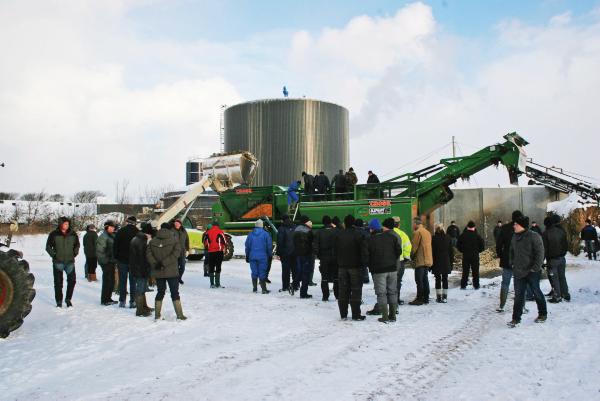
Cross Agricultural Engineering from Rathangan, Co Kildare, recently organised a trip to Denmark to visit the Gron Gas bio-gas facility to which the company had recently supplied an Elephant beet washer.
Jens Peter Lunden is a pig and tillage farmer who has developed an anaerobic digestion (AD) facility on his farm, incorporating it into his farming business. The AD facility is both a waste management and capital generation tool for his overall farming enterprise.
Rules and regulations governing all aspects of farming in Denmark, from fertilizer application rates to medicines used, are very tough. Farmers really do have to strive to keep in line with them, while also farming profitably.
Peter has 900 sows in his pig unit producing in the region of 33 piglets/sow. Birth to slaughter is 110 days and medicines used are just 10% of those used in Germany and 15% of those used in Holland, he claimed. This is achieved by operating a strict hygiene/quarantine system within the piggery among his six piggery staff.
He also produces 500 hectares of arable crops, including 110 hectares of milling wheat, 115 hectares of seed barley, 90 hectares of rape seed, 40 hectares of seed oats, 35 hectares of rye for bread, 60-85 hectares of beet for biogas and 40 hectares of maize for biogas.
Peter lists his (profitable) reasons below for developing his AD facility:
Increase the nutrient value of slurry: more of the nitrogen present is available for use in the digestate (85-95%)
Import nutrients from waste streams: pig and cattle slurry, food waste, brewer’s grains and more
Reduce mineral fertilizer bill: €30,000 for 2012
Easier to export the digestate to other farms compared to raw pig slurry
Produce renewable heat and power
Reduce carbon footprint
Reduce the odour from spreading digestate instead of raw pig slurry
The AD facility has been up and running since 2002 and progress has been pretty rapid along the way. In 2003, it was expanded with a pasteurisation unit and maize feeder to allow maize to be used.
2006 saw the installation of a straw burner and construction of a 4km district heating pipeline to Hjorring District Heating Plant. In 2007, it started to receive manure fibre from other farmers.
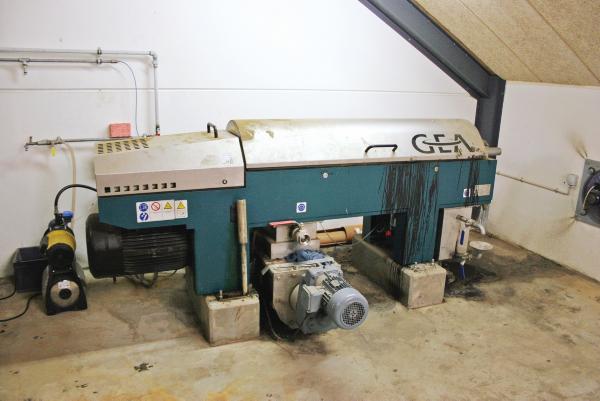
A 1.4MW Jenbacher engine was installed in 2009 resulting in an increase of power efficiency from 31% to 42%. At the same time, a digestate separation unit was installed which separated out the Ps and Ks for spreading use separately.
For 2011, Gron Gas achieved a CO2 reduction of approximately 7,000 tonnes. It produced enough electricity for approximately 2,500 houses and heat for approximately 1,100 houses. Electricity has a selling price of €150/MWh and heat a selling price of 44MWh.
Biomass inputs from pig and cattle slurry, food waste, brewer’s grains, fibre from separated pig slurry, glycerine and maize and was around 30,000 tonnes in 2010.
Now a brand-new facility is being built to take in the region of 200,000 tonnes/year of biomass. Plans also include a facility to ‘upgrade’ the gas produced to natural gas which can be used in the gas grid or compressed for fuelling vehicles.
Lunden chose a Cross Elephant
Jens Peter Lunden is the first person in Denmark to purchase the Cross Elephant beet washer-chopper.
“Peter was aware of the existence of the Irish made Elephant through the German bio-gas industry where it has made quite an impression. Peter flew over to Ireland to see it work and the deal was clinched later at the Cereals event in Britain,” said Simon Cross, who has significant success with his patented design on the German bio-gas market.
To date, approximately 10,000-15,000 tonnes have been washed and chopped through it and Simon expects up to 25,000 tonnes throughput from the machine this year.
About 90% of what Jens Peter Lunden washes and chops goes for AD but he also washes and chops beet for dairy farmers as well.
There are three or four further enquiries from Denmark as a result of the sale to Gron Gas. Further afield, an Elephant is due to be shipped out to the United States in early January.
Simon said that Michigan Sugar has purchased a unit to wash and chop left over beet for the dairy industry.
Michigan Sugar is a co-operative owned by over 1,000 sugarbeet growers and produces nearly one billion pounds of sugar annually.


SHARING OPTIONS