



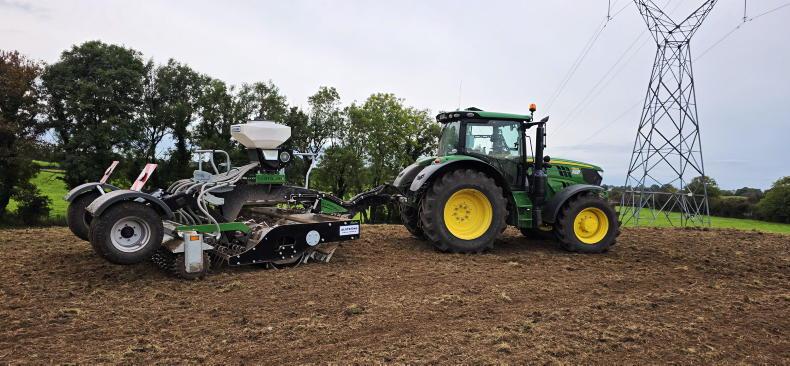
In recent years, there has been strong growth in pasture rejuvenation equipment in Ireland and across Europe. Some Irish companies specialising in manufacturing such equipment include Erth Engineering, Clarke Engineering, and Alstrong Ltd in Co Galway. In the manufacturing business since 2012, Alstrong Ltd offers a grassland aerator and its Auctus one pass reseeding unit. Michael O’Shea is a suckler-to-beef farmer and agricultural contractor based in Kilcock, Co Kildare. He also does a share of plant hire work into the construction sector. Before buying the Auctus, he was reseeding using the traditional plough system, and using a rotavator for customers who didn’t want to plough. He purchased a new Alstrong Auctus in 2024, predominantly as a cost-effective method of reseeding a lot of his own farm.
He explained that he is very happy with how the machine is working out, and is impressed with how versatile it is. Approximately 60% of the work he does with the machine is straight into burn-off ley ground, 20% is into ploughed ground and the remaining 20% is into rotavated ley ground.
The design
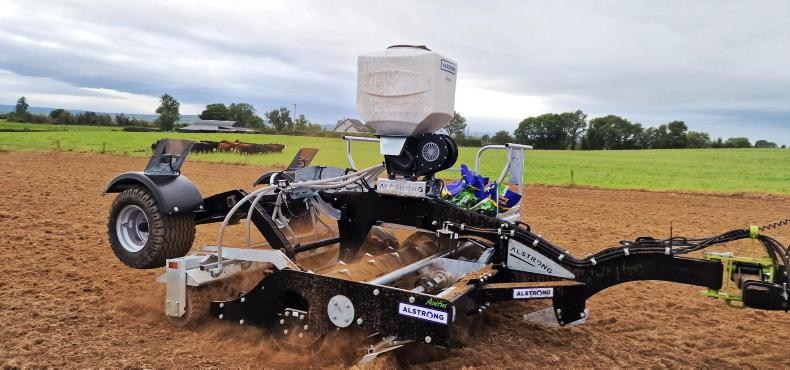
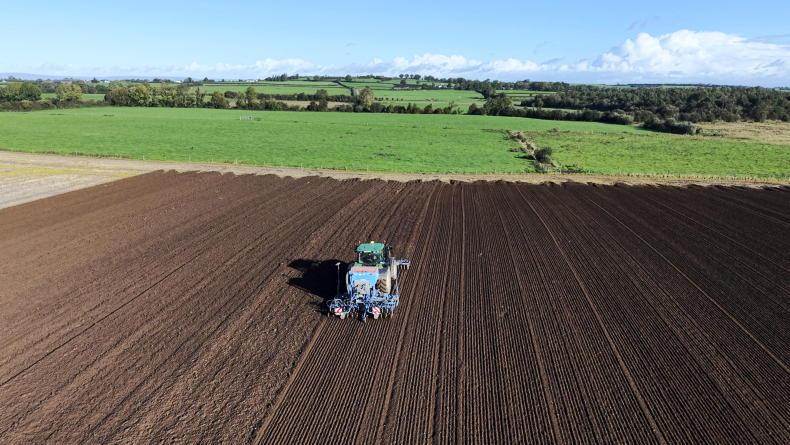
The Auctus is available as a mounted or trailed unit, both of which are offered in a 3m working width. The machine is designed to sow seed into ploughed ground, burn-off or existing pasture in a one pass solution.
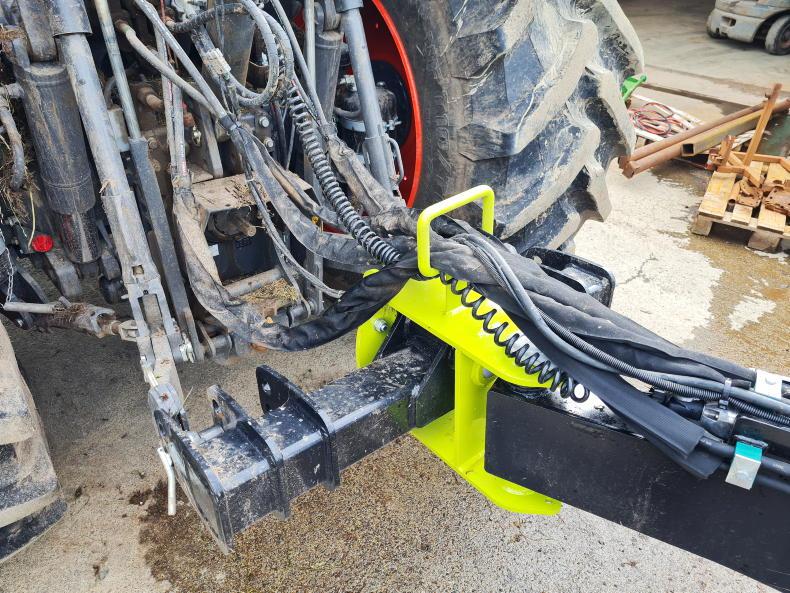
Michael runs a trailed unit, which is attached via a two-point linkage, which replaced the previous design of a straight draw bar towed via the pick-up hitch. Michael explains that this gyroscopic drawbar system, which is connected via the lift arms, leaves the machine very manoeuvrable, considering how big it is.
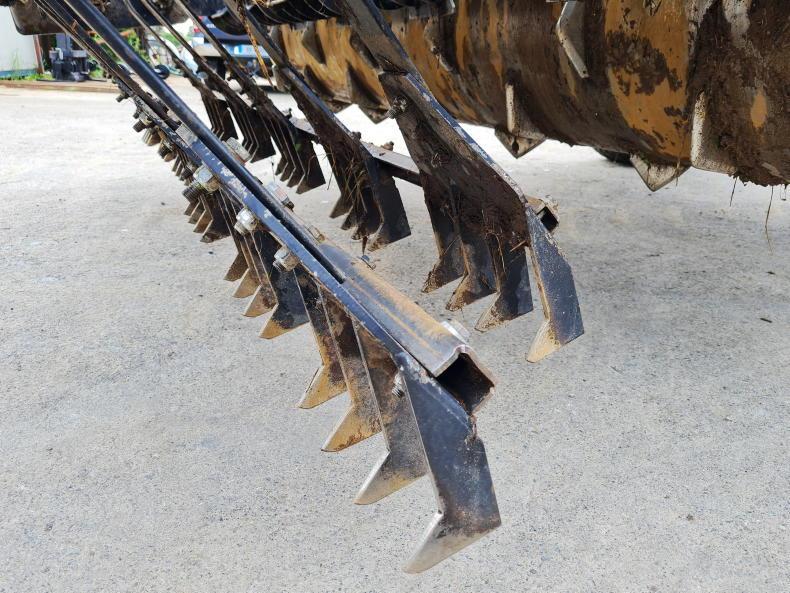
Up front, the Auctus features two rows of hydraulically adjustable sprung ripper paddles.
It features two rows totalling 11 paddles, which are offset. Each row of paddles is braced from one end to the next, helping to distribute stress and strain. Fitted with aggressive tips, they are designed to scarify and scratch the surface and remove dead material.
Spiked roller
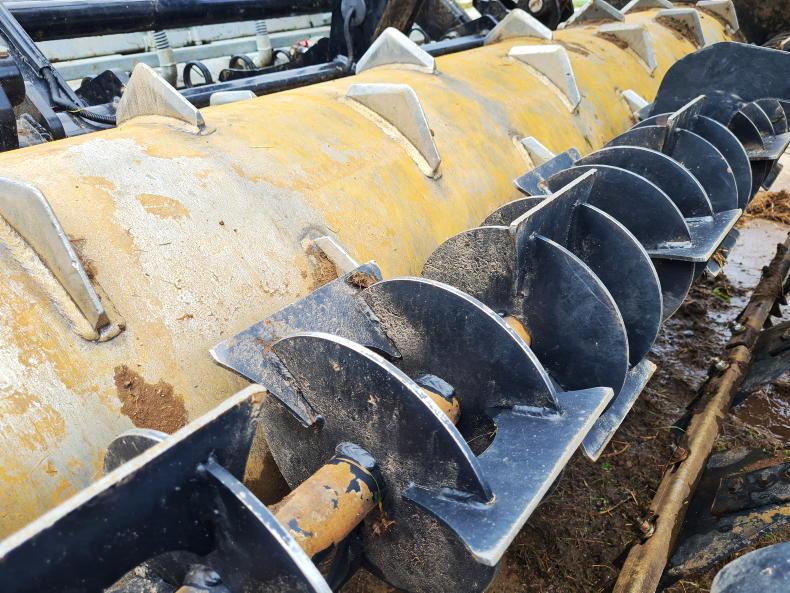
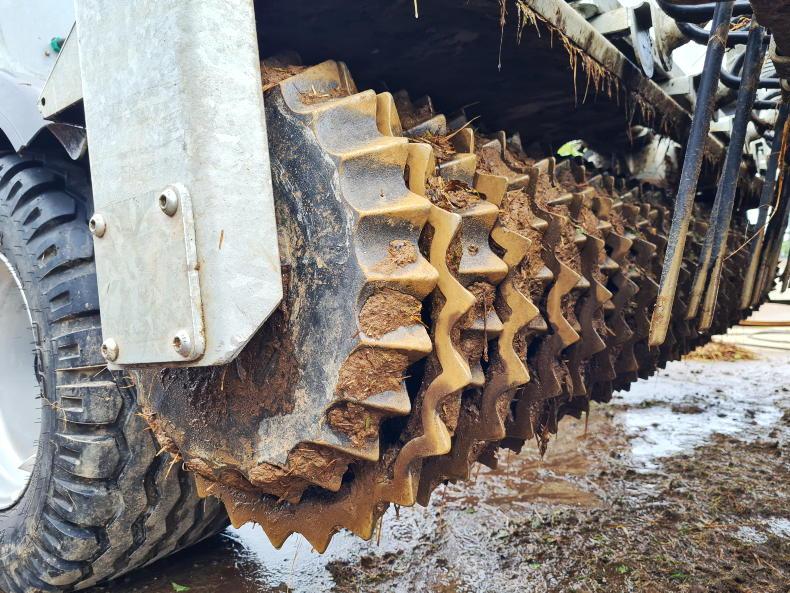
Following this is a spiked drum fitted with sixty 80mm hardened steel aeration blades.
According to Alstrong, this is designed to both repair poached soil and penetrate the surface to help aeration. If more weight and downward force is required, this hollow roller can be filled with water. This additional ballast increases the unit’s dry weight from 4.5t to a laden weight of up to 5.3t, adding an additional 800kg.
The aeration roller will naturally always be in contact with the soil, and thus is prone to soil sticking to its surface when working in sticky conditions. It’s widely known that such tacky conditions are where the likes of these machines will produce their best results. To avoid the clay sticking to the roller, Alstrong uses a revolving scraper. This is a free-wheeling scraper roller that runs close to the drum, in between the spikes to keep it clean.
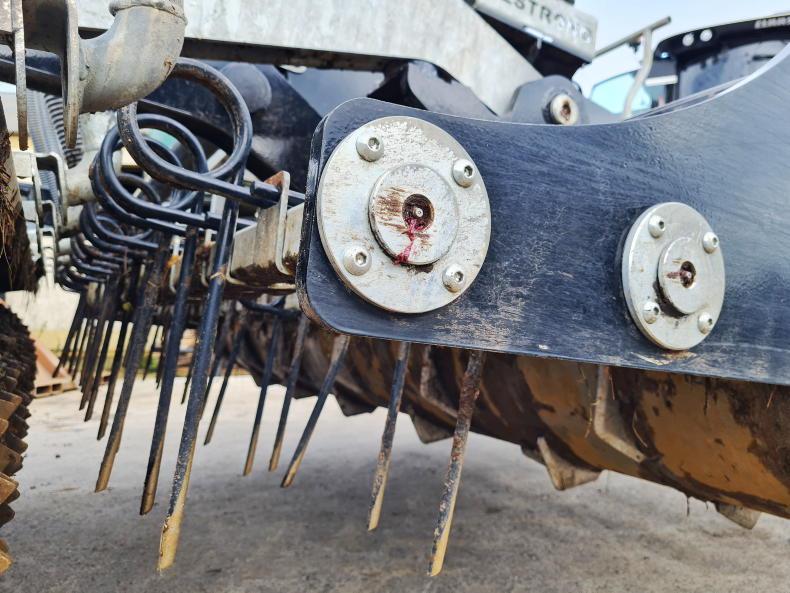
Behind the spiked drum sit two rows of hydraulically controlled 12mm tines.
Again, the hydraulic control means the aggressiveness of the tines can be adjusted on the move, from the cab, in a similar fashion to the levelling paddles.
Finally, the 560mm prismatic roller covers the seed, consolidating the seedbed.
The heavy-duty structural steel frame is constructed from 200x100x10mm box iron. It comes shod on 19.0/45-17 flotation tyres which sit under a presentable set of mudguards.
Seeding unit
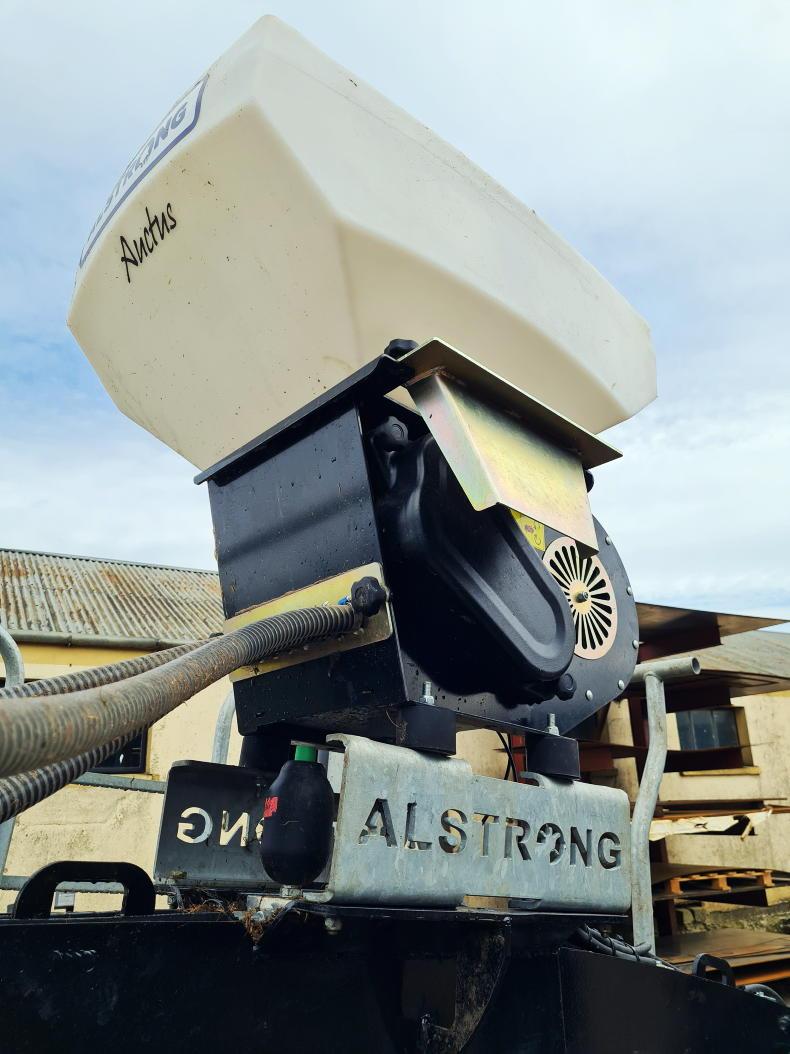
Alstrong uses the Kildare-manufactured Doyle pneumatic ‘Vario’ air seeder.
This broadcasts the seed via eight splash plates across the width of the unit. The seed is distributed after the tines and before the prism roller.
Alstrong also uses Doyle’s ‘total control’ unit, that utilises a GPS speed sensor to pick up ground speed. Once the seeder is turned on, the machine is lowered into working position and the driver begins to move forward, the grass seed starts flowing. The rate will vary to match the tractor’s forward speed.
The ‘Vario’ seeder is capable of sowing fine seeds from a rate as low as 1kg/ha, to grass seeds at up to 80kg/ha.
Changing to small seeds involves swapping the rollers.
The air seeder is powered off a 12-volt 80Nm motor, that drives fluted feed rollers via a six-speed chain and sprocket arrangement.
Alstrong recommends connecting this directly to the battery, to avoid any interruptions in current, such as when using lights or air conditioning, etc.
The manufacturer uses high-capacity twin electric impeller fans for a reliable spread, which can require a little extra power when starting up.
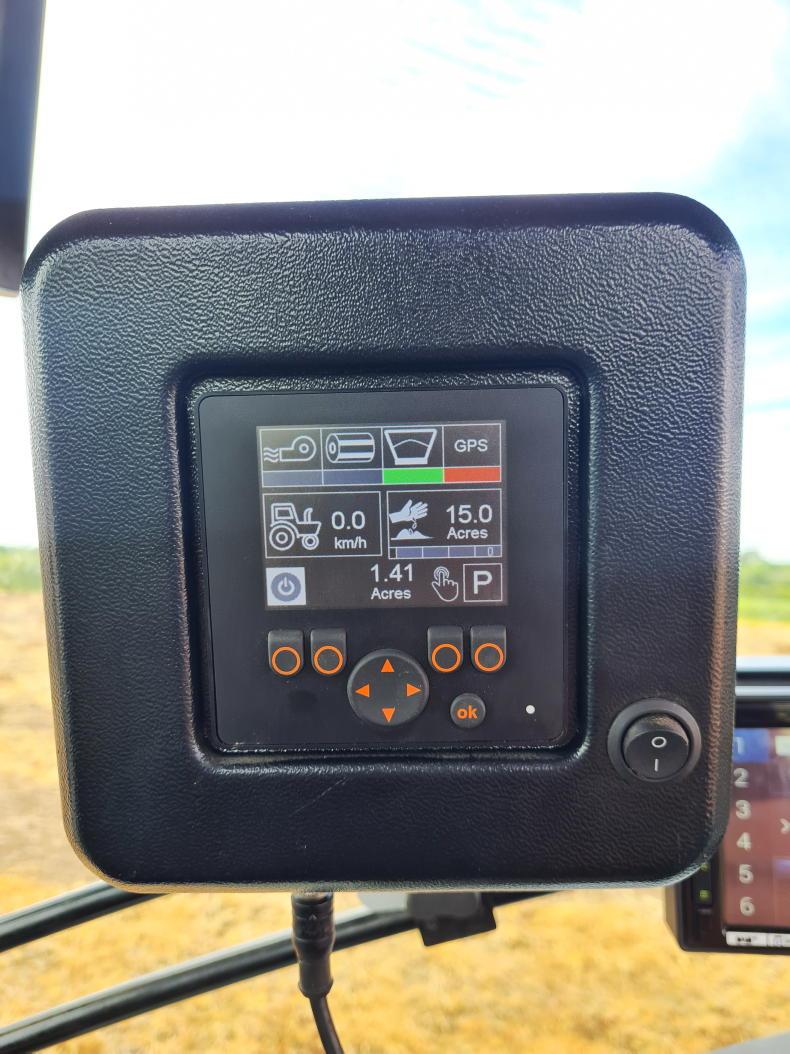
The seeding unit comes with a control box that offers seed rate change on the move, a hopper low level warning, an acre meter and a live groundspeed reading.
“Once you calibrate the seeder, I find it seriously accurate. It's also very easy to alter the seeding rates while on the move. The control box is straightforward when you get the hang of it. I like the acre metre, I find it very good for keeping a close eye on the seeding rates”, explained Michael.



SHARING OPTIONS